INTRODUCTION Integrated inductors with high quality factors (Q-factors) are becoming increasingly popular for radio frequency (RF) applications, notably in mobile devices such as smart phones, tablets, and portable electronics. High inductance density and quality factor are two critical requirements for their real application in radio frequency integrated circuits. (RFICs). Previously, sputtered or electroplated magnetic materials were utilized as inductor cores to enhance inductance density and quality factor.
1–21 Gardner et al.1 reported a 30%-60% increase in inductance at frequencies up to 3GHz by employing the Veeco-CVC technique to deposit Co-Zr-Ta as a single-layer magnetic material in spiral inductors. Gao et al.19 employed a solenoid structure with magnetic FeGaB/Al2O3 multilayers to demonstrate RF magnetic inductors with a high quality factor. These inductors displayed remarkable high-frequency performance with a peak quality factor of 20 over a wide working frequency range of 0.5-2.5GHz. When compared to an air core inductor, the capacitance increased by more than 100%.
The conventional electroplating or sputtering procedures, on the other hand, take a very long time—typically more than 24 hours. Furthermore, even with a low Q-factor, the expenses are substantial.
Spin spray deposition has been demonstrated to be a viable method for producing fully dense, high crystalline quality, and low-loss ferrites at a low temperature (90 °C) using a low-cost aqueous solution compatible with substrates such as plastics, polymers, glasses, printed circuit boards (PCB), and RFIC, among others.22–26 Under self-bias conditions, ferrite thin films coated with this approach displayed excellent microwave properties at GHz frequencies while also raising the Snoek limit by an order of magnitude above their bulk equivalents.26–28 It has been demonstrated that the NiZn spinel ferrite thin sheet’s high permeability, resistivity, and saturation magnetization make it a suitable candidate for high frequency applications.
We show a thin layer of Ni0.27Zn0.1Fe2.63 O4 with a thickness of roughly 2.1 m in this study. Using the spin spray process, the film was initially applied on the magnetic cores of inductors.
Thin layers of Ni0.27Zn0.1Fe2.63 O4 were produced on a 0.5 millimeter thick silicon wafer using a spin spray process. A 95°C heated plate was simultaneously flooded with 1L of oxidation solution comprising 2 mM NaNO2 and 17.5 mM CH3COONa with a pH of 9.8 and 1L of precursor solution containing a combination of NiCl2, ZnCl2, and FeCl2 with a pH of 3.6.28 A development rate of 40 nm/min was recorded.
22,23 The microstructure and chemistry of NiZn ferrite layers were investigated using XRD and a Cu Source: K (=1.541). The magnetization vs applied magnetic field loops were recorded using an oscillating sample magnetometer (VSM) with an external magnetic field applied in the thin film’s plane. To capture the complex permeability spectra of films, a broad band measuring approach utilizing a coplanar waveguide network analyzer with a bandwidth in the 0.5 to 5 GHz range was adopted.
Thermal oxide microfabrication was utilized to build a 500 nanometer thick SiO2 thin layer on silicon wafers for solenoid inductors. A polyimide PI2611 layer was spin coated on the wafers to reduce the substrate clamping impact. The first polyimide layer (PI1) was 6 m thick. This approach was used to deposit the Cr(10nm)/Cu(30nm) precursor layer for the physical vapor deposition (PVD) device.
Cu is used for the bottom anode. On the seed layer, a 6 m thick photoresist (P4620) layer was constructed as the stencil for soldering the bottom Cu layer. The current intensity was tuned to generate a 4 m thick Cu for high-quality electroplating. After electroplating, the photoresist layer was promptly removed using methanol. The filament thickness was determined using a profilometer to be around 4 m. To generate the isolation layer, a second layer of polyimide (HD 4110, photosensitive) was printed on the bottom Cu. Concurrently, through holes for the winding link were made.
The magnetic coating was applied using a spin spray. A PVD-deposited Cu top seed layer was then electroplated to generate a 4 m thick Cu top layer in a similar manner.
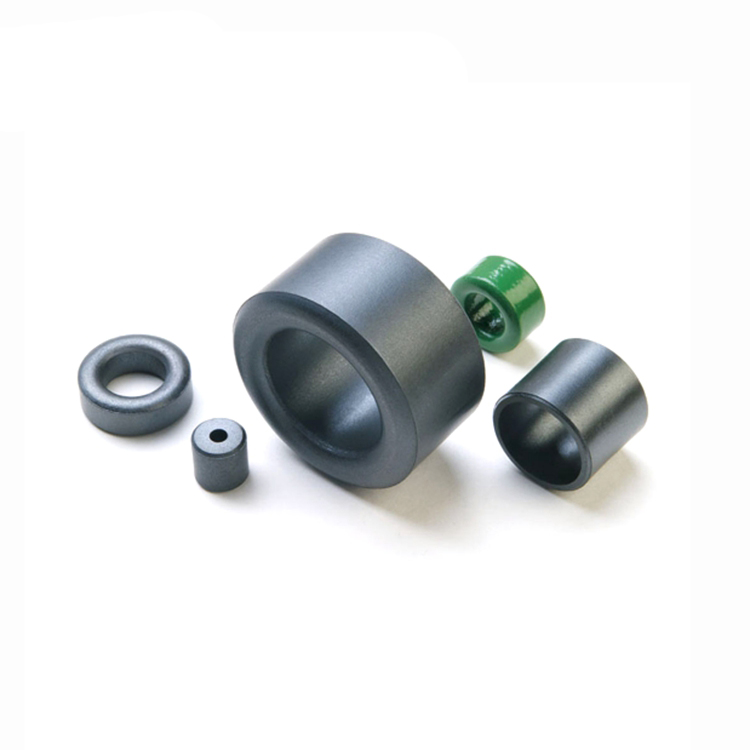
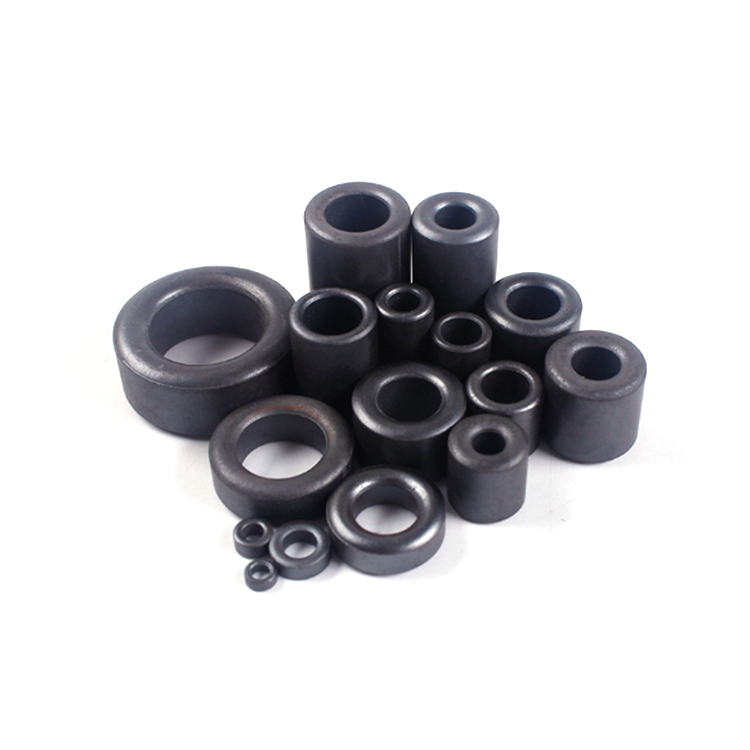
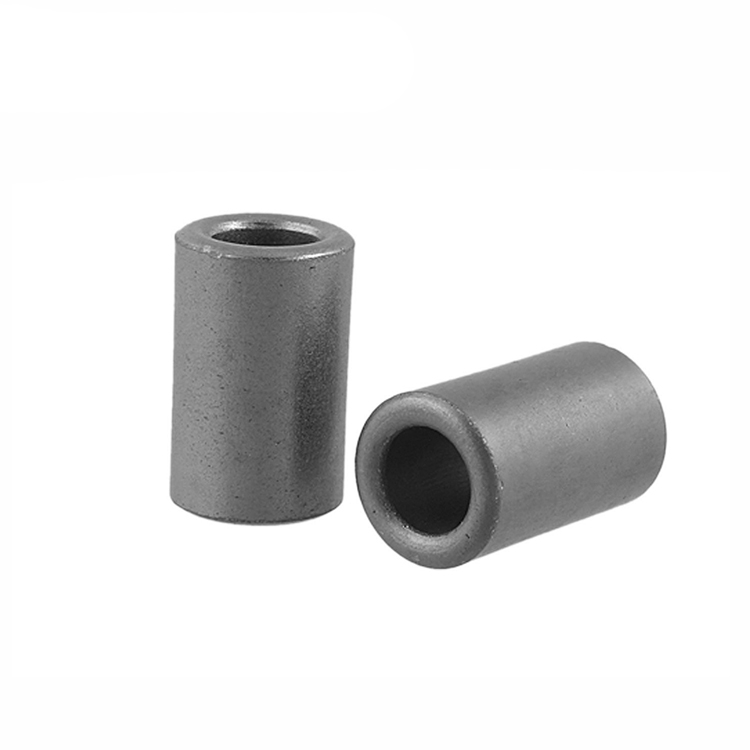
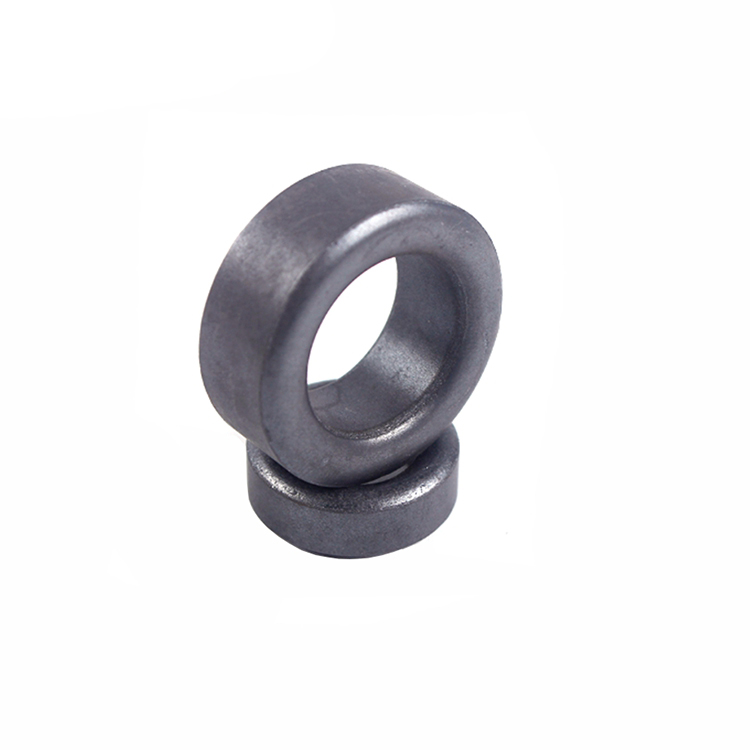
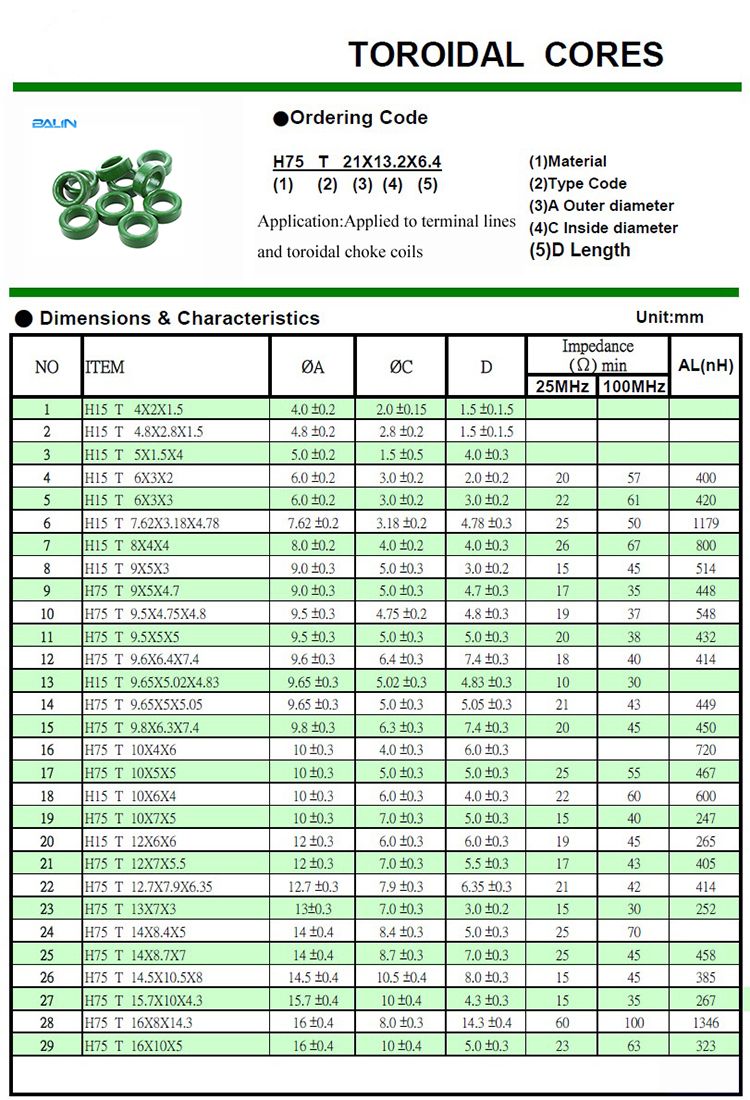
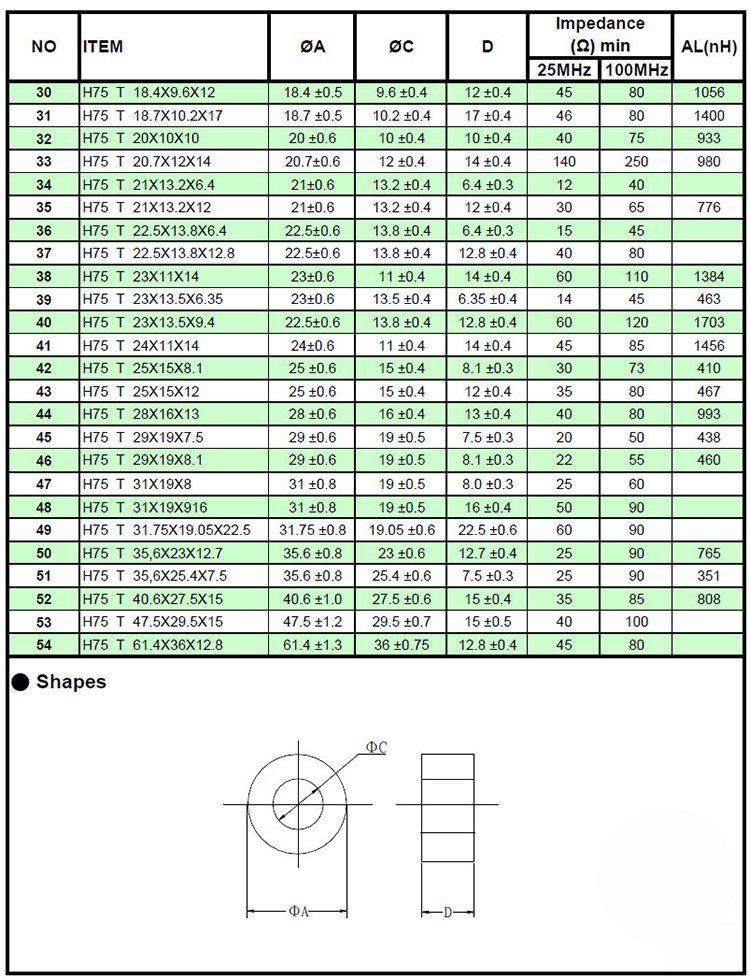
MnZn/NiZn ferrite toroidal core specifications:
1.Ferrite magnet as a material
2.Inductance and current magnitude may be adjusted to meet your specific needs.
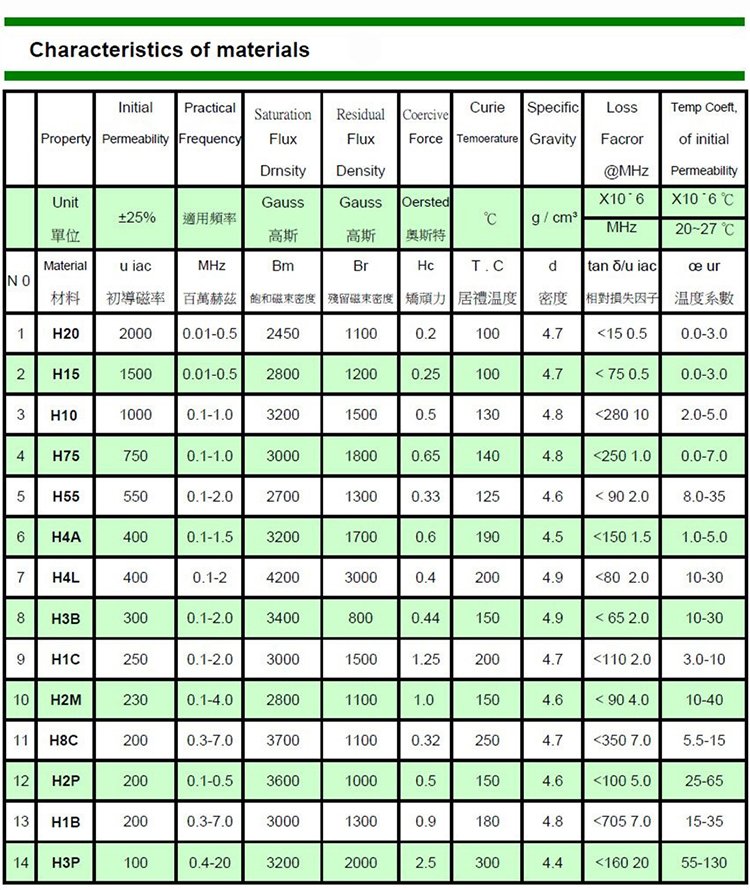
3.The goods are constructed of high grade magnetic material that has a broad band, a wide temperature range, and a strong impendence.
4. Impact resistance and excellent stability
5.Ability to sustain increased impendance even under high-frequency working circumstances
6.Applications: Inductors are used.
MnZn/NiZn ferrite toroidal core properties:
1.First and foremost competitive advantages:
a) Region’s country
b) Acceptance of small orders
b) Skilled technical personnel
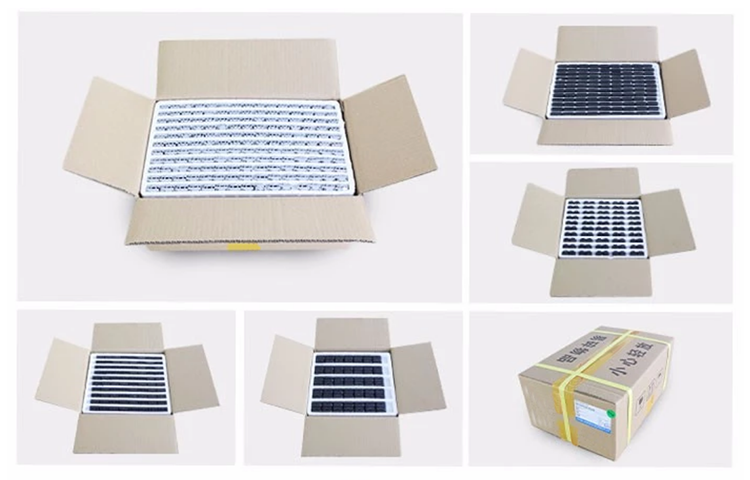
d) Meet ISO9001 and RoHS packaging standards.
2.A strict and accountable quality control department, so that we can assure the quality.
3.The out diameter may reach 153mm.
4.The inner diameter may reach 120mm.
5.High energy efficiency and low resistance.
Abstract
The soft magnetic manganese zinc ferrite core materials for high frequency power transformer and filter inductor uses are the subject of this standard. The saturation flux density and core loss of this soft magnetic manganese zinc ferrite power transformer frequently place size restrictions on it, whereas the inductance index, which is a function of material permeability, places restrictions on the size of the filter inductor core. For tensile strength, coefficient of linear expansion, compressive strength, and density, representative material values are provided.
Release of Nickel-Zinc Ferrites
A reverse micelle method was used to create nickel zinc ferrite nanoparticles (Ni0.20Zn0.44Fe2.36O4) at ambient temperature without calcination. Transmission electron microscopy and x-ray powder diffraction have found the particle size to be around 7 nm. Particle size, cation occupancy, and saturation magnetization values are less than expected in the spinel lattice. A substantial quantity of Zn21, which typically fills tetrahedral sites, may actually reside in octahedral coordination in a zinc-enriched outer layer of the particles, according to an extended x-ray absorption fine structure study. Thus, the “excess” of diamagnetic Zn may be a factor in the general decline in magnetism. The claimed innovation is a transformer core made of NiZn ferrite.
When used in a transformer, the aforementioned transformer core shows minimal total losses. If the preponderance of the grains in the sintered ferrite substance have a monodomain structure, the claimed minimal losses are achieved. If the typical grain size is less than 2.8 microns, then this is the situation. The sintered material’s preferred particle size varies from 1.3 to 2.6 millimeters. Preferably, the deviation number is under 4 nm.
NiZn ferrite material’s benefit
Nickel Zinc ferrites are provided with Low loss, High magnetic field, Thermal shock resistance, Stress resistance, High permeability, Rotary transformers (Manufactured in HFT), additionally, Nizn ferrite material have the advantage of high resistively, high curie temperature, low temperature factor, low relative loss features.
Zinc-Nickel Ferrite
Ferrite ceramics, which are made of iron, boron, and barium or strontium and molybdenum, create one of the strongest kinds of magnetics. Having a higher magnetic permeability than iron, ferrite is a clay magnet that can hold greater magnetic fields.
It can be challenging to prepare specimens from fragile or friable materials, like ferrites. The Ni-Fe ferrite structure of these materials must be preserved through proper microstructural processing. The ferrite is mounted in a castable fixing material, such as epoxy, to achieve this.
To avoid drawing out the ferrite particles, particularly the smaller ones, preliminary grinding with 320 grit or finer SiC paper is necessary. Diamond is used for rough polishing on braided polishing cloths, and polycrystalline alumina is used for finishing polishing on high napped fabric.
Diamond wafer cutting with blades of middle grain and low percentage.
We have received positive feedback from customers because of our high quality, excellent service, affordable pricing, and quick delivery.
MnZn/NiZn ferrite toroidal core environmental data:
1.Temperature range for storage: -40°C to +125°C
2.Temperature range: -40°C to +125°C
MnZn/NiZn ferrite toroidal core applications:
They are mostly used for inductors, namely toroidal inductors.
Be able to develop and manufacture specific orders from customers.