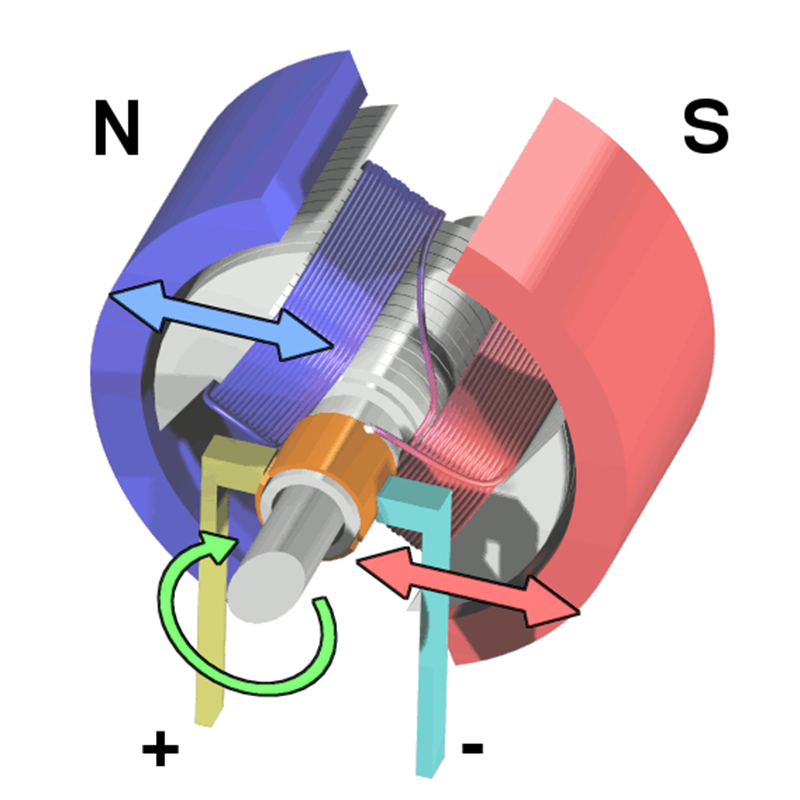
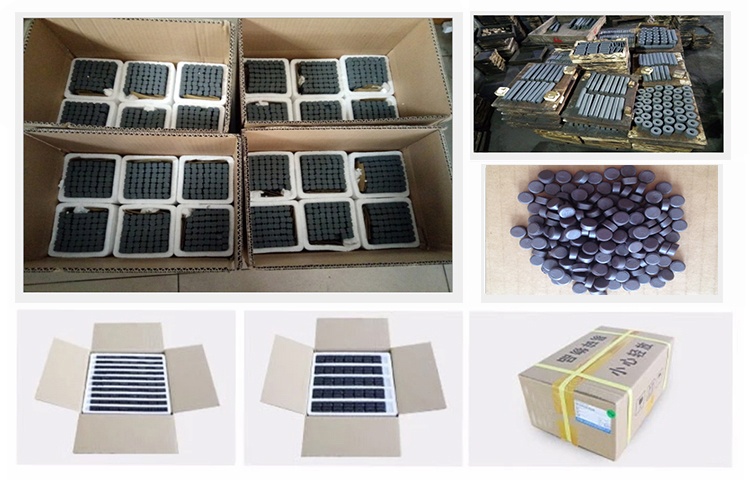
Magnetization Direction
Shape, size, and tolerance: Can build complex and one-of-a-kind patterns as requested by clients.
Industrial applications include motors, speakers, air conditioning, hobbies, everyday living, and livestock.
Features
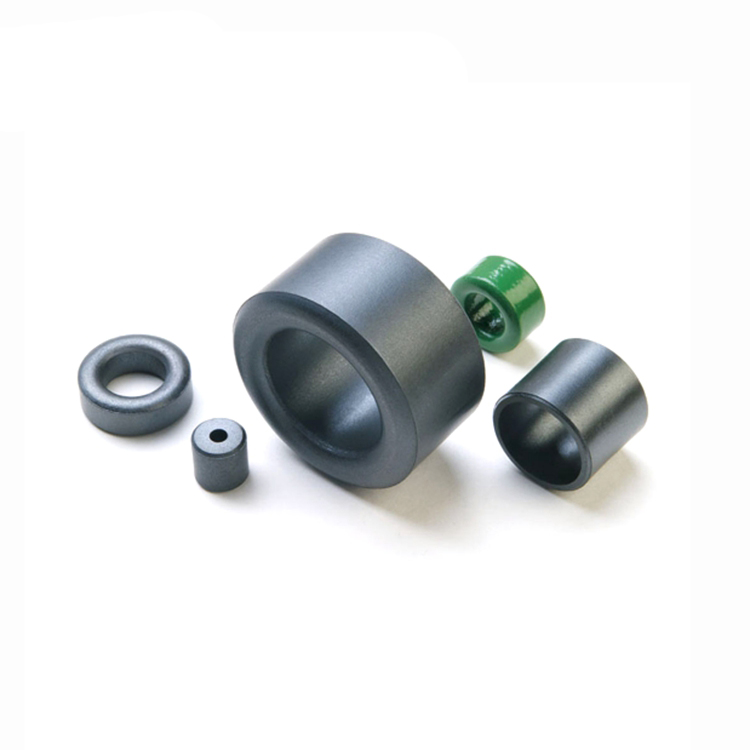
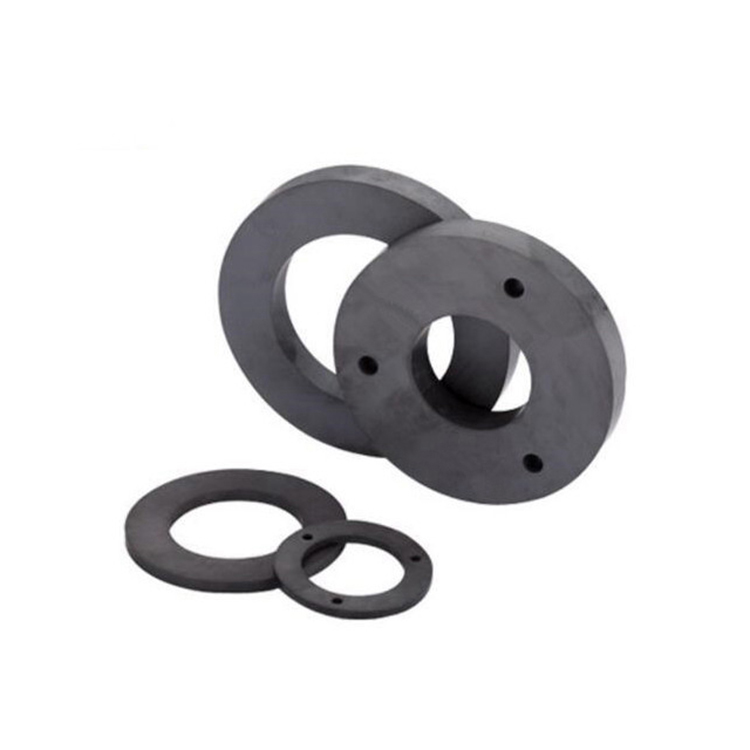
Sintered Ferrite magnets are made using the powder metallurgy technique. They have properties that make them especially suitable for use as the magnetic circuit structure of dynamic working conditions, such as low remanence, low magnetic permeability, higher coercive force, and high resistance to demagnetization. Silicon carbide tools may be used to cut the hard and brittle ferrite material. Isotropic ferrite permanent magnets, although being weakly magnetic, can be attracted in a variety of directions. Anisotropic sintered ferrite magnets have strong magnetic properties, but they can only be magnetized in one direction.
Magnets: Ferrite vs. Neodymium
The key distinctions between NdFeB and Ferrite magnets are as follows:
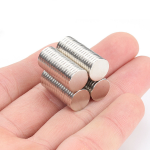
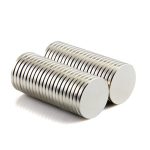
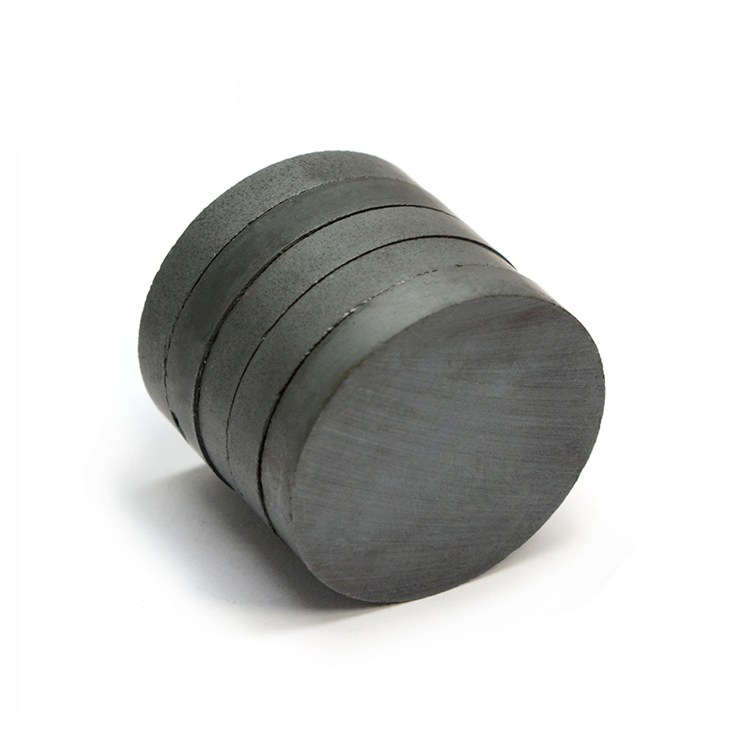
1. Ferrite magnets have a sloppy appearance, no metal sheen, and are often supplied unplated. Ferrite magnets are generally oxides, which are highly solid and resistant to corrosion. They are also often black in color. NdFeB magnets are oxidizable metals that are routinely coated to avoid corrosion. NdFeB has a silvery-white surface with a metallic gloss or various colors.
2. The magnetic energies of NdFeB and ferrite are substantially different. NdFeB magnets have a magnetic energy output of up to 53MGOe, whereas ferrite magnets have a magnetic energy output of 6MGOe.
3. Ferrite magnets are substantially less expensive in terms of cost than Nd-Fe-B magnets. While neodymium iron boron is mostly made up of rare earth and iron, ferrite is mostly made up of ferrous oxide.
4. Unlike neodymium magnets, which are vulnerable to demagnetization at high temperatures, ferrite magnets have excellent temperature resistance and do not lose their magnetic qualities quickly.
5. While multipole magnetization of ferrite magnets is straightforward, multipole magnetization of neodymium magnets is more difficult.
Because of its high permeability, cheap cost, and great temperature endurance, ferrite magnets are well suited for use in low frequency situations. They are commonly used in speech boxes and amplifiers.
Because of its small size, low weight, and strong magnetic strength, neodymium magnets have a wide range of applications. They also have outstanding mechanical characteristics. Because they are inexpensive, they are widely employed in electrical technology and modern industries.
Ferrite cylinder magnets are used in a wide range of applications, including the regulation and control of moving parts in control valves, flow meters, and sensors of various sizes and shapes, as well as monitoring devices that protect against the unintentional or intentional incorrect operation of these critical instruments for measuring physical forces.
For exact measurement and infrastructure safety, these stationary magnets are utilized in valves, gauges, meters, and instruments to monitor temperature, pressure, gases, liquid flows, and grain fluxes. Magnetized sensors can detect stresses in a wide range of structures, including dam walls, grain bunkers, and ship hulls.
Furthermore, ferrite cylinders are widely used in electronic equipment to control the movement of moving parts, particularly reed switches for the opening and closing of electrical circuits in response to the application or removal of a magnetic force field. This use of magnetic force has established itself as a secure and safe method of holding and releasing individual electronic components in a natural, light-touch or no-contact method that significantly increases the longevity and dependability of all electronic devices since the development of electronic systems.
Furthermore, these microscopic ferrite cylinder magnets are used in a variety of diversions and pleasures. These magnets give inconspicuous enjoyment by allowing game pieces to be effortlessly held, released, and re-held. They are placed in chess pieces to allow for the safe enjoyment of chess on a train, plane, or during an earthquake.
Allowing the toy or doll to be split at a predetermined joint or area helps protect the object from more fatal injury when subjected to high forces, such as being banged against a tree trunk. In this example, the article simply collapses at the preset magnetic pull pressures, allowing for a subsequent, simple recoupling.
Ferrite magnets, often known as ceramic magnets, have the strongest magnetic field of any magnet. They are also resistant to corrosion. They may be used to make a number of items, including souvenirs, fridge magnets, and blackboard magnets.
What is a ceramic magnet?
Ferrite magnets, commonly known as ceramic magnets, were developed in the 1960s as a less costly alternative to steel magnets. They are composed of iron oxide and strontium carbonate. Ceramic magnets have gained popularity due to their resistance to corrosion and demagnetization, low cost per pound, and hard, brittle nature, which precludes them from various applications. More than 75% of magnets used worldwide (by weight) are ferrite. It is the best choice for the vast majority of DC motors, magnetic dividers, magnetic resonance imaging, and vehicle sensors.
How are they made?
Ceramic magnets are made using particle technology technologies. The fundamental basic component, ferrite, is made from iron oxide and strontium carbonate. Following their combination, these components are heated to temperatures ranging from 1800 to 2000 degrees Fahrenheit. At this temperature, they undergo a molecular transition, and the end result is ferrite.
After that, the ferrite material is damp milled into extremely small particles. Following that, the ground powder is either dried (for dry pressed material) or pumped into a die in a large hydraulic press (in moist slurry form). The blade is made of nonmagnetic steel with carbide inlays. The die cavities mirror the shape of the component to be pressed.
The wet powder (slurry) is then compressed using a magnetic field. Because of the water, the planar ferrite particle may more readily orient itself in the magnetic field. The bulk of the water is removed during the compression process. The leftover water is evaporated during the early stages of the sintering process. Hardening occurs at around 2000 degrees Fahrenheit. After sintering, the material is totally dense and ready for final grinding to the customer’s specifications. Because of the material’s exceptional hardness and brittleness, all polishing for ceramic magnets is done with diamond wheels.
Ceramic (ferrite) magnet material was developed in the 1950s as a less expensive option for other types of magnet materials, and it was further improved in the 1960s. The main fundamental components used to manufacture clay magnets are iron oxide, usually known as rust, and strontium carbonate. When these components are mixed at high temperatures between 1800 and 2000 degrees F, a chemical reaction occurs, forming the ferrite material. Because of their low cost, ceramic magnets are the most often utilized permanent magnets today.
A pliable ferrite binder is used to generate a one-of-a-kind ferrite magnet. These compounds are commonly referred to as “ceramic
Integrated Magnetics designs and manufactures custom technical ceramic magnets and magnetic components to your exact requirements. Send us a quote request or contact us right now to learn more about our regular or custom clay magnets. MagnetShop.com also has a large collection of Porcelain magnets for sale online.
The Primary Benefits of Alumina Magnets
Strong but inexpensive; a perfect blend of power and price.
does not demagnetize easily.
Magnetized using a large number of magnets if necessary.
It will never rust.
Difficulties with Porcelain Magnets Brittle and stiff material.
The decline of temperature-related properties is continual. At 350°F (177°C), around 75% of the magnetization at ambient temperature remains, and 50% remains at 550°F (288°C).
A Few Words about Ceramic Magnets The density of the substance is 0.180 pounds per cubic inch.
The saturation magnetizing field required is roughly 10kOe.
Extrusion, calendering, injection molding, and sintering (the most common) (the last three procedures when the material is mixed with a carrier). Magnets formed of entirely compact solid ferrite can be dry-pressed or wet-pressed (wet pressing produces stronger magnets).
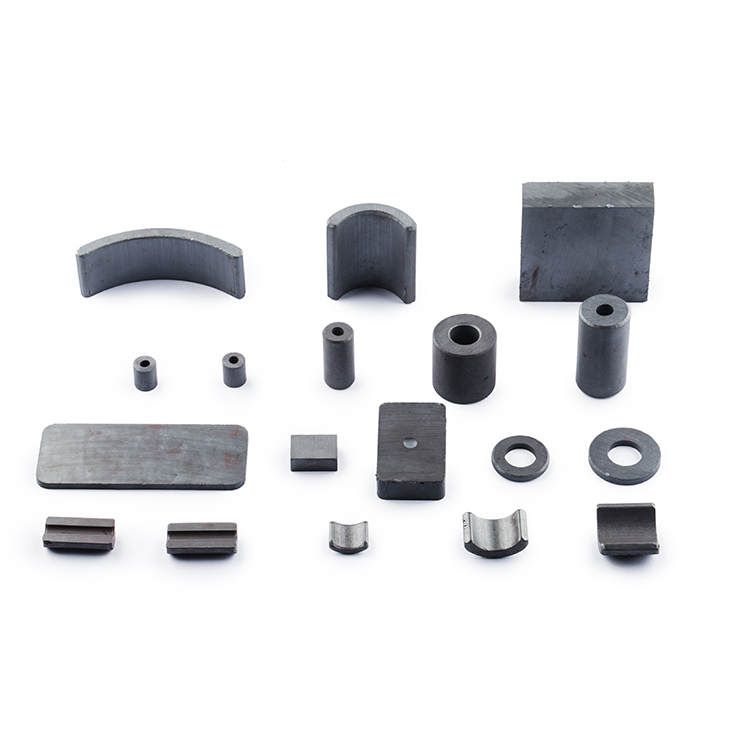
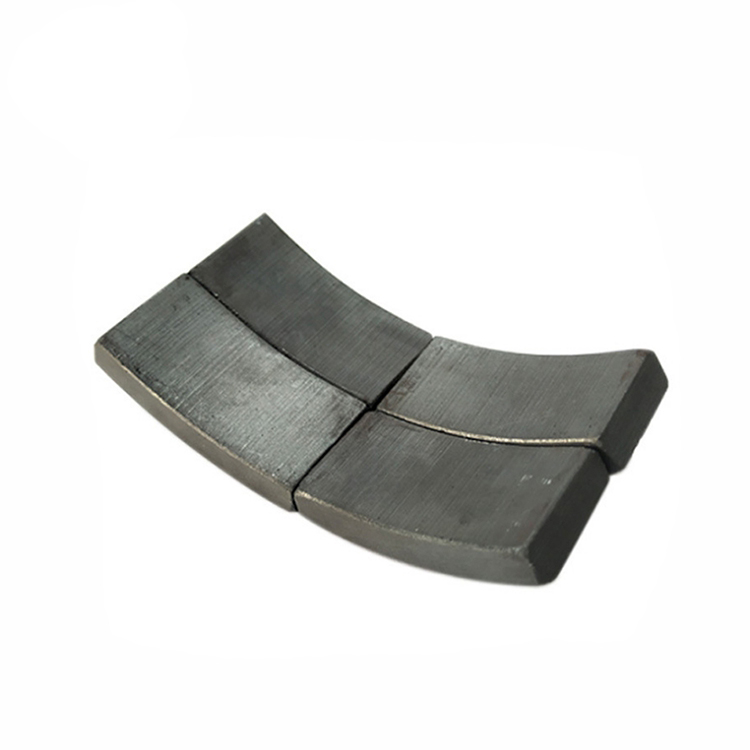
There are blocks, bars, cylinders, circles, arc pieces, and more forms to choose from.
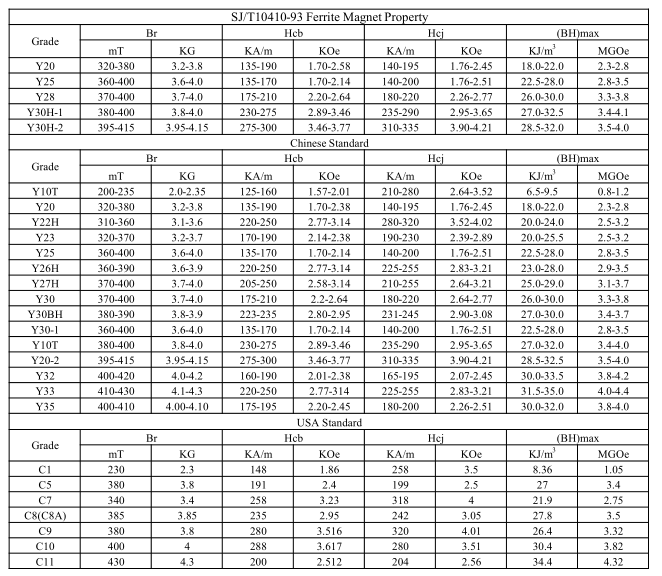
Grades range from 0103 to 0404. (The first two values represent BHmax; the second two represent Hci, or intrinsic coercivity.)
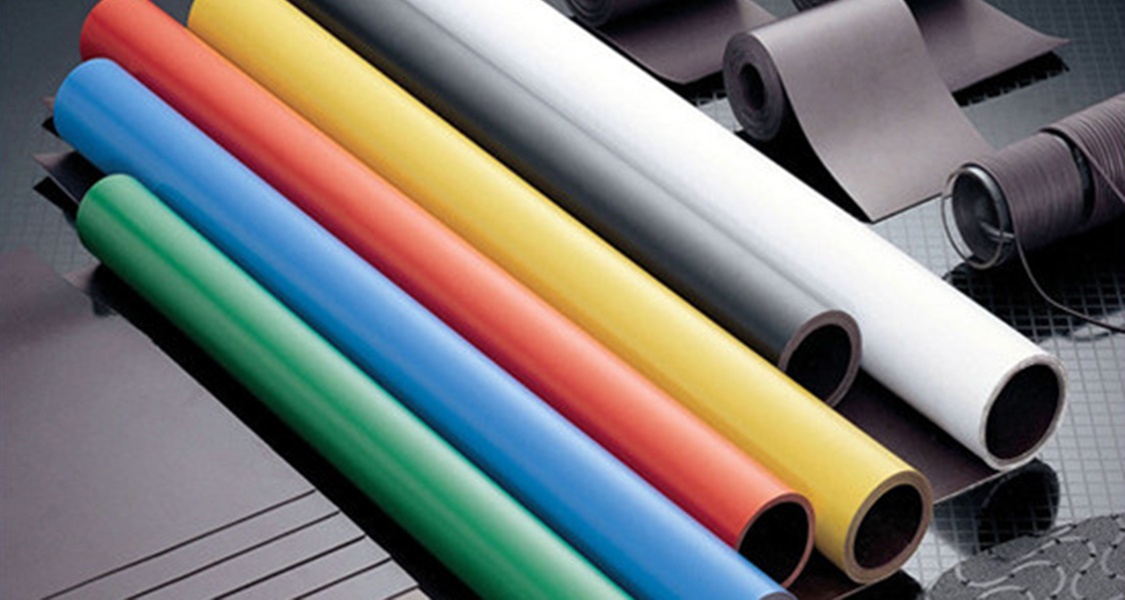
Sizes: Cemented ferrite magnet blocks up to 10″ x 4″ x 1 can be made. Extruded ferrite, often known as flexible magnets, is available in an endless number of lengths. The energy output of flexible magnets, however, is much lower when compared to entirely dense, sintered ferrite magnets.
Surface Solutions for Ceramic Magnet Materials
Because ceramic magnets are inert and do not oxidize, they do not require surface coatings. They can be coated with various types of epoxy coatings for sanitary concerns.
Caution!
When handling these magnets, exercise extra caution since ferrite materials are highly hard and delicate, and will break if dropped.