Ímanes de ferrite vs. Ímanes de neodímio
Seguem-se as principais diferenças entre os ímanes NdFeB e os ímanes de ferrite:
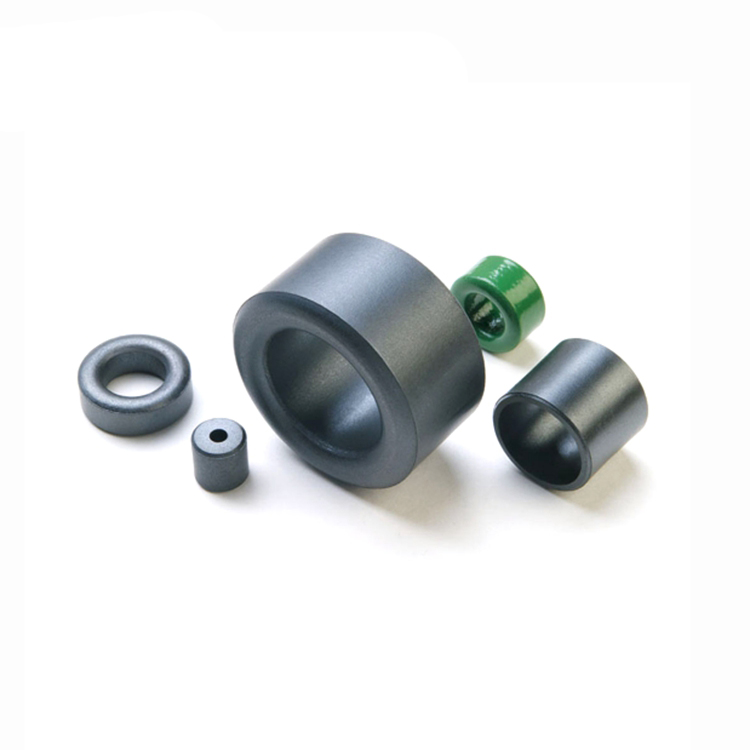
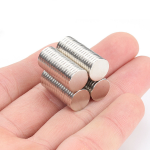
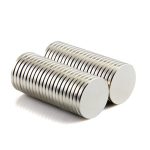
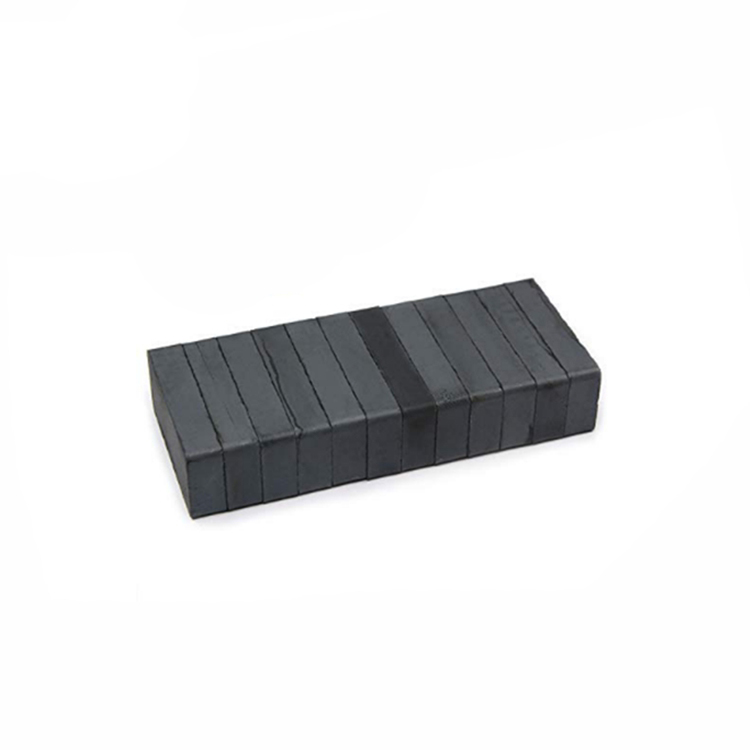
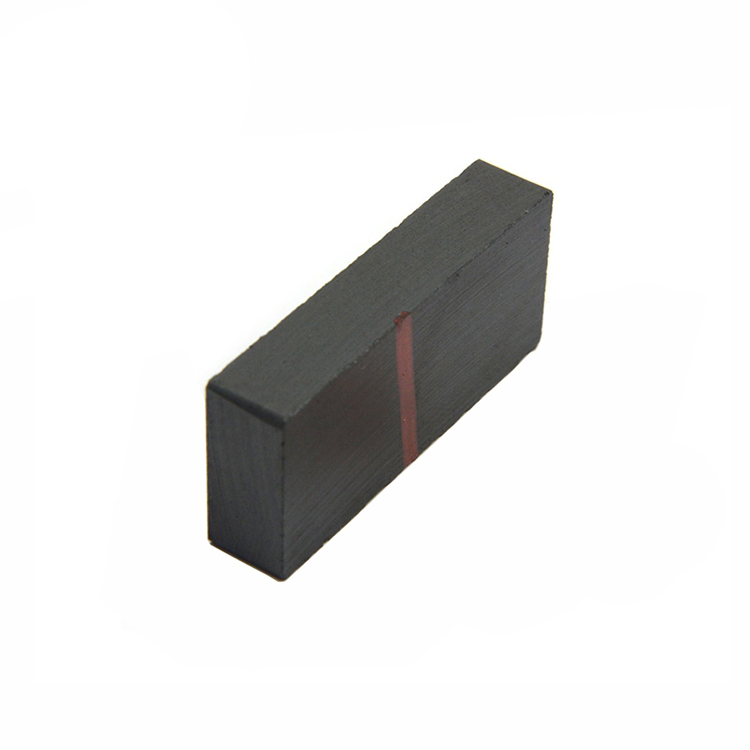
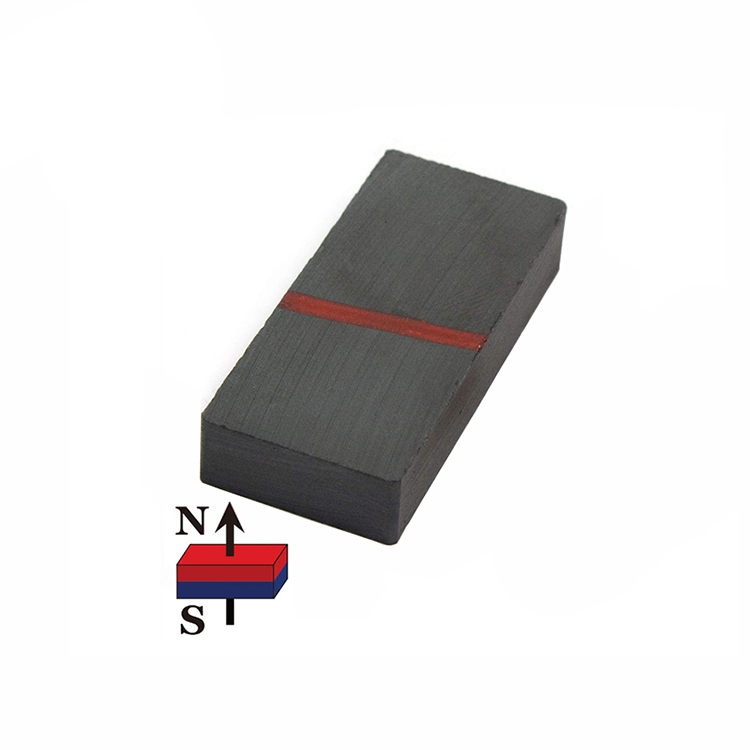
1. Ferrite magnets have a loose look, no metal sheen, and are typically delivered unplated. Ferrite magnets are typically oxides, highly stable, and difficult to rust. They are also often black in appearance. NdFeB magnets are alloys that are easily oxidized and are frequently coated to prevent rusting. NdFeB has a silvery-white surface that may also have metallic luster or other hues.
2. NdFeB and ferrite have quite different magnetic energies. NdFeB magnets have a magnetic energy output of up to 53MGOe, compared to 6MGOe for ferrite magnets.
3. Ferrite magnets are significantly less expensive than Nd-Fe-B magnets in terms of cost. While neodymium iron boron mostly consists of rare earth and iron, ferrite primarily consists of ferric oxide.
4. In contrast to neodymium magnets, which are susceptible to demagnetization in high temperatures, ferrite magnets have good temperature resistance and do not quickly lose their magnetic properties.
5. A magnetização multipolar de ímanes de ferrite é simples; no entanto, a magnetização multipolar de ímanes de neodímio é mais difícil.
Remark: Ferrite magnets are appropriate for operating in low frequency environments due to their high permeability, low cost, and high temperature resistance. They are frequently employed in speech boxes and loudspeakers.
Neodymium magnets offer a wide range of uses due to their tiny size, low weight, and great magnetic strength. They also have exceptional mechanical properties. They are frequently utilized in electrical technology and modern industries because they are economical.
Barium and Strontium Magnetic Ferrite Powder and even a hard ferrite magnet are other names for the permanent ferrite magnet. Although they all relate to the exact same material kind, the names are interchangeable. Because they are electrically insulating, they are referred to as ceramic magnets. Strontium and barium ferrite magnets are the two types of permanent ferrite magnets that are available. The most popular type of magnet is strontium ferrite.
Barium-Strontium Ferrite Magnet are a deeper shade of grey and are sometimes described as looking like “pencil lead.”
Hard ferrite materials are the formal name for permanent magnets made of ferrite and ceramic (when exposed to a brief external magnetic field, the material retains magnetism due to having high coercivity, Hc). They differ from soft ferrite materials used in transformer cores in several ways (which do not retain magnetism after exposure to a brief magnetic field because soft ferrite materials have low coercivity). Ferrite magnets, like all other permanent magnets, are categorized as hard materials due to their strong coercive force.
Due of their qualities, ferrite magnets are quite well-liked. Ferrite magnets are corrosion-free, making them excellent for long-term performance. If maintained properly, they may outlast the lifecycles of the majority of goods. Up to +250 degrees C (and in certain situations up to +300 degrees C), ferrite magnets can be employed. Ferrite magnets are relatively inexpensive, especially when produced in large quantities. We have 27 different ferrite permanent magnet grades.
This page provides an overview of the creation of ferrite permanent magnets as well as their properties. You should be able to assess your needs for Ferrite magnets from this (or we can help you if you need more assistance). And after that, we can provide you a quote for your magnet specifications.
All sectors, including automotive, aerospace, military, advertising, design studios, electronics, and academic/R&D, are served by our global supply of ferrite and ceramic magnets. Please get in touch with us if you need custom Ferrite/Ceramic magnets or magnetic assemblies, Technical Support, or our Ferrite/Ceramic Magnet Technical Data Sheet. Please get in touch with us if you want a quote for a pre-existing magnet shape or a custom form. Given that our production site is in China, our pricing is quite aggressive.
Ceramic magnet made of ferrite
Os ímanes de ferrite, normalmente designados por ímanes de cerâmica, são resistentes à corrosão e podem ser utilizados na água sem sofrerem qualquer corrosão. A sua elevada coercividade e o custo relativamente baixo tornam-nos excelentes para utilização em motores e motores de alta temperatura, apesar de não serem tão fortes como os ímanes de neodímio de terras raras (NdFeB).
Os ímanes de ferrite funcionam bem em aplicações pouco dispendiosas.
Além disso, os ímanes de ferrite são eletricamente isolantes e impedem a circulação de correntes parasitas no seu interior.
Os ímanes de ferrite funcionam bem a temperaturas mais elevadas, mas são menos adequados para utilização em ambientes extremamente frios.
Ceramic, Feroba, and Hard Ferrite Magnets are other names for Ferrite Magnets. They are among the materials for permanent magnets that are most often used globally.
Os ímanes de ferrite são um material magnético barato que é ideal para grandes séries de fabrico. Devido às suas capacidades superiores de isolamento elétrico, são conhecidos como cerâmica.
Caraterísticas e particularidades dos ímanes de ferrite
Os ímanes de ferrite são excelentes em condições húmidas, marítimas ou de humidade, uma vez que não se corroem. O ferro não pode oxidar (enferrujar) mais na água, uma vez que já se encontra num estado oxidado estável dentro da sua estrutura. Os dois tipos de ímanes de ferrite cerâmicos são os ímanes de estrôncio (SrO.6Fe2O3) e os ímanes de bário (BaO.6Fe2O3). Devido às suas qualidades magnéticas superiores, os ímanes de ferrite de estrôncio são os mais frequentemente produzidos.
Os ímanes cerâmicos conhecidos como ferrite têm uma cor caraterística de "mina de lápis" (ou seja, uma cor cinzenta escura).
Em termos de propriedades magnéticas, são ferrimagnéticos (bom campo magnético e potência mas, tamanho por tamanho, não tão potentes como o NdFeB ou o SmCo). São utilizados em praticamente todas as indústrias, incluindo a automóvel, de sensores, de máquinas, aeroespacial, militar, publicitária, eléctrica/eletrónica, académica, de design e de I&D. São particularmente comuns em projectos de motores, geradores, altifalantes e marítimos. Os ímanes de ferrite podem funcionar a temperaturas tão elevadas como +250 °C (e, em algumas circunstâncias, até +300 °C). Atualmente, estão disponíveis 27 graus diferentes de ímanes de ferrite.
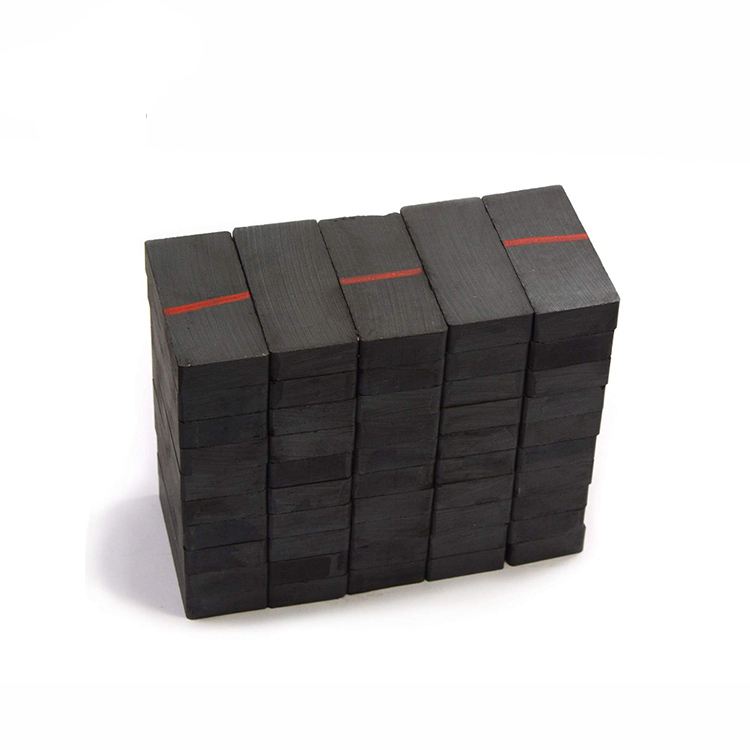
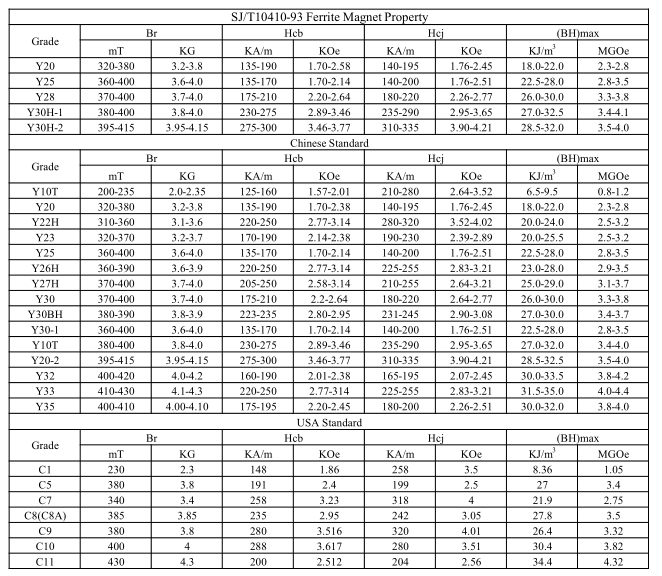
Atualmente, estão disponíveis 27 graus diferentes de ímanes de ferrite. Atualmente, C5 (também conhecido como Feroba2, Fer2, Y30 e HF26/18) e C8 são os dois tipos mais comuns (também conhecido como Feroba3, Fer3 e Y30H-1). Para aplicações como ímanes de banda larga, o C 5 / Y30 é uma escolha comum de íman de ferrite. Para aplicações como motores e, ocasionalmente, altifalantes, o C8 / Y30H-1 é uma opção preferível (o C8 tem um Br semelhante ao C5, mas tem um Hc e um Hci mais elevados). Os ímanes de ferrite podem ser fabricados numa variedade de formas e dimensões. O material de ferrite, isolante do ponto de vista elétrico, não permite a erosão por faísca do fio, pelo que a maquinagem à medida só é possível através de processos de trituração. Consequentemente, os blocos, os discos, os anéis, os arcos e as barras são as principais formas.