


A bonded NdFeB magnet is what?
Typically, injection molding is used to create bonded neodymium iron boron magnets. Magnetic powder and a binder are combined during the injection molding process to create granules, which are then used to create injection molded magnets, which are permanent magnets. In comparison to alternative permanent magnet production processes, injection molding provides distinct and incomparable benefits. The product has improved size and performance consistency thanks to the injection molding method. Since the material comprises a thermoplastic binder, it completely fills the mold cavity with the greatest concentration during the molding process. This gives the magnet good mechanical and physical properties.
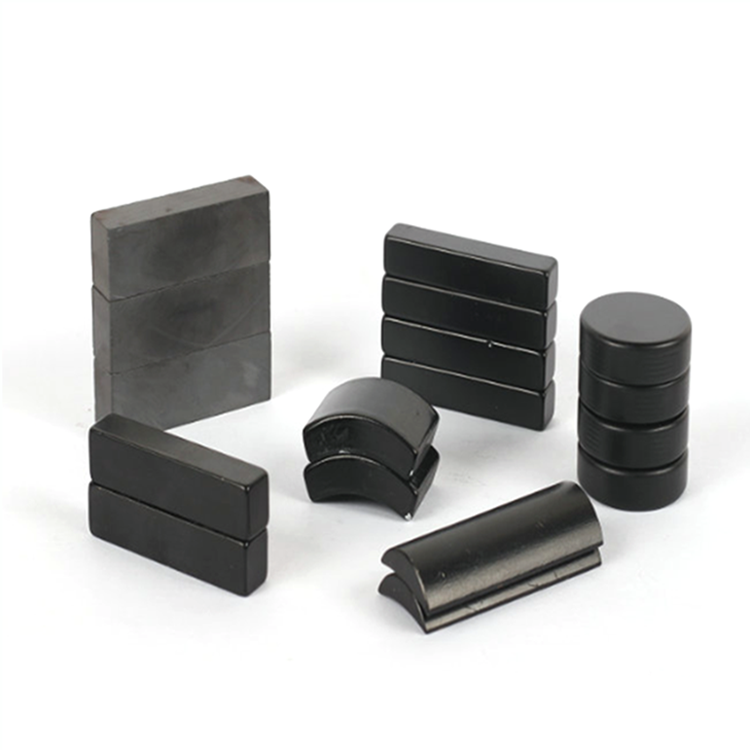
A sintered NdFeB magnet is what?
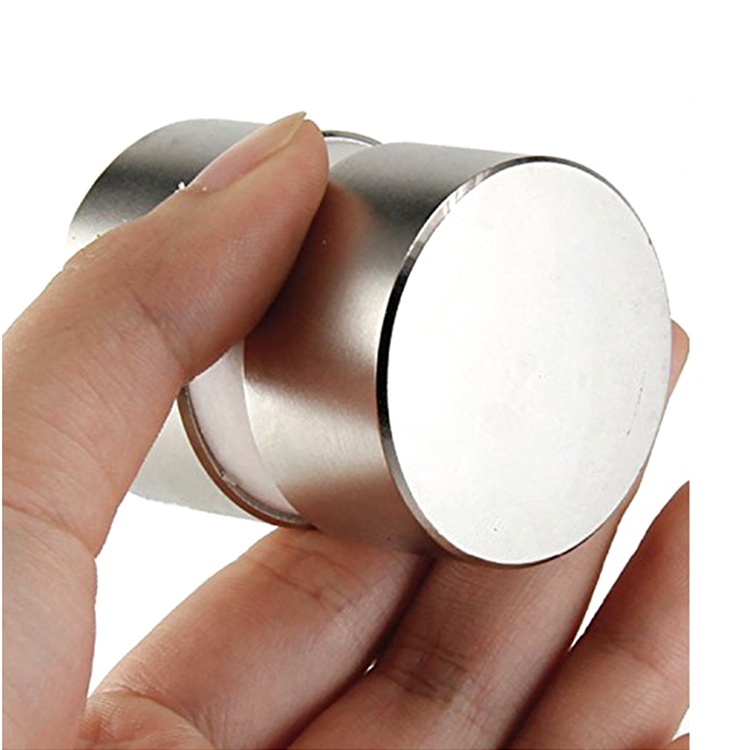
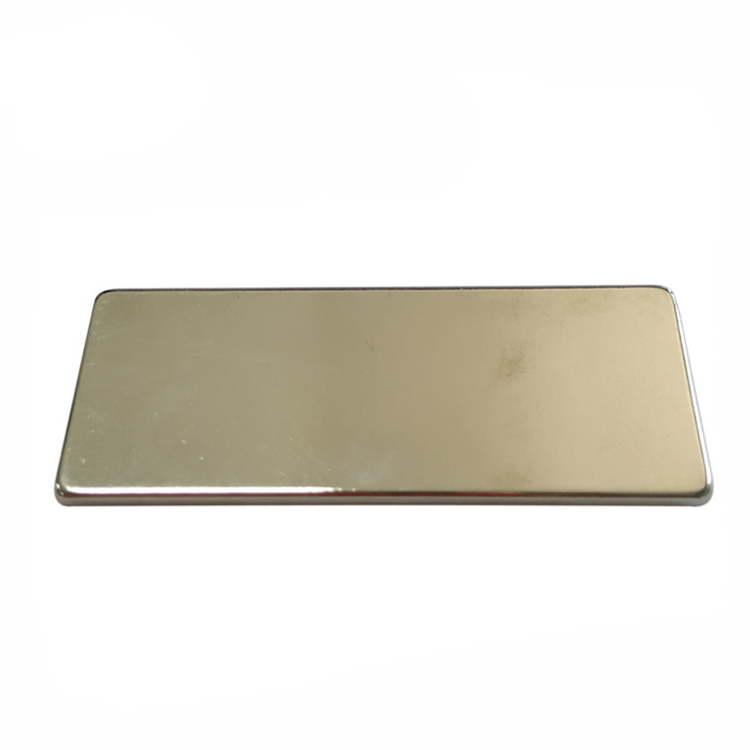
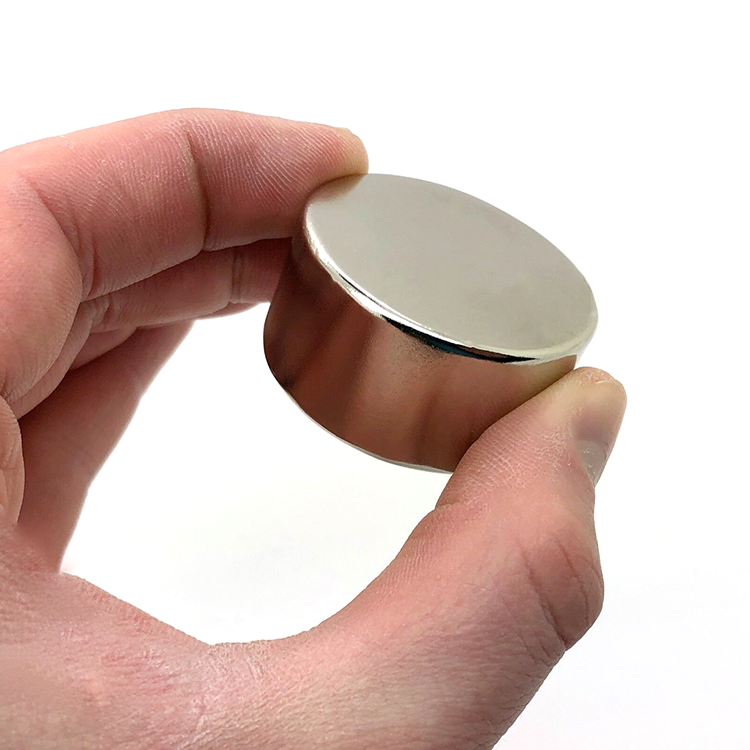
An anisotropic magnet created by powder sintering is the sintered NdFeB magnet. Typically, just a blank can be created after sintering, and subsequently magnets of various shapes can be created by mechanical processing (such as wire cutting, slicing, grinding, etc.).
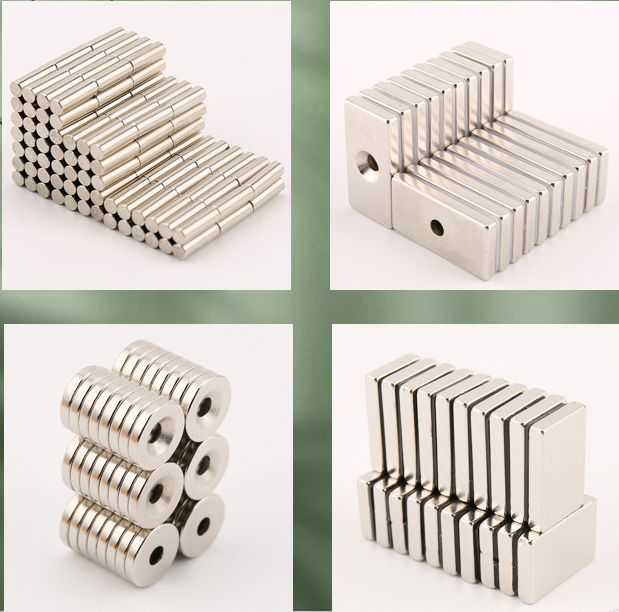
Confronto tra magneti NdFeB sinterizzati e magneti NdFeB incollati
The bonded NdFeB magnets are made by injection molding, thus they contain adhesives, and the density is often only 80% of the theoretical value. Sintered magnets are more magnetic. Through a convoluted procedure, the sintered neodymium magnet is heated to a high temperature. As a result, the bonded NdFeB magnet exhibits roughly 30% less attenuation than the sintered NdFeB magnet. For instance, our sintered magnet’s coercivity has increased to 33AH. As a result, sintered NdFeB has a larger variety of applications than bonded NdFeB.
Confronto tra magneti NdFeB sinterizzati e magneti NdFeB incollati
The bonded NdFeB magnets are made by injection molding, thus they contain adhesives, and the density is often only 80% of the theoretical value. Sintered magnets are more magnetic. Through a convoluted procedure, the sintered neodymium magnet is heated to a high temperature. As a result, the bonded NdFeB magnet exhibits roughly 30% less attenuation than the sintered NdFeB magnet. For instance, our sintered magnet’s coercivity has increased to 33AH. As a result, sintered NdFeB has a larger variety of applications than bonded NdFeB.
The thickness and form of the product affect how much it shrinks. The usual tolerance for dimensions is 0.05mm. As a result, sintered magnets have a larger range of applications than bonded magnets.
Better corrosion resistance may be found in bonded neodymium iron boron magnets because injection molded magnets have a high proportion of polymer binder, which gives the magnets themselves good corrosion resistance without the need for surface coatings. Sintered neodymium magnets are a challenging to work with, hard, and brittle material. It has a high rate of processing loss, is expensive, has subpar dimensional accuracy, and has subpar corrosion resistance. The surface has to be electroplated.
Higher dimensional precision is achieved using bonded magnet injection molding: Since the injection molded product’s size matches that of the injection mold chamber, dimensional precision can be regulated rather precisely. The magnet’s form can be complicated, and the magnet’s magnetization direction can be chosen at random.
Bonded magnets are less expensive since they use less materials and go through simpler procedures. However, the magnetic performance is poor; the isotropic bonded magnet’s greatest performance is just one-fifth that of the sintered NdFeB magnet.
Applicazione
The final size of bonded NdFeB magnets may be produced without mechanical processing, which can reduce the need for raw materials. The product is appropriate for mass manufacturing and has great dimensional precision. But there isn’t much magnetism. Some thin, tiny, and irregular items can be bonded. Bonded magnets are often used in a variety of goods, including automotive and other industrial sensors, multi-pole magnetic rotors for brushless DC and stepping motors, magnetic transmission devices, and magnetic stators for low-power DC motors. The selection of a binder depends on a variety of elements, including the temperature properties, strength, water absorption, solvent resistance, complexity of the magnet form, and compatibility with magnetic powder, for every given application.
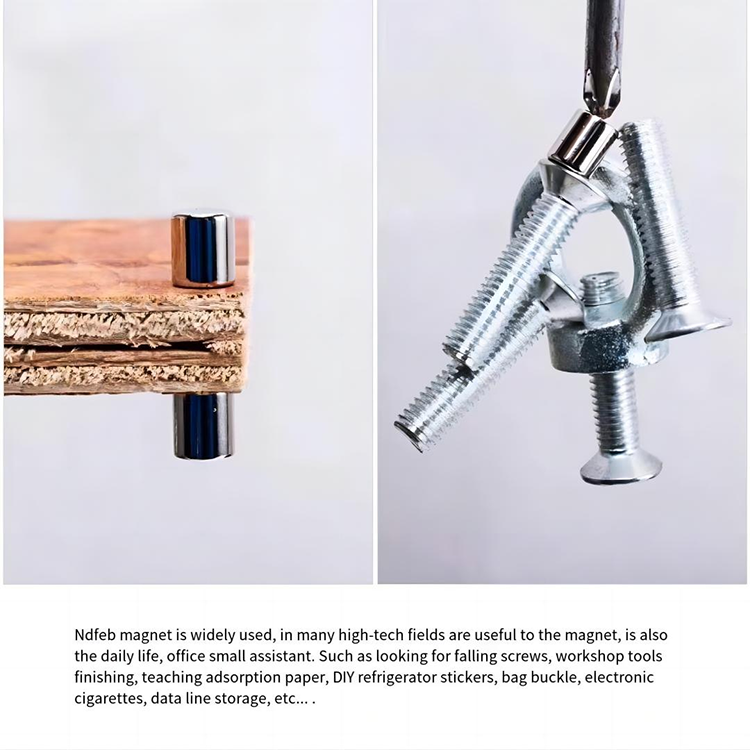
Sintered magnets are utilized more frequently,Sintered magnets are frequently used in a variety of products, including electronics, electrical appliances, packaging, motors, toys, leather goods, vehicle gear, loudspeakers, magnetic hooks, magnetic holders, filters for cars, etc.
Neodimio, ferro e boro sono simboli chimici che devono essere seguiti attentamente nella produzione di magneti al neodimio, comunemente noti come NdFeB.
Qui approfondiamo le numerose fasi di produzione dei magneti al neodimio ferro boro (NdFeB).
1. Preparazione delle materie prime: Neodimio, ferro e boro, le tre materie prime necessarie per la produzione di magneti NdFeB, vengono ottenute e preparate per essere utilizzate nel processo di produzione. Per migliorare le caratteristiche magnetiche del prodotto finale, possono essere aggiunti altri elementi, tra cui disprosio, praseodimio e terbio.
2. Miscelazione della polvere: Per creare una combinazione uniforme di polveri, i componenti di base vengono mescolati in un rapporto preciso. Per assicurarsi che le particelle di polvere siano di dimensioni omogenee e che la miscela sia omogenea, la miscela viene spesso macinata o frantumata.
3. Pressatura: Per creare un magnete "verde", la combinazione di polveri viene poi compressa sotto un'intensa pressione. Per produrre un magnete con la densità e la forza richieste, la pressione e la temperatura utilizzate in questo processo sono attentamente regolate.
4. Sintering: To fuse the powder particles together and create a solid magnet, the green magnet is heated in a furnace to a high temperature, usually between 1000 and 1200 °C. The final magnetic characteristics of the material are established during the crucial production stage of sintering.
5. Lavorazione: Utilizzando strumenti da taglio come lame diamantate o mole, il magnete sinterizzato viene spesso lavorato per ottenere la forma e le dimensioni finali. In questo modo si ha la certezza che il magnete abbia le dimensioni e le tolleranze necessarie.
6. Trattamento della superficie: I magneti NdFeB sono spesso rivestiti con un rivestimento protettivo, come il nichel o l'epossidico, per impedire l'ossidazione e il deterioramento a causa dell'elevato contenuto di ferro, che li rende suscettibili alla corrosione.
7. Magnetizzazione: Il magnete viene sottoposto a un campo magnetico elevato come ultima fase del processo di produzione per allineare i suoi domini magnetici e conferirgli una particolare polarità e forza magnetica.
Overall, the NdFeB magnet production process is intricate and demands careful control of several factors to produce the necessary
The greatest life magnets are a magnetic tool pendant, a magnetic clutch for a purse, a magnetic strip for a refrigerator door, a compass, a magnetic stationery box, a magnetic chalkboard, a magnetic badge, etc.
1. Magnetic Tool Pendant: Key chains and other iron objects can be hung from magnetic tool pendants.
Pendant 1 for a magnetic tool Pendant 2 for a magnetic tool
2. Magnetic Handbag Buckle: A magnetic buckle will be installed on the handbag’s opening to hold the switch.
Magnetic Buckle for Handbag 1 Magnetic bag buckle 2 Magnetic bag buckle 3
3. The fridge’s door Magnetic strip: A refrigerator door mounted on the magnetic strip may have a tight connection to the refrigerator body.
Magnetic strip on the refrigerator door
4. Compass: the magnet’s center, which is hung by a thin wire.
The pole pointing north is known as the North Pole or N Pole, and the pole pointing south is known as the guide pole or S Pole while the object is at rest.
Compass Numbers 1 and 2
5. Magnetic Stationery Box: A stationery box is a container that students use to store writing instruments including pens, pencils, rulers, and erasers. There are numerous diverse textures, most commonly seen in wood, iron, plastic, and other goods in various forms, primarily rectangular.
Magnetic Pencil Box
6. Magnetic Blackboard: Usually composed of wood, frosted glass, or another material, magnetic blackboards are lined with magnetic strips or have magnetic particles attached to the surface.
One magnetic board, two magnetic boards
7. Magnetic Badge: When using, please take out the strongest neodymium magnet that was positioned on the inside of the clothing and replace it with the card surface, which should be positioned on the outside of the clothing to allow for natural absorption.
Prodotti correlati