


what is a ndfeb magnet
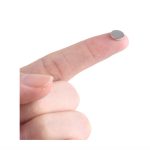
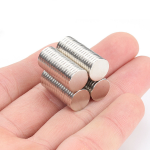
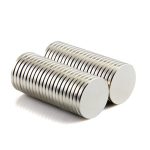
An NdFeB magnet, also known as a neodymium magnet, is a type of permanent magnet made from an alloy of neodymium, iron, and boron (Nd2Fe14B). It is the most widely used type of rare-earth magnet, known for its incredibly strong magnetic field.
These magnets are prized for their high strength, resistance to demagnetization, and relatively low cost compared to other types of rare-earth magnets. They are commonly used in various applications such as electric motors, generators, magnetic resonance imaging (MRI) machines, magnetic separators, and many consumer electronics like headphones, speakers, and hard drives.
With the continuous development of science and technology, electric motor technology is also constantly innovating. Especially now that the industrial field continues to put forward higher expectations and requirements for the servo characteristics of motors, coreless motors have emerged as the times require.
Coreless motors are DC permanent magnet servo and control motors, and can also be classified as micro motors. What is a NdFeb Magnet, Coreless motors have outstanding energy-saving characteristics, sensitive and convenient control characteristics and stable operating characteristics, and their technological advancement is very obvious. As a high-efficiency energy conversion device, it represents the development direction of electric motors in many fields.

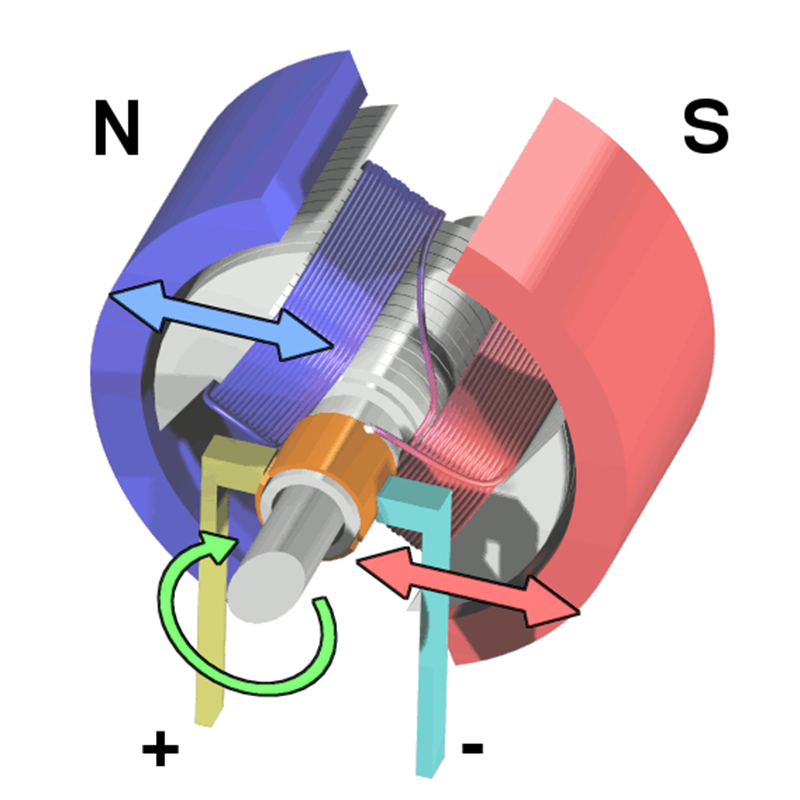
Structure and principle of coreless motor
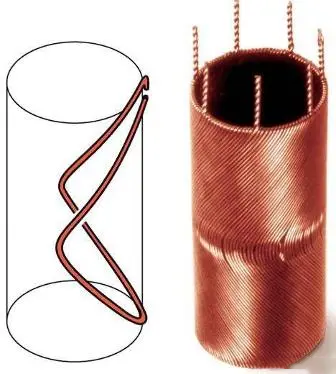
The following figure is a simplified structural diagram of a general coreless motor. Coreless motors are DC permanent magnet motors. The main difference from ordinary brushed and brushless DC motors is the use of iron-core rotors, also called coreless cup rotors.

The rotor is directly made of wire windings. There is no other structure to support these windings. The winding itself is made into a cup shape, which forms the structure of the rotor (as shown below). Due to the structural change of the rotor, the operating characteristics of the motor have been greatly improved. It not only has outstanding energy-saving characteristics, but more importantly, it has control and drag characteristics that cannot be achieved by iron-core motors.

Coreless motors are divided into two types: brushed and brushless. Brushed coreless motors have no iron core in the rotor, and brushless coreless motors have no iron core in the stator. Common coreless cup motor models in the market include diameters of Φ4, Φ6, Φ7, Φ8, Φ10, Φ12, Φ15, etc.
Advantages and applications of coreless motors
Coreless motors have a series of advantages such as high power density, high efficiency, no torque lag, no cogging effect, low starting torque, no radial force between the rotor and the stator, smooth speed curve, low noise, and good heat dissipation effect.
The application of What is a NdFeb Magnet coreless motors has developed rapidly in the past ten years after entering the large industrial and civil fields from the military and high-tech fields. Especially in industrially developed countries, it has been involved in most industries and many products.
A follow-up system that requires fast response. For example, the rapid adjustment of the flight direction of missiles, the follow-up control of high-magnification optical drives, fast automatic focusing, highly sensitive recording and detection equipment, industrial robots, bionic prosthetics, etc.,
hollow cup motors can well meet their technical requirements.
Products that require smooth and long-lasting driving of the driving components. For example, for various types of portable instruments, personal equipment, equipment for field operations, electric vehicles, etc., What is a NdFeb Magnet the power supply time can be more than doubled with the same set of power supplies.
Various aircraft, including aviation, aerospace, model aircraft, etc. Taking advantage of the coreless motor’s advantages of light weight, small size and low energy consumption, the weight of the aircraft can be reduced to the greatest extent.
A variety of household appliances and industrial products. Using coreless motors as actuators can improve product quality and provide superior performance.
Because coreless motors are small in size, many products with relatively small volume requirements use coreless cups as power components.
For example; toys and gifts (toy cars, model airplanes, etc.), beauty and massage products (face brushes, introduction devices, facial massagers, etc.), and daily necessities (electric toothbrushes, shampoo brushes, hair straighteners, etc.).
Coreless motor magnets
Sintered NdFeB permanent magnets are generally used in coreless motors. They have the characteristics of high remanence, high coercivity, and high magnetic energy product. They are the permanent magnet materials that best meet the requirements of coreless motors on the market What is a NdFeb Magnet.
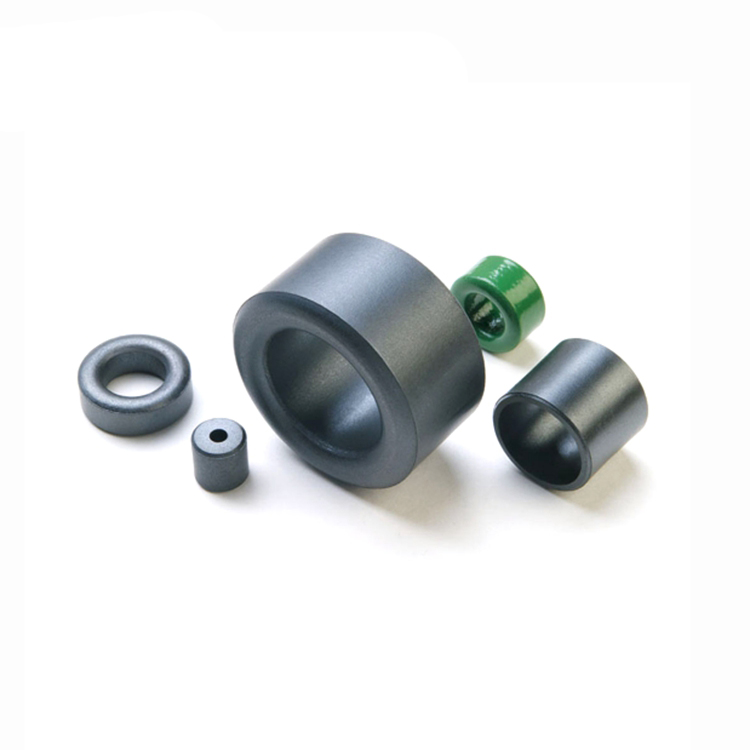
Under the same size of motor and winding data, the performance of the magnet directly affects the speed of the motor. Common NdFeB magnets suitable for coreless motors are ring-shaped, with properties such as N40, N45, etc., and a temperature resistance of around 100°C.

In coreless motors, permanent magnet materials are crucial for generating the magnetic field required for operation. Here are some common permanent magnet materials used in coreless motors:
Neodymium Iron Boron (NdFeB): NdFeB magnets are the most popular choice due to their high magnetic strength, excellent magnetic properties, and relatively low cost. These magnets provide high efficiency and power density, making them ideal for compact and powerful coreless motors.
Samarium Cobalt (SmCo): SmCo magnets are another type of rare-earth magnet known for their high magnetic strength and resistance to high temperatures. While they are more expensive than NdFeB magnets, SmCo magnets offer excellent stability over a wide range of temperatures, making them suitable for applications where high temperature stability is crucial.
Alnico (Aluminum-Nickel-Cobalt): Alnico magnets are composed of aluminum, nickel, cobalt, and iron. They have been used historically in motors and generators. Although they are not as strong as NdFeB or SmCo magnets What is a NdFeb Magnet, Alnico magnets have excellent temperature stability and can maintain their magnetic properties at high temperatures. They are also more corrosion-resistant than other magnet materials.
Ferrite (Ceramic): Ferrite magnets, also known as ceramic magnets, are made from iron oxide and barium or strontium carbonate. They are relatively inexpensive and have good resistance to corrosion and demagnetization. However, they are not as strong as rare-earth magnets and are typically used in applications where lower magnetic strength is acceptable.
Each of these permanent magnet materials has its own set of characteristics, making them suitable for different types of coreless motors depending on factors such as cost, size, temperature requirements, and magnetic field strength needed for the application What is a NdFeb Magnet.
Sintered NdFeB permanent magnets are the magnetic materials with the highest magnetic properties discovered so far and are widely used in wind power generation, new energy vehicles, maglev trains, intelligent robots and other fields.
Sintered NdFeB magnets use powder metallurgy technology, and the raw materials contain highly active rare earth elements, which deteriorates their corrosion resistance in high temperature and high humidity environments What is a NdFeb Magnet, greatly limiting their use in various complex working conditions. This This puts higher requirements on the comprehensive performance of NdFeB magnets in practical applications.
The weight loss test is used to test the corrosion resistance of the NdFeB substrate What is a NdFeb Magnet. The sample is a magnet substrate without any protective layer. When the test sample is exposed to high temperature and high pressure water vapor environment, the weight loss refers to the mass loss per unit surface area caused by corrosion of the orientation surface of the magnet, and the unit is mg/cm2.
Hast test and PCT test
The weight loss test can be performed in Hast mode and PCT mode. Many people are confused about the difference between the Hast test and the PCT test. Let us first introduce the differences between the two tests.
1. Different test conditions:
PCT is the English abbreviation of pressure cooker test, which refers to the high-pressure accelerated aging life test. It is a saturated type. The default humidity is 100%, and the temperature, humidity, and pressure rise or fall at the same time. It is used to test the sealing performance and aging performance of magnetic material products What is a NdFeb Magnet.
Hast is a non-saturated type. The temperature, humidity (70%~100%), and pressure can be adjusted according to needs. It can be used for high temperature and high humidity, high and low temperature cycles, double 95 What is a NdFeb Magnet, high temperature, high humidity and high pressure tests, also called aging tests.
2. Different test instruments and equipment
PCT test and Hast test have special testing equipment and cannot be mixed.
3. In addition to testing the corrosion resistance of the magnet base material, the PCT test can also test the corrosion resistance of NdFeB finished products (products after processing and surface coating treatment) within a certain period of time (12h, 24h, 72h, etc.) Whether it can ensure that there is no corrosion phenomenon on the surface of the sample is the evaluation index.
Weight loss test method (national standard draft for review, recommended standard)
The weight loss test has now become the most direct reference index for evaluating the corrosion resistance and long-term stability of sintered NdFeB permanent magnets. It has been widely used by mainstream NdFeB manufacturers and is recognized by customers What is a NdFeb Magnet.
There have been no corresponding national and industry standards for the weight loss test method of sintered NdFeB permanent magnets. During the actual test process, the main test parameters such as temperature, humidity, What is a NdFeb Magnet and constant temperature time are mostly mutually agreed with the customer.
In particular, there is a lack of specifications for important aspects such as the size of the model, the placement method, and the surface treatment method before the sample, resulting in a large amount of comparable test data What is a NdFeb Magnet. Poor sex What is a NdFeb Magnet. The writing and implementation of national standards can well change the current chaotic situation.
1. Test method
Put the sintered NdFeB magnet sample that has been accurately weighed and measured in size into a high-pressure container. After the sample is continuously tested under the action of high-temperature and high-pressure water vapor for a certain period of time, the surface grains and water vapor will produce an electrochemical reaction, resulting in crystals What is a NdFeb Magnet. Peel off, and the surface layer is corroded and powdered; after the test, take out the sample, remove the loose corrosion on the surface and then weigh it. Based on the mass change of the sample before and after the test, calculate the mass loss (and weight loss) corresponding to the unit magnetic orientation surface area.
2.Test sample
Shape: It is recommended to use slicing processing to process the sintered NdFeB blank into squares. For those that are inconvenient to process into squares, wire cutting or other methods can be used to process into cylinders. If the sample contains a protective layer, the protective layer should be removed by grinding or other methods What is a NdFeb Magnet.
Size: If conditions permit, the following standard size samples are recommended: square 12×12×8mm, cylinder 13.5×8mm, where the 8mm direction is the easy magnetization direction.
Nettoyage de la surface : Utilisez une solution d'acide nitrique diluée pour nettoyer les échantillons. Les taches d'huile superficielles des échantillons usinés doivent d'abord être éliminées (voir les exigences de la norme pour les méthodes d'opération spécifiques).
Quantité d'échantillons et exigences en matière de placement : le même lot d'échantillons ne doit pas être inférieur à 3 pièces, et 5 pièces sont appropriées. La direction de magnétisation facile de l'échantillon doit être horizontale et la surface de magnétisation facile ne doit pas être en contact avec le cadre ou le support de l'échantillon. La distance entre les échantillons ne doit pas être inférieure à 10 mm.
3. Conditions d'essai
Trois durées sont spécifiées pour le test, qui doivent être choisies en fonction de la résistance à la corrosion de l'échantillon et des exigences du client.
Des tests ont confirmé que la perte de poids de la plupart des échantillons de substrat d'aimant permanent NdFeB fritté est proche de zéro pendant 480 heures dans des conditions HAST de 130°C et 95% d'humidité relative Qu'est-ce qu'un aimant NdFeb.
Par conséquent, le mode de saturation plus sévère de 120°C a été choisi pour évaluer le substrat de l'aimant. L'apesanteur est plus scientifique et permet de réduire considérablement le temps nécessaire à l'évaluation.
Pendant le test de perte de poids Qu'est-ce qu'un aimant NdFeb, une fois que des piqûres de corrosion se sont formées à la surface de l'échantillon d'aimant permanent NdFeB fritté, lorsque la corrosion s'étend et atteint un certain point critique, la perte de poids due à la corrosion causée par l'écaillage des grains à la surface de l'échantillon augmente de façon presque linéaire à mesure que la durée du test s'allonge. Le point critique de la perte de poids est d'environ 5mg/cm2.