



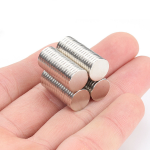
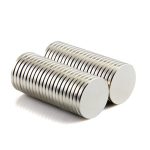
Larger neodymium magnets
also known as neodymium rare-earth magnets, are used in various industrial, commercial, and research applications where strong magnetic fields are required. These larger neodymium magnets are typically made from neodymium, iron, and boron (Nd2Fe14B) and exhibit exceptionally strong magnetic properties.
Here are some common applications for larger neodymium magnets:
Wind Turbines: larger neodymium magnets are used in the generators of wind turbines to convert mechanical energy into electrical energy. Their high strength-to-weight ratio makes them ideal for generating electricity efficiently.
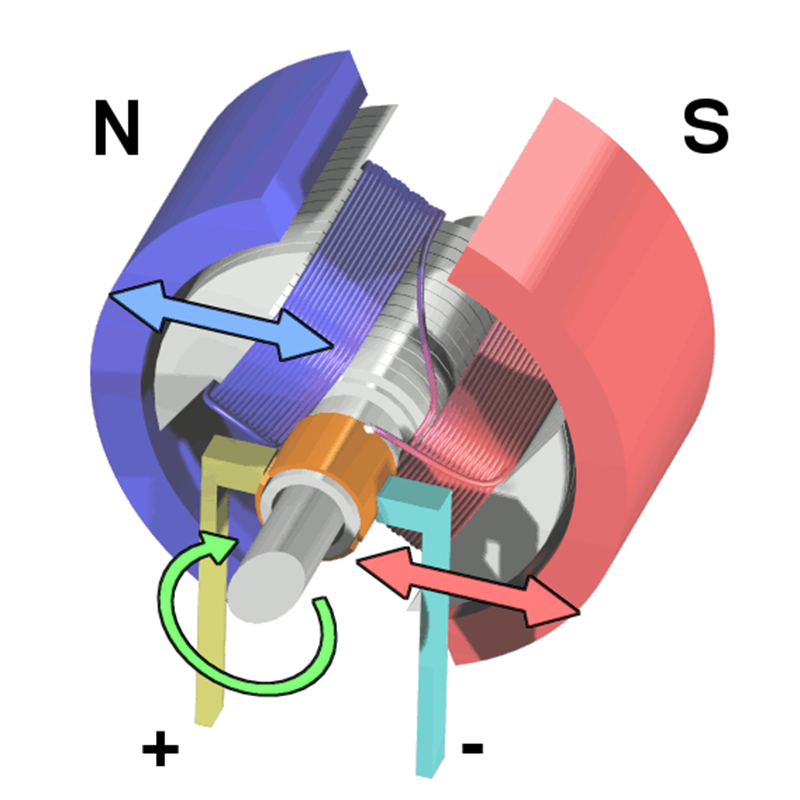
Electric Motors: Larger neodymium magnets are used in electric motors for various applications, including industrial machinery, electric vehicles, and aerospace systems. They provide high torque and efficiency in compact designs.
MRI Machines: larger neodymium magnets are used in magnetic resonance imaging (MRI) machines to generate the strong magnetic fields needed to produce detailed images of internal body structures for medical diagnosis.
Magnetic Separators: In industries such as mining, recycling, and food processing, larger neodymium magnets are used in magnetic separators to remove ferrous contaminants from materials such as ores, plastics, and grains.
Levitation Systems: larger neodymium magnets are used in magnetic levitation systems for applications such as maglev trains, magnetic bearings, and levitating displays.
Research and Development: Larger neodymium magnets are used in scientific research for experiments in fields such as physics, chemistry, and materials science. They enable researchers to study magnetic phenomena and develop new technologies.
When selecting larger neodymium magnets, factors such as size, shape, grade (magnetic strength), temperature resistance, and cost must be considered based on the specific requirements of the application.
Since its advent in the 1980s, NdFeB larger neodymium magnets materials have been widely used in various fields such as automobiles, wind power, aerospace, and military industry due to their excellent magnetic properties. In recent years, the demand for wind power generation, new energy vehicles, etc. has increased sharply. , which places higher requirements on the coercivity and temperature stability of NdFeB permanent magnet materials, requiring them to work above 200°C.
Since the magnetocrystalline anisotropy field of the Dy2Fe14B phase is much stronger than that of the Nd2Fe14B2 phase, and the Curie temperature is relatively high, the coercive force and temperature stability of the material can be greatly improved. For materials with higher coercive force and operating temperature requirements In sintered NdFeB materials, the content of dysprosium element is very high, up to more than 10%. There are two major ways to reduce the amount of dysprosium in NdFeB, namely crystal particle miniaturization and grain boundary diffusion.
The dysprosium content is expected to be reduced by about 1-2% through miniaturization of crystal particles, and by about 2-3% using the grain boundary diffusion method. In total, it can be reduced by about 5%.

The traditional method of adding elements is to add it during the smelting process, that is, Dy is smelted together with Nd, Fe, B and other elements. In the final prepared magnet, Dy is distributed in both the grain boundaries and the main phase within the grains. However, some studies have shown that Dy at the grain boundary has the most significant effect on increasing coercive force.
Japanese researchers first proposed the concept of “grain boundary diffusion”. They used a special process to make Dy only exist at the grain boundaries without entering the grains through diffusion. This not only improved the performance of NdFeB materials, but also greatly reduced Dy.
The total amount of elements reduces the cost of materials. They deposited Dy vapor on the particle surface during the powdering process, and Dy atoms diffused along the grain boundaries during the subsequent sintering process. Dy and Fe located at the grain boundary are antiferromagnetically coupled, and the material coercivity increases from 800kA/m to 1800kA/m with almost no reduction in residual magnetism.
Damage to the larger neodymium magnets surface after machining will lead to a weakening of the magnetic properties. Especially for small-sized samples, the coercive force is significantly reduced. Grain boundary diffusion technology can be used to repair and increase the magnetic properties of the magnet surface. At present, grain boundary diffusion technology has received widespread attention, and its preparation processes mainly include evaporation diffusion, magnetron sputtering, surface coating, etc.
Evaporation diffusion
The evaporation process of Dy/Tb on the surface of NdFeB magnets was first developed by Japan Aifake Co., Ltd., which places heavy rare earth elements or their compounds and the original sample to be processed in a steamer, and uses high-temperature heating to make the heavy rare earth elements It evaporates at high temperature and is deposited on the surface of the original magnet under the induction of foreign rare gases and diffuses into the magnet along the grain boundaries.
Using the evaporation diffusion method, the Dy evaporation source can be sublimated under high-temperature heating, and the NdFeB
The surface deposition of boron and the diffusion process in the magnet are carried out simultaneously. The advantage of using the evaporation diffusion method is to make the heavy rare earth elements diffuse more fully, reduce the usage of heavy rare earth elements, and reduce the cost, thus successfully preparing high coercivity and low cost. NdFeB magnets with rare earth content.
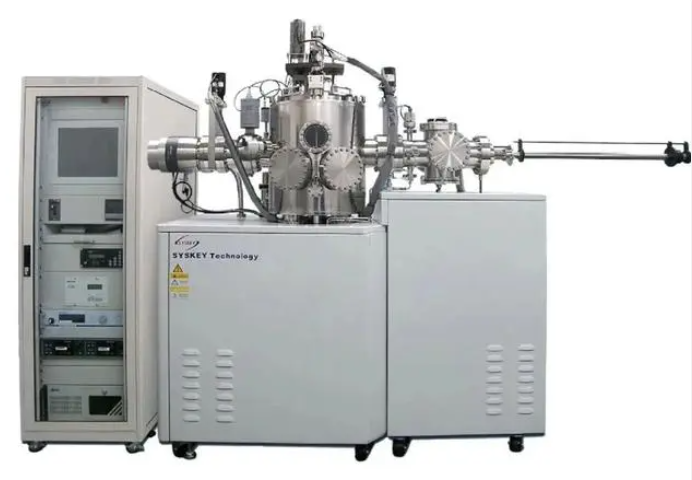
Magnetron sputtering
Different from the evaporation diffusion method described above, magnetron sputtering separates the Dy deposition process from the diffusion process. It deposits Dy on the surface of the original larger neodymium magnets through physical sputtering, and then performs high-temperature diffusion. Magnetron sputtering has the advantages of uniform film layer preparation and obvious improvement in coercivity.
Research tests have shown that after N35 sintered and tempered magnets are sputtered and infiltrated with Dy, the coercive force is greatly increased, with the residual magnetism only reduced by 0.009T and 0.03T, respectively by 708.44kA/m and 665.46 kA/m, the increases were as high as 73.5% and 64.8% respectively, and the average mass fraction of Dy element in the magnet after Dy infiltration treatment did not increase by more than 0.4%.
After Dy infiltration treatment, the larger neodymium magnets Dy is enriched in the Nd-rich phase in a continuous band shape, making the Nd-rich phase more continuous and smooth. The improvement of the structure morphology of the Nd-rich phase is one of the reasons for the increase in coercive force. The formed (Nd, Dy)2Fe14B epitaxial layer has a large magnetocrystalline anisotropy field. The hardening of the grain epitaxial layer can better suppress reverse domain nucleation, which is also the main reason for the increase in coercive force.

Surface coating method
The surface coating method refers to coating rare earth compounds directly on the surface of the original larger neodymium magnets sample, and then performing high-temperature heat treatment and diffusion in a rare gas atmosphere after drying. Using this method can significantly improve the coercive force of the magnet. The advantage is that the process is simple and convenient, but the disadvantage is that it can easily lead to uneven coating and insufficient diffusion.
The magnetism of permanent magnets mainly comes from its easily magnetized crystal structure. It can obtain extremely high magnetism under the action of a strong external magnetic field, and its magnetism will not disappear after the external magnetic field disappears. Therefore, “magnetization” is NdFeB. A key step for permanent magnet materials to obtain magnetism.
Isotropic magnets and anisotropic magnets
Magnetic materials are divided into two categories: isotropic magnets and anisotropic magnets.
Isotropic magnets have the same magnetic properties in any direction and can be attracted together at will
Anisotropic larger neodymium magnets have different magnetic properties in different directions. The direction in which it can obtain the best magnetic properties is called the orientation direction of the magnet.
If the magnetic material has an orientation process during the production process, it is an anisotropic larger neodymium magnets. Sintered NdFeB is generally molded and pressed using magnetic field orientation. Therefore, it is necessary to determine the orientation direction, that is, the future magnetization direction, before production. Powder magnetic field orientation is one of the key technologies for manufacturing high-performance NdFeB.
Direction de l'aimantation
Apply a magnetic field to the permanent larger neodymium magnets along the direction of magnetic field orientation, and gradually increase the magnetic field strength to reach technical saturation. This process is called magnetization. Sintered NdFeB generally has several shapes such as square, cylinder, ring, tile, etc. Next, we will talk about their common magnetization directions.
Magnetization method:
The magnetizer is a tool for magnetizing magnetic materials or magnetic device magnets. It applies a magnetic field to the permanent larger neodymium magnets products that need to be magnetized. If the magnetized magnetic field cannot reach the technical saturation magnetic field, the remanence Bj and coercive force Hcj of the permanent magnet will not reach their expected values. So how to determine the energy of the magnetizer? First, determine the size of the magnetizing tool based on the size of the magnet and the direction of magnetization.
Then calculate the size of the magnetic field in the center of the tool. The size of the tool’s magnetic field should be 3-5 times the coercive force of the magnet. Finally, calculate the magnetizing current. According to the current and the voltage of the magnetizer, the energy storage capacitor capacity of the magnetizer is finally determined, and the energy of the magnetizer is finally determined.
The basic principle of magnetization is to place the magnetic object to be magnetized in the magnetic field formed by a coil with direct current passing through it. There are two main methods: DC magnetization and pulse magnetization.