




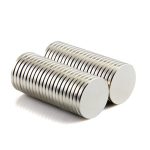
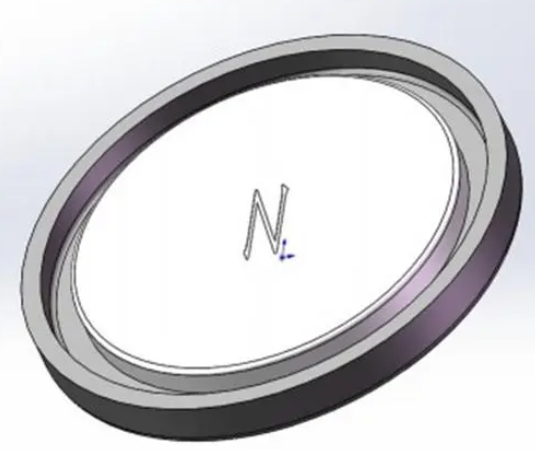
A fan shaped magnet
which is a type of magnet that has a shape resembling that of a handheld fan, with multiple “blades” or “arms” extending outward from a central hub. These magnets are often designed for specific applications where their unique shape offers advantages over traditional fan shaped magnet.
Here are some characteristics and potential applications of fan shaped magnet:
Magnetic Field Distribution: The fan-shaped design allows for a more distributed magnetic field compared to a simple bar or disc magnet. This distribution can be advantageous in certain applications where a more uniform magnetic field is required.
Mounting and Attachment: Fan-shaped magnets may have mounting holes or other features that make them easier to attach to surfaces or machinery. This can be useful in industrial applications where magnets need to be securely mounted.
Directional Control: The orientation and arrangement of the “blades” or “arms” in a fan-shaped magnet can help control the direction and strength of the magnetic field in specific directions. This feature may be beneficial in applications such as magnetic separation or sorting.
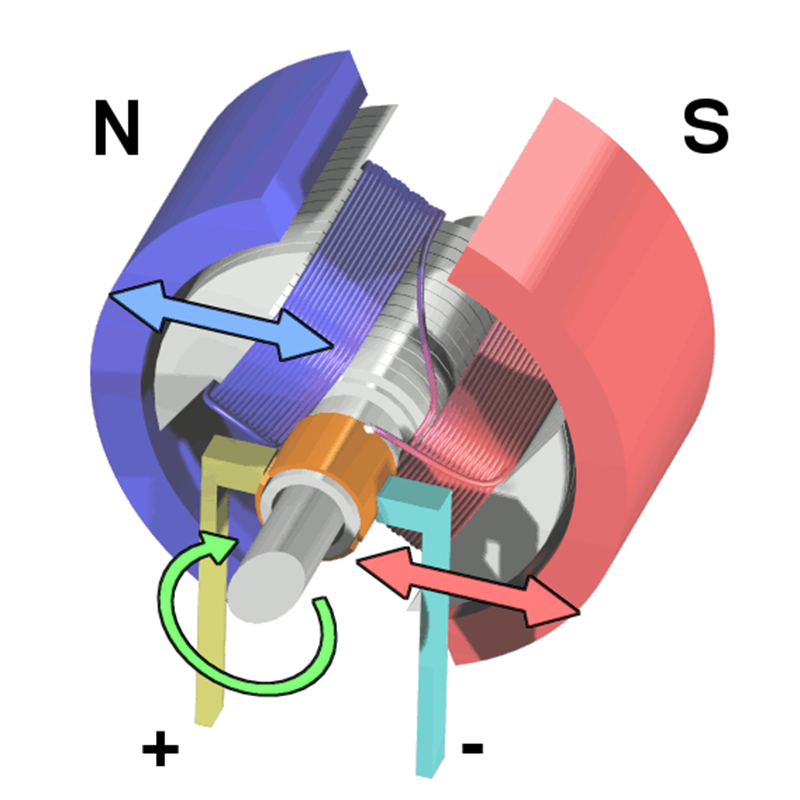
Airflow and Cooling: In some cases, fan-shaped magnets may be used in motors or generators where airflow and cooling are important factors. The open design of the fan shape can facilitate airflow, helping to dissipate heat and improve efficiency.
Experimental and Educational Use: Fan-shaped magnets can also be used in educational settings or for experimental purposes to demonstrate magnetic properties and phenomena. Their distinctive shape makes them visually interesting and can aid in understanding magnetic fields.
Fan-shaped magnets can come in various sizes and materials, including neodymium, ferrite, or samarium-cobalt, depending on the specific requirements of the application. They are utilized in a wide range of industries, including manufacturing, automotive, aerospace, and research laboratories, among others fan shaped magnet.
The usage scenarios of NdFeB permanent magnets are roughly divided into adsorption, repulsion, induction, electromagnetic conversion, etc. In different applications, the requirements for magnetic fields are also different fan shaped magnet.
? The space structure of 3C products is extremely limited and requires high adsorption strength. The space structure does not allow the magnet size to increase, so the magnetic field strength needs to be increased through magnetic circuit design fan shaped magnet;
? In situations where magnetic field induction is required, excessively divergent magnetic lines of force will cause the Hall element to accidentally touch, and the magnetic field range needs to be controlled through magnetic circuit design fan shaped magnet;
? When one side of the magnet requires high adsorption strength and the other side needs to be shielded from the magnetic field, too high a magnetic field intensity on the shielding side will affect the use of electronic components. This problem also needs to be solved through magnetic circuit design fan shaped magnet;
? Occasions where precise positioning effect is required, occasions where uniform magnetic field is required…etc.
In all the above situations, it is difficult to achieve the usage requirements using a single magnet, and when the price of rare earth is high, the volume and dosage of the magnet will seriously affect the cost and price of the product fan shaped magnet. Therefore,
When we meet the adsorption conditions or normal use, we can modify the magnetic circuit structure of the magnet to meet different usage scenarios, while reducing the amount of magnets to reduce costs.
Common magnetic circuits are roughly divided into HALBACH ARRAY, multi-pole magnetic circuits, focused magnetic circuits, added magnetic conductive materials, flexible transmission, single-sided magnets, magnetic condensation structures, etc. Let me introduce them one by one for you fan shaped magnet.