

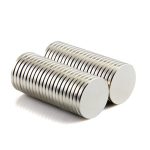
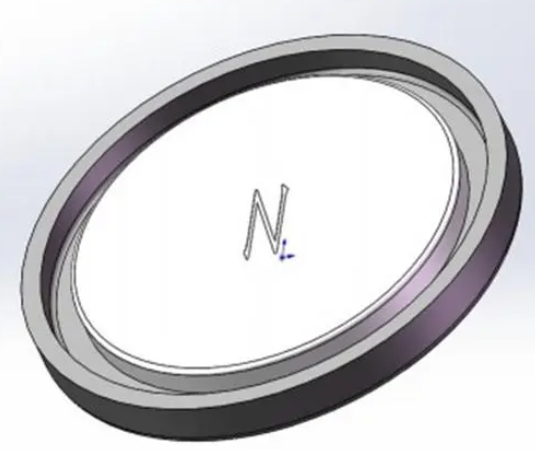
A fan shaped magnet

which is a type of magnet that has a shape resembling that of a handheld fan, with multiple “blades” or “arms” extending outward from a central hub. These magnets are often designed for specific applications where their unique shape offers advantages over traditional fan shaped magnet.

Here are some characteristics and potential applications of fan shaped magnet:

Magnetic Field Distribution: The fan-shaped design allows for a more distributed magnetic field compared to a simple bar or disc magnet. This distribution can be advantageous in certain applications where a more uniform magnetic field is required.

Mounting and Attachment: Fan-shaped magnets may have mounting holes or other features that make them easier to attach to surfaces or machinery. This can be useful in industrial applications where magnets need to be securely mounted.

Directional Control: The orientation and arrangement of the “blades” or “arms” in a fan-shaped magnet can help control the direction and strength of the magnetic field in specific directions. This feature may be beneficial in applications such as magnetic separation or sorting.

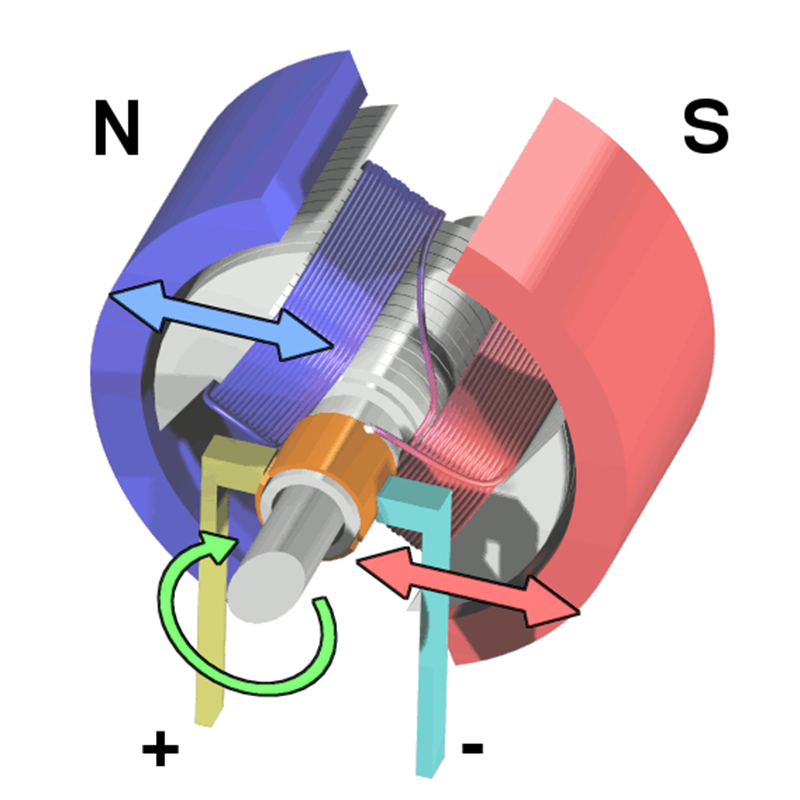
Airflow and Cooling: In some cases, fan-shaped magnets may be used in motors or generators where airflow and cooling are important factors. The open design of the fan shape can facilitate airflow, helping to dissipate heat and improve efficiency.

Experimental and Educational Use: Fan-shaped magnets can also be used in educational settings or for experimental purposes to demonstrate magnetic properties and phenomena. Their distinctive shape makes them visually interesting and can aid in understanding magnetic fields.

Fan-shaped magnets can come in various sizes and materials, including neodymium, ferrite, or samarium-cobalt, depending on the specific requirements of the application. They are utilized in a wide range of industries, including manufacturing, automotive, aerospace, and research laboratories, among others fan shaped magnet.

The usage scenarios of NdFeB permanent magnets are roughly divided into adsorption, repulsion, induction, electromagnetic conversion, etc. In different applications, the requirements for magnetic fields are also different fan shaped magnet.

? The space structure of 3C products is extremely limited and requires high adsorption strength. The space structure does not allow the magnet size to increase, so the magnetic field strength needs to be increased through magnetic circuit design fan shaped magnet;

? In situations where magnetic field induction is required, excessively divergent magnetic lines of force will cause the Hall element to accidentally touch, and the magnetic field range needs to be controlled through magnetic circuit design fan shaped magnet;

? When one side of the magnet requires high adsorption strength and the other side needs to be shielded from the magnetic field, too high a magnetic field intensity on the shielding side will affect the use of electronic components. This problem also needs to be solved through magnetic circuit design fan shaped magnet;

? Occasions where precise positioning effect is required, occasions where uniform magnetic field is required…etc.

In all the above situations, it is difficult to achieve the usage requirements using a single magnet, and when the price of rare earth is high, the volume and dosage of the magnet will seriously affect the cost and price of the product fan shaped magnet. Therefore,

When we meet the adsorption conditions or normal use, we can modify the magnetic circuit structure of the magnet to meet different usage scenarios, while reducing the amount of magnets to reduce costs.

Common magnetic circuits are roughly divided into HALBACH ARRAY, multi-pole magnetic circuits, focused magnetic circuits, added magnetic conductive materials, flexible transmission, single-sided magnets, magnetic condensation structures, etc. Let me introduce them one by one for you fan shaped magnet.

HALBACH ARRAY Halbach array

This is an approximately ideal structure in engineering, with the goal of producing the strongest magnetic field using the smallest amount of magnets. Due to the special magnetic circuit structure of the Halbeck array, most of the magnetic field loop can circulate inside the magnetic device, thereby reducing magnetic flux leakage, achieving magnetic fan shaped magnet.
concentration, and achieving self-shielding effect in non-working areas. The minimum area can achieve 100% shielding. As can be seen in the figure, the magnetic field lines of the conventional magnetic circuit are symmetrically divergent, while most of the magnetic field lines of the Halbach array are concentrated in the working area, so the magnetic attraction force can be improved fan shaped magnet.

1 4

Multi-pole magnetic circuit

Multi-pole magnetic circuits mainly utilize the characteristics of magnetic field lines to preferentially select the nearest different poles to form a magnetic circuit. Compared with ordinary single-pole magnets, the magnetic field lines (magnetic field) of multi-pole magnetic circuits are more concentrated on the surface, especially the more poles the more obvious it is fan shaped magnet.

There are two types of multi-pole magnetic circuits, one is the multi-pole magnetization method of one magnet, and the other is the adsorption method of multiple unipolar magnets fan shaped magnet. The difference between these two methods is the cost, but the actual functions are the same. The advantages of multi-pole magnetic circuits in adsorption at small intervals are very obvious.

2 4

Focus on the magnetic circuit

The focusing magnetic circuit uses a special magnetic circuit direction to concentrate the magnetic field in a small area, making the magnetic field in this area very strong, even reaching 1T, which is very helpful for accurate positioning and local induction.

3 6

Magnetic material

Magnetic permeable materials use magnetic field loops to prioritize the path with the smallest magnetic resistance fan shaped magnet. Using highly permeable materials (SUS430, SPCC, DT4, etc.) in the magnetic circuit can well guide the direction of the magnetic field, thereby achieving local magnetization and isolation. Effect.

A fan shaped magnet

Single pole magnet

The characteristic of single-sided magnets is that the polarity of one side of the magnet is shielded and the polarity of the other side is retained fan shaped magnet. The direct adsorption force is greater, but the magnetic force attenuates greatly as the distance increases.

5 3

Magnetic structure

The form feature is that the magnet and the iron yoke are arranged relative to each other according to polarity. As the ratio of the thickness of the magnet to the thickness of the iron yoke increases fan shaped magnet, the thicker the thickness of the iron yoke, the smaller the divergence of the magnetic field lines. The magnetization structure can be flexibly designed according to the size of the air gap to achieve the optimal effect, which can effectively save magnets. The magnetic field is evenly distributed along the iron yoke, but the disadvantage is that the assembly cost is high.

Magnetic circuits are structures designed to control and direct magnetic fields in various applications. They are analogous to electric circuits and are used in devices such as transformers, motors, generators, and magnetic sensors. Here are explanations of some common magnetic circuit structures:

Closed Magnetic Circuit:

A closed magnetic circuit forms a complete loop for the flow of magnetic flux fan shaped magnet. It consists of a ferromagnetic core (such as iron or steel) that directs the magnetic field lines through its material. The core typically has a uniform cross-sectional area to minimize magnetic reluctance (opposition to magnetic flux).
Examples of closed magnetic circuits include the cores of transformers and electromagnets. In transformers, the core is usually made of laminated steel to reduce eddy current losses.

Open Magnetic Circuit:

An open magnetic circuit lacks a closed loop for the flow of magnetic flux fan shaped magnet. Instead, the magnetic field lines emerge from one pole of the magnet or magnetic device and return to the other pole through the surrounding air or non-magnetic materials.

Examples of open magnetic circuits include horseshoe magnets and simple magnetic pick-up devices fan shaped magnet. In these devices, the magnetic field lines travel through the air or other materials, which typically have higher magnetic reluctance compared to ferromagnetic materials.
C-Core Magnetic Circuit:

A C-core magnetic circuit consists of a ferromagnetic core in the shape of the letter “C”. It is commonly used in transformers and inductors. The winding (coil) is wound around one or both legs of the C-core, allowing for efficient coupling of magnetic flux.

C-core transformers are widely used in power distribution systems due to their efficient magnetic coupling and compact design.
E-Core Magnetic Circuit:

An E-core magnetic circuit features a ferromagnetic core in the shape of the letter “E”, with a center leg and two outer legs. It is often used in transformers and inductors where space is limited fan shaped magnet.
E-core transformers provide a shorter magnetic path compared to C-core transformers, reducing magnetic reluctance and improving efficiency.
Toroidal Magnetic Circuit:

A toroidal magnetic circuit utilizes a toroidal (doughnut-shaped) core to form a closed loop for magnetic flux. The winding is typically wound around the entire core, providing efficient magnetic coupling and minimal leakage flux.
Toroidal transformers are commonly used in electronic equipment and power supplies due to their compact size, high efficiency, and low electromagnetic interference.
These are just a few examples of common magnetic circuit structures. The choice of magnetic circuit depends on factors such as the application requirements, efficiency, size constraints, and cost considerations.


6 1