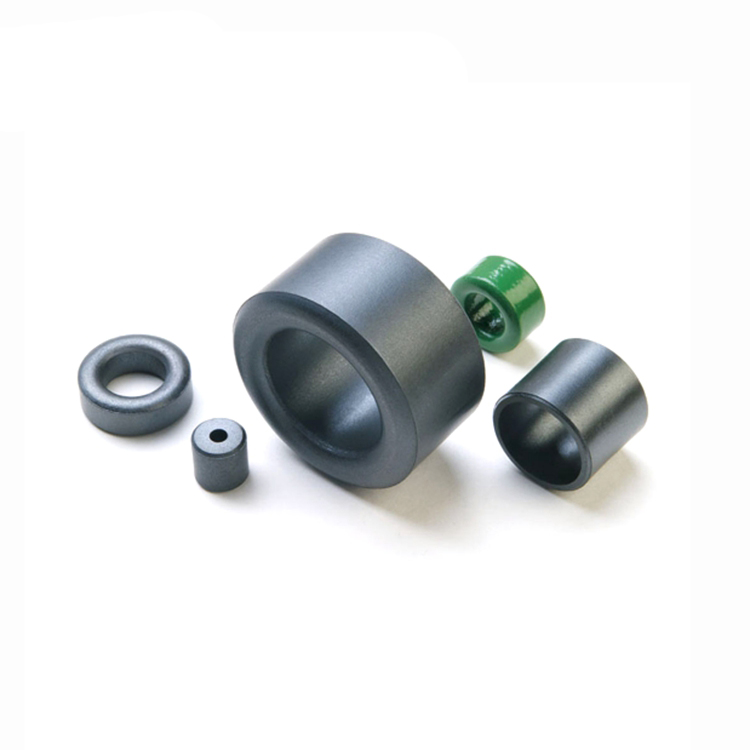
Ferrite Core Inductors
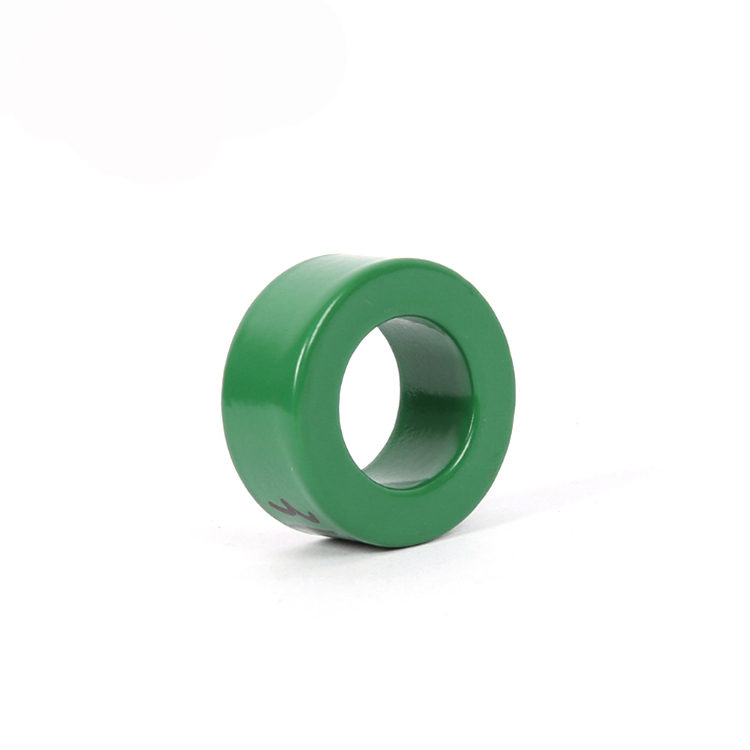
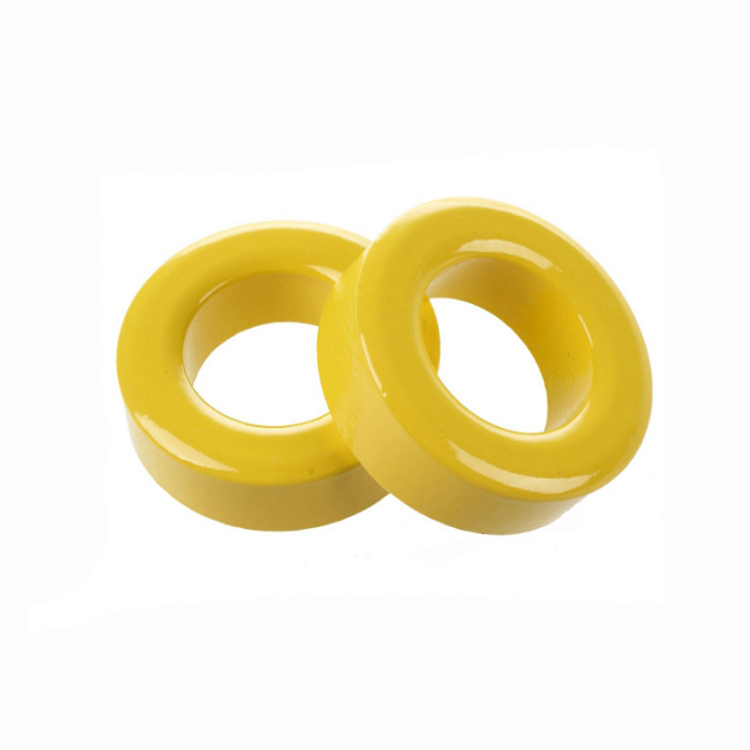
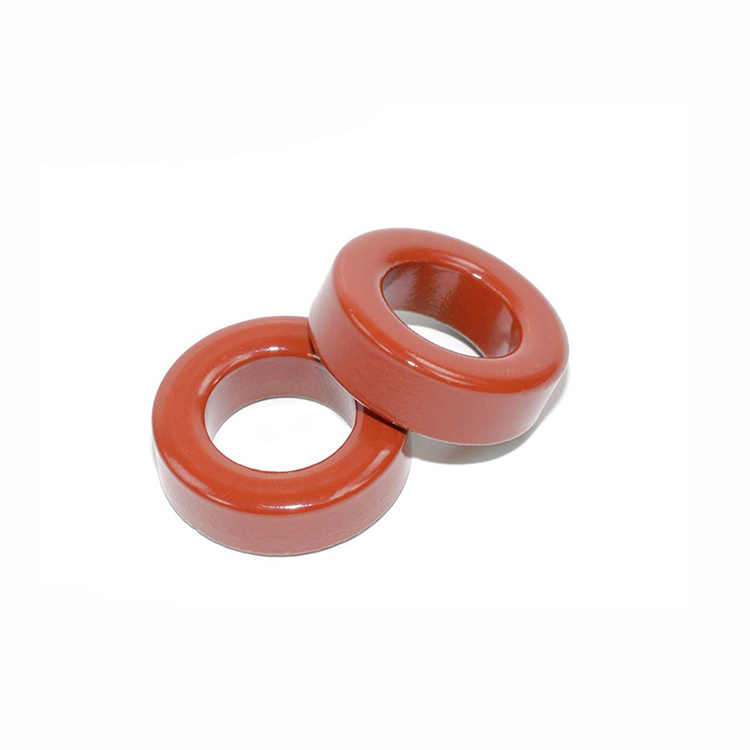
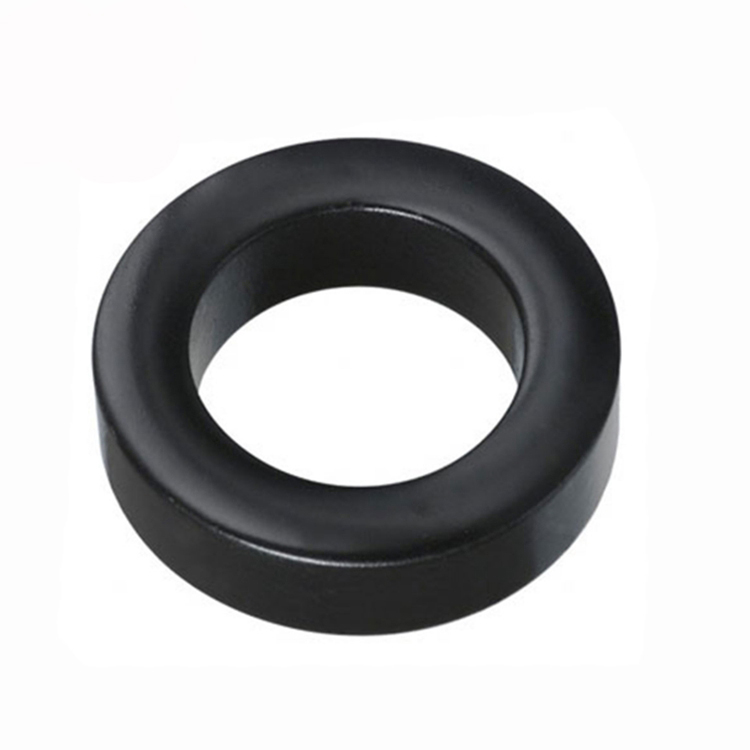
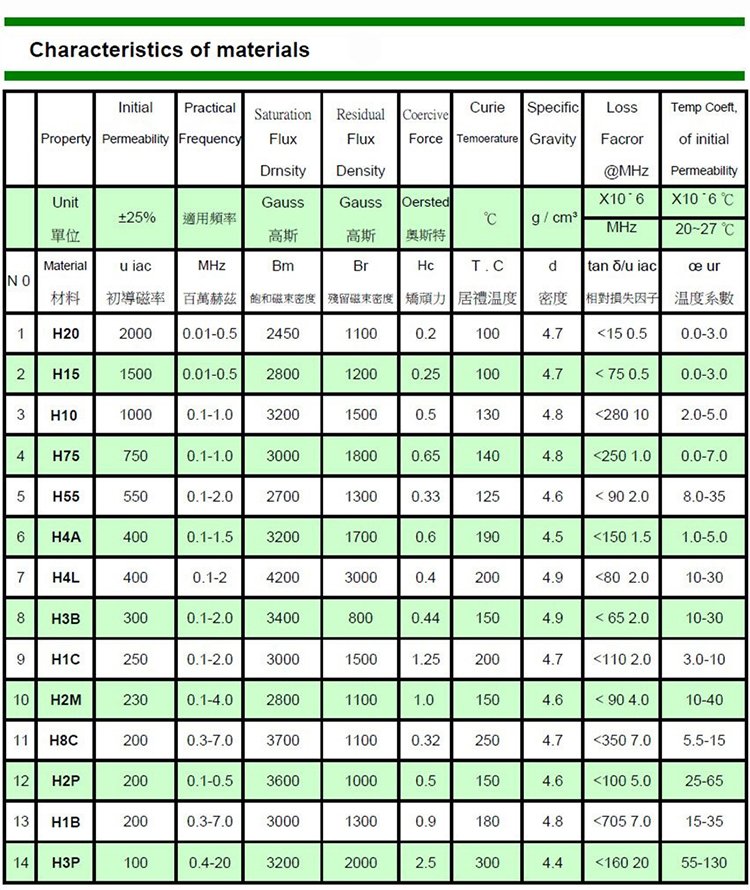
Core Geometries: Core geometries can be tailored to meet specific magnetic and mechanical requirements. A tunable high Q inductor dictates a different core shape than one used in TV line output transformers.
For use as a tile electromagnetic wave absorber, nickel-zinc ferrite (Ni0.5Zn0.5Fe2O4) particles were made using the traditional solid-state method and fused at 1100 and 1300 °C. By using characterization methods such as X-ray diffraction, thermogravimetric analysis, Raman spectroscopy, electron microscope, vibrating sample magnetometry, and vector network analyser, structural, magnetic, and microwave absorption characteristics were examined. The samples had a high magnetic concentration of 87 emu/g and a low coercivity of 4 Oe after being fused at 1300 °C. The 3D contour plot plainly shows that electromagnetic studies display high reflection losses up to 48.1 dB at specific high and low gigahertz frequencies. A reflection loss of approximately 36.1 dB at the corresponding thickness of 3.7 mm for the X-band was found when the relationship between reflection loss, thickness, and frequency was adjusted. Furthermore,
With a minimal thickness of 4.3 mm, the effective operating bandwidth at 10 dB was up to 7.1 GHz, which completely encompassed the C-band. The incorporation of dielectric and magnetic loss processes, in which the magnetic component predominates, was said to have contributed to the Ni-Zn ferrite’s well-sintered Ni-Zn ferrite’s microwave absorption efficiency.
Introduction
Due to its affordability, portability, simplicity, and dependability, wireless communication—which transfers information from one place to another without the use of wires, cords, or any other tangible medium—is widely used in mobile phones, GPS devices, remote controls, and Wi-Fi.
1,2. Wireless connections do have some disadvantages, though, including interference, security risks, and possible health issues3,4,5. High levels of noise can result from electromagnetic (EM) wave disturbance from different devices.
links made in unwanted ways, both positively and negatively 6,7,8,9. A desirable and useful technique for protecting electronic equipment from electromagnetic interferences and ensuring excellent electromagnetic compatibility (EMC) for the working devices is shielding the equipment with microwave absorbers. 10,11. High dielectric and magnetic losses, chemical stability, cheap expense, and light weight are all desirable characteristics in an absorber substance for electromagnetic interference (EMI) shielding. 12,13.
In order to reduce the specific frequency range and lessen the interference brought on by aerial connections18, materials such as dielectric14, magnetic15, and carbon-based16,17 could be used as EM wave absorbers. Another difficult problem is that an absorber material must meet the impedance matching requirement (z=/1) in order to receive incident EM waves with the lowest reflectivity. This ability to attenuate is linked to dielectric and magnetic losses.
Most absorber materials have high permittivity and low permeability, but magnetic spinel ferrites have a greater permeability than other absorbers, making them better at matching impedance. Because of their relatively high dielectric/magnetic loss, excellent chemical stability, and low cost26,27, spinel ferrites (MFe2O4, M = Co, Ni, Mn, Zn, Fe, Cu) as soft magnetic materials can be used for a variety of applications, including home and industrial electronic devices19,20, biomedicals21,22,23, catalysts24,25, and further EMI shielding as absorber materials. Due to its greater resistivity, high saturation magnetization, and high permeability, Nickel-Zinc ferrite exhibits superior EM wave absorption capabilities when compared to other spinel ferrites28,29,30. The space group of the cubic crystal structure of the spinel Ni-Zn ferrite, in which the cations are spread between, is Fd3m.
locations that are octahedral (B) and tetrahedral (A) 12. The ionic radius, crystal field, electron arrangement, and ionic polarization of cations all play significant roles in the filling of (A) sites and [B] sites31,32. As a result, due to crystal energy stabilization, Zn2+ cations are typically favored to inhabit (A) sites, whereas Ni2+ cations should occupy the octahedral [B] sites33,34. Due to the minimal crystal field energy stabilization, the Fe3+ cations can spread between (A) sites and [B] sites35. The greater difference of magnetic moments between (A) sites and [B] sites, which is caused by Zn2+ doping36,37, accounts for the higher saturation magnetization (Ms) of Ni0.5Zn0.5Fe2O4 ferrites than that of NiFe2O4 ferrite.
As of right now, papers on the electromagnetic characteristics of Ni-Zn ferrite in the low frequency ranges38,39,40 have also been published.
The magnetic concentration of paraffin/Ni-Zn nanofiber was estimated by Huang et al.35 to be around 77 emu/g, and the reflection loss (RL) was estimated to be around 14.1 dB at 10.9 GHz. Aggarwal and Narang41 examined the nickel-zinc ferrite’s 8.2-12.4 GHz range electromagnetic properties and achieved a minimal reflection loss of 17.5 dB with an effective absorption band length of 3.1 GHz. The microwave absorption characteristics of the MWCNT/Ni-Zn alloy were examined by Mustaffa et al.42, who obtained an RL = 19.3 dB with a spread of 1.24 GHz at the X band frequency.
Spinel ferrite powders were typically made in the solid state43,44 or through a wet chemical process45,46 and combined with various concentrations of an appropriate non-conductive.
The compound combination can be used as a covering when conductive polymer is used as the dispersant medium47,48. The polymer/ferrite compounds have poor endurance as a fixed coating and are prone to breaking down in harsh environments49. Furthermore, it was frequently stated that increasing the Ni-Zn ferrite content could enhance EM wave absorption performance50,51; however, the difficulties in doing so, in addition to the inadequacy of polymer-based coatings49, prompted our team to look into the microwave absorption characteristics of sintered Ni-Zn ferrite in the broad 1-18 GHz frequency range for use as tile absorber. Furthermore, Naidu52 demonstrated that mass Ni-Mg ferrite exhibits superior microwave absorbance characteristics compared to Ni-Mg nanoferrites. Bulk Ni0.5Zn0.5Fe2O4 crystals were created in the current study
The structural, microstructural, magnetic, and microwave absorption characteristics as a function of sintering temperature were investigated using the traditional ceramic technique.
experimental technique
The traditional solid-state technique was used to create the Ni-Zn ferrite particles. A planetary ball mill (Sanat Ceram, Iran) was used to combine analytical grade Fe2O3, ZnO, and NiO particles in stoichiometric quantities (1:0.5:0.5) in a medium of wet ethanol. A ball to powder ratio (BPR) of 20 was used during the 7-hour grinding process, with a rolling speed of 200 rpm. The resulting combination was first dried at 70 °C in the kiln before being calcined at 900 °C in an atmosphere of air. To separate the big agglomerates, the calcined powders were once again pulverized. Uniaxial compression was used to push the as-calcined NiZn ferrite particles into both under a pressure of 250 MPa, disk-shaped (d = 10 mm) and toroidal ones (din = 3 mm and dout = 7 mm) performed well. The compressed masses were sintered in an air environment for 2 hours at 1100 and 1300 °C. Fig. 1 depicts a diagram of the synthesizing process.