Magnets made with neodymium-doped rare-earth (NdFeB)
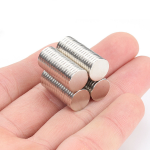
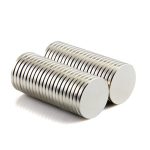
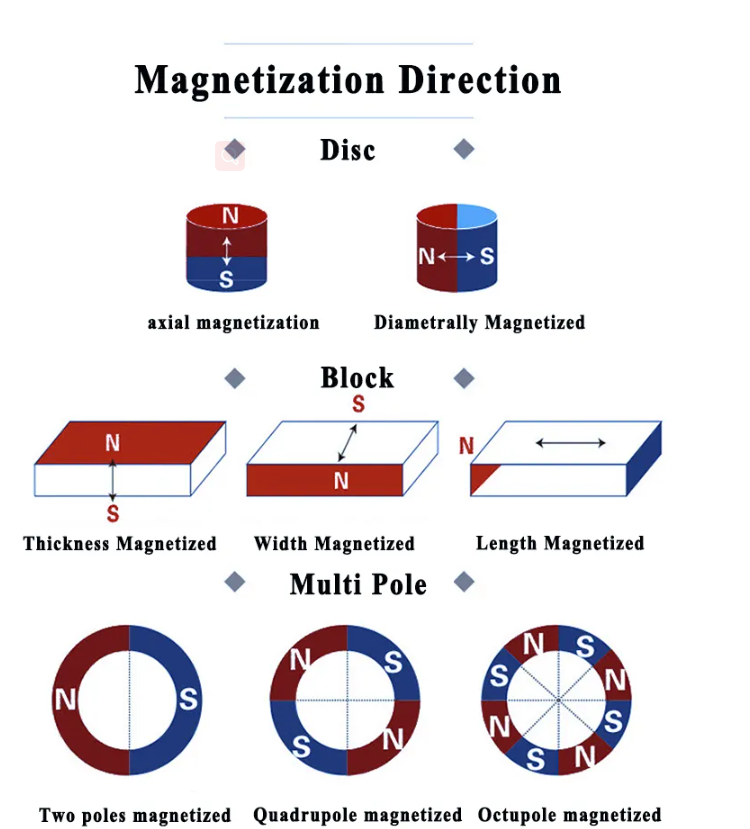
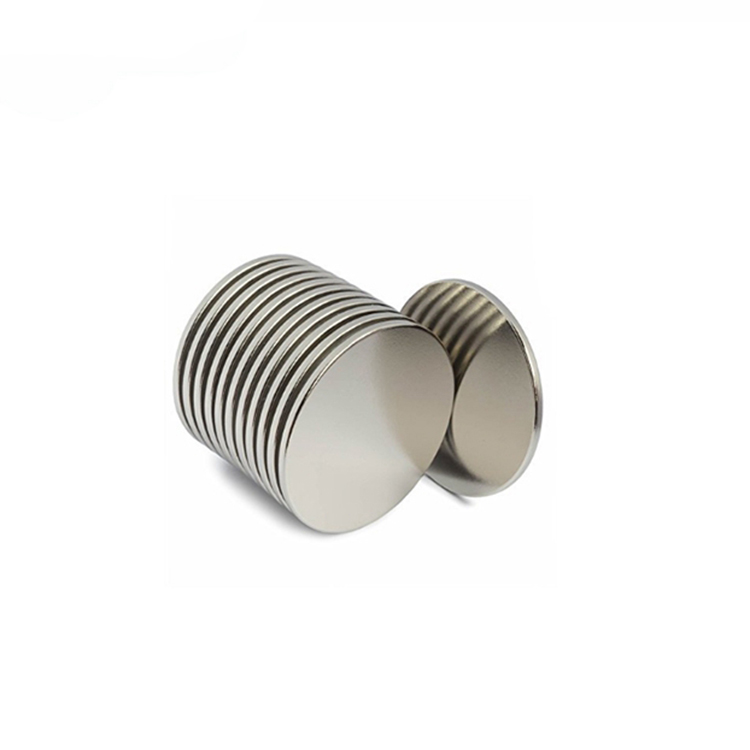
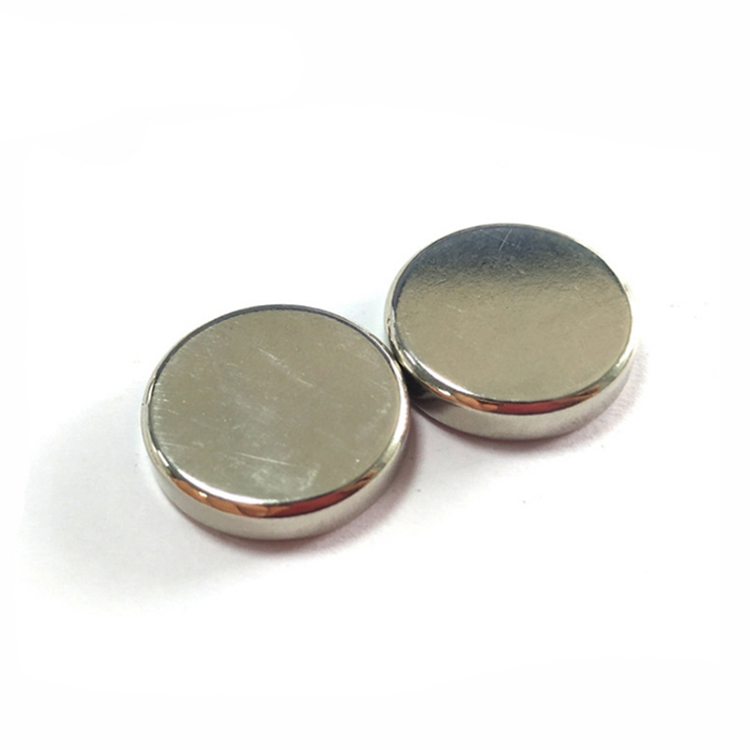
Disc Ndfeb Magnet Manufacturer in the shape of a coin, called NdFeB or Rare Earth disc magnets, come in a range of diameters and strengths. The NdFeB disc magnets are typically axially magnetized, meaning that one of their circular flat faces is a North pole and the other is a South pole, and that the distance between the flat faces (the disc thickness) is equal to the distance between the poles (the magnet is magnetised along the central axis of the Neodymium disc magnet). Unless otherwise noted, all of our NdFeB disc magnets are delivered as axially magnetized NdFeB magnets.
Ndfeb Disc Magnet Significance that are diametrically magnetized
Neodymium rare earth magnets with diametric magnetization are conceivable (i.e. the magnet is magnetised across the diameter perpendicular to the central axis – like being magnetised from 12 noon through to 6pm when looking down onto the magnet circular face). Diametrically magnetized magnets would typically attract one another through point contact if a row of cans were placed flat face down on a table and touched in a single line. The bulk of them are produced by us as customized magnets.
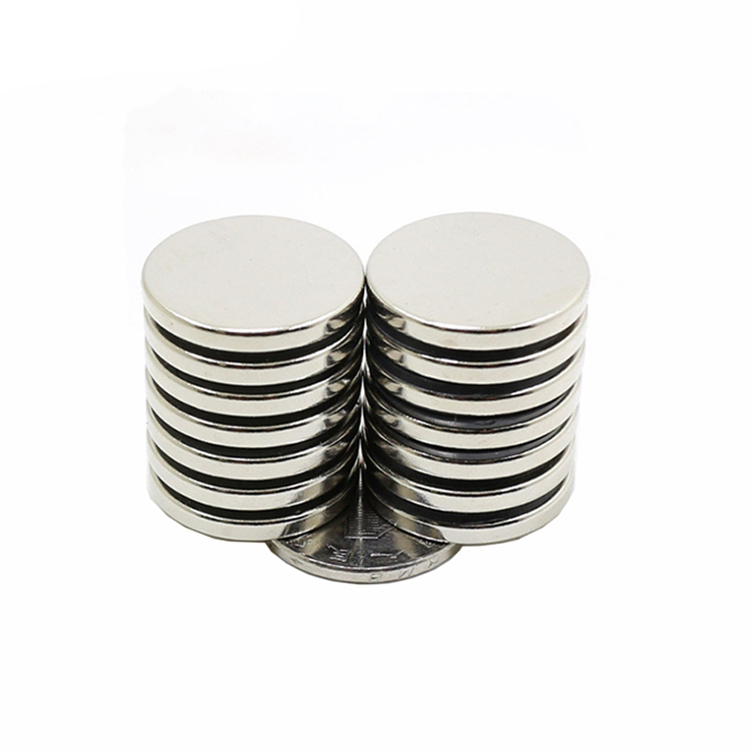
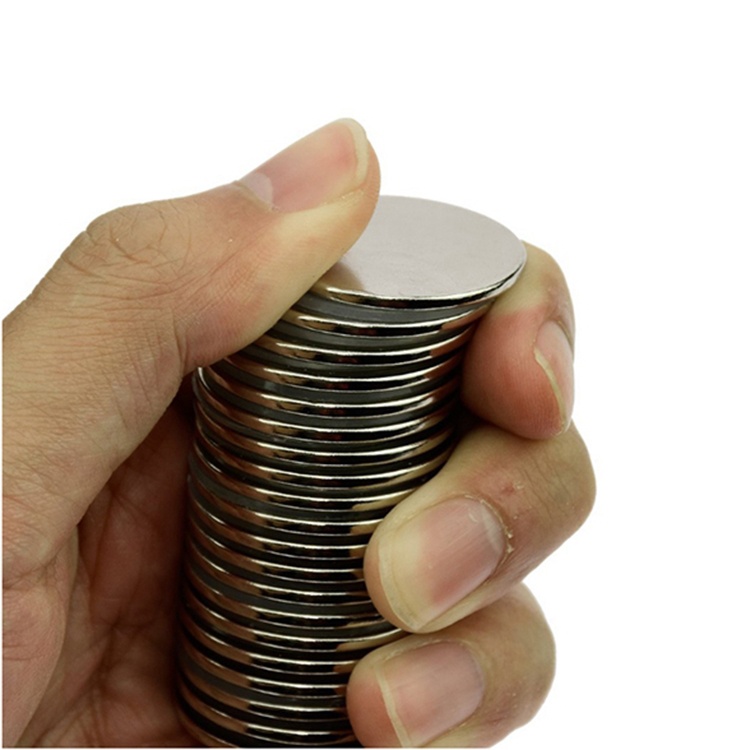
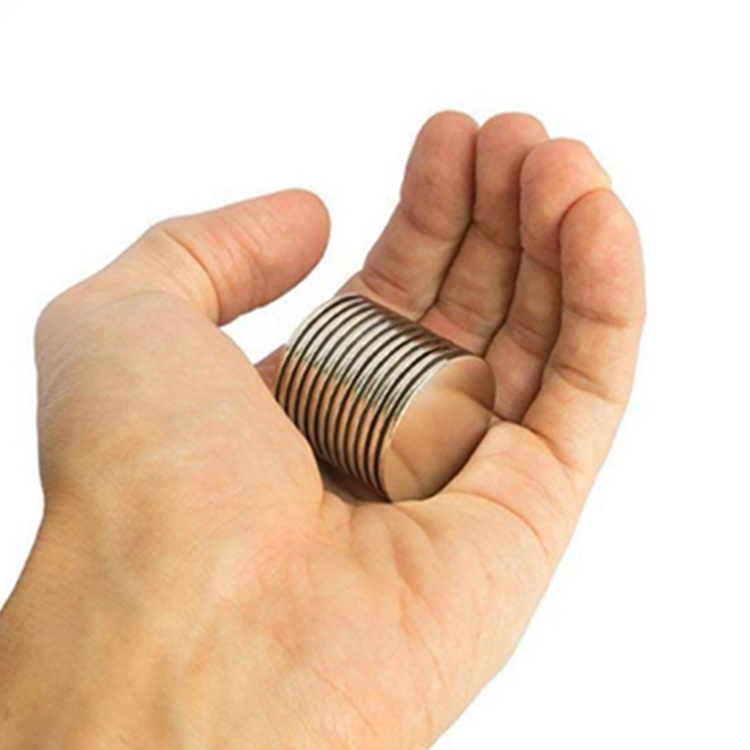
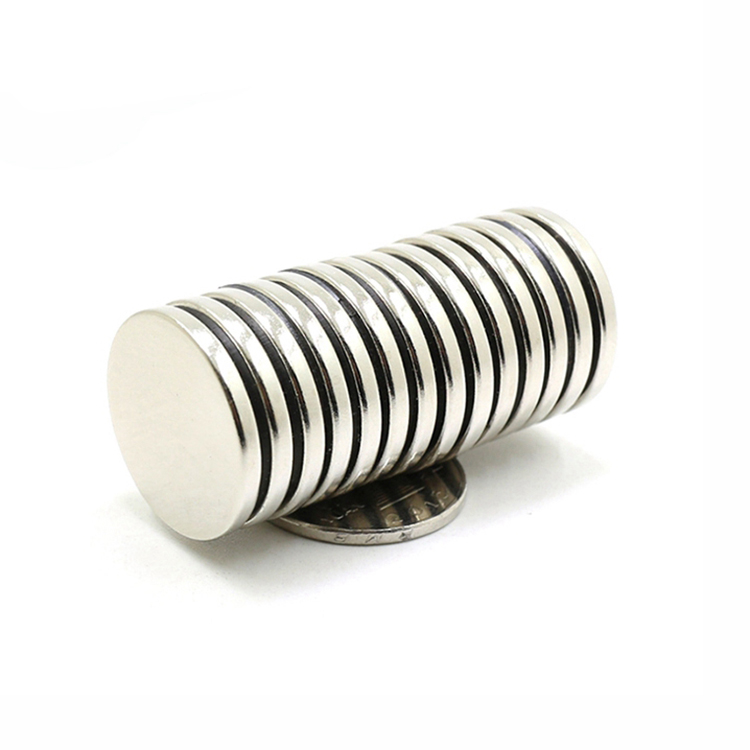
To make thicker magnets, the axially magnetized NdFeB rare earth disc magnets may be attracted to one another (in multiples of the magnet thickness). There is a thickness at which adding extra magnet height gives less and less performance benefit (the performance plateaus off), so if more performance is required, a bigger diameter magnet should be taken into consideration. Increasing the thickness of a Neodymium disc magnet can increase its magnetic output (or ask us for advice).
Therefore, if you are unsure of the ideal thickness for your magnet, think about buying a thinner magnet and stacking it higher as needed to get the desired performance.
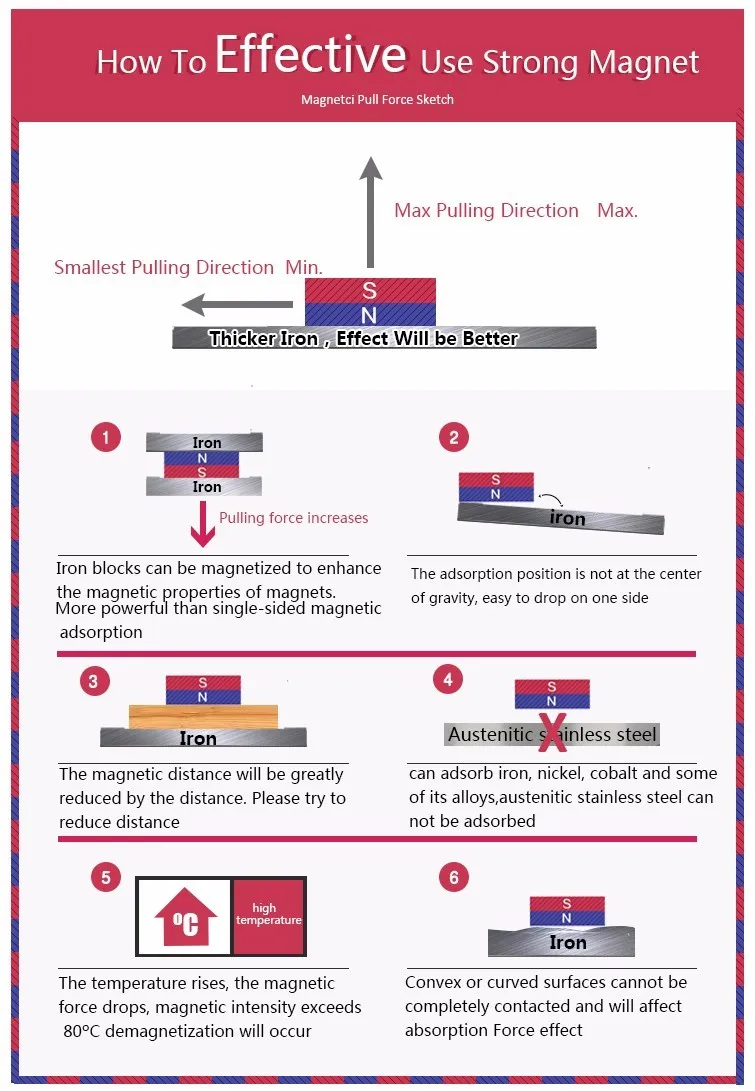
Adhesives (such as superglue, cyanoacrylate, two-part epoxies, etc.) can be used to secure the Neodymium disc magnets in place. To hide the magnet or provide it with further corrosion protection, holes can also be cut into components so that magnets can be bonded into them or implanted deeper and potted away. Sometimes the discs are covered to conceal them, such as when making furniture, where a thin layer of wood is applied over the magnet to conceal it and enhance the aesthetic appeal of more expensive wooden furniture (while keeping in mind that this introduces an air gap, which will reduce the magnetic pull force that can be gained by using thicker and/or larger diameter NdFeB magnets).
The draw force of Neodymium disc magnets is greater when they are attracted to another magnet than when they are attracted to a ferromagnetic (such as mild steel) component. Additionally, we provide Neodymium block magnets. see more.
The Strengthening of NdFeB Disc Magnets
If more pull force is needed, you can increase the thickness of the magnets (possibly stacking them if testing), the diameter of the magnet (especially if there is a space between the magnets), the distance (usually an air gap) between attracting magnets, the magnet grade (e.g., N48 instead of N30), or any combination of the above.
By just duplicating your magnet system in a different position, you might be able to quadruple your performance in some applications (e.g. to hold a door closed, have a magnet system at the top corner and add another at the bottom corner, doubling the potential performance). Consider that situations where magnet pole faces can slide apart have less holding force since it normally takes 5 times less effort to move magnets apart than it does to pull them apart (if possible turn them so that they pull directly away from each other to make the pull force stronger).
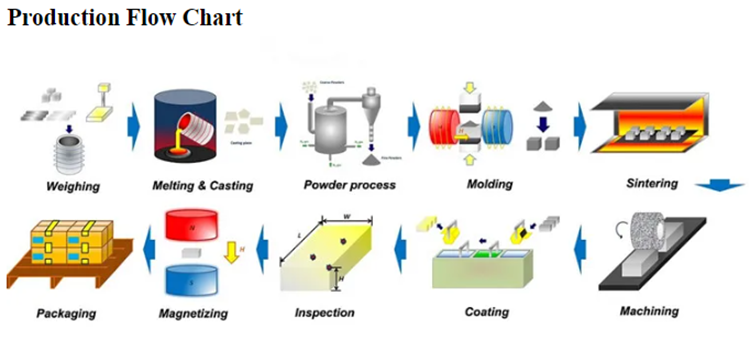
Except as otherwise noted, the nickel plating on Neodymium NdFeB disc magnets is typically a triple layer of NiCuNi; alternative platings are available upon request. The keeper is either included with the Neodymium disc magnets or they are delivered in rows with a keeper at each end. Please get in touch with us if you have any questions about the size or kind of magnet you should buy or if you need technical support.
Typical Neodymium Disc Applications
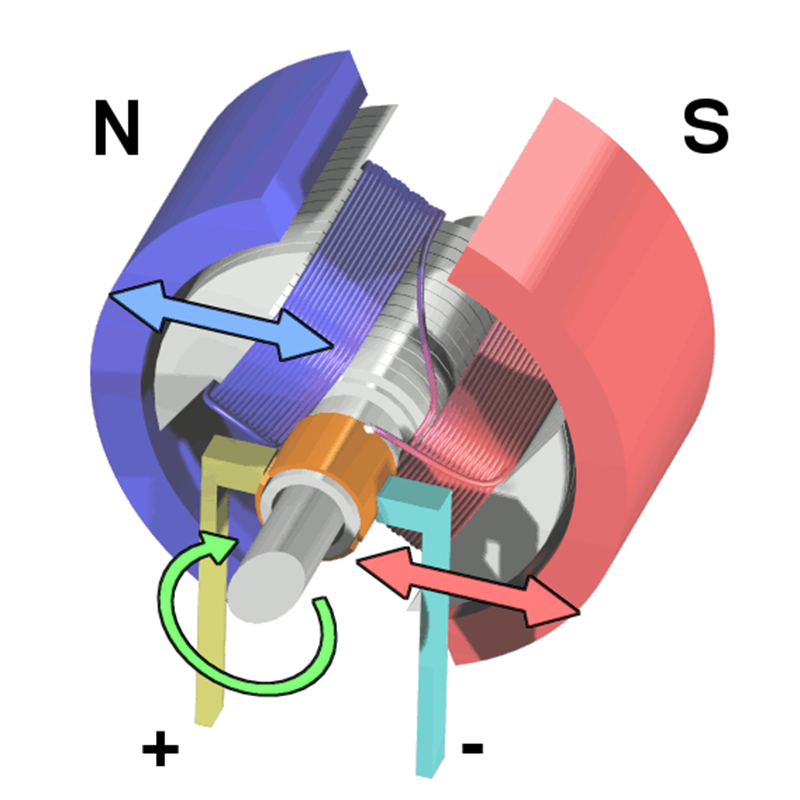
Simple holding uses for NdFeB discs include jewelry clasps, door closures, crafts, point-of-sale holding, notice boards, and folder closures. Additionally, they may be applied to more intricate design projects like machinery for levitation, motors, and audio equipment.
Neodymium magnets, or Neodymium-Iron-Boron magnets (shorthand NdFeB magnets), provide the largest adhesion force at the lowest volume. These are sometimes known as “super strong magnets” or “super adhesion magnets.” As a result, Neodymium is a high-quality magnetic substance.
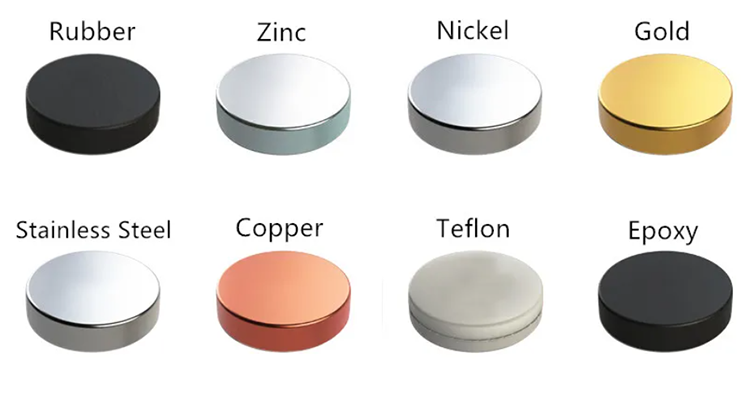
Most applications employ Neodymium magnets with a nickel coating due to their superior corrosion resistance. Other coatings, such as epoxy, gold, or parylene, are also options. Our inventory includes a variety of typical Neodymium magnets such as block-, bar-, segment-, disc-, and ring magnets. On request, we can also create custom designs based on your specifications/drawings.
Neodymium magnets can be employed for holding, as a closing, or for sensory exertion. We would be delighted to help you develop your application and advise you on design, quality, coating, and magnetization in order to create a useful and cost-effective product.
Neodymium disc magnets are neodymium magnets that are spherical coin-shaped and vary in diameter and thickness. Neodymium (Neo or NdFeb) magnets are tiny circular permanent magnets that belong to the rare-earth magnet family. Neo magnets have the strongest magnetic characteristics and are the most powerful magnets commercially available today. Neodymium disc magnets are the ideal choice for many consumer, commercial, and technical applications due to their magnetic strength.
Stanford Magnets specializes in the manufacture and delivery of neodymium disc magnets used in a variety of industrial applications. In this industry, we have sophisticated technology, extensive expertise, and competent engineering specialists.
Looking for a certain size? Please consult the Disc Magnet Grade page for alternative magnet sizes! If you need a size that isn’t shown on our website, please contact us for a custom magnet quotation.
Magnetized Neodymium Disc Material Specification: Sintered Neodymium-Iron-Boron (NdFeB)
Customized size
Form: disc
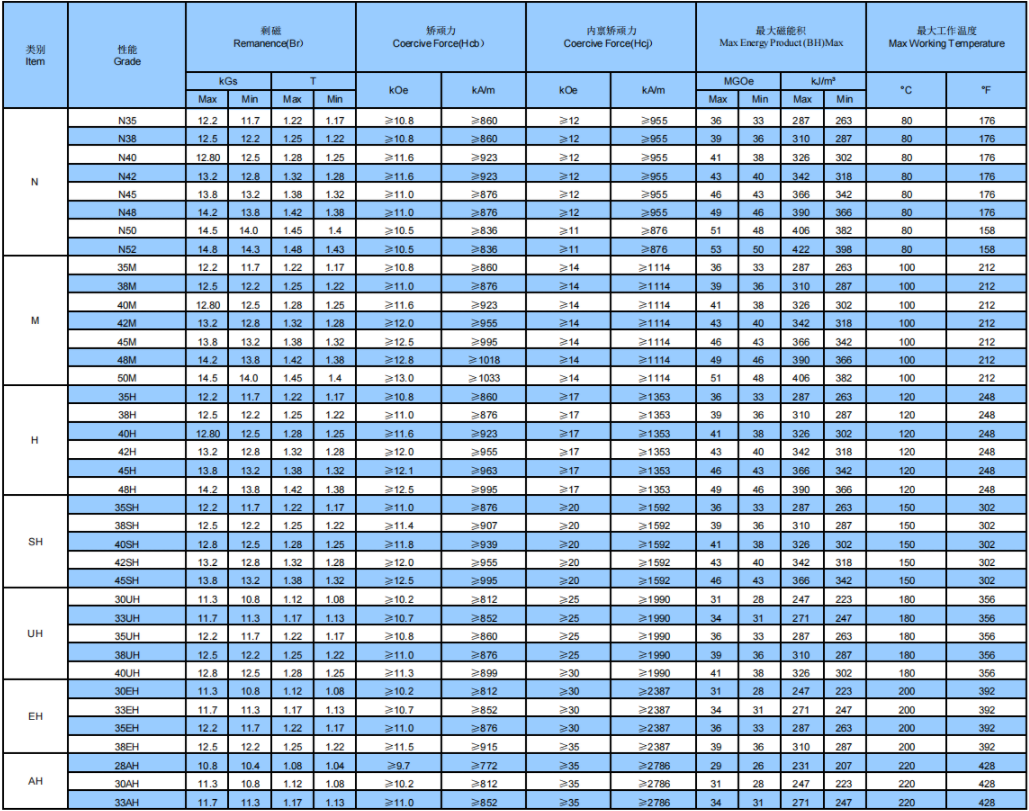
Customized performance (N33 N35 N38 N40 N42 N45 N48 N50 N52……)
Nickel/Customized (Zn, Ni-Cu-Ni, Ni, Gold, Silver, Copper, Epoxy, Chrome, etc.) Coating
Tolerances for size: 0.05mm for diameter/thickness, 0.1mm for width/length
Magnetization techniques include thickness magnetization, axial magnetization, diametric magnetization, multi-pole magnetization, and radial magnetization. (Magnetized for customized special needs)
N35-N52 maximum working temperature: 80°C (176°F)33M- 48M: 100°C (212°F)33H-48H: 120°C (248°F)Temperature range: 30SH-45SH: 150°C (302°F).30UH-40UH: 356°F (356°C)Temperature range: 200°C (392°F) for 28EH-38EH.28AH to 35AH: 220°C (428°F)
Applications for Neodymium Disc Magnets
Craft and model building projects, high-performance motors, jewelry clasps, audio equipment, POP displays, scientific projects, home repair projects, hanging artwork, and many more applications are common uses for neodymium disc magnets.
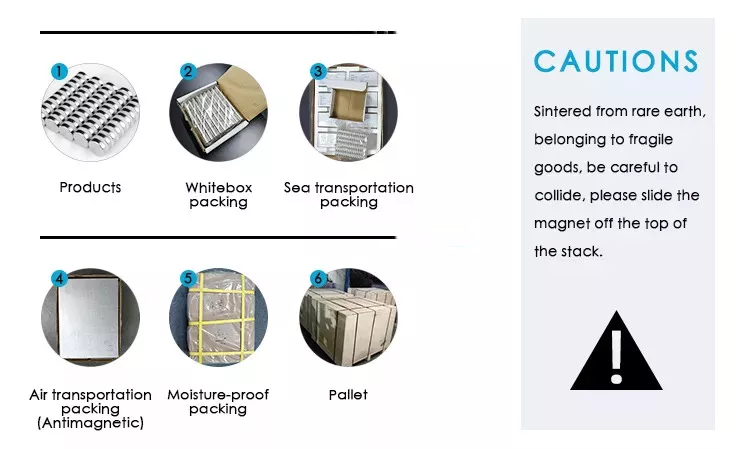
WARNING: Extremely powerful magnets. • Fingers might become severely squeezed if they are caught between two or more magnets. • KEEP ALL CHILDREN OUT OF REACH. THIS IS NOT A CHILD’S TOY. • Do not consume or inhale. • DO NOT put in your nose, mouth, or any other area of your body. • Magnets that are swallowed can adhere to the intestines, causing significant harm (NECROSIS) or even death. • Seek medical assistance immediately if any magnet(s) are ingested or breathed. • Neodymium magnets have a BRITTLE surface. •If they are allowed to snap together or crash against a metal item, they can SHATTER, CRACK, PEEL, or SPLINTER. • Broken magnets have the potential to be very SHARP. • HAZARD OF MAGNETIC MEDIA AND ELECTRONIC EQUIPMENT. • AVOID PACEMAKERS AND INTERNAL MEDICAL DEVICES. • Magnetized materials are HAZARDOUS MATERIALS and are REGULATED FOR AIR TRANSPORT.
Magnetized materials are HAZARDOUS MATERIALS and are REGULATED FOR AIR TRANSPORT. • If heated over 175°F (80° C), neodymium magnets lose their magnetic characteristics. • Never cut or drill Neodymium Magnets since there is a fire and fracture hazard, and the dust is hazardous. • Pull Force – The amount of force necessary to separate two magnets of the same size from each other. The actual draw force of cylinder/disc magnets may vary depending on the application or magnets to curved surfaces due to the tiny contact surface. • Please test them before to use.