Abstract
We examine the magnetic characteristics of isotropic NdFeB powders used to make bonded magnets. Two recently created powders, MQP-13-9 and MQP-S-9-8, had their properties compared to those of already existing powders. Spherical powders for injection molding have several benefits, which were emphasized. NdFeB nanocomposites and the 180°C application’s development goals were also mentioned.
Introduction
For many years, permanent magnets have been utilized extensively in a variety of applications to transform electrical energy into mechanical energy or the other way around [1], [2]. The remanence (Br), intrinsic coercivity (Hci), and maximal energy product (BH)max are three crucial characteristics that characterize the performance of permanent magnets. Magnets with greater (BH)max often need less volume to carry out certain tasks.
Therefore, magnet circuit design engineers should use high (BH)max magnets to miniaturize their circuits.
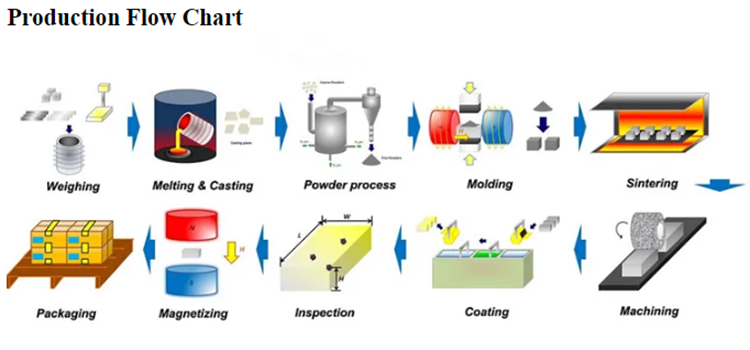
Since the initial reports of high-energy magnets based on Nd2Fe14B in late 1983 [3], [4], much research has been done to enhance the inherent material characteristics and create production methods. The metallic and bonded magnets are the two broad groups into which the NdFeB-type magnet may be generally divided. The metallic magnet may be made using either hot deformation techniques or the traditional alloy casting and powder metallurgy methods [5]. Materials formed by quick solidification are typically used as the precursor materials for hot pressing and/or die upsetting (nanocrystalline). Bonded magnets, as opposed to metallic magnets, need a binder to “glue” the magnetic granules together.
For bonded magnets, a molding stage is typically necessary [6], [7]. Most NdFeB bonded magnets currently also use fast solidification to create powders.
Permanent magnets have been created using NdFeB materials that solidify quickly for more than 15 years [3]. The primary phase of this material is an intermetallic combination called Nd2Fe14B. Traditionally, melt spinning is used to create alloys with nominal compositions that are close to the stoichiometric Nd2Fe14B. The resulting ribbons or flakes are subsequently crushed into particles smaller than 40 mesh. The necessary microstructure and magnetic characteristics are then developed by a carefully regulated thermal treatment. The powders produced are often magnetically isotropic because of the tiny crystalline size.
Powders are combined with thermal-set or thermal-plastic-type polymers for compression molding or injection molding, respectively, to create bound magnets. Both compression and injection molding may create magnets in close to net form with the right tool design. Recently, NdFeB magnets have also been made via extrusion or calendering to satisfy certain application segments.
To produce high (BH)max magnets for bonded magnets, powder magnetic properties, loading factor, and molding qualities are crucial. In general, high (BH)max powders are necessary to produce high (BH)max magnets. To achieve high (BH)max magnets, high NdFeB powder loading must be done while yet allowing for molding.
In every situation, it would be necessary to mold magnets using a machine that is commercially accessible in order to get the needed forms with the right magnetic and mechanical qualities. A magnet’s magnetizability is a crucial consideration when assessing its suitability for a certain application.
For applications that may be subjected to high temperatures, flux aging loss and thermal stability of magnets are crucial in addition to (BH)max. Since there are many different kinds of magnetic powder and polymer that may be used to mold bonded magnets, it’s critical to determine their thermal properties in order to produce high (BH)max bonded magnets with the appropriate properties.
In this study, the performance of NdFeB powders made using the quick solidification approach will be compared to the basic properties of polymers frequently employed in bonded magnets.
Figure 1 displays the typical Br and Hci of many commercially available permanent magnets, including bonded and metallic magnets. Each family of materials, as can be observed, has a certain range of Br and Hci. Ferrites with Br ranging from 130 to 420 mT and Hci between 175 and 320 kA/m are often found in the lower left corner of the plot, while metallic NdFeB magnets with Br between 1100 and 1400 mT and Hci up to 2600 kA/m are found in the upper right corner.
The void between the corners of two different types of magnets is filled by bonded NdFeB magnets with Br ranges between 400 and 800 mT and Hci ranges between 600 and 1400 kA/m. By coincidence, the prices of these permanent magnets range from cheap ferrites to expensive completely dense NdFeB magnets, with the prices of bonded NdFeB magnets falling between ferrite and metallic rare earth magnets once more. The features of temperature coefficient, magnetizability, electrical conductivity, and machinability must be taken into account in addition to the Br and Hci values. The basic features of frequently used permanent magnets are collected in Table 1.
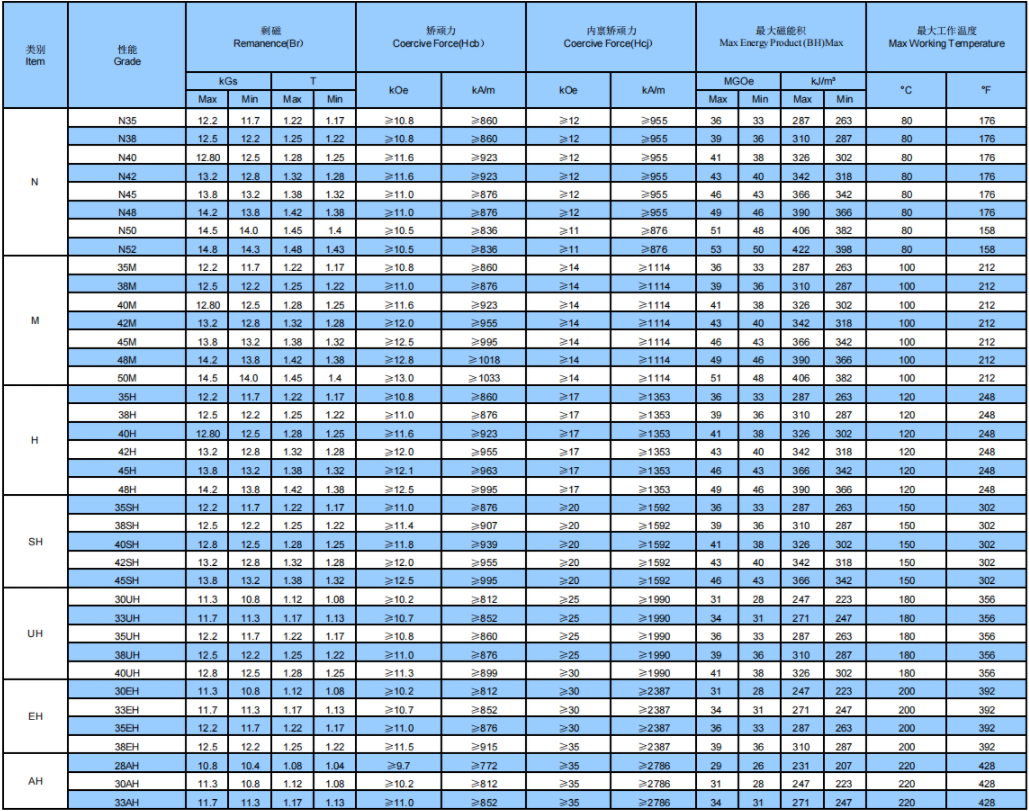
Conventionally, easily acquired commercial quantities of fast solidified isotropic powders with Br of 800-920 mT, Hci of 320-1360 kA/m, and (BH)max of 80-130 kJ/m3 at room temperature may be found in Table 2. Powder type also affects the Curie temperature (Tc), temperature coefficient of induction, or maximum working temperature. For molding, these powders can be used with different polymer binders that have different loading factors. Table 3 compares the various molding techniques, their accompanying traits, and the usual Br and (BH)max values that they depict. The maximum volumetric fraction of magnetic particles may often be obtained by using a compression molding technique in conjunction with an epoxy binder.
Compression molding makes it simple to produce magnets with Br values between 620 and 720 mT and (BH)max values between 48 and 85 kJ/m3. The loading factor for injection molding can range from 50 to roughly 75 vol% depending on the kind of polymers used, namely polyamides (nylon) or polyphenylene sulfide (PPS). Typically, using an injection molding process, magnets with Br values of 480–600 mT and (BH)max values of 40–55 kJ/m3 may be produced. Such magnets may be made in a larger range of sizes and for a wider range of uses [10]. In compared to compression molded magnets, the Br and (BH)max of injection molded magnets tend to be lower due to the larger volume percentage of the polymers used in the process.
Despite the lower Br and (BH)max, the injection molding technology is particularly appealing and adaptable due to its ability to create inexpensive magnets and components.
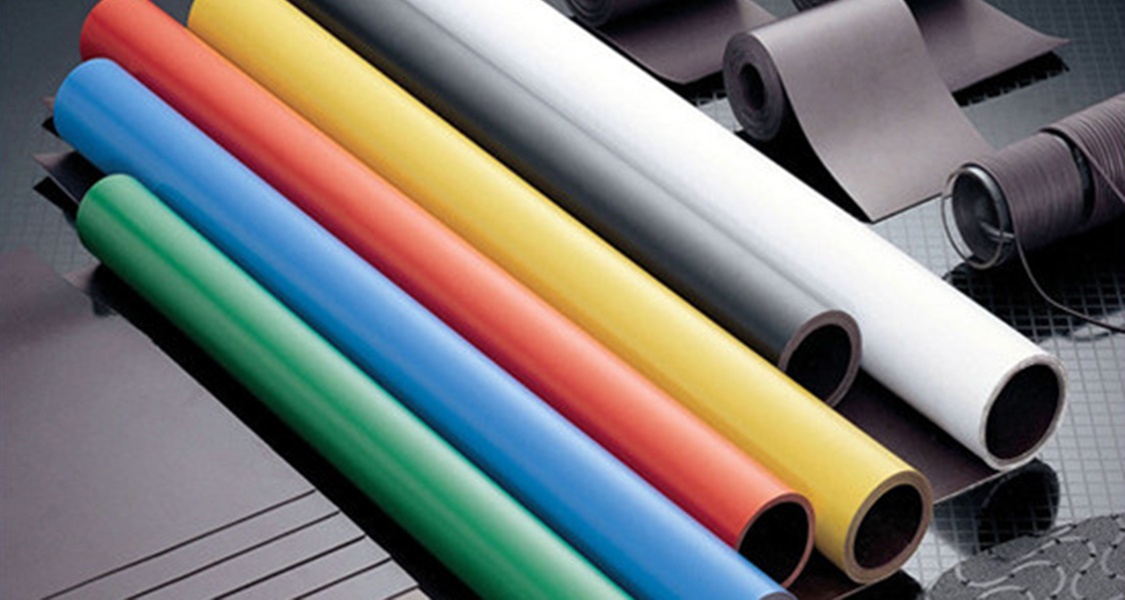
Mechanically flexible NdFeB magnets can also be made for particular uses via extrusion or calendering. Almost any desirable shape may be created with flexible magnets, depending on the purpose. The Br and (BH)max of magnets generated by calendering are typically lower than those created by compression, injection, or extrusion due to the low loading factors. Application engineers often need to take into account the Br, (BH)max, and Hci values and their temperature characteristics together with the molding procedure before the ideal magnet can be selected based on the operation temperatures necessary for a certain application.
There are several uses for bonded NdFeB magnets. Bonded NdFeB magnets have enormous growth potential due to the development of significant emerging economies, the expansion of the personal computer industry and related technologies, and government regulations promoting efficiency in household appliances and vehicles. In order to keep up with the demand for new powder grades and production techniques, both powder and magnet makers must continually enhance their goods.
fragments of sections
latest advancement
Magnequench is dedicated to increasing its processing effectiveness to lower the selling price of the most popular MQP-B powder in order to enable NdFeB magnets for new applications. According to our estimates, this price reduction program will make bonded NdFeB a viable alternative to ceramic ferrite or hybrid bonded magnets in terms of cost and flux for a variety of new applications. Magnequench has also launched a new grade of powder, MQP-13-9, in response to the need for less expensive powder.
Conclusions
The functionality of isotropic NdFeB powder sold commercially has been outlined. Additionally, the fundamental qualities of magnets produced using industrial molding techniques have been covered. The Br and (BH)max values of bonded NdFeB magnets are mostly dependent on the binder-type loading factor and molding method. The MQP-13-9 and spherically shaped MQP-S-9-8 low-cost NdFeB powders’ performances were compared to those of the most widely used MQP-B powder. The benefits