Ferrite core inductor manufacturers
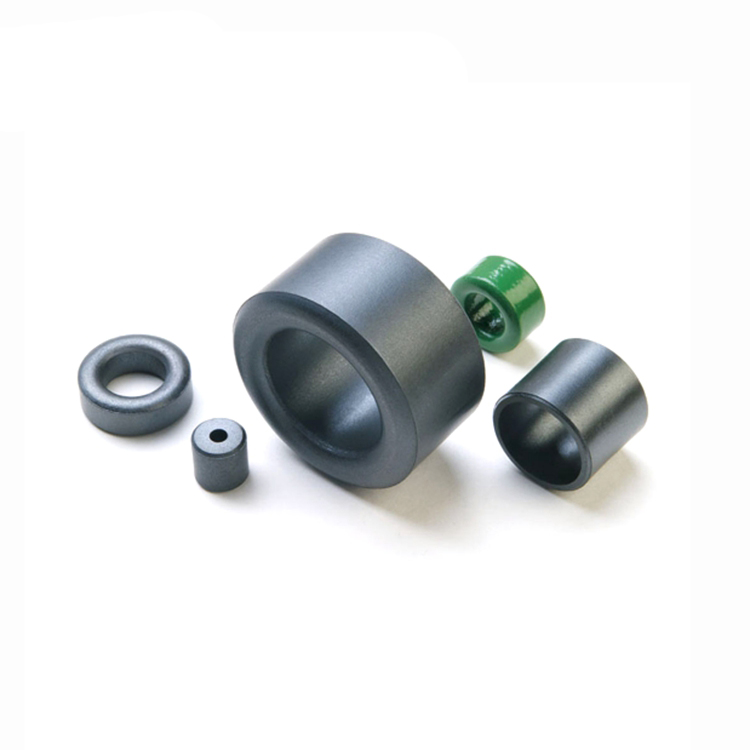
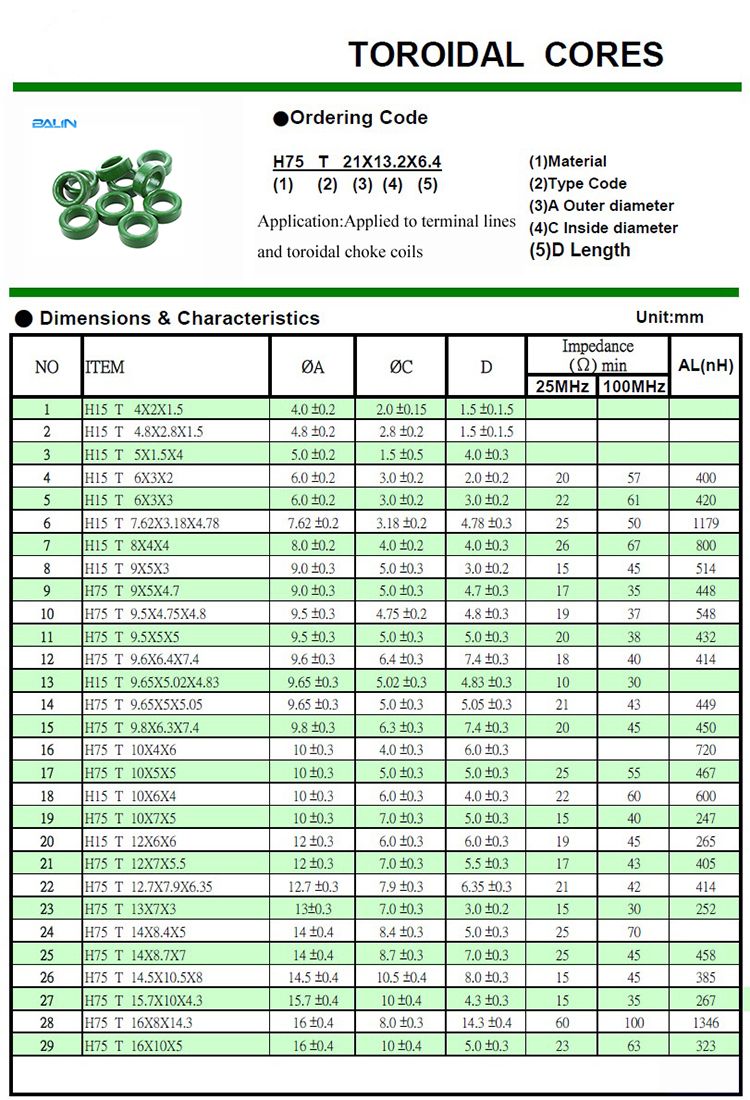
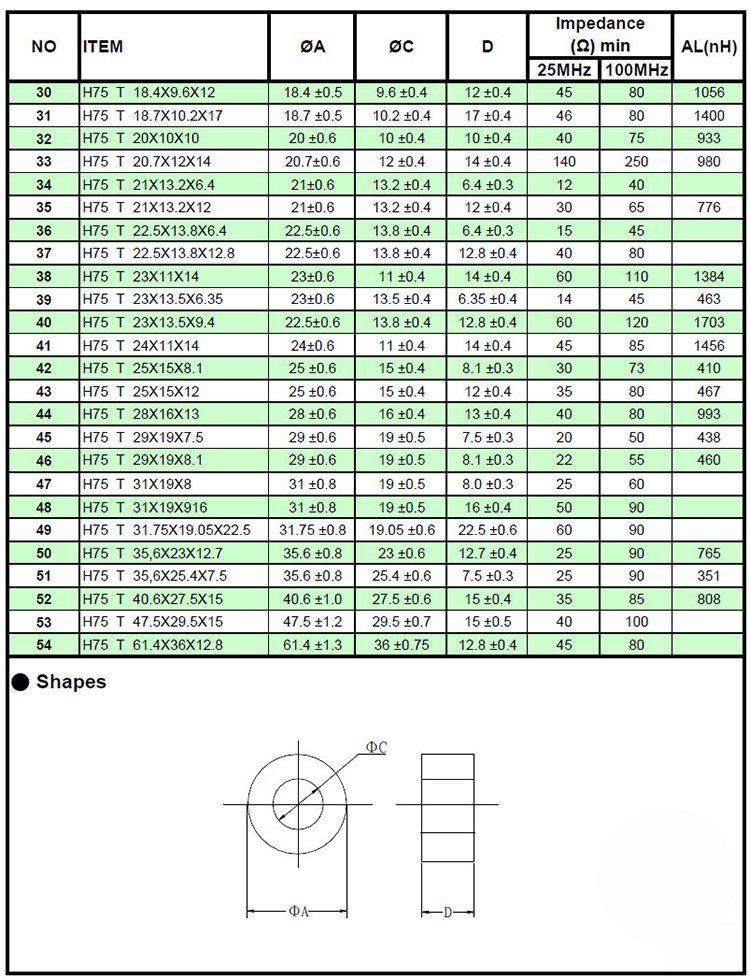
Xiamen Balin Balin New Materials Co.,Ltd specializes in MnZn ferrite core manufacture and offers a wide range of (MnZn power magnets)MnZn power core.
Erocore is committed to providing the finest EMI ferrite core and MnZn ferrite core items to its clients in every country around the world. We are committed to providing value-added goods, doing our best, allowing our clients to develop, and creating a win-win approach based on the concept of cooperation. Erocore employs cutting-edge infrastructure to provide clients with a separate MnZn ferrite core. Erocore is the market leader in EMI ferrite core ODM/OEM.
Our company makes ferrite cores in a range of shapes and sizes. These magnetic cores in various shapes each have their unique characteristics and may be utilized to construct various objects.
Ferrite core types
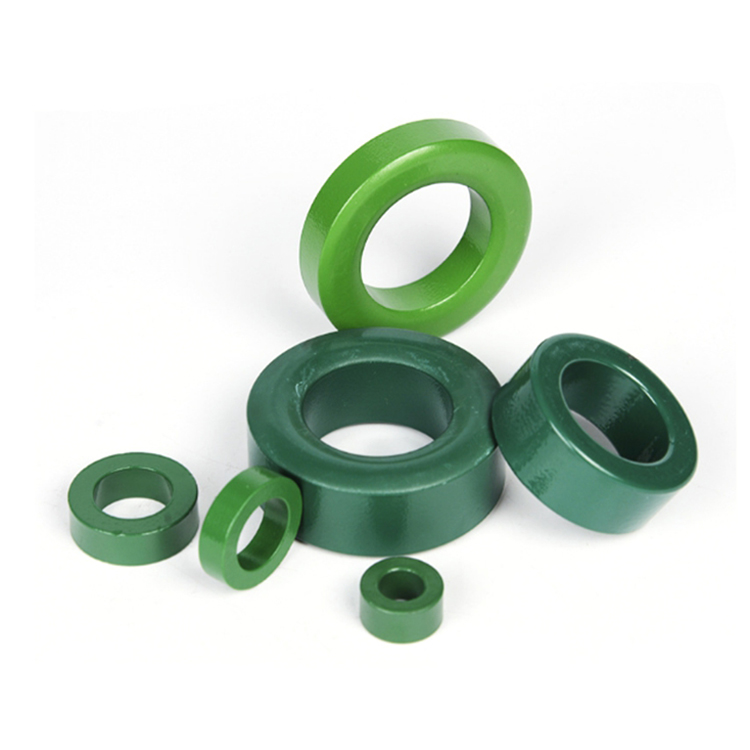
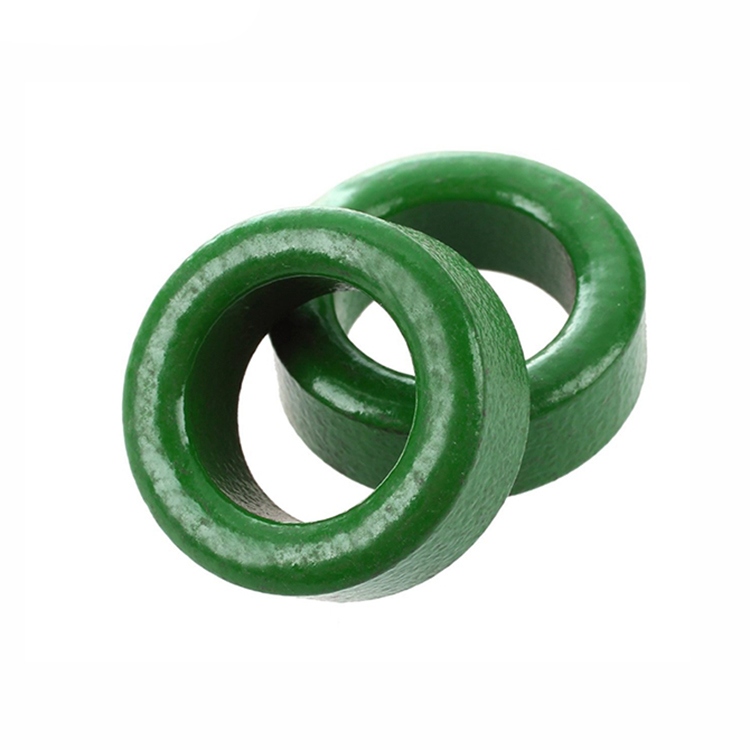
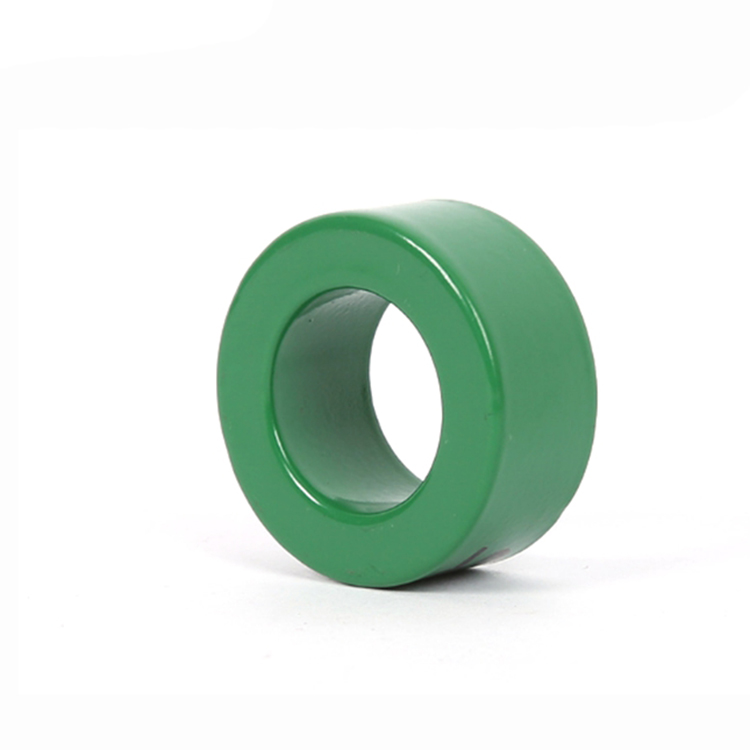
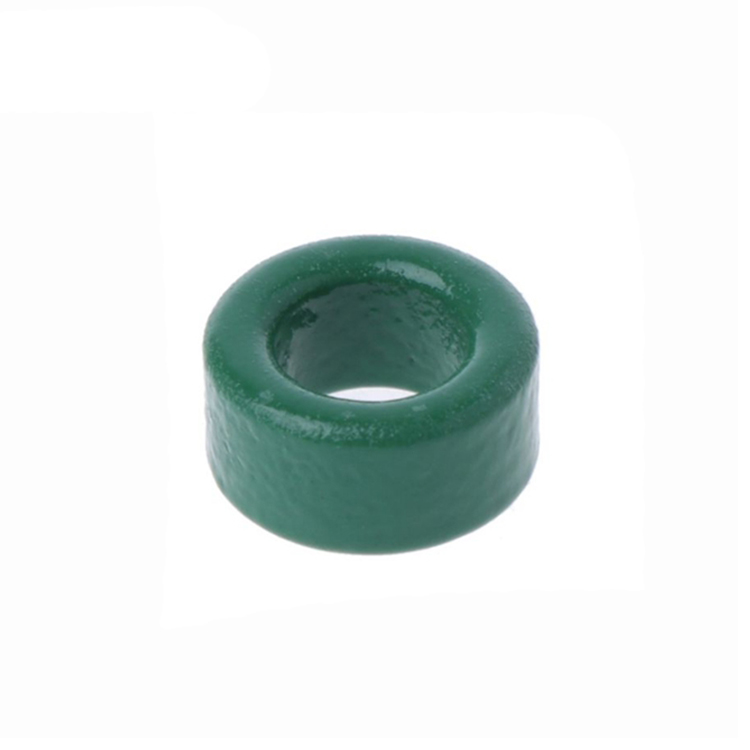
(1) Magnetized ring center. From a magnetic standpoint, the magnetic ring may be the best alternative since its magnetic circuit is closed, enhancing the ferrite’s performance. Even a little amount of air reduces magnetic permeability dramatically, especially for ferrite materials with high magnetic permeability. Interference reduction coils, magnetic amplifiers, and pulse converters (common mode inductors) are all applications for the magnetic ring.
Despite being one of the least expensive magnetic components for a given power processing capability, wrapping the magnetic ring is the most difficult.
(2) Is a key typer. Almost all wire packages and bobbins are housed in transmission filter inductors, which were the can core’s original purpose. This structure prevents outside radio interference (EMI). Because the can core is more expensive than other types and has poor heat dissipation performance, there is no product suitable for high power applications.
(3) An E-type magnetic core. The E-type magnetic core is less costly, easier to spin, and easier to install than the can core. The skeleton of an E-type magnetic core is divided into two types: vertical and horizontal. The horizontal skeleton is the inverse of the vertical skeleton in that it has a large height but a small PCB area. Type E is presently the most common core type. With the exception of differences in the leakage magnetic field distribution, both the EE core and the EI core may be utilized to produce switching power supply transformers since they have the same size, shape, and structure.
(4) The EC core. The EC core is a hybrid of the E and can cores, with a large window area (for the can core) and a heat dissipation duct. The circumference of the circular center column is 11% less than that of the square center column under the same area, reducing copper loss, and the round shape is more easy when coiled.
(5) PQ cores provide maximal inductance and wire package area in the lowest core size and are mostly used in switching power supply. As a consequence, its core delivers maximum power while maintaining the smallest feasible height and volume. Our company makes ferrite cores in a range of shapes and sizes. These magnetic cores in various shapes each have their unique characteristics and may be utilized to make various magnetic components. Our company makes ferrite cores in a range of shapes and sizes. These magnetic cores in various shapes each have their unique characteristics and may be utilized to make various magnetic components.
Ferrite core material types
The sol-gel process was used to create core-shell FeCo/MnZn ferrite powders with ferrite concentrations ranging from 5.01 wt.% to 17.10 wt.%. Mn0.8Zn0.2Fe2O4 was the target composition for the MnZn ferrite shell. Using the field-assisted sintering process (FAST) at 800°C for 10 minutes, the powders were compressed into bulk composites containing FeCo separated by an oxide matrix.
Each compact formed had a proportionate density more than 95%. As the MnZn ferrite concentration in the initial core-shell powder increases from 5.01 wt% to 17.10 wt%, the saturation magnetization of the compacts decreases from 222 Am2/kg to 165 Am2/kg and the coercivity increases from 772 A/m to 1654 A/m. According to the XRD findings of the compacts, the spinel-structured MnZn ferrite is chemically decomposed into a rocksalt-structured phase. The interaction between FeCo and MnZn ferrite occurs around 800°C but is more advantageous for MnZn ferrite at temperatures below 400°C, according to thermodynamic simulations. This prediction was validated by FAST aggregation at 400°C.
The magnetic drive
Mn Zn Ferrite Magnet Manufacturing
Magnet Gear (instead of regular gear)
Magnets in two sizes: large and small.
Magnet with an uneven form
12000gs 17000 gauss magnetic separator rod plate
(rated lifting strength) 5 ton 5000kg lifting magnet
Suspension height of 450mm (conveyor belt suspension magnet)
Magnet Powder in all forms
Water that has been magnetized
Magnet with a high temperature resistance of 550 C
Magnet made of dielectric material
Tolerances are strict and precise.
The tolerance of NdFeB sintered magnets is +-0.01mm.
(The typical industrial tolerance is +-0.05)
N35-N56 classification
Magnet NdFeB 5400 gauss
Grade Y30-Y46 ferrite magnet
Ceramic magnet C8-C15
Every form imaginable
Tool for Magnetic Assembly
The price of high power magnets, alnico magnets, and bonded ndfeb magnets is competitive.
Soft type magnet :
Produce CSC cores with competitive price
All kinds of soft magnet,sendust,mpp,iron powder,
mega flux,high flux,ferrite core, inculde KDM etc.
Low permeability material have meet American and Korea standard,
we can make some special cores that others can not make.
Customize soft cores and inductors and transformers
Abstract
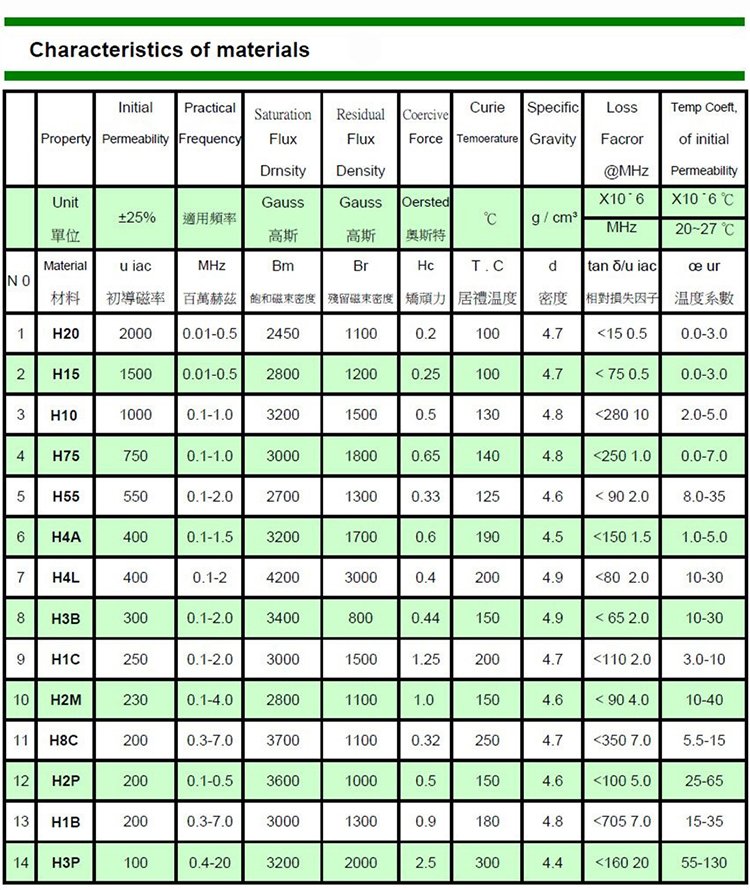
The soft magnetic manganese zinc ferrite core materials for high frequency power transformer and filter inductor uses are the subject of this standard. The saturation flux density and core loss of this soft magnetic manganese zinc ferrite power transformer frequently place size restrictions on it, whereas the inductance index, which is a function of material permeability, places restrictions on the size of the filter inductor core. For tensile strength, coefficient of linear expansion, compressive strength, and density, representative material values are provided.
Scope
Clause 1.1 of this standard covers the requirements for the defined grades of soft magnetic manganese zinc (MnZn) ferrite materials. The principal uses for these materials’ cores are transformers and inductors.
1.2 Frequency—MnZn ferrite cores are most often used at frequencies ranging from 10 kHz to 1 MHz. Many inductors also include a direct current component.
1.3 Magnetic Flux Density—There are two categories of applications: high magnetic flux density applications and low magnetic flux density applications.
1.3.1 High magnetic flux density power converter transformers. In high current applications, chokes or inductors are used.
1.3.2 Transformers, inductors, and chokes are examples of signal filtering devices with low magnetic flux density.
1.4 The figures supplied in SI units should be considered standard. Parenthetical numbers are mathematical conversions to cgs-emu and inch-pound units that are provided for informative reasons only and should not be considered standards.
1.5 If there are any safety concerns, this guidance does not pretend to cover them entirely. The user of this standard is responsible for developing appropriate safety, health, and environmental standards, as well as determining the application of any regulatory limits prior to use.
1.6 This international standard was developed in accordance with the internationally recognized standardization principles defined in the World Trade Organization’s Technical Barriers to Trade Determination on Principles for the Development of International Standards, Guidelines, and Suggestions (TBT).