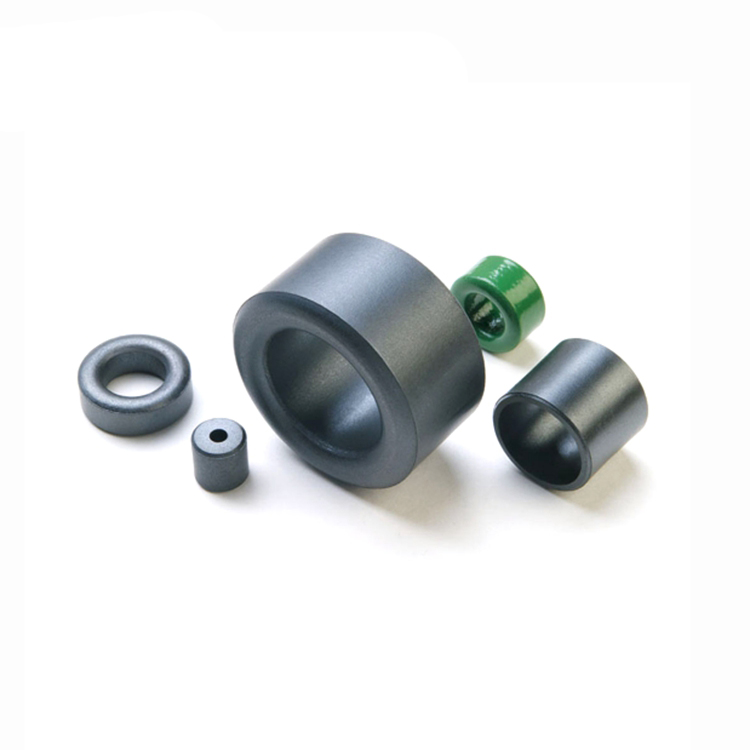
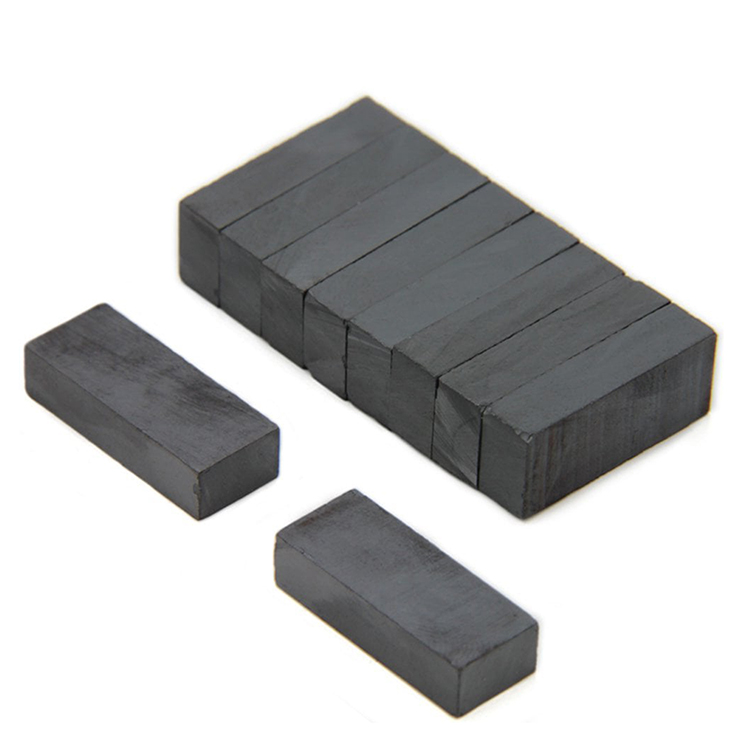
Ceramic magnets, ceramic ferrite magnets, ferroba magnets,
and hard ferrite magnets are further names for ferrite magnets.
One of the most popular types of permanent magnets in use today is ceramic ferrite.
Ferrite magnets are an inexpensive magnet material that is ideal for larger manufacturing runs.
Because of their superior electrical insulating capabilities, they are known as ceramics.
Ferrite magnets are excellent in moist, marine, or damp conditions since they don’t corrode.
Iron cannot oxidize (rust) any further in water since it is already in a stable oxidized state inside its structure.
The two types of ceramic Ferrite magnets are strontium (SrO.6Fe2O3) magnets and barium (BaO.6Fe2O3) magnets.
Due to their superior magnetic qualities, Strontium Ferrite magnets are the most often produced.
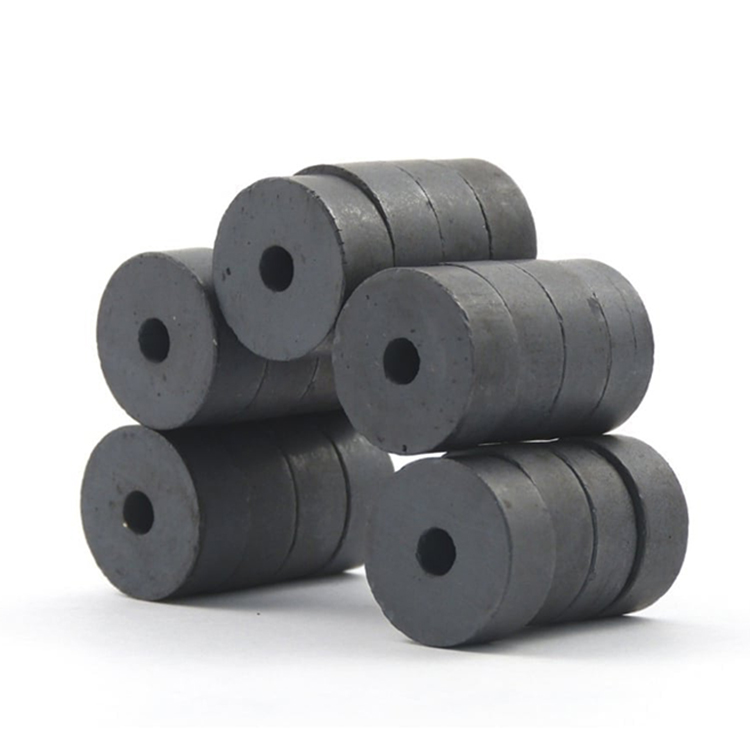
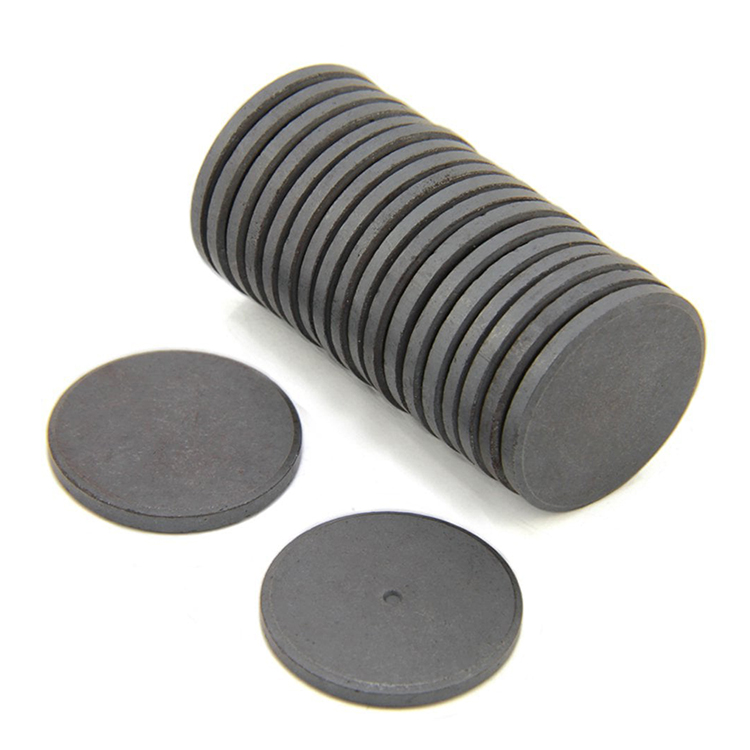
The ceramic magnets known as ferrite have a distinctive “pencil lead” color (i.e. a dark grey colour).
Their magnetic performance is ferrimagnetic
(excellent magnetic field and power, but not as strong as NdFeB or SmCo, size for size).
Ferrite magnets are used in practically every industry, including automotive, sensor, machine,
aerospace, military, advertising, electrical/electronic, academic, design house, and R&D.
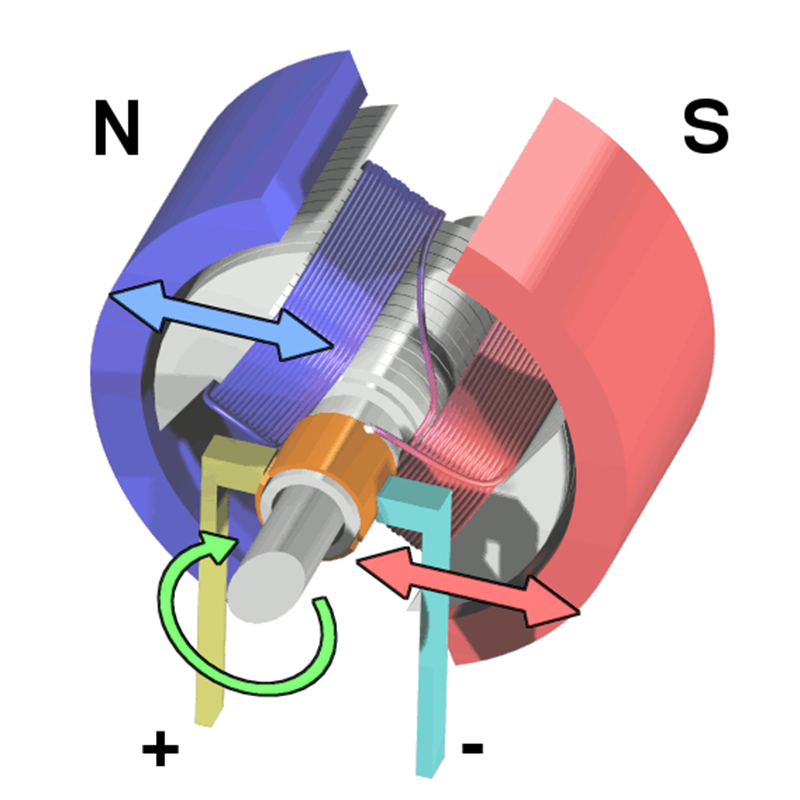
They are particularly common in motor, generator, loudspeaker, and maritime designs.
Ferrite magnets may operate at temperatures as high as +250 °C (and in some circumstances, even +300 °C).
Currently, 27 different grades of ferrite magnets are available.
Currently, C5 (also known as Feroba2, Fer2, Y30, and HF26/18) and C8
(also known as Feroba3, Fer3, and Y30H-1) are the two most common grades.
For applications like overband magnets, C 5 / Y30 is a common choice of ferrite magnet.
For applications like loudspeakers and occasionally motors, C8 / Y30H-1 is a preferable option
(C8 has a comparable Br to C5 but has a greater Hc and Hci).
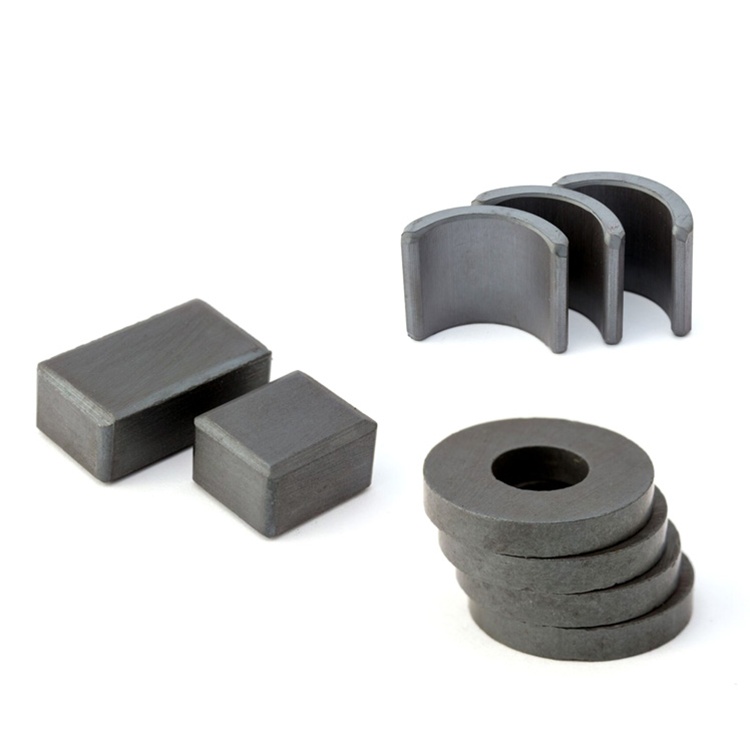
Ferrite magnets may be made in a variety of forms and dimensions.
The electrically insulating Ferrite material does not permit wire spark erosion,
hence machining to size is only possible through grinding procedures.
As a result, blocks, discs, rings, arcs, and rods are the primary forms.
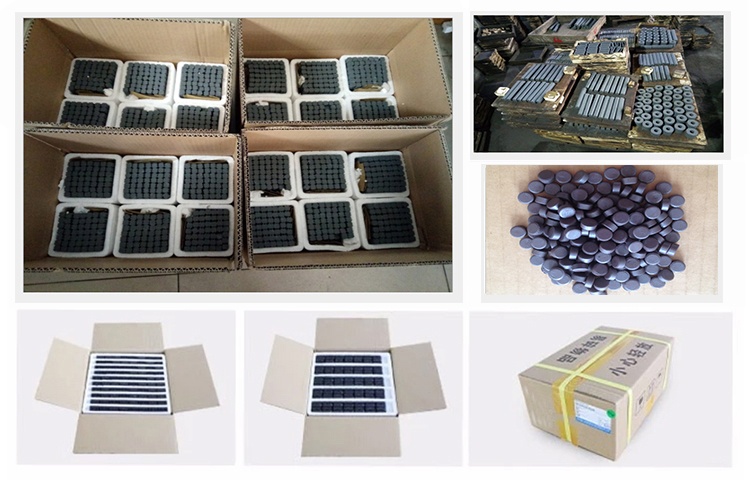
Custom sizes and other shapes could be available, although tooling fees might be involved.
NOTE:- Soft ferrites (used in transformers) and ferrite magnets operate quite differently from one another.
“Transformer” ferrites lose their magnetic properties (soft ferrite).
Because they maintain their magnetic, ferrite magnets are permanent (hard ferrite).
Ferrite magnets are permanent magnets, not rare earth magnets, and are primarily manufactured from iron oxide and strontium carbonate using ceramic manufacturing technologies.
Ferrite magnets are fragile and may be formed into a variety of forms and sizes by die pressing and then sintering. Its usual working temperature ranges from -40°C to 250°C. Because of their low cost, ease of manufacture, and superior corrosion and demagnetization resistance, ceramic magnets are the most often used permanent magnet materials. It can be made isotropically or anisotropically. Magnets C3, C5, and C8 are anisotropic. If you want the strongest magnetic materials, we recommend sintered NdFeB magnets such as N52.
Magnetic Properties and Specification
Magnet Type: Permanent Magnet
Sintered Ferrite is the material used.
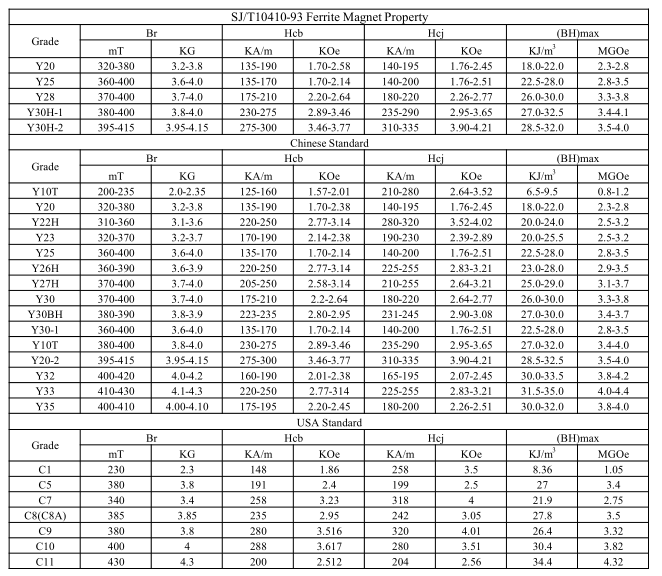
Grade: Y30, Y30BH, Y33, and so on (Download Sintered Ferrite Magnet Magnetic Property Sheet)
Magnetization Orientation
Shape, size, and tolerance: Can design unusual and complicated forms according on customer requirements.
Industrial, motors, speakers, air conditioning systems, crafts, everyday life, cattle, and so forth.
Features
Sintered The powder metallurgy process is used to create ferrite magnets. They have a low remanence, a low magnetic permeability, a high coercive force, and a high resistance to demagnetization, making them ideal for use as the magnetic circuit structure of dynamic operating circumstances. Ferrite is a hard and brittle substance that may be cut using silicon carbide tools. Isotropic ferrite permanent magnets have low magnetism but may be magnetized in several directions. Anisotropic sintered ferrite magnets offer a high magnetic performance but can only be magnetized along one axis.
Neodymium vs. Ferrite Magnets
The following are the primary distinctions between NdFeB magnets and Ferrite magnets:
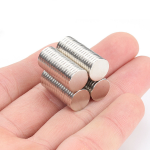
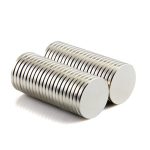
1. Ferrite magnets have a loose look, no metal sheen, and are typically delivered unplated. Ferrite magnets are typically black in color and are oxides, which are highly stable and do not corrode easily. NdFeB magnets are quick to oxidize alloys that are normally supplied with a coating or can be readily corroded. NdFeB has a silvery white surface with metallic shine or various hues.
2. There is a significant magnetic energy differential between NdFeB and Ferrite. NdFeB magnets have a magnetic energy product of 53MGOe, while ferrite magnets have a magnetic energy product of 6MGOe.
3. Ferrite magnets are significantly less expensive than Nd-Fe-B magnets. Ferrite is mostly composed of ferric oxide, whereas neodymium iron boron is primarily composed of rare earth and iron.
4. Unlike neodymium magnets, which swiftly demagnetize at high temperatures, ferrite magnets have good temperature resistance and do not easily lose magnetic strength.
5. Ferrite magnets are easily magnetized with many poles, but neodymium magnets are more difficult to magnetize with multiple poles.
Remark: Due to their high permeability, low cost, and great temperature tolerance, ferrite magnets are suitable for low frequency operating environments. They are commonly found in loudspeakers and speech boxes.
Neodymium magnets offer a wide range of applications and exceptional mechanical properties due to their compact size, low weight, and high magnetic strength. They are inexpensive and widely utilized in modern industries and electronics.
The oldest mention of magnets goes back more than 2,500 years, when the Greeks discovered and exploited magnetic lodestones, however older civilisations may possibly have utilised naturally occurring magnetic stones. The term magnet is derived from the Greek phrase ‘Magnetis Lithos,’ which means ‘Magnesian Stone,’ in reference to the location of now-modern-day Turkey where the stones were discovered.
Did you know that?
The ancient Greeks found the first magnetic substance almost 2,500 years ago!
FROM INJURY TO MASS PRODUCTION
These lodestones were used by the world’s early navigators and explorers to determine the earth’s magnetic north, and in 1600, William Gilbert wrote De Magenete, the first scientific study of magnetism. The first ceramic magnet, commonly known as a ceramic magnet, was accidentally created in 1930 by two Japanese academics at the Tokyo Institute of Technology, Dr. Yogoro Kato and Dr. Takeshi Takei. Ceramic magnets were mass-produced in the 1950s as an alternative to metallic magnets, and they are now widely utilized in electronic inductors, transformers, and electromagnets. They have also essentially replaced the earlier developed Alnico magnets in loudspeakers as radio magnets.
Did you know that?
In the 1930s, two Japanese scientists by chance discovered the chemical composition of the first ceramic magnets.
COMPOSITION OF CHEMICALS
Ceramic magnets, often known as ferrite magnets, are a type of permanent magnet manufactured of the chemical combination Ferrite, which is composed of ceramic materials and iron oxide (Fe2O3), with the chemical formula SrO-6(Fe2O3). Ceramic magnets are made from strontium carbonate and iron oxide, with each magnet containing around 90% iron oxide and 10% strontium carbonate. Both resources are abundant and reasonably priced.
Did you know that?
Because of their electrically insulating qualities and manufacturing method, ceramic magnets are also known as ferrite magnets.
AFFORDABILITY
Ceramic magnets are among the most common for daily applications due to their low production costs and resilience to heat (up to 250?) and corrosion. They have a substantially greater intrinsic coercivity than Alnico magnets, making them far more resistant to demagnetization caused by external magnetic fields. Their adhesive magnetic force, however, is significantly lower than that of high-performance neodymium magnets.
Hard Ceramic magnets are particularly resistant to demagnetization and have a high magnetic permeability, allowing them to hold larger magnetic fields than metallic magnets. While not as strong as neodymium magnets, they offer excellent endurance and will most certainly outlast the life cycle of the applications in which they are utilized.
All of our magnets at first4magnets.com are outstanding value for money, however if price is more essential than sticky force, Ceramic may be the magnet type for you. We have a large assortment of Ceramic magnets for praA ceramic magnet: what is it?
In the 1960s, ceramic magnets—also referred to as ferrite magnets—were created as an affordable substitute for metallic magnets. They are made of strontium carbonate and iron oxide. Ceramic magnets have gained widespread recognition because of their inexpensive cost per pound and resilience to corrosion and demagnetization, despite their hard, brittle nature and low energy limiting their use in several applications. By weight, ferrite accounts for about 75% of all magnet usage worldwide. For the majority of DC motor types, automotive sensors, magnetic separators, and magnetic resonance imaging, it is the first option.ctically any purpose.
How do you make them?
Powder technology methods are employed in the production of ceramic magnets. The main raw material, strontium carbonate and iron oxide, are combined to make ferrite. After combining these ingredients, the temperature is raised to 1800–2000 degrees Fahrenheit. They go through a chemical transformation at this temperature, producing ferrite as the end product.
Wet milling is then used to reduce the ferrite material to an extremely fine particle size. After that, the ground powder is either dried (for dry pressed material) or pumped into a die in a big hydraulic press (as a wet slurry). The die has carbide liners and is made of non-magnetic steel. The form of the part to be pressed is represented by the die cavities.
Next, a magnetic field is used to compress the wet powder, also known as slurry. The flat ferrite particle may more readily align itself in the magnetic field because of the water. During the compaction process, the majority of the water is removed. In the early stages of the sintering process, the residual water evaporates. The sintering process occurs at about 2000 degrees Fahrenheit. The material is completely dense and prepared for final grinding to client requirements after sintering. Diamond wheels are used for all ceramic magnet grinding since the material is extremely brittle and hard.
Ceramic Ferrite Magnet Substance
Because ferrite magnets resist corrosion, they may be used in water without experiencing any corrosion at all. Their strong coercivity and relatively low cost make them excellent for use in motors, especially high temperature motors, even if they are not as powerful as Neodymium Rare Earth.
Ferrite magnets are the best choice for low-cost uses.
In addition to being electrically insulators, ferrite magnets prevent eddy currents from flowing through them.
Iron magnets work well at higher temperatures, but they are not the best choice for extremely cold environments.
The benefits and drawbacks of ceramic magnets made of ferrite
Avoid corroding in water.
Useful temperature range: +250°C (482°F); in certain cases, up to +300°C (572°F).
high coercivity (Hci), which rises with magnetization.
having electrical insulation.
Reasonably inexpensive – ideal for projects aiming to cut costs.
The drawbacks
Not as powerful as Neodymium Rare Earth Magnets, which normally provide a draw force of around 1/7th that of NdFeBs of a similar size.
Tooling costs may apply to specialized shapes.
The Intrinsic Coercivity (Hci) decreases to a point where, depending on the application and form, the magnet may begin to demagnetize when cooled to around -20°C (-4°F) or below.
Common Uses for Ferrite (Ceramic) Magnets: Marine Applications; Motors and Generators; Meters
elevated temperatures in use.
Pot magnets and clamping systems at reduced costs
Magnets for loudspeakers: Overband
For instance: NdFeB Neodymium magnets were being used by a corporation to clamp onto hot mild steel surfaces, but the magnets were having trouble working and were expensive. We produced Ferrite pot magnets, which not only offered a direct draw force that was sufficient, but they could also withstand high temperatures, their design prevented damage to the magnets, and the system was less expensive and simpler to maintain.
Ceramic magnets, which are mostly made of iron oxide, Fe2O3, are often referred to as hard ferrites or ferrite magnets. Strontium ferrite, SrFe12O19 (SrO·6Fe2O3), and barium ferrite, BaFe12O19 (BaO·6Fe2O3), are the two prevalent components. Manganese-zinc ferrite (MnZn, formula MnaZn(1-a)Fe2O4) and nickel-zinc ferrite (NiZn, formula NiaZn(1-a)Fe2O4) are typical compositions of soft ferrites, which have a reduced coercivity.
Magnets made of ceramic can be anisotropic or isotropic. Anisotropic ceramic magnets can only be magnetized along the easy axis (the direction of magnetization), but isotropic ceramic magnets can be magnetized in any direction. Their inherent coercivity has a positive reversible temperature coefficient and an extremely high electrical resistivity of around 106 Ohm-cm.
Since ceramic magnets have a lower maximum energy product (BH)max than other permanent magnets, they are usually significantly bigger in real applications. They are the most often used magnet in the world by weight. Because ceramics need cheap raw materials and manufacturing techniques, they are the most affordable and chemically stable magnets. While the intrinsic coercivity, Hci, of 1 to 4 MGOe is higher than that of Alnico, the maximum energy product, (BH)max, of 1 to 4 MGOe is lower than that of rare earth magnets. For a variety of industrial applications, ceramic magnets are an affordable option.
EXPORT-USED CERAMIC MAGNETS
We distinguish ourselves from our rivals with our high-quality products, expert craftsmanship, affordable costs, and dedication to achieving complete client pleasure. Not the quantity of their orders, but our clients and their requirements are what matter most to us. Customer service is our commitment at Magnetic Hold.
A CERAMIC MAGNET: WHAT IS IT?
Known by another name, hard ferrite magnets, which are made of barium or strontium, were created as an affordable substitute for metallic magnets in the early 1960s. In comparison to other magnetic materials, this kind of magnet is extremely brittle, hard, and has lower energy characteristics. Nonetheless, due to their widespread usage and high popularity.
However, due of their superior demagnetization and corrosion resistance as well as their affordable price, ceramic ferrite magnets are highly popular and widely employed.
Pottery Magnets
Ferrite magnets are made via injection molding or sintering. At 350 °F, ceramic magnets maintain around 45% of their room-temperature magnetic properties. Up to around 840 °F, at which point ceramic magnets totally demagnetize, degradation with rising temperature is almost linear and variations in magnetization are basically reversible. For continuous usage, ceramic magnets subjected to temperatures as high as 1800 °F can be remagnetized. Above 1800 °F, however, alterations are permanent.
The most often used magnets are ceramic 5 magnets, which need to be magnetized in the orientation that they are oriented in.
Because Ceramic 8 magnets have a better peak energy product than Ceramic 5 magnets and a stronger resistance to demagnetization, they are utilized. In addition, they need to be magnetized in the orientation’s direction. When the magnet length is at its lowest or the magnetic circuit is exposed to a strong demagnetizing field, ceramic 8 is a great option. For information on ceramic magnet qualities and grades, see the table below.
One of the most affordable magnetic materials is ceramic ferrite magnets. It can function in moderate temperatures and has a fair to good resistance to corrosion. Ceramic Ferrite magnets are low energy devices that are often utilized in mild steel assemblages.
Powder technology methods are employed in the production of ceramic magnets. The main raw material, strontium carbonate and iron oxide, are combined to make ferrite. By weight, ferrite magnets account for almost 75% of all magnet usage worldwide. For the majority of DC motor types, automotive sensors, magnetic resonance imaging, and magnetic separators, ferrite magnets are the preferred option.
The production and distribution of ceramic ferrite magnets used in a variety of industrial applications is the area of expertise for Stanford Magnets. We have skilled engineering specialists, a wealth of knowledge, and cutting-edge technology.