



Preparation process of neodymium block magnets
Neodymium block magnets are strong permanent magnets made from an alloy of neodymium, iron, and boron. They are also known as neodymium rectangular magnets or neodymium bar magnets due to their rectangular shape. These magnets are incredibly powerful for their size and are commonly used in various applications where a strong magnetic field is required
Raw material preparation (alloy melting and casting)
Milling
Orientation forming
Sintering, heat treatment and machining
Today we will start with raw material preparation and alloy preparation. Sintered Neodymium block magnets usually use pure metals or intermediate alloys as raw materials. They use the electromagnetic induction heating principle of alternating magnetic field to generate eddy currents in the raw materials. The raw materials are smelted by medium and low frequency induction in a vacuum or inert gas environment, so that the raw materials are heated and melted.
The melt is stirred to homogenize it. The melting points of rare earth metals are between 800 and 1500°C, Fe and Co are 1536°C and 1495°C respectively, and pure B is as high as 2077°C. The melting points of some high melting point metals used as additives such as Ti, Cr, Mo or Nb are at 1600~3400℃. Taking into account the suppression of volatilization of rare earth elements Neodymium block magnets, the melting temperature is usually controlled at 1000~1600°C.
High-melting-point elements Neodymium block magnets are melted by the alloying of the rare-earth metal melt, or alloys of high-melting-point elements (usually iron alloys) are directly used as raw materials, such as B-Fe (melting point ~1500℃), Nb-Fe (melting point ~1600℃) alloy, etc. In order to ensure a low-oxygen environment for smelting and casting, it is necessary to evacuate the smelting and casting furnace bodies and fully deflate the components and raw materials in the furnace. The vacuum level usually reaches 10-2~10-3.
The furnace body is heated The pressure increase rate (internal gas release and external air leakage) also needs to be controlled at a low level. For example, for a smelting furnace with a capacity of 1t, the pressure increase rate should be lower than 5×10⁻⁴~1×10⁻³ L/s. . Vacuum smelting can fully deflate the molten liquid, remove low-boiling impurities and harmful gas elements, and improve the purity of the alloy.
However, because the vapor pressure of rare earth metals is very low (less than 1 Pa), the volatilization loss is very considerable, so it is usually used during the smelting process. The furnace body is filled with inert gas to increase the ambient air pressure to suppress the volatilization of rare earths. It is more convenient to use high-purity argon gas, which is generally filled to a level of 50kPa. After the alloy melt is homogenized, vented and slagging is fully completed, casting can begin.
Alloy casting is a very critical process, because the composition, crystallization state and spatial distribution of the phases are crucial to the performance of the sintered n52 neodymium magnet.
The alloy ingot has experienced heavy “cannonballs”, 20mm thick “books”, and 5mm “pancakes” “Currently, it has developed to rapid-setting flakes with a thickness of only 0.3mm. Industry insiders haveNeodymium block magnets made various efforts to avoid component segregation and the generation of impurity phases, and to reasonably distribute the distribution of neodymium-rich phases.
1. Smelting
Rare earth raw materials usually take the form of pure metals, and rare earth alloys are often selected due to cost reasons, such as praseodymium and neodymium metal, lanthanum and cerium metal, mixed Neodymium block magnets rare earths and dysprosium ferroalloys, etc.; high melting point element components (such as: B, Mo, Nb, etc.) It is mostly added in the form of ferroalloy. Nd-Fe-B magnets have the characteristics of multi-metallic phases.
The Nd-rich phase is a necessary condition for high coercivity, and the B-rich phase must also coexist. Therefore, the rare earth and B in the original formula are usually required to be higher than the positive components of R2Fe14B, but Sometimes in order to adjust the composition of the grain boundary phase (especially when Cu, Al, and Ga are added), the B content is slightly lower than the positive component Neodymium block magnets .
Due to the reaction between rare earth metals and crucible materials and volatilization during smelting and sintering, a certain amount of loss of rare earth metals needs to be considered when formulating. In order to reduce the impurity content in the alloy, the purity of the raw materials must be strictly controlled, and the oxide layer and attachments on the surface must be fully removed.
The heat source of medium and low frequency induction melting is the induced eddy current formed in the raw material by the alternating magnetic field. The skin effect of the eddy current causes the current to concentrate on the surface of the raw material Neodymium block magnets. If the size of the raw material block is too large, the eddy current cannot penetrate into the center of the block and will only The core can be melted by heat conduction n52 neodymium magnet , which is very unrealistic in actual production.
Therefore, the size of the raw material must be adjusted according to the frequency selection and controlled to 3 to 6 times the skin depth. The figure below shows the relationship between power frequency – skin depth – raw material size. It can be seen that the higher the frequency, the more significant the skin effect is, and the smaller the size of the raw material is required.
The choice of melting frequency is subject to another important function of induction melting – electromagnetic stirring, which uses the interaction of the force between the molten metal and the alternating magnetic field to promote the melting of unmelted solids and the homogenization of the molten metal Neodymium block magnets .
The electromagnetic force The magnitude is inversely proportional to the square root of the current frequency. Too high a frequency will weaken the electromagnetic stirring effect of the alternating power supply. The frequency band used in actual production is around 1000~2500Hz, and the raw material size needs to be controlled below 100mm.
The stacking of raw materials in the crucible must take into account the spatial distribution of the induced magnetic field and temperature during the melting process. Usually, the induction coil is wound around the outside of the crucible.
The magnetic field is strongest on the inside of the crucible and gradually weakens toward the center, but the sides, bottom and top of the crucible The opening is the main way for heat to escape Neodymium block magnets, so the temperature of the lower side of the crucible is in the middle, the temperature of the upper layer and the middle of the bottom is lower, and the temperature of the middle part is the highest.
Therefore, when loading, it is advisable to place small pieces of low-melting point materials densely at the bottom of the crucible; high-melting point materials and large pieces of materials should be placed in the middle and lower parts; large pieces of low-melting point materials should be placed in the upper part and be loose to prevent bridging.
Nowadays, continuous smelting-casting technology has been widely used. Raw materials are continuously added to the crucible that is still at high temperature through a charging chamber n52 neodymium magnet . In order to control the volatilization of rare earth materials, pure iron is usually added first to melt it, then high melting point metals or alloys are added sequentially, and finally rare earths are added.
2. Casting
Rare earth binary or ternary alloys inevitably generate α-Co or α-Fe phases under slow (near equilibrium) cooling conditions. Their soft magnetic properties at room temperature will seriously damage the permanent magnet properties of the Neodymium block magnets, and must be quickly Cool to inhibit its formation.
In order to achieve the required rapid cooling effect, traditional ingot mold casting technology has been working towards reducing the thickness of the alloy ingot. The advantages of ingot mold casting are low equipment cost, simple operation, and can meet the general magnet production requirements.
The disadvantage is that the grain size is uneven and α-Co or α-Fe phases often precipitate Neodymium block magnets. Long-term heat treatment of alloy ingots at temperatures below the melting point of the alloy can help eliminate the α-Co or α-Fe phase, but it will cause the accumulation of Nd-rich phases, which is not conducive to the optimal distribution of grain boundary phases in sintered magnets.
In order to further reduce the thickness of the alloy ingot, a “disc-scraper” structure similar to spreading a pancake was developed, making the alloy thickness reach about 1cm. However, the increase in the alloy area brought a lot of trouble to the collection of large-capacity smelting furnaces.
Another effective technology development path goes in the opposite direction, starting from the extremely high cooling rate for preparing fast-quenching Nd-Fe-B alloys Neodymium block magnets, and trying to reduce the cooling rate to prepare fast-cooling crystalline alloys, which are called strips The technology of casting or quick-setting flakes (strip casting or SC) came into being.
It pours the molten alloy through a diversion trough onto a rapidly rotating water-cooled metal wheel to obtain a 0.2~0.6mm thickness, ideal phase composition and texture. Alloy flakes. In the strip-cast alloy structure Neodymium block magnets, the uniform distribution of Nd-rich phase and the suppression of α-Fe reduce the total rare earth content, which is beneficial to obtaining high-performance magnets and reducing magnet costs; the disadvantage is that due to the reduction in the volume fraction of Nd-rich phase , compared with magnets produced by ingot mold casting, the brittleness of the magnets increases and post-processing becomes more difficult.
Alloy smelting and casting. The cast alloy needs to be made into powder through a pulverizing process before it can enter the subsequent processing process. Obtaining suitable powder shape Neodymium block magnets, average particle size and particle size distribution are the basic purposes of powder preparation.
The above-mentioned characteristic differences of the powder are macroscopically manifested as changes in the bulk density, tap density, angle of repose, fluidity, compression ratio, internal friction and external friction coefficient of the powder, which are directly related to the powder filling, The magnetic field orientation, blank pressing and demoulding, as well as the magnet microstructure generated by the sintering and heat treatment processes, thus sensitively affect the permanent magnetic properties, mechanical properties, thermoelectric properties and chemical stability of then52 neodymium magnet .
The ideal microstructure of sintered magnets is that of fine and uniform main phase grains surrounded by smooth, thin additional items, with the easy magnetization directions of the main n52 neodymium magnet phase grains arranged as consistently as possible along the orientation direction.
Cavities, large grains and larger-sized soft magnetic phases will seriously reduce the intrinsic coercive force of the magnet, while grains whose magnetization direction deviates from the orientation direction will simultaneously reduce the squareness of the magnet’s residual magnetization and demagnetization curves. For this purpose, alloy ingots or rapid cooling flakes need to be made into single crystal particles with an average particle size of 3~5 μm, a maximum particle size of less than 20 μm, and a shape close to spherical.
At the same time, the proportion of excessively fine grains must be controlled to avoid the tendency of serious oxidation of the powder. , if necessary, use powder surface treatment to enhance the anti-oxidation ability of the powder and improve filling and compressibility.
1. Conventional mechanical crushing method
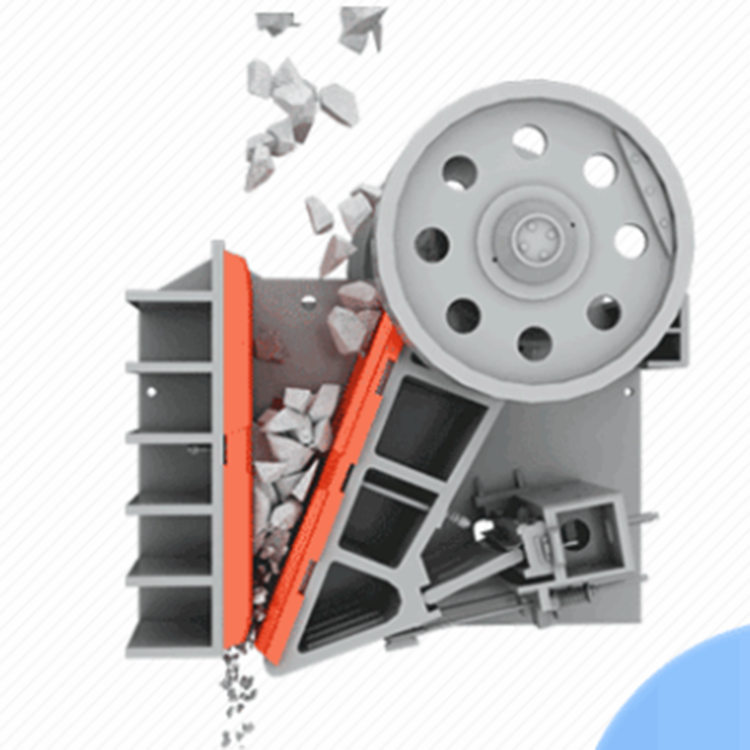
Neodymium block magnets transition group intermetallic compounds have high hardness and brittleness. Alloy ingots can be easily broken into small pieces using a jaw crusher or similar machinery, and then mechanically crushed step by step to an average particle size of 3~5 μm. However, equipment wear brings in Impurities also inevitably affect the quality of the powder. Due to the severe oxidation tendency of rare earth metals and their intermetallic compounds, coarse crushing (~10mm level) and medium crushing (~100μm level) are usually carried out under a protective atmosphere such as nitrogen or argon, while fine grinding (average particle size 3~5μm) Choose liquid protection ball mill or nitrogen or inert gas flow mill.

The double alloy method or multi-alloy method of sintered NdFeB is also widely used. Usually, an alloy close to the Nd2Fe14B positive component and an Nd-rich fast-cooling alloy are mixed and ground Neodymium block magnets , and the small-volume Nd-rich powder is evenly distributed to It is nearly divided into the main body of alloy powder.
2. Hydrogen Decrepitation (HD)
Research on the hydrogen absorption behavior of rare earth metals, alloys and intermetallic compounds and the physical and chemical properties of hydrides has always been a major issue in the application of rare earths. The most direct example is hydrogen batteries. Alloy ingots of rare earth permanent magnet materials also have a strong tendency to absorb hydrogen.
Hydrogen atoms enter the interstitial sites in the main phase of the intermetallic compound and the rare earth-rich grain boundary phase to form interstitial atomic compounds, which increases the atomic spacing and expands the lattice volume. , the resulting internal stress causes grain boundary cracking (intergranular fracture), grain fracture (transgranular fracture) or ductile fracture of the alloy in a very brittle alloy Neodymium block magnets . Because this cracking may be accompanied by a crackling sound, it is called It’s called “hydrogen crushing” or “hydrogen bursting.”

3. Ammonia jet milling method
In laboratories or large-scale production processes, fluidized bed jet mills using high-pressure (0.6MPa), high-purity (99.995%) nitrogen as the power source are usually used. The median particle size D50 measured by the laser particle size analyzer is around 5 μm. Neodymium block magnets . Considering that gas pressure is proportional to the average kinetic energy of gas molecules, under the same pressure, gas with a small molecular weight has a greater flight speed Neodymium block magnets , and an increase in gas flow rate is conducive to increasing the frequency of natural collisions of powder particles. Hydrogen molecules and helium molecules are the best candidates, but due to the explosive nature of hydrogen, helium is the best choice. The flow rate of helium is 2.9 times that of nitrogen, and Nd-Fe-B coarse powder can be powdered in a short time. Crush to D50=2μm or less.

Magnetic field orientation forming uses the interaction between magnetic powder and external magnetic field to arrange the easy magnetization directions of the powder particles so that they are consistent with the final magnetization direction of the Neodymium block magnets. This is the most commonly used method to obtain anisotropic magnets. The powder preparation process breaks the Nd-Fe-B alloy into single-crystal particles, and they are uniaxially anisotropic.
Each particle has only one easy magnetic axis—the c-axis of the main phase unit cell. The powder is loosely filled into the mold. The filling density is about 25%-30% of the actual density Neodymium block magnets. Under the action of an external magnetic field above 0.8A/m, these powder particles change from multi-domain to single-domain and are rotated or moved. The easy magnetization direction is adjusted to the direction of the external magnetic field.
In industrial production, current press forming methods are divided into two categories: one-time forming and two-time forming.
One-time forming can use a one-way press (pressure is generally 50-100MPa, green compact density is 55%-60% solid density) or cold isostatic press (pressure is generally 200MPa, green compact density is 60% solid density) ).
The two-step forming can use a one-way press (pressure is generally 20-30MPa, green compact density is 45% solid density) plus a cold isostatic press (pressure is generally 200MPa, green compact density is 60% solid density) .
During the orientation forming process, the alloy powder basically retains the c-axis orientation arrangement. After the pressing is completed, the blank is demagnetized (to eliminate the damage to the orientation of adjacent particles caused by the magnetic dipole interaction between magnetic powder particles), and then demolded Neodymium block magnets . A blank with good orientation in the easy magnetization direction can be obtained.
Pressures as high as 100 MPa will force the magnetic powder to obey the balance conditions of mechanical force and magnetic force, which will inevitably cause the movement or rotation of the magnetic powder particles, which may cause the c-axis to deviate from the direction of the external magnetic field and reduce the orientation of the Neodymium block magnets。
Therefore, the magnetic field formation process is to reasonably balance the relationship between the magnetic field intensity and the forming pressure on the premise of achieving the density of the blank to obtain the highest possible orientation.
The degree of powder orientation is also affected by the internal friction of the powder. The impact is particularly serious when the bulk density is large. In actual production, organic lubricants are used to reduce the internal friction, but they must be removed before the sintering reaction occurs (usually around 200°C). The lubricant is completely released to prevent oxidation or carbonization of the lubricant from reducing the performance of the Neodymium block magnets .
There are usually three types of forming processes in actual production:
Transverse Direction Pressing, TDP
Axial Direction Pressing, ADP
Isostatic Pressing Isostatic Pressing, IP (isostatic pressing usually uses a liquid medium, and isostatic pressing using rubber as the medium is called rubber molding Rubber Isostatic Pressing, RIP)

The most common of them is vertical pressing, which means that the direction of the magnetic field H is perpendicular to the pressing direction P; parallel pressing means that the direction of the magnetic field is parallel to the forming pressure; and isostatic pressing applies pressure evenly to the magnetic powder in all directions through a medium such as liquid or rubber mold Neodymium block magnets.
When the process parameters such as magnetic powder filling, magnetic field intensity, and forming pressure are the same, the performance of the Neodymium block magnets obtained by isostatic pressing is the highest, followed by vertical pressing, and parallel pressing is the lowest.
If the degree of orientation is measured by the ratio of remanence and saturation magnetization, RIP is as high as 94%~96%, TDP is 90%~93%, and ADP is only 86%~88%, between the three (BH) max can differ by 16~40kJ/m3 (2~5MGOe). This difference typically reflects the competitive relationship between mechanical pressure, magnetic dipole interaction and internal and external friction forces.
Cold isostatic pressing is also often used for secondary pressurization of unidirectional pressed blanks. When the orientation magnetic field is limited, lower pressure is first used to obtain the appropriate degree of orientation, and then isostatic pressing is used to further increase the density of the compact. Do not destroy existing orientation levels.
Sintering and heat treatment
The blanks pressed by magnetic field orientation are sintered under high vacuum or pure inert atmosphere to reach a high density close to 95% of the theoretical density. The magnet holes have a closed structure, ensuring the uniformity of the magnetic flux density and the chemical stability of the metal; and because of the Neodymium block magnets’s The characteristics of permanent magnets are closely related to their metallographic microstructure.
The heat treatment process after sintering is crucial to the adjustment of the magnetism. However, after all, the processing temperature is relatively low. Some important microstructural characteristics cannot be completely expected to be adjusted by heat treatment, but must be adjusted in The sintering process is carefully controlled.
In order to avoid the decrease in coercivity caused by the growth of the main phase grains, Nd-Fe-B Neodymium block magnets need to be sintered at a temperature lower than 1100°C. The usual sintering temperature is 1050~1080°C, and can obtain close to zero porosity. The real density and grain size are in the range of 5~15μm; in order to obtain high coercivity, two-stage heat treatment at around 900°C and 500°C is usually required, and quenching is required after sintering and heat treatment to fix the corresponding microstructure. structure.
The optimal combination of heat treatment temperature and time is closely related to the added elements and its composition in the Nd-Fe-B Neodymium block magnets magnet, but a large number of experiments show that the first-level heat treatment temperature (900°C) has wide applicability because of the rich content at this temperature. The Nd phase is in a liquid state. As a grain boundary phase, it can repair the surface of the main phase grains. As long as the time is not too long, it will not cause the main phase grains to grow too much or the Nd-rich phase to become enriched.
This effect has nothing to do with the composition. Large; the second-stage heat treatment is crucial to the adjustment of the phase composition and microstructure of the magnet. In this temperature range, eutectic reactions will occur, and the total amount, composition, and distribution of the liquid phase are changing Neodymium block magnets , so it will be sensitive to It affects the intrinsic coercive force of the magnet, the squareness of the demagnetization curve and the high-temperature irreversible loss of the magnet.
Machining
Due to the characteristics and technical limitations of the magnetic field orientation forming process, it is difficult for sintered Neodymium block magnets to directly achieve the shape and dimensional accuracy for practical applications n52 neodymium magnet at one time, so mechanical processing of sintered blanks is inevitable. The main reasons are:
1. Many finished magnets are small in size and complex in shape, and can only be processed from blank magnets of a certain shape;
2. Even for nearly-finally formed blank magnets, due to the low bulk density and poor fluidity of the powder, the filling uniformity of the female mold is poor, and it is difficult to avoid fluctuations in the shape or size of the sintered magnet blank;
3. Due to the obvious difference in sintering shrinkage of the Neodymium block magnets blank magnet in parallel and perpendicular to the orientation direction, as well as the difference in sintering shrinkage at the boundary and center of the blank magnet, it is ultimately difficult to meet the dimensional accuracy requirements of the finished magnet.
Considering raw material and labor costs, Japanese and European and American companies mostly choose near-net forming technology Neodymium block magnets, supplemented by subsequent mechanical processing;
Chinese companies produce a wide range of rare earth permanent magnet products, mainly using a comprehensive production process that combines rough magnets with post-processing, and fully draws on ceramics And the technological advantages of crystal processing bring the mechanical processing level of rare earth permanent magnets to the extreme. With the increase in raw material cost and labor cost pressure, near-net forming and automatic forming technology are developing rapidly in our country.
Rare earth permanent magnets prepared by powder metallurgy are a typical cermet product that is hard and brittle. For hard and brittle materials, the turning, milling, planing, and grinding Neodymium block magnets drills used for general machining only include cutting, drilling, and drilling. Grinded and tumbled. It can be subdivided according to the basic characteristics of the processing surface:
Blade cutting usually uses diamond or cubic boron nitride powder electroplated blades. Different blade thicknesses and blade edge positions are selected according to the incision depth and geometric tolerance requirements Neodymium block magnets . The edge of the inner circular cutter is supported by the blade and the outer circular hoop. Good flatness can be ensured during the cutting process, so the blade thickness can be as high as 0.1mm, but the depth of the cut and the size of the magnet being cut are limited by the difference between the inner diameter of the blade and the inner and outer diameters.
The cutting edge of the external cutter floats on the outer edge, and the blade support ability is inferior to that of the internal cutter. Therefore, to ensure the same tolerance level, a slightly thicker blade is required Neodymium block magnets , generally in the range of 0.2~0.5mm, and the resulting material loss is also Bigger. For products with large batches and single sizes, it is very efficient to use wire saws for slicing.
Electrical discharge cutting and laser cutting are direct thermal processing, which can be used for cutting with complex shapes. However, the cutting efficiency is relatively low and the processing cost is high Neodymium block magnets . Moreover, some studies have found that the processed surface of sintered NdFeB magnets has a thickness of about 10% due to the heating process. The 15μm Nd-rich layer reduces the chemical stability of the material.
Magnet drilling relies on diamond drills or lasers. In order to improve material utilization, the technology of hollow drilling has been developed. The solid cylinder dug out from the center of larger inner diameter products can also be used to make other small-sized products Neodymium block magnets . Drilling with ultrasonic action The hole pattern can alleviate brittle damage, which is beneficial to the processing of high-performance or high thermal stability magnets with high brittleness.
There are two types of grinding wheels: metal-based or resin-based. Profile grinding makes a grinding wheel base based on the grinding surface profile Neodymium block magnets , which is then coated with diamond or BN powder and modified to meet the final product requirements.
Mechanical processing will produce defects on the surface of the Neodymium block magnets , which seriously affects the performance and corrosion resistance of the magnet. This is more serious for small and thin products, so it needs to be repaired by removing or repairing the surface defect layer.