

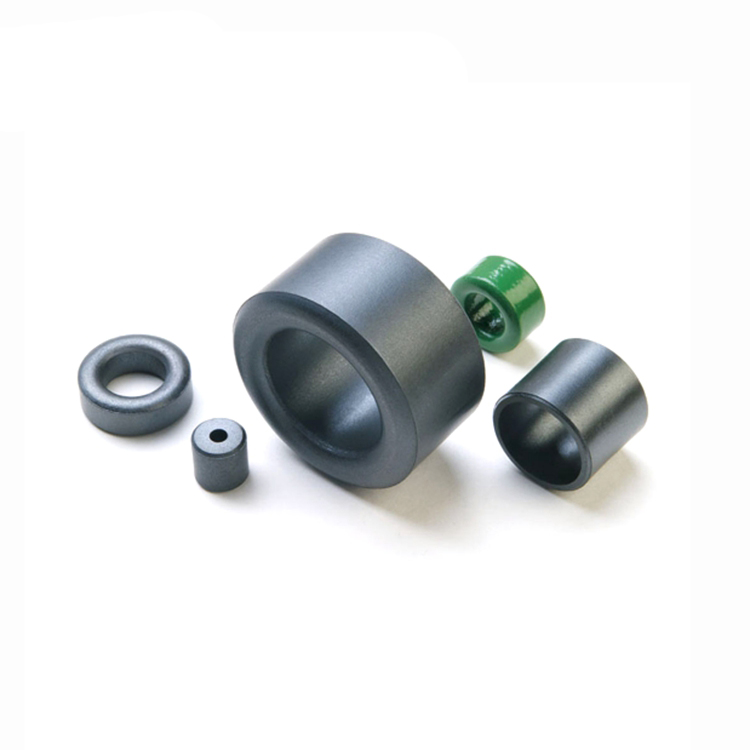

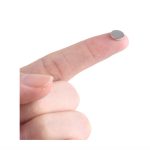
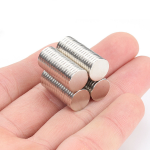
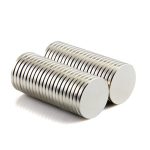
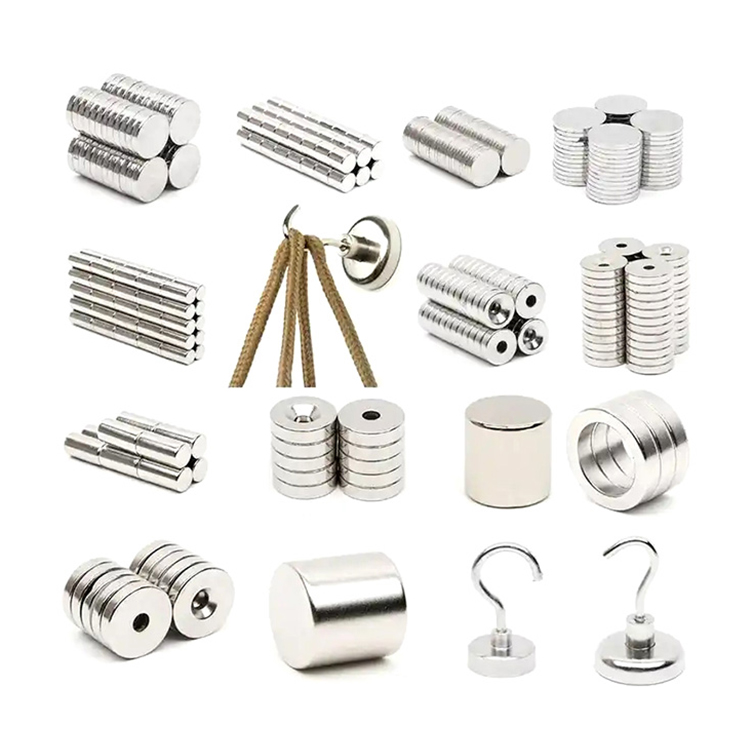
Neodymium magnets are the strongest magnets available today, and their strength allows even tiny neodymium magnets to perform their functions, making them extremely versatile. Since the first neodymium magnets were created, they have been used in a wide range of applications.
Industries such as motor manufacturing, medicine, renewable energy, and technology all rely on ultra-strong neodymium magnets. Without neodymium magnets, many of the advances of the past 30 years would not have been possible.
Neodymium magnets are also versatile due to their extreme strength, excellent performance, resistance to demagnetization, and the variety of shapes and sizes they come in.

Common Uses of Neodymium Magnets:
Hard Drives
Hard drives record data by magnetizing and demagnetizing a thin layer of ferromagnetic material on a disk. Each disk is divided into multiple tracks and sectors, and each sector contains many tiny individual magnetic cells that are magnetized by the drive’s read/write heads when data is written to the drive.
Hard drive heads are made of ceramic wrapped in a thin coil of wire. When writing, the coil is energized, creating a strong magnetic field, and the recording surface near the gap is magnetized.Strong magnets are also used to drive the actuator that holds the read/write head in place.
Audio devices such as microphones, pickups, headphones, and speakers Speakers use permanent magnets and current-carrying coils, which convert electrical energy into mechanical energy that pushes the speaker cone, which in turn changes the pressure of the surrounding air and produces sound.
Microphones work in the opposite way; the diaphragm is attached to a coil of wire that sits inside a permanent magnet, and when sound pushes on the diaphragm, the coil moves with it. When the coil passes through the magnetic field created by the permanent magnet, an electrical signal is generated that is characteristic of the original sound.
Reed Switch
A reed switch is a switch that is actuated by a magnetic field. Reed switches consist of contacts placed on a ferrous reed enclosed in a sealed glass tube. They can be designed to default to open or closed in the absence of a magnetic field and are activated by bringing a neodymium magnet close to the switch.
A typical use for a reed switch is to detect the opening and closing of a door in a burglar alarm system.
Magnetic Separators
Most processing facilities will use some form of magnetic separation system to remove contaminated ferrous and paramagnetic items from the production or processing line. This is usually achieved using some type of conveyor system and a strong filter bar magnet.
Lifting Machinery
Permanent magnets are essential in the heavy engineering and manufacturing industries for lifting large ferrous items. Switchable release magnets using super strong neodymium magnets are often used as they are equipped with a quick release switch mechanism.

ABS (Anti-lock Braking) System Sensors
Passive ABS sensors use a neodymium magnet wrapped inside a copper coil. The sensor is placed near the ABS reluctance ring and as the reluctance ring rotates, a voltage is induced in the copper wire. This signal is monitored by the vehicle’s computer system and used to determine wheel speed.
Point of Sale Displays
You may not realize you are surrounded by neodymium magnets every time you enter a store or restaurant, but they are there. That’s because many point of sale display billboards and stands are held together using small but strong neodymium magnets or suspended from steel ceilings using neodymium hook magnets.
MRI Scanners
An MRI scanner generates a powerful magnetic field that causes protons in the human body to align in the direction of the magnetic field. Radiofrequency waves are then directed into the body, producing detailed internal images. Many “open” MRI machines used in hospitals use large neodymium magnets, and they literally help save lives.
Motors and Generators
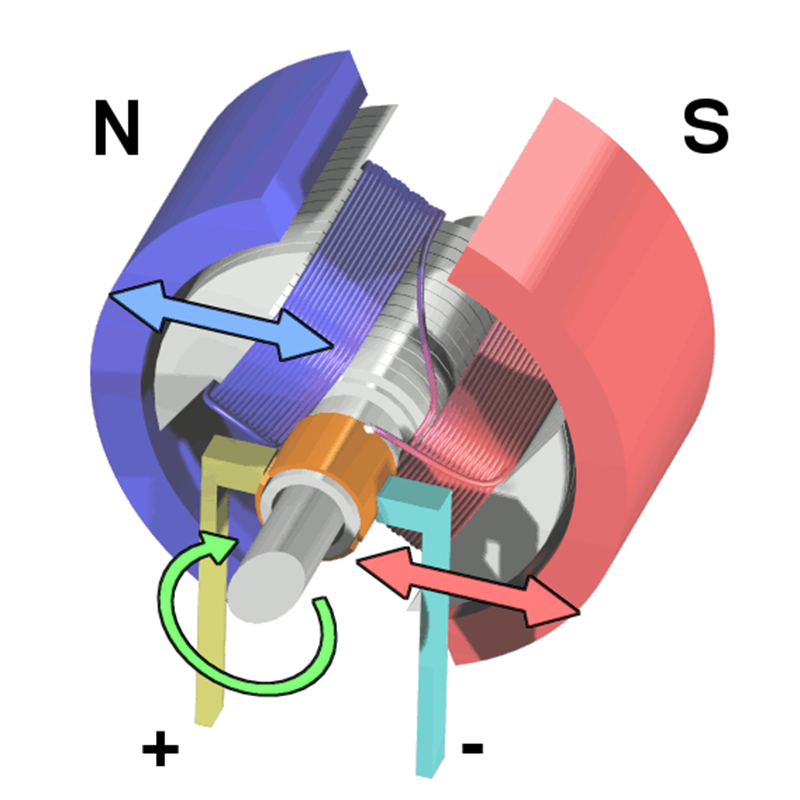
Electric Motors