




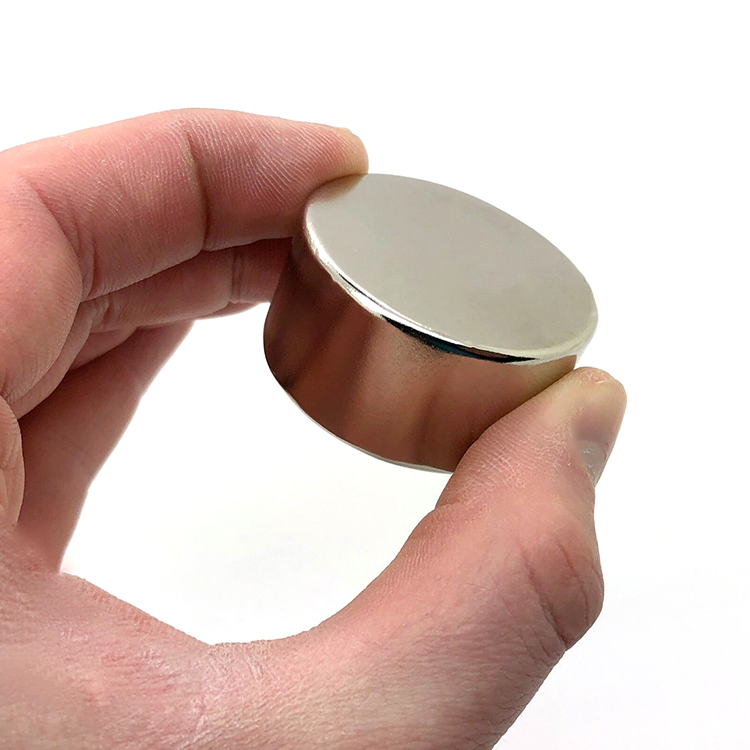
When it comes to magnetic materials, we have to talk about “magnetism” first. Experiments have shown that any substance can be more or less magnetized in an external magnetic field, but the degree of magnetization is different. According to the properties of substances in an external magnetic field, substances can be divided into five categories: paramagnetic substances, diamagnetic substances, ferromagnetic substances, ferrimagnetic substances, and antiferromagnetic substances:
Paramagnetic substance: It is a kind of substance that can be magnetized according to the direction of the magnetic field when it is moved close to the magnetic field, but it is very weak and can only be measured with precision instruments; if the external magnetic field is removed, the internal magnetic field will also return to zero, resulting in It is not magnetic. Such as aluminum, oxygen and so on.
Diamagnetic substance: It is a substance with a negative magnetic susceptibility. When subjected to an external magnetic field, an induced electron circulation is generated in the molecule, and the magnetic moment generated by it is opposite to the direction of the external magnetic field, that is to say, the direction of the magnetic field after magnetization is the same as that of the external magnetic field. in the opposite direction. All organic compounds are diamagnetic, and graphite, lead, water, etc. are diamagnetic substances.
Ferromagnetic substance: After being magnetized under the action of an external magnetic field, even if the external magnetic field disappears, it can still maintain its magnetized state with magnetic properties. Iron, cobalt, and nickel are all ferromagnetic substances.
Ferrimagnetic substance: The macroscopic magnetism is the same as ferromagnetism, but the magnetic susceptibility is lower. The typical ferrimagnetic substance is ferrite. The most significant difference between them and ferromagnetic substances is the difference in the internal magnetic structure.
Antiferromagnetic substances: Inside antiferromagnetic substances, the spins of adjacent valence electrons tend to be in opposite directions. This substance has a net magnetic moment of zero and produces no magnetic field. Such substances are relatively uncommon, and most antiferromagnetic substances only exist at low temperatures. Assuming the temperature exceeds a certain value, it usually becomes paramagnetic. For example, chromium, manganese, etc. are all antiferromagnetic.
We refer to paramagnetic substances and diamagnetic substances as weak magnetic substances, and ferromagnetic substances and ferrimagnetic substances as strong magnetic substances. The so-called magnetic materials generally refer to ferromagnetic substances. According to the use of magnetic materials, they can be divided into:
Soft magnetic material: It can achieve the maximum magnetization intensity with the minimum external magnetic field, and it is a magnetic material with low coercive force and high magnetic permeability. Soft magnetic materials are easy to magnetize and easy to demagnetize. For example: soft ferrite, amorphous nanocrystalline alloy.
Hard magnetic material: also called permanent magnetic material, refers to a material that is difficult to magnetize and difficult to demagnetize once magnetized. Its main feature is high coercive force, including rare earth permanent magnet materials, metal permanent magnet materials and permanent ferrite .
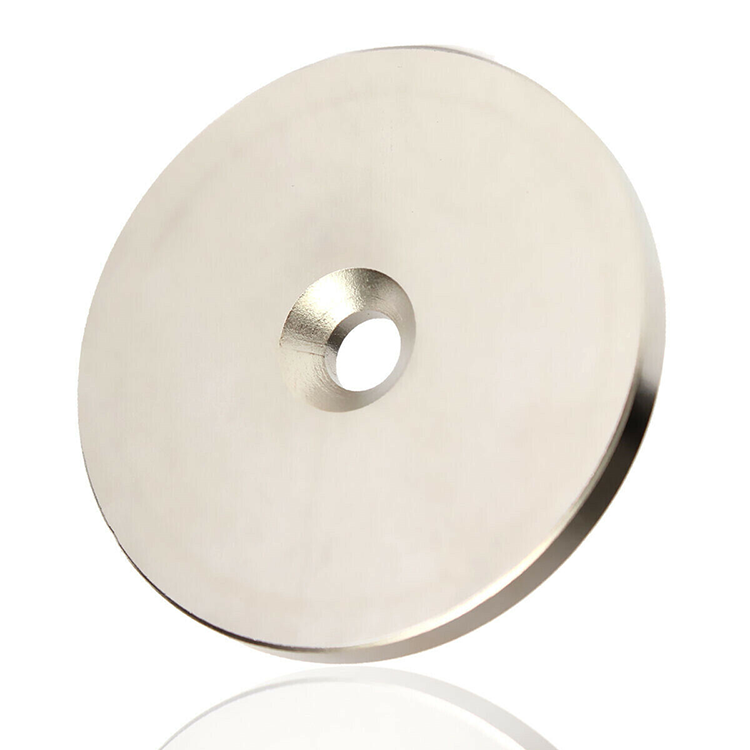
Functional magnetic materials: mainly include magnetostrictive materials, magnetic recording materials, magnetoresistance materials, magnetic bubble materials, magneto-optical materials, and magnetic thin film materials.
Permanent magnetic materials, also known as hard magnetic materials, refer to materials that are difficult to magnetize and difficult to demagnetize once magnetized. Its main feature is its high coercive force. It is the most important category of magnetic materials. Starting with permanent magnet materials, let’s gradually explore the world of magnetic materials~
Rare-earth permanent magnets are one of the most important magnetic products. Since their introduction in the 1960s, three generations of products have been mass-produced and applied. The fourth-generation rare-earth iron-nitrogen permanent magnets are in the research and development stage, and may become new in the future. A generation of rare earth permanent magnet products.
The first-generation and second-generation samarium-cobalt permanent magnets are prepared by powder metallurgy. The main raw materials are samarium and cobalt, which are expensive and cobalt is a strategic resource. Therefore, the mass production and large-scale use of samarium-cobalt permanent magnets are limited. has not been widely used. Mainly used in aviation, aerospace and defense industries.
The successful research and development of the third-generation NdFeB Nd-Fe-B rare earth permanent magnet is of great significance. It not only has amazing excellent performance and record high magnetic energy product, but also replaces it with iron and neodymium with low price and abundant reserves. The expensive strategic material cobalt and the scarce resource samarium. The characteristics of high quality and low price of NdFeB permanent magnets, huge production potential and wide application prospects have caused great shock among magnet researchers and manufacturers all over the world. Since Japan Sagawa Masato announced the existence of Nd-Fe-B magnets in 1983, the records of various properties of the magnets have been refreshed many times, and it has become the central topic of international academic conferences many times.
Through comparison, it can be found that NdFeB is currently the most cost-effective rare earth permanent magnet material, and the magnetic properties of sintered NdFeB are better than that of bonded NdFeB, but bonded NdFeB has better machining ability.
Mark and the Neodymium Trapezoid Magnet
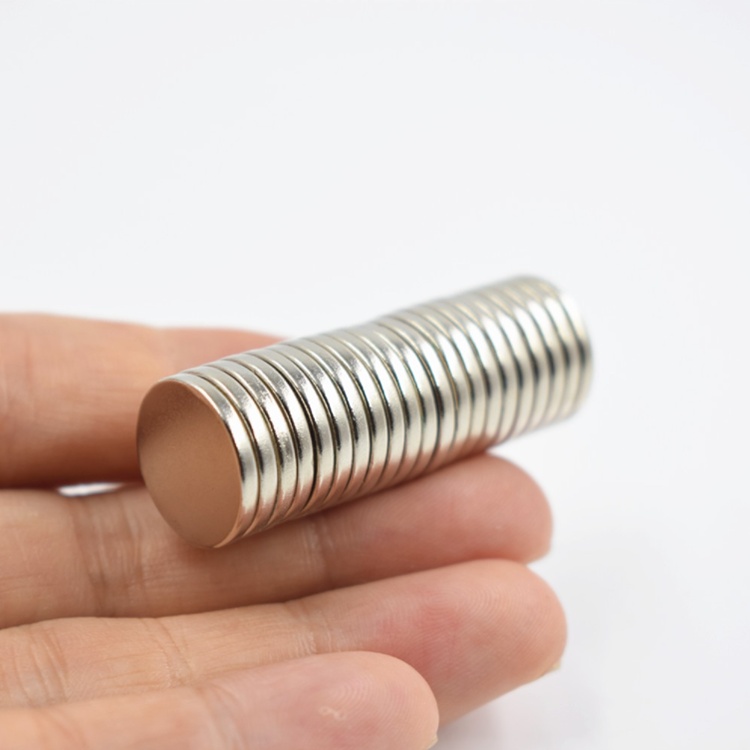
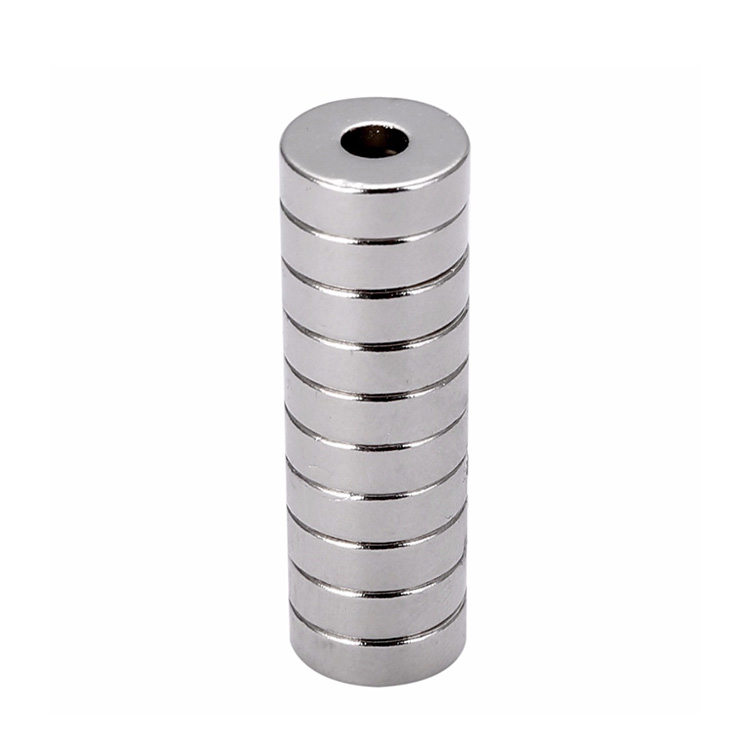
The Neodymium magnet, sometimes referred to as the NdFeB magnet, is a teband crystal made of neodymium, iron, and boron (Nd2Fe14B).
Neodymium magnets were created in 1982 by Satoshi Sagawa of Sumitomo Special Metal.
This magnet’s magnetic energy product (BHmax) was higher than that of the greatest mass in the world at the time, a samarium cobalt magnet.
Later, General Motors and Sumitomo Specialty Metals developed the Melt-spinning and Powder Metallurgy processes, respectively, to create NdFeB magnets.
This kind of magnet is the most popular rare earth magnet and is now the second most permanent magnet after the absolute holmium magnet.
Electronics including hard drives, cell phones, earbuds, and battery-operated equipment frequently employ ndfeb magnets.
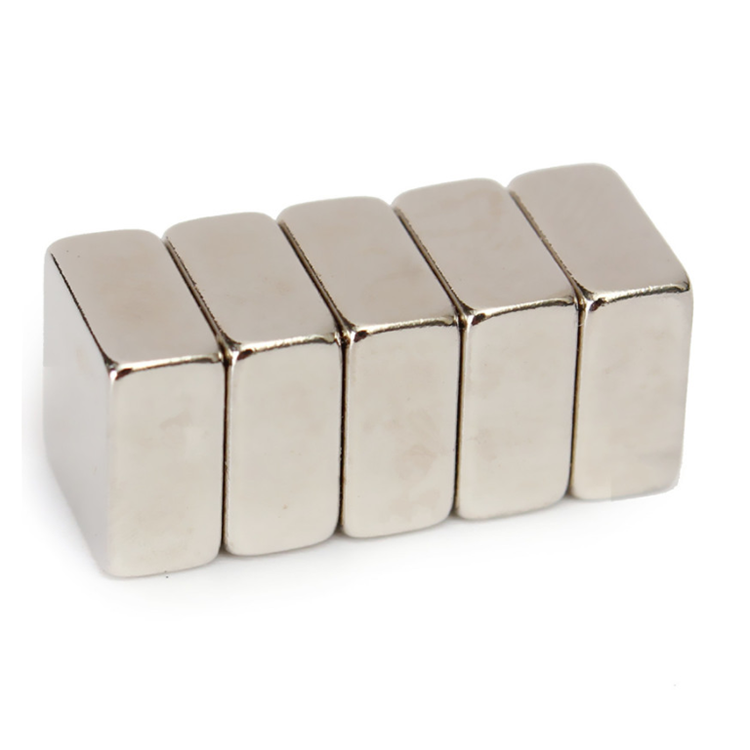
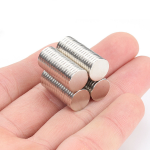
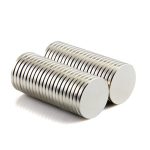
Neodymium block magnets are frequently utilized in manufacturing, day-to-day activities, motor, sensor, and holding applications. The magnets are formed like blocks, such as squares, rectangles, cubes, and bars, among others. The dimensions of the shapes—such as their length, breadth, and thickness—are uniform.
As is customary, we refer to them as magnetic blocks, rectangular neodymium magnets, magnet blocks, or neodymium bar magnets. The little magnetic blocks can occasionally be used as craft magnets for many enjoyable hours of entertainment. Magnetic blocks are always employed in industry or laboratories.
Neodymium block magnets from rare earth are among of the strongest permanent magnets on the market. Our product line is appropriate for a variety of uses, including water conditioning, flow control systems, and magnetic separators in the food sector, to mention a few. Due to the strength of modern magnetic alloys, the versatile Rare Earth blocks are the most popular magnet. We provide a variety of sizes, shapes, and grades of neodymium block magnets, commonly known as rare earth block magnets. They are the finest option if you need a multifunctional magnet with the strongest magnetic field.
Diametric or meridional magnetization
1170–1220 mT (11.7–12.2 kGs) is the residual magnetic flux density (Br).
Energy Density (BH)max: 33–36 MGOe (263-287 KJ/m3)
868 kA/m (10.9 kOe) of coercivity force (Hcb)
1353 kA/m (17 kOe) is the intrinsic coercivity force (Hcj).
120 °C is the maximum operating temperature.
Forgiveness: 0.05 mm
E-coat (a liquid dip epoxy coating), dry electrostatic spray epoxy, nickel plating, and mixtures of these coatings are examples of coatings that have been effectively employed. Corrosion resistance and high temperature performance have significantly improved as a consequence of changes in composition and processing over the past few years.
what are magnetic materials
Neodymium magnets are more powerful than other types of magnets in terms of remanence, coercivity, and energy output, although their Curie temperatures are frequently lower. To maintain its magnetic characteristics, neodymium is alloyed with terbium and dysprosium.
The magnets need to be slid on and off. Magnets made of neodymium are fragile and prone to breaking and chipping. They do not appreciate being machined.
Produits apparentés