Since its commercial release in the early 1980s, neodymium iron boron (NdFeB) High Magnetic NdFeB have been extensively employed in a variety of applications. *NdFeB magnets are covered by numerous patents and only licensed materials are permitted into the USA. Neodymium magnet material costs are equivalent to ferrite magnets (on a dollar per energy product basis).
High Magnetic NdFeB and magnetic assemblies made to your specific specifications are designed and built by Integrated Magnetics. Request a quote from us or get in touch with us right now for additional details on our regular or unique neo magnets. High Magnetic NdFeB offers a huge selection of neodymium magnets for online purchase.
Principal Advantages of Ímanes de neodímio really strong. Low cost: by “Dollar per BHmax” around 1.5 times ferrite magnets, by weight about 20 times ferrite magnets.
very simple to manufacture compared to samarium cobalt and alnico magnets.
NdFeB altamente magnético
Neodymium, iron, and boron (Nd2Fe14B) make up the majority of the tetragonal crystals known as neodymium iron boron (NdFeB). It possesses high magnetic energy product, high intrinsic coercivity, and high remanence (BR).
It is the most widely used rare earth magnet and the strongest permanent magnet ever created. NdFeB magnets produce energy ranging from 28 MGOe to 58 MGOe.
All permanent magnets have the strongest magnetic properties.
The most common kind of rare earth magnets are neodymium magnets, usually referred to as NdFeB or Neo magnets.
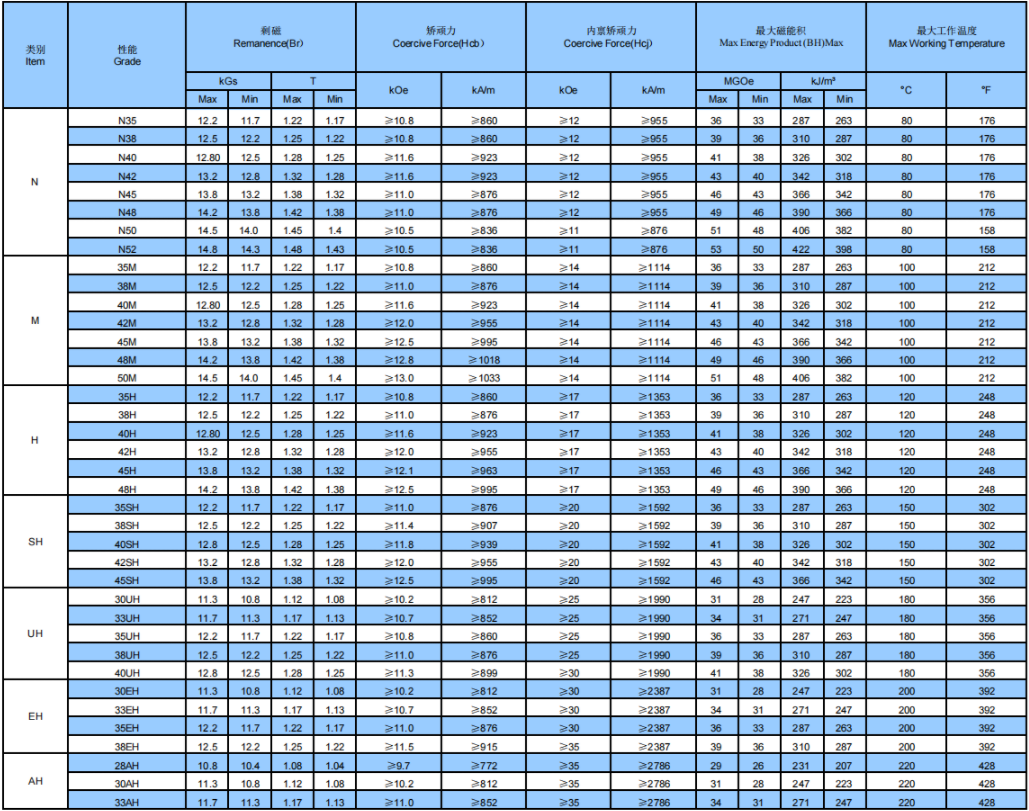
The primary components of this permanent magnet are neodymium (Nd), iron (Fe), and boron (B).Important High Magnetic NdFeB Challenges Depending on the grade and permeance coefficient the magnet runs at, material properties start to rapidly degrade at temperatures over roughly 150°C.
The majority of NdFeB magnet grades require coating or plating to prevent oxidation.
Brief Information about Neodymium Magnets 0.275 lbs. per cubic inch is the material density.
Required saturation magnetizing field: approximately 35kOe.
Manufacturing processes include calendaring, injection molding, compression bonding, and sintering (the most popular).
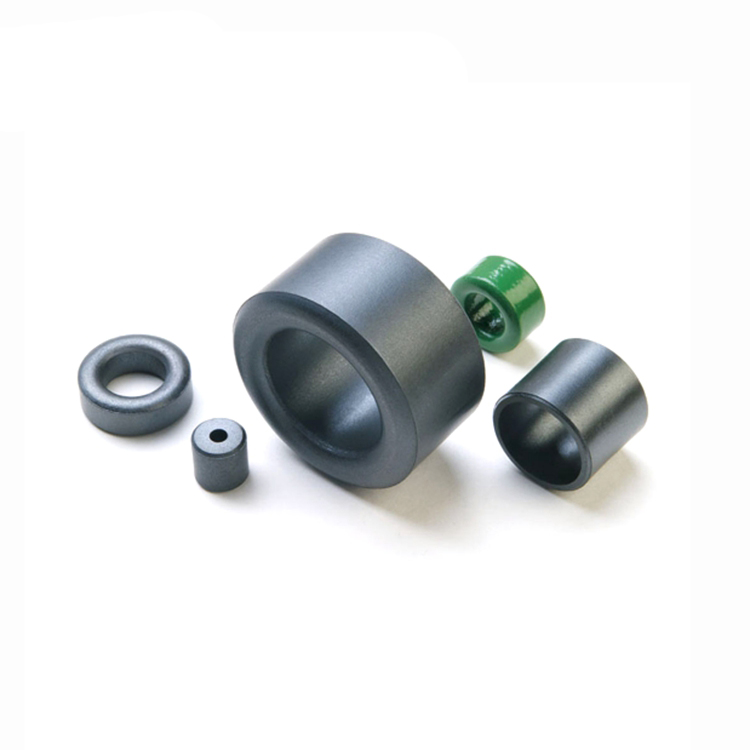
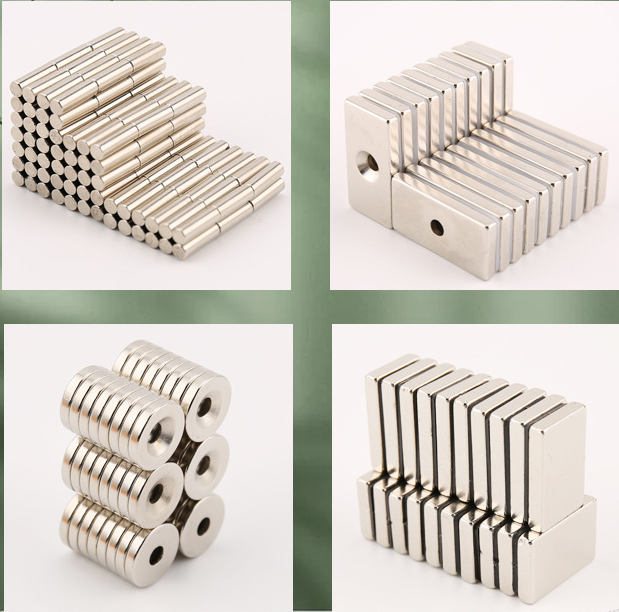
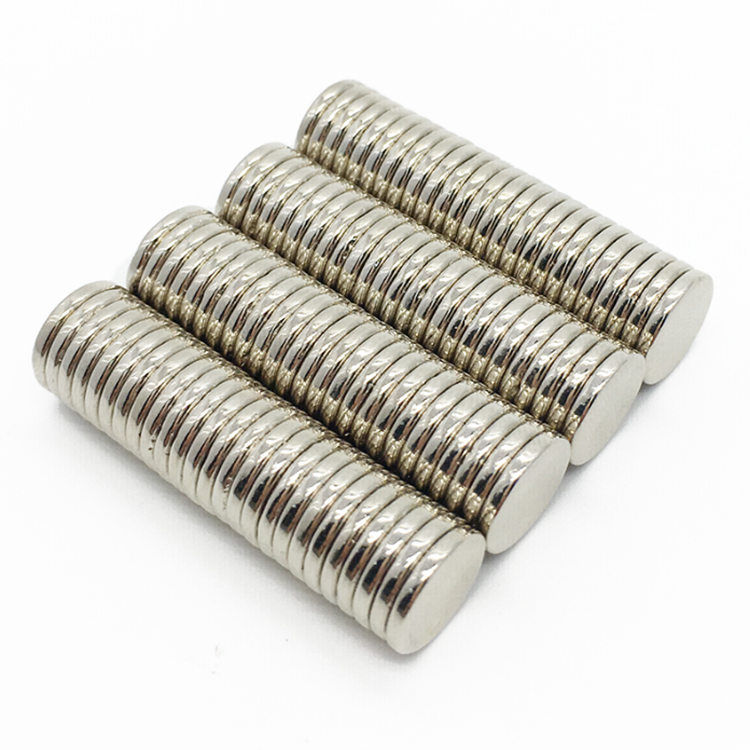
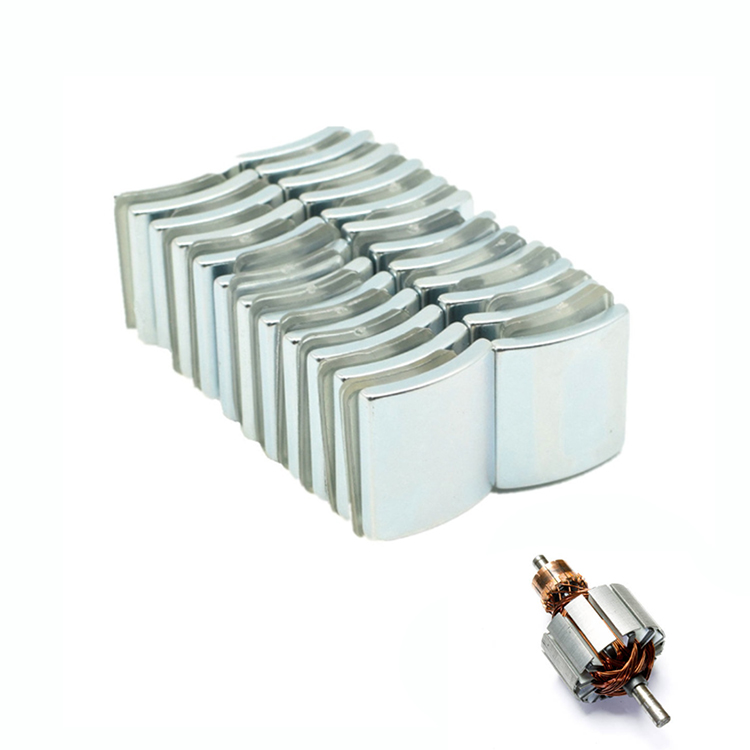
Blocks, bars, discs, rings, arc segments, and more forms are available.
Grades from around 3330 to 5311 are available. (First two digits are BHmax; second two are Hci, or intrinsic coercivity.)
Sizes: Isostatically pressed blocks can be substantially longer in the orientation direction (up to 9′) than die-pressed blocks, which have the maximum off-tool dimensions of roughly 4″ x 4″.
NdFeB altamente magnético should be manufactured using diamond wheels for grinding. Neo magnets are the most machine-friendly of the hard magnet materials. We have successfully produced very small magnets with dimensions of 0.012″ in diameter, 0.003″ in diameter for the central hole, and 0.040″ in length.
Surface Modifications for Materials with NdFeB altamente magnético
NdFeB should typically be painted, coated, or plated, albeit recently, several grades have been produced that demonstrate greater oxidation resistance.
Commercial plating facilities are not used to the challenging process of plating NdFeB.
NdFeB plating is a challenging process, and industrial plating facilities without the specific plating know-how needed are unlikely to be able to produce plating with adequate adhesion on Neo magnets.
NdFeB magnets with nickel, zinc, or tin coating provide good corrosion resistance, albeit these may require longer lead times or larger quantities. Ion vacuum deposition (IVD) methods can also be used to plate neomagnets. This speciality plating offers good adherence to the substrate and is extremely controllable in terms of thickness.
Numerous organic coatings with good corrosion resistance properties have also been successfully produced for NdFeB altamente magnético. It could be wise to utilize a mix of coating methods or to enclose the material in a sealed container for very hostile situations.
Caution! NdFeB High Magnetic NdFeB.
Neodymium, iron, and boron (Nd2Fe14B) make up the majority of the tetragonal crystals known as neodymium iron boron (NdFeB). It possesses high magnetic energy product, high intrinsic coercivity, and high remanence (BR).
It is the most widely used rare earth magnet and the strongest permanent magnet ever created. NdFeB magnets produce energy ranging from 28 MGOe to 58 MGOe.
All permanent magnets have the strongest magnetic properties.
The most common kind of rare earth magnets are neodymium magnets, usually referred to as NdFeB or High Magnetic NdFeB.
The primary components of this permanent magnet are neodymium (Nd), iron (Fe), and boron (B).
The strongest magnets in the world are neodymium ones. Not all magnets are made the same! The lowest priced, best quality neodymium magnets are available at Applied High Magnetic NdFeB. Our powerful neodymium magnets are created utilizing cutting-edge technology and engineered to adhere to strict quality requirements.
Neodymium magnets, a kind of rare earth magnet consisting of neodymium, iron, boron, and other minor elements, are also known as Neo, NdFeB, NIB, or super magnets.
Stronger than N40, N38, and N35, Grade N42 High Magnetic NdFeB.
Max Br: 13200 gauss
Applications include holding magnets, lifting magnets, and industrial magnets.
Neodymium magnets are triple-layered in nickel-copper-nickel for optimal durability and corrosion resistance.
Neodymium magnets N42, strong industrial magnets NdFeB rare earth magnets with a 4 inch diameter and a 3 inch thickness that are magnetized through the thickness.
1200 lbs. of approximate pull force
For a discount on bulk industrial or High Magnetic NdFeB purchases, get in touch with us.
As a result, NdFeB altamente magnético have been available and marketed for more than 30 years. Why are High Magnetic NdFeB still in use as we wait for the next big thing? It is quite challenging to find new substances and materials for permanent magnets. Finding a composition or phase with a uniaxial crystal structure that exhibits the appropriate intrinsic characteristics of Ms, Ha, and Tc is the first step.
Next, a microstructure that prevents reverse domain nucleation and growth must be created. Additionally, a macroscopic texture must be created for an anisotropic magnet. Finally, even after overcoming the first two severe obstacles, it is necessary to be able to create usable bulk structures in large quantities. For instance, ion implantation has revealed some intriguing features.
Now, all of these issues must be resolved within a relatively condensed time frame in order to market a new High Magnetic NdFeB with the required extrinsic Br, (BH)max, Hc, etc. qualities. We may not be surprised that we are still waiting as the economics of raw materials and processing need to be financially feasible for businesses.
some advancements in magnet materials
Here is an overview of recent advancements in novel magnet materials, but the most have been available for more than ten years. Since the 1980s, exchange springs and nanostructured composites have been understood. They simply combine the high Ms of the soft phase with the high Hc of the hard phases through interactions between the hard and soft magnetic phases.
However, a highly exact phase size, morphology, distribution, and interpose separation are required in order to generate the essential exchange mechanism. It has shown to be quite difficult to replicate this in bulk materials. Co nanowires have reached (BH)max values of 44 MGOe (interestingly, shape anisotropy is the coercivity mechanism).
There are many alternative compositions, such as MnAl, MnBi, ZrCo, HfCo, etc., but none of them can compare to Nd2Fe14B in terms of raw material advantages, characteristics, or economics. I must grudgingly admit that Nd2Fe14B is excellent—possibly even too excellent! First, it is established that iron is a superb magnetic component. I’m contrasting the ferromagnetic transition components in this case along with a few REEs.
The element’s crystal structure is displayed in the first column. I then compare the elements’ atomic magnetic moments, or their degree of magnetization. The fundamental magnetization units known as the Bohr Magnetron serve as the foundation for atomic magnetic moments. The magnetic moment of an electron brought on by its orbital or spin angular momentum is known as a Bohr magnetron.
It’s interesting to see that despite having relatively low Tcs, the two REEs had the highest moments. I then estimated the price per atom using the atomic weights and the current price of each element per kilogram. I then calculated price per atomic magnetic moment by dividing price per atom by the atomic magnetic moment using an analogy to my magnet price performance metric.
Fe is by far the most effective element. Of course, to change the BCC crystal structure into something uniaxial and ideally with a substantial Ha, the metallurgists, materials scientists, and even physicists must identify acceptable alloying elements.
Describe NdFeB.
Neodymium Magnet is a type of rare earth permanent magnet that has excellent mechanical qualities as well as extraordinarily high magnetic energy, coercive force, and energy density. It is employed extensively in contemporary industries and electrical technologies since it is the strongest permanent magnet among modern magnetic materials.
Sintered magnetic steel research has been the focus of Balin efforts ever since we were founded. We now have extensive production and processing knowledge. specializing in the manufacturing of complex-shaped, high-precision sintered NdFeB magnets, magnetic tiles, rings, and rings made of magnetic steel.
The permanent High Magnetic NdFeB magnetic materials based on a Nd-Fe-B tetragonal crystal structure are known as sintered NdFeB magnets, sometimes known as sintered neodymium iron boron magnets. Early in the 1980s, M. Sagawa’s team developed sintered NdFeB magnets, which are produced using a powder metallurgy method.
Neodymium, iron, and boron are the three primary elements found in sintered NdFeB magnets. A fraction of other rare earth elements, such as praseodymium, dysprosium, terbium, cerium, etc., can be used in place of High Magnetic NdFeB.
To raise the Curie temperature Tc, thermal stability, and corrosion resistance of the magnets, some cobalt can be used in place of the iron. It also incorporates several doping substances, including as gallium, niobium, copper, and aluminum, in order to regulate the microstructure and microchemistry and achieve the desired performance.
Controlling the formula is the fundamental technique to acquire the necessary magnet grades for bespoke NdFeB magnets sintered.
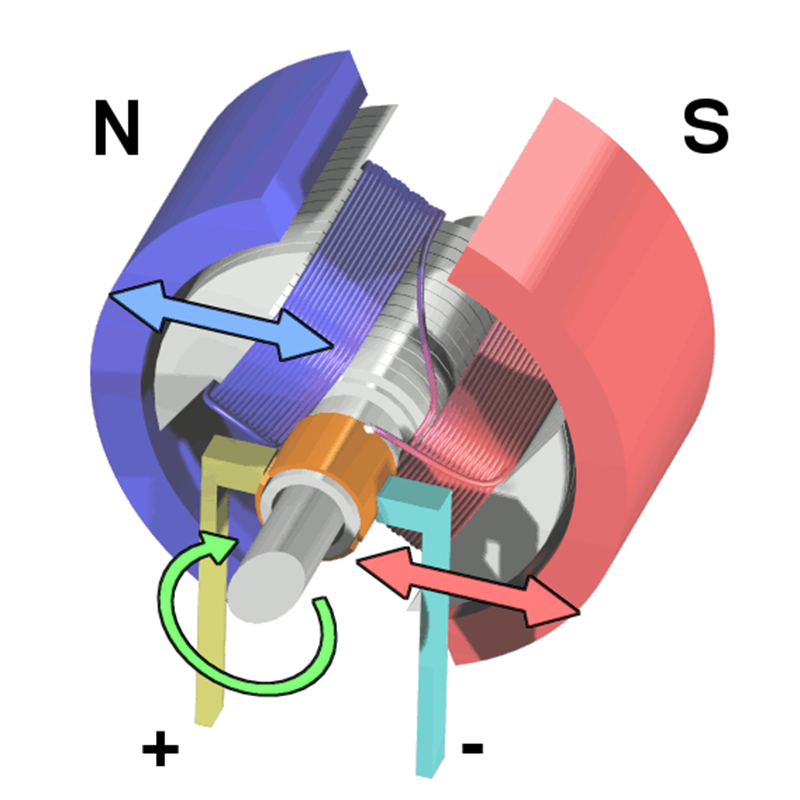
High Magnetic NdFeB magnets are used in a variety of devices, including DC motors, servo motors, stepper/stepping motors, synchronous motors, linear motors, voice coil motors (VCMs), wind turbines and generators, magnetic resonance imaging (MRI), electric power steering (EPS), magnetic separators, and wind turbines and generators due to their exceptional magnetic properties (high remanence Br 1.1-1.5 T, middle high coercivity Hcj.
NdFeB altamente magnético
These are rare-earth metal-based permanent magnets. Numerous new technological applications are made possible by the high-energy product with more than 385 kJ/m3 or 48 MGOe.
In compared to typical magnetic materials like barium ferrites or AINiCo, it is now feasible to create much smaller magnet systems or magnets with significantly greater magnetic energy for the same size. As an illustration: A barium ferrite magnet needs a volume six times greater to have the same amount of energy in it.
A barium ferrite magnet has to be around 25 times bigger than a samarium-cobalt magnet in order to produce a field with a strength of 100 mT (1,000 G) at a distance of 1 mm from the pole.
The new neodymium-iron-boron magnets’ energy output is almost 70% greater than that of the older ones.
“Rare-earth metals” – what are they?
The 15 elements that make up rare-earth metals, often known as lanthanides, are listed in the periodic table between positions 57 and 71. They account for around 1/7 of all naturally occurring elements. The rare-earth elements are therefore not at all rare. Cerium (Ce) for the production of steel or glass; Lanthanum (La) for the production of X-ray films as well as catalytic converters for reducing exhaust emissions;
Europium (Eu) for the production of the red color in TV screens; Samarium (Sm) and Neodymium (Nd) for the production of magnet materials with the highest energy product.
Only a small portion of the rare-earth elements are formed by samarium.Production with a high purity ratio is expensive. More neodymium is found in the rare-earth elements.
Rare-earth magnets are more expensive than regular permanent magnet materials because the final magnet requires expensive processing. Cobalt (Co), a pricey component, is also present in samarium-cobalt magnets.
Due to the high prices, large-volume utilization is constrained.
How are powerful magnets made?
SmCo and NdFeB magnets are often alloyed by melting. After that, the material ingots are broken up and ground into fine powders, then squeezed by a magnetic field before being sintered.
We handle large-sized ingots produced by isostatic pressing followed by sintering. Diamond saws are then used underwater to chop apart these ingots. Diamond tools are also used to make discs and rings. The powder is crushed into forms and sintered to generate large volume pieces.
It is only possible to create simple geometric forms.
The magnet must be magnetized until saturation occurs after it has taken on its final form. A very strong magnetic field is necessary for this. Charged capacitor batteries are discharged in an air-core coil to create these powerful magnetic fields.
The strong magnetic field that is created when the impulse discharge is “fired off” magnetizes the magnet body that is positioned in the inner hole of the low-impedance air-core coil till saturation. Only in the magnetic direction in which it was “impregnated” during manufacture is magnetization possible!
Standard magnets that have reached saturation are what we provide. On request, we may also deliver magnets that need to be magnetized later in the system.
Properties
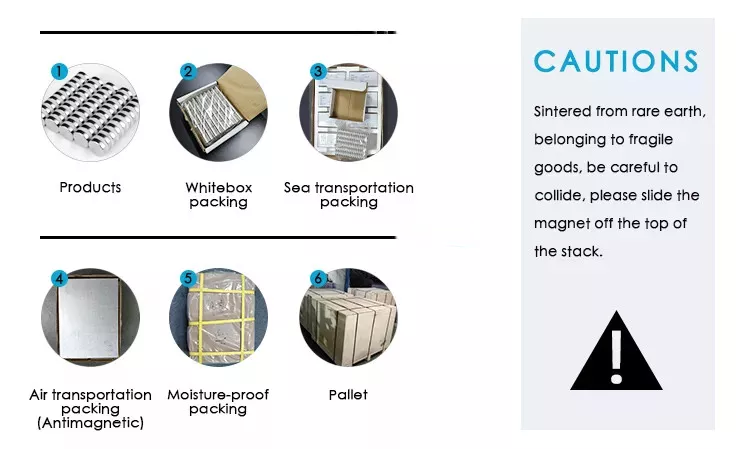
Magnets made of SmCo are exceedingly brittle and hard. Magnets made of NdFeB are strong and less fragile.
In a humid environment, the magnets oxidize; SmCo only very slightly, but NdFeB more significantly. Magnets made of SmCo are comparatively water-resistant. NdFeB magnets slowly dissolve in water and oxidize to a very high degree.