


The basic principle of N38 magnets
Because an unseen magnetic field forms outside the item, magnetic materials can mysteriously attract one another at great distances. However, there is one issue: Where does the magnetic field originate? It’s easy to find n38 magnet. The fundamental similarity between magnetism and electricity has long been recognized. Time and space can all be converted into one another, just as mass and energy can be converted into one another. In actuality, the electric field that develops when a charged item starts to move transforms into a magnetic field. This describes how the geomagnetic field is produced and why an electron stream traveling via a wire causes a compass to revolve.But when there is no current flowing through it, the magnetic bar or compass is merely a piece of metal.

Is that accurate? The atoms and molecules that make up matter are surrounded by many electrons at the tiny level. That is correct! This leads to the intriguing phenomena that any common object’s magnetism is influenced by a fascinating confluence of effects caused by particles, atoms, groups of atoms, and collections of groups of atoms. First, permanent magnetism can only be properly understood as a quantum mechanical phenomenon, because basic qualities like mass and charge are present in particles like electrons and quarks, unlike the processes of gravity and electricity in living things. The majority of particles also possess a characteristic known as micromagnetism. I kid you not; it is referred to as the intrinsic magnetic moment. However, there are speculations that claim charged particles are also micromagnetic. If you wish to understand why electrons have an electric charge and why things with kinetic energy are drawn to one other by gravity, you might also want to understand why electrons are charged. Nobody is aware. We just know that it is a universal rule.

The fact that electrons and protons are micromagnets has been known since the 1920s, which gets us to the atomic level. An atom is made up of a collection of positively charged protons that are surrounded by a collection of negatively charged electrons that are in orbit around it. Because the micromagnetism of the proton is approximately a thousand times less than that of the electron, the nucleus has very little impact on the magnetism of the entire atom. N38 magnet may imagine that many electrons—but not all—are also in motion, much like an electric current in a wire. It is expected that motion will produce a magnetic field, and indeed, an orbital magnetic field is produced. However, they often don’t contribute to the development of atomic magnetic fields because of the following: The electrons in atoms can be complexly and correctly described by quantum mechanics, but the essential is that the electrons are grouped in the electron layer surrounding the nucleus. Any entire electron layer has equally mobile electrons in all directions, thus the currents they generate cancel each other out and there is no magnetic field.

The micromagnetic directions of these electrons, which also occur in pairs and cancel one another out, are in opposition to one another. However, none of the electrons couple up in an electron shell that is just halfway full. The atomic magnetic field is dominated by the intrinsic magnetism of the outer electrons because their micromagnetic fields are in the same direction and overlaid on one another. Thus, at the main group and transition zone of the periodic table, atoms having a totally full (or nearly full) outer electron shell are not magnetic. Each partition’s central atoms have a magnetic outer electron layer that is half filled. Including nickel, cobalt, iron, manganese, chromium, and other elements. Chromite isn’t magnetic, you say? Ah, but just because one atom is magnetic doesn’t always follow that everything that contains that atom is magnetic. This brings us to the crystal level; when a collection of magnetic atoms join together to form a solid, one of two things typically occurs: either all the atoms align their magnetic fields in the same direction, or they alternate in a line so that their magnetic fields cancel one another out. The atoms will typically opt for the less energy-intensive option.

Because chromium is the most antiferromagnetic material known, that is why chromium atoms are magnetic and solid chromium is not magnetic. Contrarily, iron and ferromagnetism are interchangeable terms. Therefore, it is hardly unexpected that iron is magnetic, or ferromagnetic in technical terms. The field is the last dimension of magnetism, and this can occur sometimes. In essence, even in magnetic materials with aligned atomic magnetic fields, different regions of the material may have atoms that are aligned in different directions from one another. A piece of iron has no magnetic field because of the competing magnetic fields within it if all the “fields” are the same size and none of them is powerful enough to push the others into alignment with it. However, one magnetic domain may be made stronger such that it has influence over the adjoining magnetic domain if a strong enough magnetic field, force, or pressure is applied from outside the material.

Because it’s ferromagnetic and all the magnetic fields are lined up. Yes, it is important to remember that magnetism is a basic quantum feature. Each permanent magnet gives a little clue that quantum physics is the underlying principle of everyday items like magnets. A material must possess a consistent magnetic domain in order to be magnetic. Additionally, there are an unlimited number of magnetic atoms inside each magnetic domain, all of which must align. Each atom’s magnetic property relies on having an outer electron layer that is roughly half filled, which allows the atom’s magnetic fields to align without canceling each other out. Naturally, these requirements are demanding,which is why there are only a limited number of suitable materials for n38 magnet. Or you can apply electricity to any of the conductors to create a magnetic field.

History and development of magnets
The French scientists Arago and Lussac discovered in 1822 that an iron block within a coil becomes magnetic when an electric current runs through it.
Melt. The electromagnet principle was truly discovered for the first time using this. Sturgeon conducted a related experiment in 1823 in which he wrapped 18 copper wires around a U-shaped iron rod that wasn’t a magnet. The copper coils around the U-shaped iron bar created a strong magnetic field when the copper wire was linked to a battery, turning the U-shaped iron bar into a “electromagnet.” This electromagnet has a lot more magnetic energy than a permanent n38 magnet, and it can absorb iron chunks that are 20 times heavier.
The French scientists Arago and Lussac discovered in 1822 that an iron block within a coil becomes magnetic when an electric current runs through it.
Melt. The electromagnet principle was truly discovered for the first time using this. Sturgeon conducted a related experiment in 1823 in which he wrapped 18 copper wires around a U-shaped iron rod that wasn’t a magnet. The copper coils around the U-shaped iron bar created a strong magnetic field when the copper wire was linked to a battery, turning the U-shaped iron bar into a “electromagnet.” This electromagnet has a lot more magnetic energy than a permanent magnet, and it can absorb iron chunks that are 20 times heavier.
This significantly increases the capacity to transform electrical energy into magnetic energy. Henry attempted to create a more modern electromagnet in 1831; while being small in size, it is capable of lifting a ton of iron. Generator power has increased significantly as a result of the development of electromagnets. Humans first found natural magnets (Fe3O4) 5000 years ago.
2300 years ago, the Chinese people ground the natural magnet into a spoon shape and placed it on a smooth surface. Under the action of geomagnetic field, the spoon handle guide, said “Sinan”, was the world’s first guide instrument.
1,000 years ago, the Chinese magnetized a magnet by rubbing it with an iron needle and made the world’s earliest compass.
Around 1100, China combined the magnet needle and the azimuth disc into one, which became the magnet type guide instrument for navigation.
1405-1432 Zheng He began the great pioneering work of navigation in human history with the guide instrument.
1488-1521 Columbus, Gama, and Magellan made their world-famous voyages with guides from China.
1600 William the Englishman. Giber published a monograph on magnetism, “Magnet”, which repeated and developed the previous understanding and experiments on magnetism.
1785 French physicist C. Coulomb used torsion scales to establish the “Coulomb’s law” describing the force between electric charges and magnetic poles.
1820 Danish physicist H.C. Oster discovered that electric currents induce magnetism.
1831 British physicist M. Faraday discovered the phenomenon of electromagnetic induction.
1873 English physicist J.C. Maxwell completed a unified theory of electromagnetism in his monograph “On Electricity and Magnetism.”
1898-1899 French physicist P. Curie discovered the phenomenon of ferromagnetic substances becoming paramagnetic at a specific temperature (Curie temperature).
1905 French physicist P.I. Langevin explained the change of paramagnetism with temperature based on the theory of statistical mechanics.
1907 French physicist P.E. Weiss proposed the molecular field theory, which extended Langevin’s theory.
1921 Austrian physicist W. Pauli proposed the Bohr magneton as the basic unit of the atomic magnetic moment. The American physicist A. Compton proposed that the electron also has A magnetic moment corresponding to its spin.
1928 British physicist P.A.M. Dirac used relativistic quantum mechanics to perfectly explain the intrinsic spin and magnetic moment of electrons. Together with the German physicist W. Heisenberg, he proved the existence of exchange forces of electrostatic origin, laying the foundation of modern magnetism.
1936 The Soviet physicist Landau completed the great book “The Course of Theoretical Physics”, which contains a comprehensive and wonderful chapter on modern electromagnetism and ferromagnetism.
This updated and expanded on the prior investigations and knowledge of magnetism.
C. Coulomb, a French scientist, developed “Coulomb’s law” in 1785, which describes the force acting between electric charges and magnetic poles.
H.C. Oster, a Danish scientist, established in 1820 that electric currents cause magnetism.
M. Faraday, a British physicist, developed electromagnetic induction in 1831.
In his treatise “On Electricity and Magnetism,” English scientist J.C. Maxwell created a unifying theory of electromagnetic.
P. Curie, a French physicist, first observed the phenomena of ferromagnetic materials turning paramagnetic at a certain temperature (the Curie temperature) in 1898–1899.
1905 P.I. Langevin, a French scientist, used statistical mechanics to explain how paramagnetism changes with temperature.
French scientist P.E. Weiss advanced Langevin’s idea in 1907 by putting out the molecular field theory.
The Bohr magneton was postulated by Austrian physicist W. Pauli in 1921 as the fundamental building block of the atomic magnetic moment. According to the theory put out by American physicist A. Compton, the electron also contains a magnetic moment that corresponds to its spin.
Relativistic quantum mechanics was utilized by British scientist P.A.M. Dirac in 1928 to precisely describe the inherent spin and magnetic moment of electrons. He established the presence of exchange forces with electrostatic origins along with the German scientist W. Heisenberg, establishing the basis for contemporary magnetism.
1936 The classic book “The Course of Theoretical Physics” was written by the Soviet physicist Landau, and it has a remarkable chapter on contemporary ferromagnetism and electromagnetic that is both thorough and insightful.
The notion and theory of antiferromagnetism and ferromagnetism were put out by French physicist L. Knell between 1936 and 1948, and in the years that followed, his study furthered our understanding of matter magnetism.
Under the direction of quantum magnetism, Austrian researcher K.J. Snater made the rare earth magnet (SmCo5) discovery in 1967, ushering in a new era in the creation of permanent magnet materials.
The age of rare earth magnets began in 1967 with the invention of samarium cobalt magnets by Strnat of Dayton University in the United States.
1974 The rare earth permanent magnet Sm2Co17, second generation, was released.
The NdFeb magnet, developed in 1982 by Masato Sagawa of Sumitomo Special Metals in Japan, was the precursor to the third generation of rare earth permanent magnets, Nd2Fe14B.
1990 Sm-Fe-N, an atomic gap magnet, was presented.
E.F. Kneller, a German scientist, established the theoretical framework for the exchange of bipolar composite magnets in 1991 and highlighted the potential for nanocrystalline magnet development.
As civilization develops, magnets are used in a wider variety of items, from high-tech gadgets to the most basic magnetic packaging.
Ndfeb magnets and ferrite magnets are now the most popular types of n38 magnet.

According to the evolution of magnets, the primary permanent magnet materials employed during the end of the 19th and the beginning of the 20th centuries were carbon steel, tungsten steel, chromium steel, and cobalt steel. Similar accounts may be found in older works like the Classic of Mountains and Seas. In the master part of the ninth book of Lu’s Spring and Autumn Annals, it is written: “Kindness summons iron, or it is also cited.” This refers to the iron absorption properties of magnets, which were discovered relatively early. The concept of “magnetism” was equated with “kindness” during the time, and people compared n38 magnet drawing iron to a loving mother drawing her children to her. Stone is the mother of iron, yet stone has two types of kindness and unkindness, a sort of kindness and an unkindness.A good stone will draw his offspring, but a bad stone will not. The magnet was referred to be “Ci Shi” (the stone of love) before the Han Dynasty.
The issue of the mountain, with its numerous ailanzhe, quicksand, and more than whetstone, claimed that it was north of 320 miles. The Father was the name given to a creature that resembled an ox and had a white tail. There is a bird that resembles a human face and a female pheasant, making people jump when it is seen or heard. Smith Han’s water was expelled, and a flood of magnetic energy from the west came in. 3 Magnet: sometimes referred to as “stone,” this natural mineral has the ability to draw metals like iron, nickel,metallic materials like cobalt. presently recognized as magnet stone but formerly known as magnet stone. One of the four marvels of ancient Chinese engineering was the magnet-based compass.
Can magnets draw other metals if they can draw iron? After several tries, our forefathers discovered that magnets could not only attract metals like gold, silver, and copper, but also non-metal items like bricks and tiles. People began to learn that magnets could only attract iron and not other objects during the Western Han Dynasty. When two magnets are positioned close to one another, they occasionally attract and occasionally repel one another. A magnet has two poles, one of which is known as the N pole and the other as the S pole. When two poles are in opposition to one another, they attract one another. People at the time were aware of the phenomena even if they were unaware of this fact.
A Fang scholar by the name of Luan Da used this feature of the magnet to create two chess pieces resemble one another. By varying the mutual location of the two pieces’ polarities, the two pieces can sometimes be attracted to one another and other times be attracted to the other. “Fighting chess” is what Luan Big termed it. He gave Emperor Wudi this invention and immediately gave a demonstration of it. While being greatly delighted, Emperor Wudi even sealed Luan Dawei, the “five Li general.” Luan Italian created a clever scheme to trick the emperor Wudi using the n38 magnet‘s nature.
With two poles close to the geographical South Pole and the geographical North Pole, the Earth is also a powerful magnet. Due to the fact that opposites attract denotes north and south, when the magnets on the surface of the earth may spin freely, they will resist one another since they are identical sex magnets. Although they could not comprehend this, the ancients did comprehend this occurrence. n38 magnet, properly referred to as magnetic steel, may be broadly classified into two types: soft magnetic steel and hard magnetic steel.
Different types of magnets and their properties
Permanent magnet contains the following categories
1, ferrite magnet 2, rubber magnet 3, injection magnet 4, alloy magnet 5, NdFeb magnet 6, samarium cobalt magnet 7, aluminum nickel cobalt magnet 8, magnetic toys 9, magnetic office supplies
The features and application range of Ndfeb n38 magnet
Everyone is familiar with ndfeb n38 magnet since they have strong magnetic characteristics, are lightweight, and are now the most affordable n38 magnet material. Let’s now look at some of the features and applications of Ndfeb magnets!
Initially, NdFeb n38 magnet properties
4, strong corrosion resistance, good appearance quality: The product has an epoxy resin coating and a good parylene coating, good corrosion resistance, a brilliant and lovely appearance, and none of the undesirable effects such as foaming, cracking, peeling, flash, or dropping.
- Energy conservation, environmental preservation, and compact and thin.
Second, the Ndfeb n38 magnet‘ application spectrum
Ndfeb n38 magnets are widely used for a variety of purposes, including as in engineering, medicine, and other fields. Physical activity, for instance, n38 magnet may be transformed into a compass, be used to absorb light and tiny things, and can also be used to power motors, generators, magnetic levitation, electromagnetic treatment, nuclear magnetic resonance, and other devices. There is also a therapeutic impact, which can stop various types of weakness, tinnitus, sleeplessness, and other problems. The usage is also quite prevalent in industrial applications,
The usage is also quite widespread and offers plenty of convenience, such as the requirement for n38 magnets in the initiator transformer, telephone, and radio. N38 magnet use and effects are generally fairly widespread, including physical affects, food effects, medicinal consequences, and more.
New applications (wind power, variable frequency air conditioning, energy-saving elevators, hybrid vehicles, and automotive EPS steering motors) are the main driving force to promote the development of the NdFeb industry. Traditional applications (loudspeaker, selection, permanent motor, VCM, MRI, etc.) used to have a high market penetration rate.
- A molding may achieve the precision without requiring a lot of post-processing.
- Excellent magnetic performance: the magnetic energy product is three times that of the ferrite of the opposite sex, the intrinsic coercivity is strong, the mass consumption of magnetic stability is good, and the divergence is good.
- Good temperature stability; operating temperature of 150 °C.

The features and application range of Ferrite magnets
Ferrite magnets are sintered permanent íman made of barium and strontium iron. In addition to having excellent demagnetization properties, ferrite magnets have the benefit of being inexpensive. Due to its brittleness and hardness, ferrite magnets require specialized manufacturing techniques. The same-sex magnet can be magnetized in any direction because it is not oriented, in contrast to the opposite-sex magnet, which must be magnetized in the direction taken because it is oriented in the direction of manufacture. However, a slightly stronger magnetic induction is frequently found on the smallest side of the compression surface. From 1.1MGOe to 4.0MGOe is the range of the magnetic energy product. Due to its inexpensive price and wide range of uses, including in toys, crafts, motors, and speakers, ferrite magnets are now the most extensively used type of íman.
Physical quality
Due to the influence of physical qualities, even raw materials with acceptable chemical composition occasionally may not be able to produce ferrite magnets with desirable properties and microstructure. Included in the list of iron oxide’s physical characteristics are its mean particle size (APS), specific surface area (SSA), and loose density (BD). Iron oxide’s APS value significantly affects the APS value of ferrite magnet powder since it makes up roughly 70% of the manganese zinc ferrite magnet formula. Iron oxide typically has a low APS value, and ferrite magnet powder likewise has a low APS value, which is helpful for accelerating chemical reactions. Nevertheless, taking into account the tiny powder particles
The APS value shouldn’t be too low since the tiny powder particles prevent easy crystallization during the post-process pressing and sintering. The diffusion reaction of the spinel phase can only be conducted during pre-firing when the APS value of iron oxide is too high, and the grain development process cannot continue due to the big particle size. Inevitably, this will result in more activation energy being needed during sintering, which is not favorable for solid state reaction.
Due to the influence of physical qualities, even raw materials with acceptable chemical composition occasionally may not be able to produce ferrite magnets with desirable properties and microstructure. Included in the list of iron oxide’s physical characteristics are its mean particle size (APS), specific surface area (SSA), and loose density (BD). Iron oxide’s APS value significantly affects the APS value of ferrite magnet powder since it makes up roughly 70% of the manganese zinc ferrite magnet formula. Iron oxide typically has a low APS value, and ferrite magnet powder likewise has a low APS value, which is helpful for accelerating chemical reactions. The APS value should not be too low, though, because the tiny powder particles do not allow for simple crystallization during pressing and sintering in the post-process. Obviously, only the spinel phase’s diffusion process occurs when the iron oxide’s APS value is too high. Pre-firing allows for the execution of the spinel phase, but the high particle size prevents further grain development. Inevitably, this will result in more activation energy being needed during sintering, which is not favorable for solid state reaction.
1, the use of powder metallurgy manufacturing, small magnetic permeability recovery and low remanence. Large coercive force and potent anti-demagnetization properties make them particularly well suited to magnetic circuit structures employed in dynamic working environments. With emery tools, the material may be sliced since it is hard and brittle. Since oxide is the primary raw element, corrosion is difficult to achieve. Operating range: -40 to 200 degrees Celsius.
Anisotropy (heterotropy) and isotropy (isotropy) are categories for ferrite magnets. Isotropic sintered ferrite permanent magnet materials have weak magnetic qualities, yet they may be magnetized in several magnetic directions. Strong magnetic qualities may be found in heteromorphic sintered ferrite permanent magnet materials, although they can only be magnetized in the magnet’s designated direction.

The features and application range of Rubber magnets
A type of ferrite magnet series is the rubber magnet. It is constructed of soft, elastic, and distortable magnets by extrusion, calendering, injection molding, and other methods. It is made of bonded ferrite magnetic powder and synthetic rubber. It may be formed into a strip, a roll, a sheet, a block, a ring, and many more intricate shapes.
Original work
It is elastic, flexible, and flexible. By using extrusion, calendering, injection, mold forming, and other techniques, it may be made into rolls, sheets, strips, blocks, rings, and many complicated forms. PVC sheet, coated paper, double-sided tape, UV oil, or color printing die cut into different forms can also be used to cover its surface.
Qualities of machining
Chlorinated polyethylene (CPE), magnetic powder (SrO6, Fe2O3), and additional fillers (EBSO, DOP) make up the rubber magnet.
The rubber magnet is made by extruding and calendered and contains magnetic material (SrO6, Fe2O3), chlorinated polyethylene (CPE), and other additives (EBSO, DOP), among others. Rubber magnets may bend, twist, and roll and can be of the same sex as or another sex. It may be utilized right away, the form can be cut to the desired size, and it can also be covered with PVC, adhesive, UV oil, and other materials based on client needs. Its magnetic energy product is available in MGOEs of 0.60 to 1.50. From the most basic refrigerator chilling to sophisticated magnetic levitation, magnetic materials play a significant role in our daily lives. So, let’s look at this wonderful content!
Production method
Extrusion/calendering/injection molding, batching, mixing, processing, magnetization, inspection, packaging
Test of performance
Dimension, size, hardness, specific gravity, tensile strength, aging resistance, magnetic characteristics, magnetic polarity, and rotational performance.
Area of application
Rubber magnets are used for a variety of things, including refrigerators, message boards, fasteners for attaching items to metal bodies for advertising, switches, and sensors. mostly utilized in the manufacturing of micromotors, refrigerators, kitchen cabinets, disinfection cabinets, toys, stationery, and other products.

The features and application range of SMCO magnets
Samarium and cobalt are the two main components of samarium cobalt magnets, sometimes referred to as samarium cobalt magnets. SmCo magnets are permanent magnets and rare earth magnets that come in a range of dimensions, forms, and other characteristics.
Neodymium earth magnets are stronger than samarium-cobalt magnets, however samarium-cobalt magnets offer advantages over neodymium earth magnets, such as good heat resistance. Samarium cobalt magnets are more and more common due to their benefits. China accounted for 71% of global consumption of samarium cobalt magnets in 2019, which had a usage value of 498 million US dollars.
Samarium-cobalt magnet properties
Samarium-cobalt magnets are a good option for industrial applications due to their various benefits. This advantage has helped samarium-cobalt magnets become more and more popular. In some circumstances, samarium-cobalt magnets could even be more useful than neodymium magnets.
Samarium cobalt magnets have several benefits, including strong heat resistance (up to 300°C), resilience to low temperatures (certainly below zero, -273°C), price sensitivity to the market, high corrosion resistance, regulator demagnetization ability, and high magnetic strength. Despite the fact that samarium cobalt magnets provide a number of benefits, there are a few frequent issues that should be kept in mind when using them in business processes. SmCo magnets are fragile and perform best in situations that don’t need direct impact. Although they are more costly than certain neodymium magnets, these magnets are sensitive to price changes. The expense of manufacturing cobalt and the fact that the majority of magnets are made overseas are the main causes of this.
Use of samarium-cobalt magnets
Samarium cobalt magnets have a wide range of industrial uses due to their exceptional characteristics. SmCo magnets are frequently employed in situations where reliable magnetic performance at high temperatures is crucial. Samarium-cobalt magnets are used primarily in the following industries:
generator sets, food sector, prosthodontics, high temperature applications, sensors, pumps, and motors and motors.

The features and application range of Alnico magnets
Describe the aluminum, nickel, and cobalt magnet.
It is characterized by the advantages of aluminum-nickel-cobalt magnets, which are high remanence (up to 1.35T) and low temperature coefficient. Aluminum-nickel-cobalt (AlNiCo) is a permanent magnet alloy composed of aluminum, nickel, cobalt, iron, and other trace metal elements. It was first developed for a wide range of industrial applications. The peak usage temperature can get as high as 520°C when the temperature coefficient is -0.02%/°C. The aluminum-nickel-cobalt magnet has the drawback of having a very low coercivity (often less than 160kA/m) and a nonlinear demagnetization curve, making it simple to magnetize and simple to demagnetize. It is classified into numerous categories based on the various production methods.
Sintered aluminum nickel cobalt powder (Sintered AlNiCo) and Cast aluminum nickel cobalt powder (Cast AlNiCo) are the two categories.
Alni cobalt magnets can be classified as isotropic or anisotropic depending on the properties of the material. Casting aluminum, nickel, and cobalt through smelting production has very cheap processing costs, making it suited for the manufacturing of items with simple shapes, big sizes, and high requirements; Powder metallurgy is used to manufacture sintered aluminum, nickel, and cobalt, which can be machined into a variety of shapes and sizes and is ideal for producing small-batch products with modest weight requirements. Its density is lower than that of casting, but its machinability is higher. Aluminum-nickel-cobalt magnets have the benefit that temperature changes have a little impact on their magnetic characteristics due to their low temperature coefficient.
It can operate at a maximum temperature of 400 degrees Celsius. It is now utilized in a variety of equipment, particularly those that need great temperature stability.
Strong corrosion resistance means that the aluminum nickel cobalt magnet does not require surface plating. Process of production:
Smelting of materials for casting casting — — Heat treatment performance test — — mechanical action — –test packing –Ingredients for sintering — — powder — — sintering and pressing — –performance test for heat treatment — — mechanical action — –test — — casting of alnico magnets.
Aluminum nickel cobalt magnet metal components have diverse compositions, performance characteristics, and uses. Casting, sintering, and bonding are the three production methods used to make aluminum-nickel-cobalt magnets.
Sintered products are limited to small sizes compared to casting products, the size tolerance of the blank products produced is small, casting machinability is good, and casting aluminum nickel cobalt permanent magnet has a lower reversible temperature coefficient, the working temperature can be as high as 500 degrees Celsius or more. Casting products can also be processed into different sizes and shapes.

The features and application range of Injection magnets
Axial single magnetization, radial multistage magnetization, and axial and radial composite magnetization are the characteristics of injection molding magnetic. In the micromotor and automation industries, magnets are an essential signal source and constant magnetic source, and they cannot be replaced or compared with other magnets due to their smooth, faultless appearance, high dimensional accuracy, good consistency, follow-up processing, stable performance, and shock resistance. The thermoplastic glue used for injection molding magnets comes in two varieties: nylon (PA) and polyphenylene sulfide (PPS). The nylon type PA12, which has less water absorption and superior mechanical qualities, is one that is often utilized in the industry. PPS is insoluble in known solvents below 200°C and has good high temperature resistance and corrosion resistance. which, as opposed to the latter, is better suitable for usage in hotter and rougher situations. Specifically, pay attention to the following applications: fan magnetic ring, water heater rotor, printer magnetic shaft, copier magnetic shaft, brushless DC motor rotor, stepper motor multi-magnetic rotor, and all types of laser printing magnetic roller. A buzzer, a contactless distributor, automation tools, an axial flow fan, a motor with variable frequency for air conditioning, an instrument motor, and other things.
Injection molding magnetic, also known as injection molding ferrite, is a process used to create a product made of nylon and iron oxide powder mixed with particles. Because the coercivity of the product is much higher than that of the magnet, it can be used at temperatures between -40° and +120° without losing its magnetic properties, whereas using it at higher temperatures for a brief period will only cause it to lose some of its magnetic properties.

The features and application range of Magnetic Toy
A magnetic toy is a toy made using magnetic materials, usually including magnets and other magnetic elements. These toys can attract or repel each other through magnetism, so they can be used to build various shapes and structures. Magnetic toys are often used for children’s education and entertainment and can help them develop creativity, spatial awareness and problem solving skills. In addition, magnetic toys can also be used as stress relief tools, and adults and teenagers can also use them for relaxation and creativity. However, care needs to be taken when using magnetic toys, especially for children, to prevent accidental ingestion or swallowing of magnetic parts resulting in injury.

The features and application range of Office n38 magnets
In the modern fast-paced office environment, we need not only efficient tools, but also innovative solutions. This is our Office Magnet, a uniquely designed and powerful gadget designed to enhance your productivity and comfort.
The magic of magnetism. It’s all under control
This office magnet uses advanced magnetic technology, which can be easily adsorbed on the desktop, whether it is a laptop or a folder, and can stay on it stably. You no longer have to worry about dropping important files and enjoy unprecedented job stability.
Versatile to meet all your needs
The office magnet is more than just a folder, it also integrates several practical functions. For example, it can be used as a phone holder so that you can easily check incoming calls or messages while you are resting. At the same time, its compact design also makes it a portable charger, allowing you to charge your device at any time without carrying an additional power cord.
Environmental protection materials, healthy office
Our office n38 magnets are made of environmentally friendly materials, non-toxic and harmless, friendly to you and the environment. Even if used for a long time, it will not produce harmful substances. Allow you to enjoy the convenience of technology while maintaining a healthy office environment.
The magic of magnetism makes office easier.

Applications of n38 magnet in science and industry
Maglev trains use n38 magnets
A touchless electromagnetic levitation, guiding, and propulsion system is used in the high-speed maglev train technology known as the “maglev train.” It is the fastest ground passenger transportation in the world with a top speed of more than 500 km/h. It also has other benefits like as climbing ability, low energy consumption, low noise, safety, and comfort. It also uses no fuel and emits less pollution. Additionally, it employs the raised technique, which requires minimal plow land.
Maglev trains, as opposed to the older steel wheels and track trains, float on a rail using the fundamental concept of magnetism. The entire train car is lifted by electromagnetic force using maglev technology, which also eliminates annoying sounds and friction. Modern luxury automobiles require the employment of 15 to 70 permanent magnet devices, such as windshield wiper motors, oil pump motors, window motors, door lock motors, fog motors, automated steam controllers, and starting motors. These devices are built of the maglev train and operate on the same-sex repulsion principle.
n38 magnets used in electroacoustic applications
Loudspeaker, receiver, microphone, alarm, stage audio, automobile audio, etc. are examples of electroacoustic equipment.
Uses of n38 magnets in microwave communication
Microwave communication applications include radar, satellite communication, remote control and telemetry, electronic tracking, and electronic countermeasures. NdFeb is used in magnetrons, magnetrons traveling wave tubes, cathode ray tubes, circulators, and other devices.
Applications for n38 magnets in tool hardware
Magnetized wax preventer, pipe scaler, magnetic fixture, automatic mahjong machine, magnetic lock, magnetic door and window, baggage, leather, toys, tools, magnetic wrapping for gifts, etc.
The use of magnets in magnetic treatment
Applications for magnetic treatment include magnetic cups, magnetic balls, magnetic machines, magnetic shoes, magnetic caps, magnetic therapy bracelets, and magnetic therapy necklaces, among others.
New energy vehicles employ n38 magnets.
High torque density, high operating dependability, and strong torque control ability are required for the drive system of electric cars, which necessitates NdFeB n38 magnet having high magnetic energy product, high coercivity, and high working temperature. Compromise is required since the magnetic energy product and coercive force are incompatible.
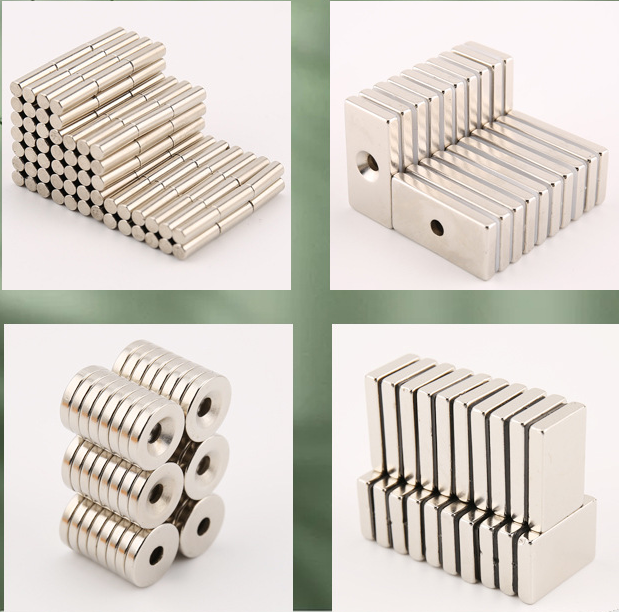
In addition, the types of n38 magnets are: block n38 magnets, tile n38 magnets, shaped n38 magnets, cylindrical n38 magnets, ring n38 magnets, disc n38 magnets, magnetic bar n38 magnets, magnetic rack n38 magnets, attribute n38 magnets: samarium cobalt n38 magnets, NdFeb n38 magnets (strong magnets), ferrite n38 magnets, aluminum nickel cobalt n38 magnets, iron chromium cobalt n38 magnets, occupational magnets: Magnetic components, motor n38 magnets, rubber n38 magnets, plastic-magnetic and so on. Different types of n38 magnets are used in different sectors in a variety of ways.
Methods for measuring magnetic and magnetic fields of n38 magnets
1. The magnetic flux density is measured in Tesla (T).
2. The measurement method of magnetic flux density adopts Hall element, constant magnetic field comparison method and other methods.
3. The measurement of magnetic flux density shall be standardized to ensure the accuracy and reliability of the measurement, and the measuring instrument shall be calibrated.
The gauss of a neodymium n38 magnet is the unit of the magnetic field, and we often use gauss as the unit when describing the magnetic force of a magnet. Many customers provide magnet size will add Gaussian value need to achieve how much, in fact, this is a wise choice, some factories will use low performance as a high performance magnet, but if you know the magnet Gaussian value, equal to you have selected the correct strong magnetic level. What is the concept of 2000 Gauss magnet 2000 Gauss means that the highest magnetic field of this neodymium magnet is 2000 Gauss. Whether it is 2000 Gauss or 3000 Gauss, there is no fixed specification size, and the two circular magnets with very different sizes may have the same Gauss value. The Gauss of the NdFeb magnet has a great relationship with its area size, thickness, grade and so on. Examples of Gaussian values for a few conventional circles:
N38 magnet material, D10*3, what is Gauss? About 2900 Gauss.
N38 magnet material, D15*3, what’s Gauss? About 2350 Gauss.
N38 magnet material, D20*3, what is Gauss? About 1990 Gauss.
N38 magnet material, D10*1, what is Gauss? About 1500 Gauss.
N38 magnet material, D10*2, what’s Gauss? About 2300 Gauss.
N38 magnet material, D10*3, what is Gauss? About 2800 Gauss.
N38 magnet material, D10*1, what is Gauss? About 1500 Gauss.
N42 magnet material, D10*1, what’s Gauss? About 1700 Gauss.
N52 magnet material, D10*1, what is Gauss? About 1900 Gauss.
In general, the Gaussian surface of the n38 magnet is inversely proportional to the area and proportional to the thickness.
The second is the grade of neodymium n38 magnet, the higher the grade, the larger the Gauss, the premise is that the magnet of the same size.
We generally use a Gaussian meter to measure Gauss. Please note here that the actual value measured by different brands of Gauss meters may vary greatly. Two, 2000 Gauss magnet where to buy
Many e-commerce platforms have 2000 Gauss magnets, but the premise is that you need to have a Gauss meter, if you have a large demand, it is recommended to customize directly from the magnet manufacturer. In the sample customization process, the supplier is required to take a video of the measurement of Gauss to ensure that the requirements are met. The same specifications, grades of magnets, the two factories may be very different prices, the main reason here is that some factories will misrepresent the performance of the n38 magnet, as long as the two factories of the sample Gauss comparison, in fact, you can find the source of the problem. Therefore, magnet Gauss is a factor that needs attention in the process of daily customer procurement of strong magnetism.

Magnetization and demagnetization technology of magnet
What is the direction of magnetization?
The magnetization direction is the first step to obtain the magnetism of Ndfeb, samarium-cobalt magnets and other permanent magnet materials. It represents the position of the north and south poles in a magnet or magnetic assembly. The magnetic properties of permanent magnet materials mainly come from their easily magnetized crystal structure. Due to this deconstruction, the n38 magnet can obtain very high magnetic properties under the action of a strong external magnetic field, and its magnetic properties will not disappear after the disappearance of the external magnetic field.
Can the direction of magnetization of the n38 magnet be changed?
From the direction of magnetization, magnetic materials are divided into two categories: isotropic magnets and anisotropic magnets. As the name suggests:
Isotropic magnets have the same magnetic properties in any direction and can be drawn together arbitrarily.
Anisotropic permanent n38 magnet materials have various magnetic characteristics in different directions, and the direction in which they can obtain the best/strongest magnetic characteristics is called the orientation direction of the permanent n38 magnet material.
Orientation technology is a necessary process for the production of anisotropic permanent n38 magnet materials. The new magnet is anisotropic. Magnetic field orientation of powder is one of the key technologies for manufacturing high performance Ndfeb n38 magnets. Sintered NdFeb is generally pressed by magnetic field oriented molding, so it is necessary to determine the orientation before production, which is the preferred direction of magnetization. Neodymium magnets, once made, cannot change the direction of magnetization. If the direction of magnetization is found to be wrong, the n38 magnet needs to be re-customized.
What are the differences between axial and radial magnetization of n38 magnets?
Axial and radial magnetization are commonly used to indicate the direction of magnetization of cylindrical/disk, ring, and arc magnets. For axially magnetized magnets, the magnetic force is mainly on two end faces. For radially magnetized magnets, the magnetic field is mainly on the inner arc and the outer arc.
What is magnetization?
Magnetization is the process of applying a magnetic field to a permanent magnet material along the direction of the magnetic field orientation and gradually increasing the magnetic field intensity to achieve technical saturation.
Sintered NdFeb permanent magnet materials can be made into square, cylindrical, circular, arc and other forms, their magnetization direction is relatively simple, generally axial and radial magnetization.
In addition to the simple direction of magnetization, the sintered Ndfeb ring can also be multi-pole magnetized according to actual needs, that is, multiple N and S poles can be presented on a plane after magnetization. Multipole rings require the use of specially designed magnetizing clamps, thus incurring additional magnetizing clamp costs.
How to magnetize a n38 magnet?
A magnetizer is a tool for magnetizing magnetic materials or magnetic components. Through it, we can apply a magnetic field to a permanent magnet product that requires magnetization.
The basic principle of magnetization is to place a magnetized object in a magnetic field formed by a coil, through which a direct current flows. There are two ways: DC magnetization and pulse magnetization.
If the magnetization field does not reach the technical saturation field, the remanent Bj and coercive Hcj of the permanent magnet material will not reach their appropriate values. So how do we determine the energy of the magnetizer?
First of all, according to the size of the magnetized product and the direction of magnetization to determine the size of the magnetization tooling. The magnetic field at the center of the tool is then calculated. The size of the magnetic field should be 3-5 times the coercive force of the magnet. The magnetizing current is then calculated. According to the current and voltage of the magnetizer, the capacity of the energy storage capacitor is finally determined. Finally, the energy of the magnetizer is determined.


N38 magnet maintenance and use precautions
The copyright belongs to the author. For commercial reprinting, please contact the author for authorization. For non-commercial reprinting, please indicate the source.
Came to the n38 magnet factory I found that there is so much knowledge about the original magnet, how long can the magnetic ability of the magnet last? N38 magnet is a widely used item, its main role is to produce a magnetic field, so as to adsorb items or as a powerful magnetic source. In production, Ndfeb magnets are considered to be the strongest n38 magnets, which are often referred to as “permanent magnets”. So, how long does a permanent magnet last? Ndfeb magnets are very tough, with a very high coercive force, under normal circumstances, in the natural environment and general magnetic field conditions, permanent n38 magnets will not demagnetize and magnetic changes, which means that the magnetic force of permanent magnets can last for a long time. However, it should be noted that if the non-permanent magnet is heated to a certain temperature, it will lose its magnetism. Ndfeb n38 magnets will oxidize at high temperatures, resulting in magnetic attenuation. In general, when the magnet is at a temperature of about 80 ° C, (here tips: Ndfeb magnets can produce high temperature magnets 80 ° C 100 ° C 120 ° C 150 ° C 200 ° C and higher) magnetic force will decline in different degrees. If the heating temperature is too high, the magnetic force will be lost very quickly. Demagnetization by heating itself is caused by changing the microscopic condition of the magnet. In other words, like this. Heating is to aggravate the vibration of the atoms inside the object, to a certain extent, the collision between the atoms will make the atoms break free of the magnetic force constraints between each other, so that the magnetic field direction of each atom will no longer remain in the same direction, but in all directions (the atom will flip during the collision, so that its magnetic field direction will change), these magnetic fields with different directions will cancel each other. There’s no magnetic field outside. In addition, in the use of magnets also need to pay attention to some matters, such as to avoid the magnet for a long time by strong heat or strong magnetic field interference, do not collide with the n38 magnet, to avoid the magnet and other magnets or magnetic sensitive elements close to, etc., these operations may affect the magnetic force and service life of the magnet. In general, the magnetic force of Ndfeb magnets can last a long time, but there are certain limitations. In the process of use, we need to carefully comply with the relevant use specifications and maintain the good condition of the n38 magnet, so as to ensure the life and magnetic performance of the magnet.
N38 magnet use precautions:
1, temperature customers in the selection of NdFeb magnets should choose their own n38 magnet brand according to its working temperature, if the working temperature is higher than the magnet brand to withstand the temperature, the magnet will slowly demagnetize until no magnetic. Before ordering, be sure to confirm the working temperature and the suitable brand for your own use.
2, environment if the magnet device used in the sealed state, you can consider choosing the surface of the magnet without electroplating or white zinc plating, which can save costs, if the magnet is exposed to humid air, especially in the state of salt spray, it is recommended to consider the surface nickel-plated magnet. N38 magnets should be stored in a dry, constant temperature environment, separated and wrapped with plastic, wood chips, cardboard, foam, etc. Keep away from iron and easily magnetized items, such as monitors, bank cards, computers, televisions, mobile phones, etc.
3, handling and stacking NdFeb strong magnetic material hard, brittle, strong magnetic field, to take lightly (especially large specifications and flakes), when the strong magnet itself or with other iron or separate, be careful not to impact. Otherwise, it is easy to damage the n38 magnet or hurt the finger due to collision. Because Ndfeb is a polymetallic alloy material, the density is between 7.45, and it has heavy and brittle characteristics. So be especially careful when handling to avoid magnetic breakage. Storage should also keep the environment dry, do not pile directly on the ground, padded with cardboard or placed on the shelf.
4, When the magnets pull up each other can not be separated, it is recommended to push staggered, must not be hard to pry. Fix the whole magnet with your left hand, and use your right hand to coordinate with your index finger and thumb to remove the magnet horizontally. Do not immediately throw the removed magnet back into the magnet pile after removing it. Please isolate the magnet immediately. Handle gently, away from the iron or magnetic objects (about 16 cm) or paper the removed paper tightly wrapped, so that it is safer. If you need to put the magnet back inside the entire magnet, put it back slowly, moving in close from the edge. Be sure to hold the magnet in your hand until it has moved in. Magnet ordering precautions:
1. Magnet performance.
2. Dimensions and tolerances.
3. Do you want to magnetize? If you want to magnetize, in what way, axial? Radial? Magnetization direction
4. Temperature of the magnet operating environment.
5. Order quantity.
6. Surface treatment. Galvanizing, nickel plating?
7. If you have any other special requirements, please inform us.
8. Provide drawings
The relationship between n38 magnets and electromagnetic induction
The copyright belongs to the author. For commercial reprinting, please contact the author for authorization. For non-commercial reprinting, please indicate the source.
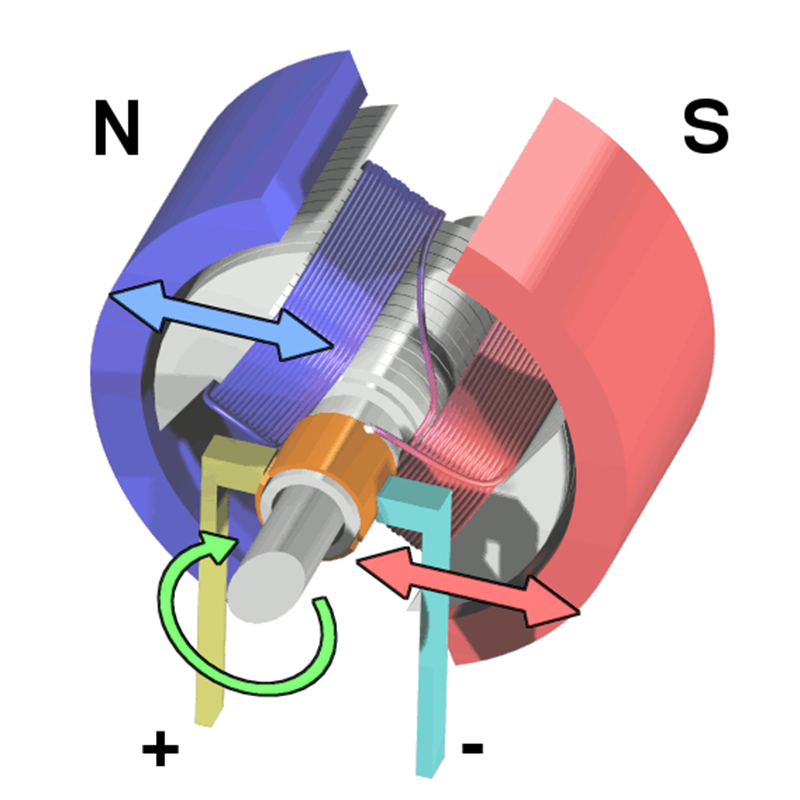
Introduction to Electromagnets Definition and working principle of electromagnets: The magnetic field generated by the coil electrification attracts or repeals the magnetic parts and the external mechanical work device called electromagnet, which uses the principle of electromagnetic induction to convert electrical energy into mechanical energy, can directly achieve linear movement, rotation, swing and linear plus rotation composite motion, in industrial automation is quite popular today, electromagnet has been widely used in all kinds of automatic devices. A linear electromagnet drives the load toward the core when it is energized, in this sense, the electromagnet is a pull device, but if a rod is installed in the section of the pole and through the hole deep in the core, when it is inhaled, the rod will be far away from the core to push the external load for a specified distance, so the electromagnet can provide force and pull. Determination of magnetic field direction: according to ampere’s right hand rule, the direction of the magnetic field generated by the current cycle can be determined by using the right hand rule, which considers the direction of the four fingers outside the thumb bending to the palm as the direction of the current, then the direction pointed by the thumb is the North Pole of the magnetic field. 1. Force: the thrust or pull force and suction generated by the electromagnet’s coil after it is energized; 2. Stroke: the distance from the starting point of slide rod movement to the final stopping position; 3. Holding force: the pull or thrust of the slide rod at the end of the stroke; 4. Working cycle: the ratio of the sum of power-on time and power-off time; 5. Continuous power: 100% working cycle; 6. Gap working cycle: less than 100% of the working cycle, it has a maximum allowable power time so that its temperature is not too high; 7. Remanence: the magnetic force remaining after the electromagnet is cut off; 8. Coil maximum operating temperature: coil maximum operating temperature can not adversely affect the organization and function of the material, this temperature is the sum of ambient temperature and coil temperature rise, usually 130 degrees Celsius; 9. Ampere-turns: the product of current and coil turns; 10 Response time: The time for the slide rod to pull into place after the power is switched on. The above is to introduce some basic knowledge of electromagnet magnet constant magnetic field source, I hope it will be helpful to you, you can also go to know more about the role of electromagnets, find more places where it can be applied, so that people’s lives can be more and more convenient.
Electromagnetic induction refers to magnetic generation of electricity: a conductor placed in a changing magnetic flux will generate an electromotive force. This electromotive force is called induced electromotive force or induced electromotive force, and if this conductor is closed into a primary circuit, the electromotive force will drive the flow of electrons to form an induced current (induced current).
In general, the magnetic field strength generated by the electromagnet is related to the size of the direct current, the number of coils and the center of the magnetic material, in the design of the electromagnet will pay attention to the distribution of the coil and the selection of the iron guide material, and the size of the direct current to control the magnetic field strength. However, the material of the coil has resistance and limits the size of the magnetic field that the electromagnet can produce, but with the discovery and application of superconductors, there will be opportunities to break through the existing limitations.
The application of n38 magnets in the medical field
Ancient homing pigeon enthusiasts are aware that even if they are released hundreds of kilometers away, they will always find their way back to the nest. What accounts for pigeons’ strong sense of place? It turns out that pigeons are sensitive to variations in the Earth’s magnetic field and may utilize such changes to locate their home. Pigeons will fly away if you put a n38 magnet on their heads. If pigeons fly over radio towers, strong electromagnetic interference can also cause them to get confused. Nuclear magnetic resonance, which is more commonly known as magnetic resonance imaging technology, uses a positive charge and spin motion in the nucleus to identify aberrant human tissue and assess illness. This technique is used in medicine. The spatial orientation of the nuclear spin changes from being disordered to being ordered when it is exposed to an external magnetic field, contrary to how the nuclear spin axes are typically arranged. When the spin system approaches equilibrium, the magnetization intensity reaches a steady value as the magnetization vector steadily increases from zero. If the nuclear spin system is exposed to outside forces, such as a specific radio frequency stimulation of the nucleus, resonance effects may result. After the radio frequency pulse stops, the intensified nuclear spin system will return to its initial configuration of the magnetic field while releasing weak energy, which will turn into a radio signal. Once enough signals are detected and given enough spatial resolution, you can see the nuclear distribution image moving. The absence of the signal known as the flow effect or flow void effect from the flowing liquid characterizes NMR. Blood is unmarked black, but blood vessels are off-white tubular structures. This makes it simple for the blood vessels to divide the soft tissues.
Cerebrospinal fluid, which is black, surrounds the normal spinal cord, and there is a white dural that is separated from fat, giving the spinal cord a strong signal structure in white. Nuclear magnetic resonance has been used to diagnose numerous bodily systems using imaging techniques. The brain, spinal cord, heart vessels, joints, bones, soft tissues, and pelvic cavity are the areas that are most affected. When diagnosing cardiovascular diseases, it is superior to other X-ray methods in that it can perform ventricular analysis for qualitative and semi-quantitative diagnosis and create multiple sectional images with high spatial resolution that show the full picture of the heart and lesions as well as their relationship to the surrounding structure. superior to CT scans, nuclide imaging, two-dimensional ultrasonography, and other X-ray imaging. Diseases may be diagnosed and treated using magnetism. A traditional Chinese medicinal plant is called magnet. Red and white blood cells are distinguished from one another by magnetic variations between the various blood components. Magnetic therapy, which plays a special role in the treatment of a number of ailments and has been applied to magnetic therapy pillows and magnetic therapy belts, is another result of the interaction between the magnetic field and human meridians. magnetic water may prevent boiler scaling, magnetic seeds can partially boost crop productivity, and an iron remover composed of magnets can eliminate any iron particles that may be present in flour, among other things.

Environmental impact and sustainability of n38 magnets
There is a relationship between the environmental impact of n38 magnets and sustainable development. Here are some of the environmental impacts and sustainability issues associated with n38 magnets:
1. Resource consumption: The production of magnets requires a large number of resources, such as iron ore and rare earth elements. The collection and processing of these resources can cause irreversible damage to the environment, so it is necessary to find alternative resources or improve production processes to reduce resource consumption.
2. Electromagnetic radiation: magnetic fields and electromagnetic radiation generated by magnets may affect the surrounding organisms and the environment. For some sensitive organisms and ecosystems, the use of n38 magnets may need to be restricted or measures taken to reduce radiation.
3. Waste disposal: After the end of the n38 magnet‘s life cycle, the disposal of waste is also an important environmental issue. N38 magnets may contain toxic or harmful substances that need to be properly handled and disposed of to prevent harm to the environment and human health.
In order to achieve sustainable development, the following measures can be taken:
1. Improve the efficiency of magnets: By improving the design and production process, n38 magnets can use resources and energy more efficiently, reducing resource consumption and environmental pollution.
2. Promote circular economy: in the life cycle of n38 magnets, promote the recycling and reuse of waste to minimize the generation of waste and the impact on the environment.
3. Explore alternative technologies: Research and development of alternatives 4. Green supply chain management: Reduce environmental impact during magnet production by selecting environmentally friendly materials, optimizing logistics and procurement strategies, and working with suppliers to promote sustainable development.
5. Raise awareness and education: strengthen the public’s understanding of the environmental impact and sustainable development of n38 magnets, promote the improvement of environmental awareness, and guide people to take environmental actions, such as reducing unnecessary n38 magnet use and correctly disposing of discarded n38 magnets.
(6) Formulate regulations and policies: the government and relevant agencies should formulate corresponding regulations and policies to encourage and support the sustainable development of the n38 magnet industry and promote the application of environmentally friendly production methods and technologies.
In summary, the environmental impact of n38 magnets is closely related to sustainable development. By improving n38 magnet production processes, promoting waste recycling, promoting green supply chain management, enhancing awareness and education, and developing relevant regulations and policies, the magnet industry can achieve sustainable development and reduce the negative impact on the environmen.