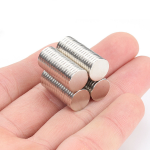
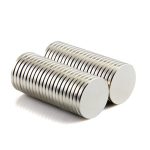
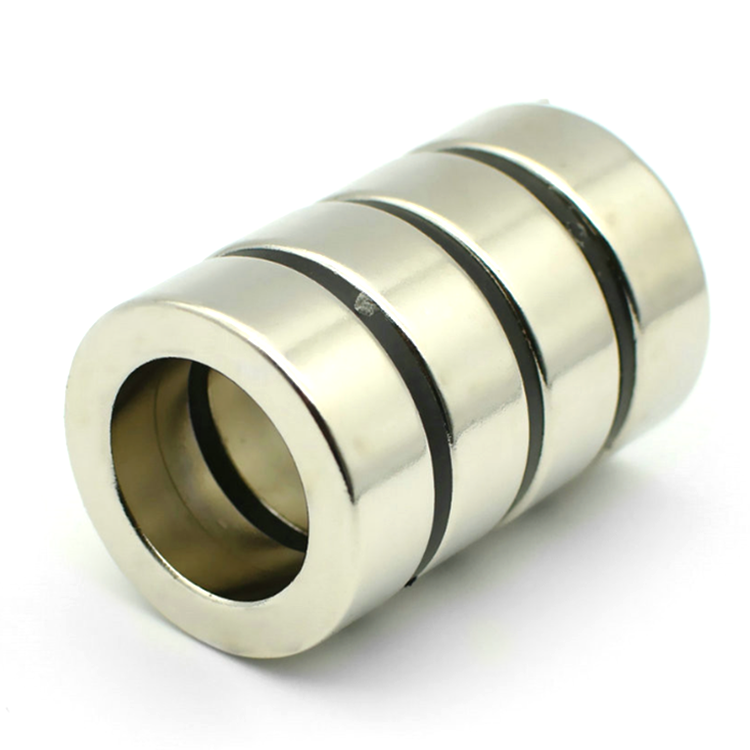
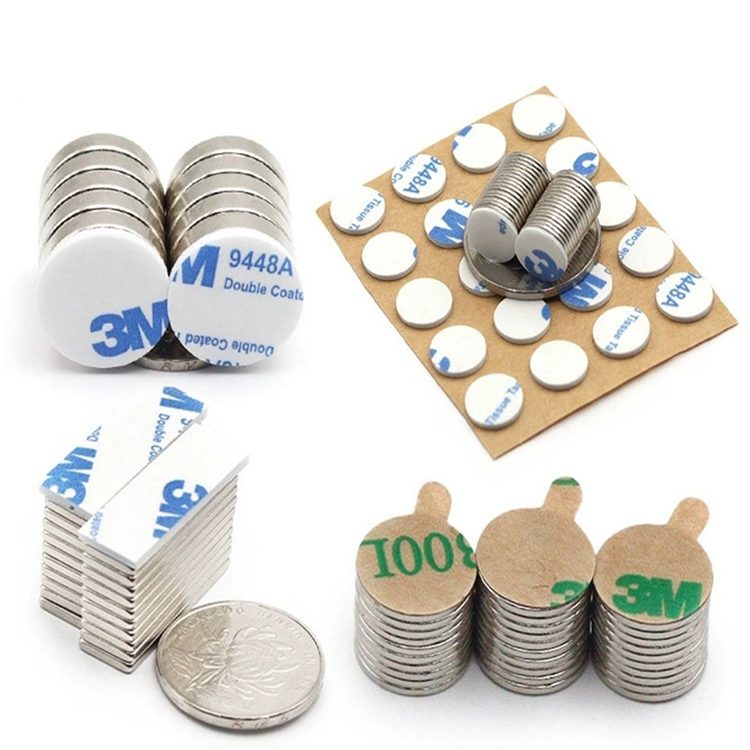
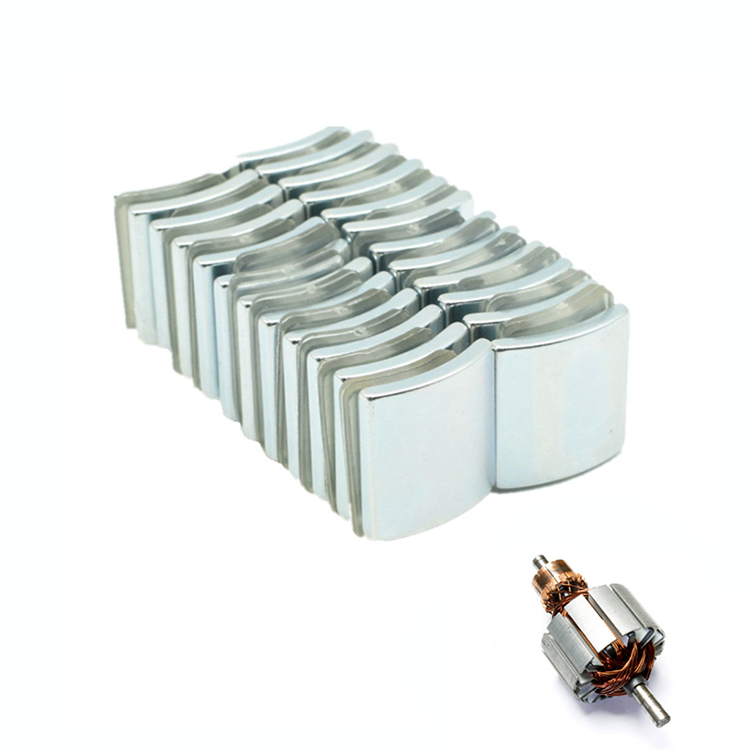
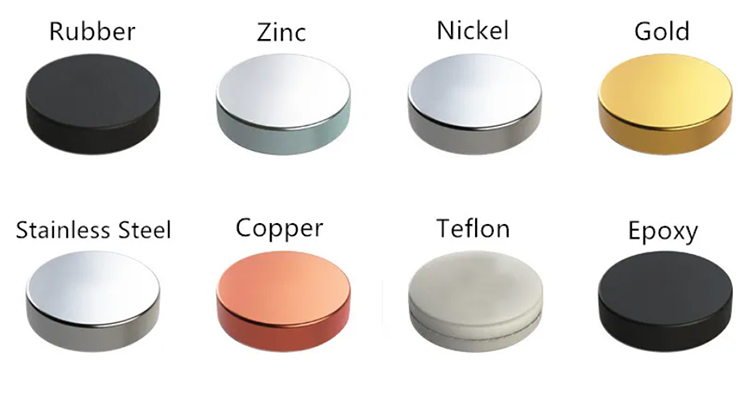
NdFeB magnets can have a variety of surface treatments. For your information, the following lists many typical neodymium magnet coatings. I sincerely hope I may be of use.
1. Nickel is the most typical form of coating for neodymium magnets.
During the electroplating process, a thick coating of nickel (Ni-Cu-Ni) is applied on these magnets. A natural antioxidant is nickel. As a result, it is frequently employed in electroplating and coatings for neodymium magnets. The magnet has an oxidation-resistant layer thanks to the nickel coating. The surface is stainless steel in color, has strong oxidation resistance, a nice gloss appearance, reasonably steady internal performance, a long service life, and can withstand salt spray exposure for 24 to 72 hours.
2. Neodymium magnets with a gold finish
More antioxidant defense is provided by gold than by copper. It neither corrodes nor rusts. On the periodic chart, gold is actually regarded as one of the least active metals. Gold, however, is pricey; as a result, neodymium magnets with a gold coating often cost more than those with a replacement coating.
3. powerful galvanized magnet
Typically, zinc is used as a single layer coating. It is extremely reasonably priced and has good corrosion resistance coating qualities. Since the zinc starts to oxidize, a coating of zinc oxide formed that aids in shielding the magnet. If you’re trying to save money and your standards for surface attractiveness and anti-oxidation aren’t too strict, galvanized is a good option.
4. An epoxy finish
Three coatings of Ni-Cu-Ni-Epoxy, which is primarily black, are applied to the epoxy coating. In outdoor applications where corrosion resistance is necessary, it offers exceptional performance. Because it is softer than other coatings and prone to scratching, the magnet may corrode if the underlying layer is exposed. Epoxy coatings are often offered in white and black.
Many commonplace objects, such as headphones, voice coil motors, guitars, speakers, cordless tools, and even hybrid automobiles, use NdFeB rare earth magnets. Let’s go through seven peculiar uses for NdFeB magnets.
Magnet puller
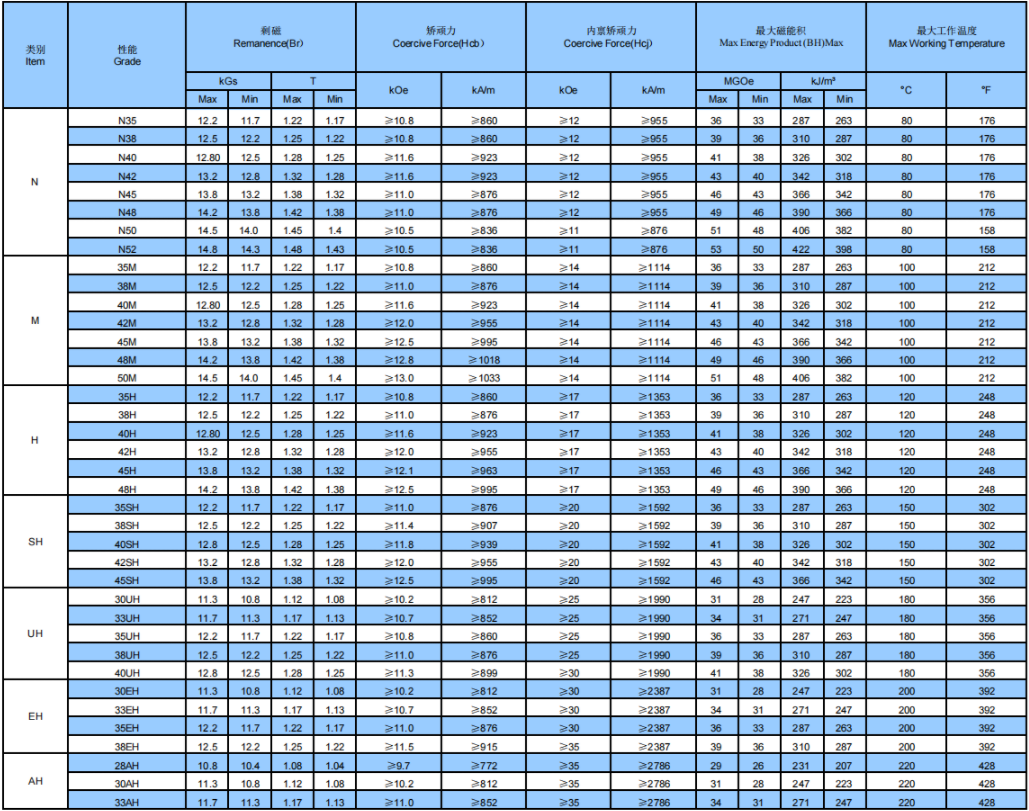
1, The two types of pull the bait plate are single magnetic and full magnetic; the full magnetic kind is the most popular and has the advantage of a magnetic force throughout the entire disk. You may get whole magnetic pull bait plates that are marked with the phrases “NdfeB strong magnetic” and the numbers 35, 40, and 52. The NdFeB magnet has the greatest magnetic force of any magnet, and the brands of its enormous magnetic force are represented by numbers like n35 and n40. The magnetic force increases as the number increases.
2, A magnetic scrubber is
Because you don’t need to empty the tank or handle the water, permanent magnets are frequently utilized in aquarium cleaners. This also holds true for wide glass windows or doors with a narrow form.
3. A stress-relieving magnet pen
Modern stationery and stress-relieving devices include magnetic stress pens. It is made of NdFeB magnets, which may alter the form of various combinations by applying the magnet attraction principle.
4. A beer opener with magnet
Above the bottle opener is a piece of NdFeB magnet that opens the lid in a split second and can be easily recycled.
5. Magnetic drapes for doors
The magnetic curtain’s look efficiently solves this problem of mosquitoes flying into the room during the summer, and its installation is easy and has a lovely appearance. The NdFeB magnet, ferrite magnet, and rubber soft magnetic curtain are the three most common types of magnetic curtains used by magnets. Depending on the design being used, either the top of the curtain will automatically adsorb or the middle of the curtain will need to be manually closed adsorption, usually with a NdFeB magnet.
6. Data wire with magnets
As long as the two ends of the magnetic line are near together, you may create a suction charge. The magnetic line is put on top of the magnet, and the other end is likewise fixed with magnetic material. The permanent magnet material NdFeB is typically used because its magnetic field never decays.
7. Hooks that magnetic
Instead of using the conventional hanger hook design, a strong magnet is built into the top of the hanger, realizing the hanger’s function while also greatly simplifying its shape. Additionally, any two hangers will always be kept apart since the magnets in them repel one another, saving you the hassle of sorting.
Can NdFeB Strong Magnets Be Air Exported?
Yes, it is possible to export NdFeB strong magnets via air.
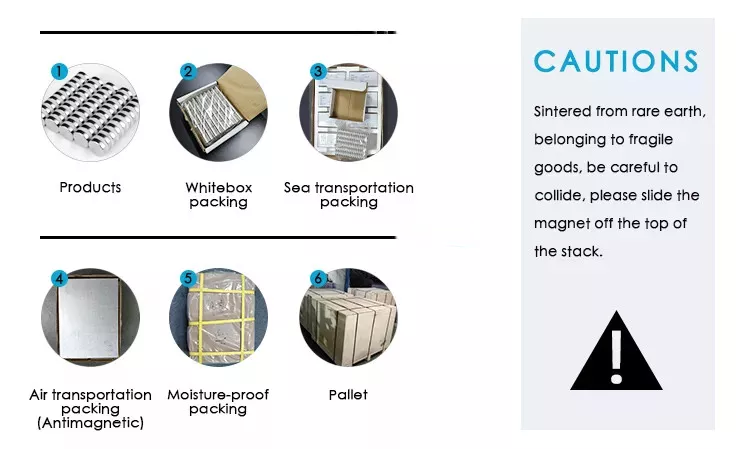
International air transport authorities, however, set limits when shipping magnetic goods because the magnetic fields interfere with aircraft navigation systems and control communications. In order to verify that the aircraft operates normally, air cargo that has magnetic properties now has to undergo magnetic detection. It can be transported once the magnetic examination satisfies the air criteria.
Additionally, the magnetic items must be degaussed prior to packing. Here, demagnetization does not result in the magnet losing its magnetic properties; rather, it uses specialized shielding packaging to ensure that the package’s magnetic display satisfies the state-mandated standards for airline safety transportation. Before shipping, make sure the magnetic field strength is not more than 0.418A/m (0.00525 Gauss) at a distance of 4.6 m (15 ft) from the surface of the package.
Ndfeb Strong Magnet Packaging for Air Export: What Should Be Done?
The customized 8-hole foam box with 6 sides that are covered in iron sheets to conceal the magnet’s magnetic field is typically exported via the NdFeB magnet’s output. A set of magnetic insulation boards typically weighs around 2 kg, has excellent magnetic insulation properties, and is ideal for common magnets and tiny magnets used in standard packaging.
We advise storing bigger size, more powerful magnets in wooden cases.
Foam may be utilized immediately to separate the magnetic field for smaller samples, which will result in lower freight costs.
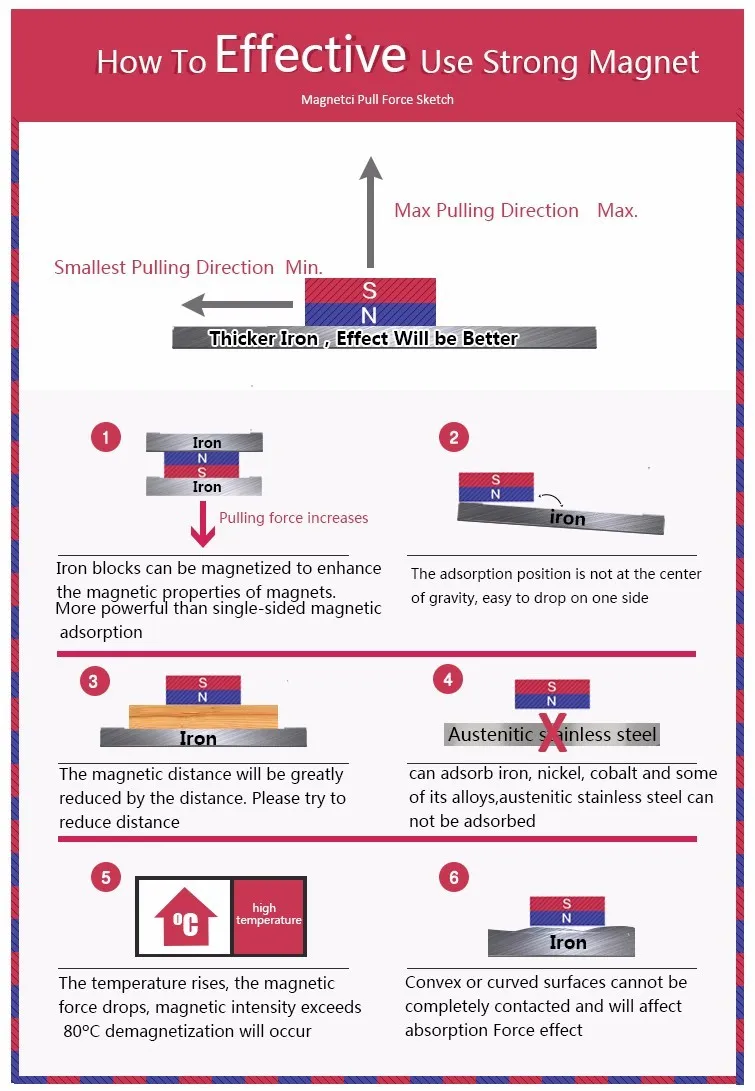
The strength of a magnet’s magnetic field is gauged by its draw force, also referred to as magnetic pull. What kind of pressure a magnet may apply to ferromagnetic objects (made of iron, nickel, or cobalt). A magnet’s draw force is influenced by its magnetic field strength, as well as by its size and form.
Most often calculated in pounds or kilos,In general, your finger will be pinched by any magnet that has a draw of greater than 7 pounds (3 kilograms). Stronger magnets may be more hazardous and should only be used by qualified individuals. For big magnets, we always advise using hand and eye protection.
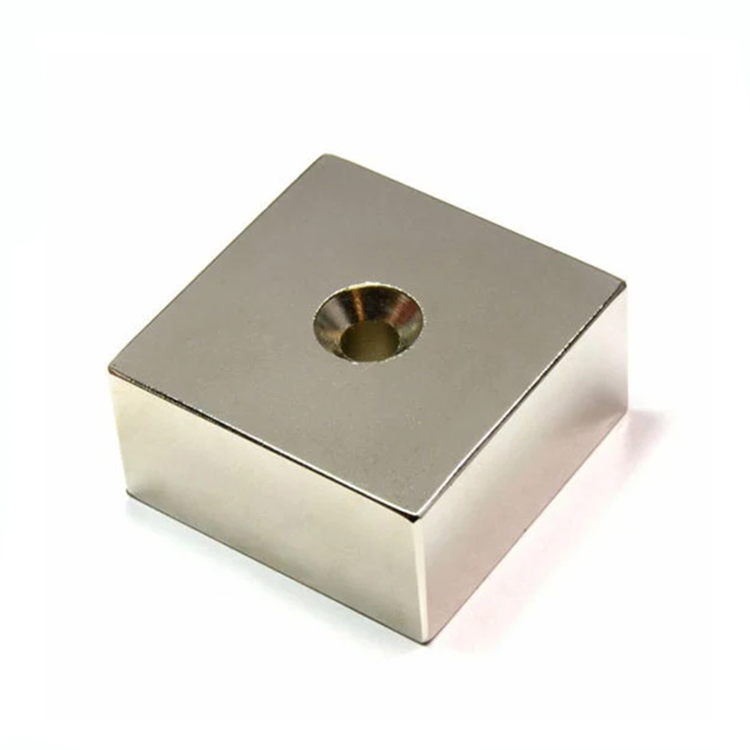
Instead of chrome, brass, aluminum, silver, gold, wood, plastic, or ceramic tiles, ferromagnetic surfaces are the best for magnets to adhere to. The best way to attach a magnet to these surfaces is using a self-adhesive or countersunk screw.
How Does Pull Force Change?
The following variables have a substantial impact on the magnet draw force:
1, Grade and kind of magnet.
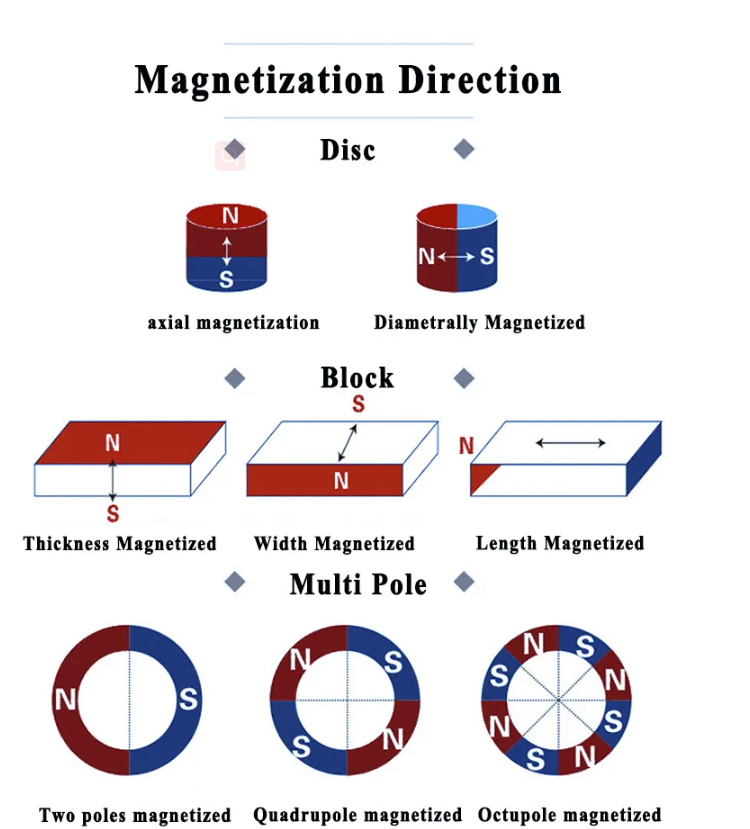
2, Magnet’s polar field
3, Air gap
The distance between a magnet and the ferromagnetic substance it is attracting or repelling is known as the magnet air gap. Because it has a significant impact on the magnet’s performance and the strength of the magnetic field, the air gap must be taken into account. The potential draw force will be dramatically affected by even a small air gap.
4. Test environment:
The size, thickness, and composition of the steel can also have an impact on how well a magnet works. Some types of steel are more magnetic than others, and various types of steel have varying magnetic qualities. For instance, stainless steel is often less magnetic than other types of steel, while low-carbon steel is typically more magnetic than high-carbon steel.
the test plate’s thickness.The test plate should have adequate thickness to accommodate all flux.
roughness and flatness. The test plate’s flatness and roughness have a significant impact on the magnet’s pull force, although this factor has long been disregarded.