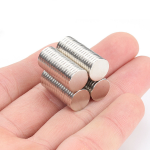
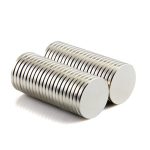
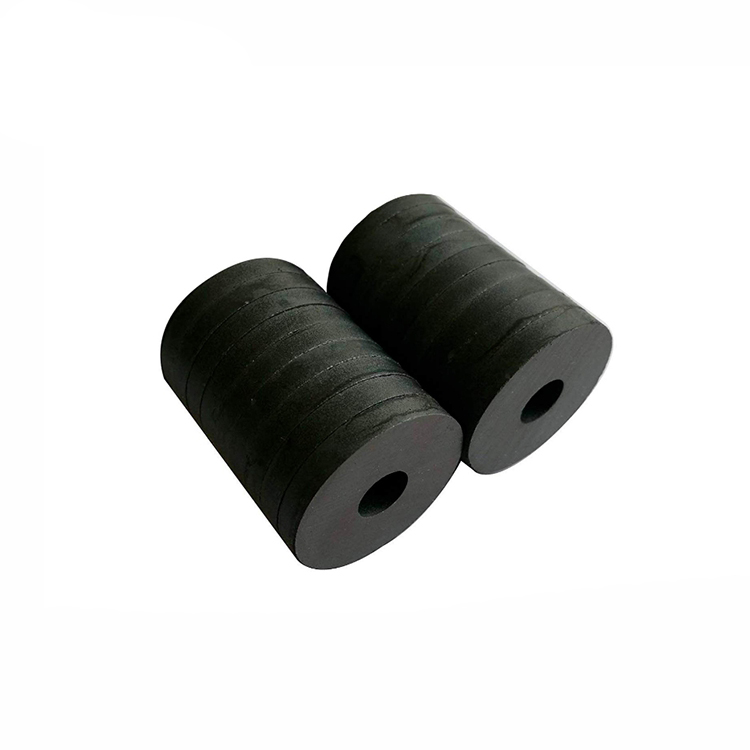
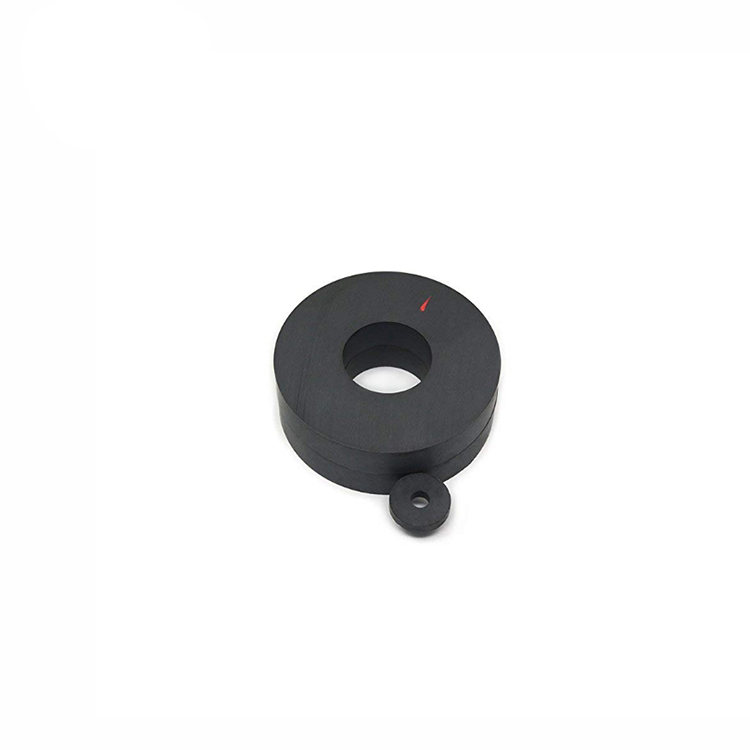
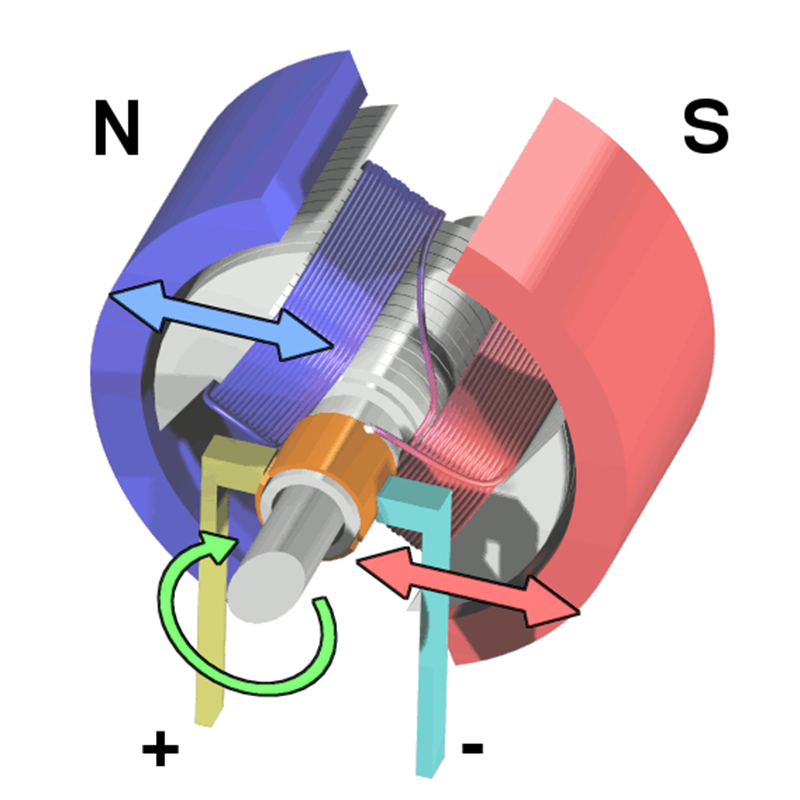
The center shaft of the ferrite magnet is magnetized. All ferrite ring magnets, ferrite countersunk ring magnets, and ferrite counterbore ring magnets are radially magnetized unless otherwise specified. Axially magnetized magnets have two smooth cylindrical end faces, one of which is designated as the North and the other as the South. By merely flipping the magnet over, the polarity of pure ferrite rings can be altered. South variants of the countersunk and counterbore ferrite ring magnets have a South at the countersunk / counterbore side, while North versions have a North at the countersunk / counterbore side (with a South at the other end, which looks like a regular ring) (with a North at the other end – which appears like a normal ring).
Any version could be used in applications where ferrite ring magnets are clamping onto ferromagnetic surfaces (such as mild steel); however, sometimes placing the magnets in a N-S-N-S arrangement may result in a slight improvement in performance as the magnets link their magnetism in a favorable manner. Just make sure that the north face of one magnet is drawing in the south face of another in situations where magnets are drawing in other magnets (unlike poles attract; like poles repel). Please be careful not to overtighten the fasteners when installing ring magnets as this could result in the Ferrite ring magnet breaking. Ferrite (Ceramic) magnets are not intended for weight carrying because, like all magnets, they are brittle (e.g. high clamping forces) We manufacture unique magnets.
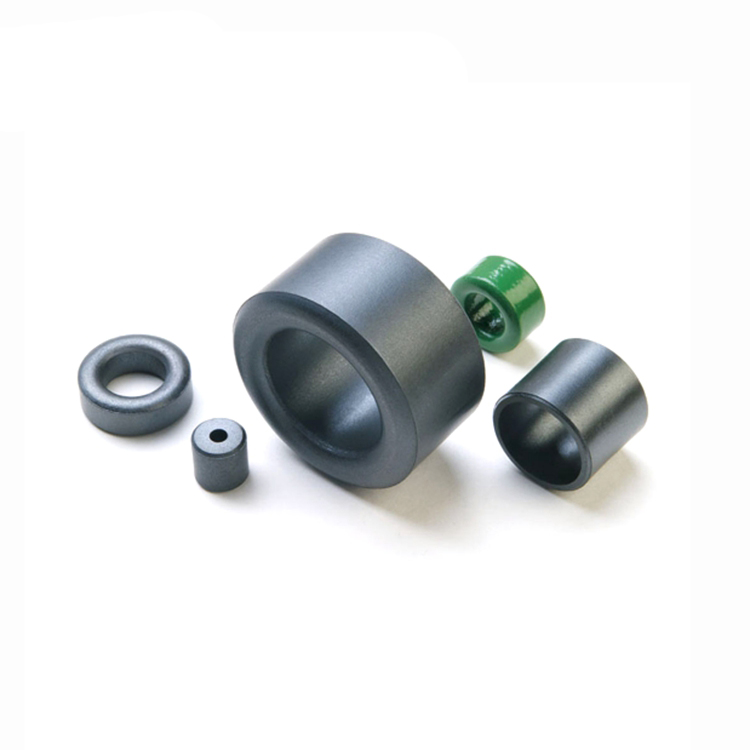
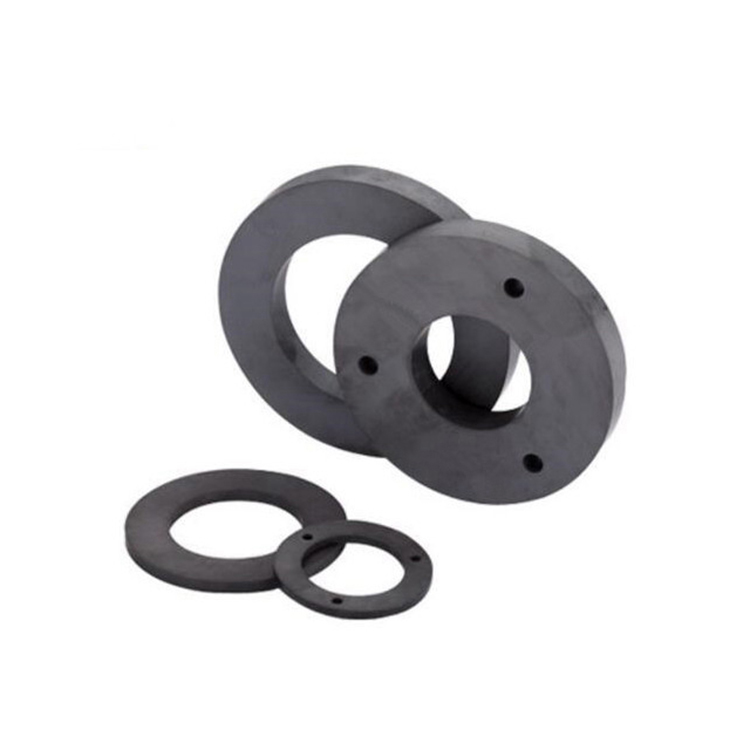
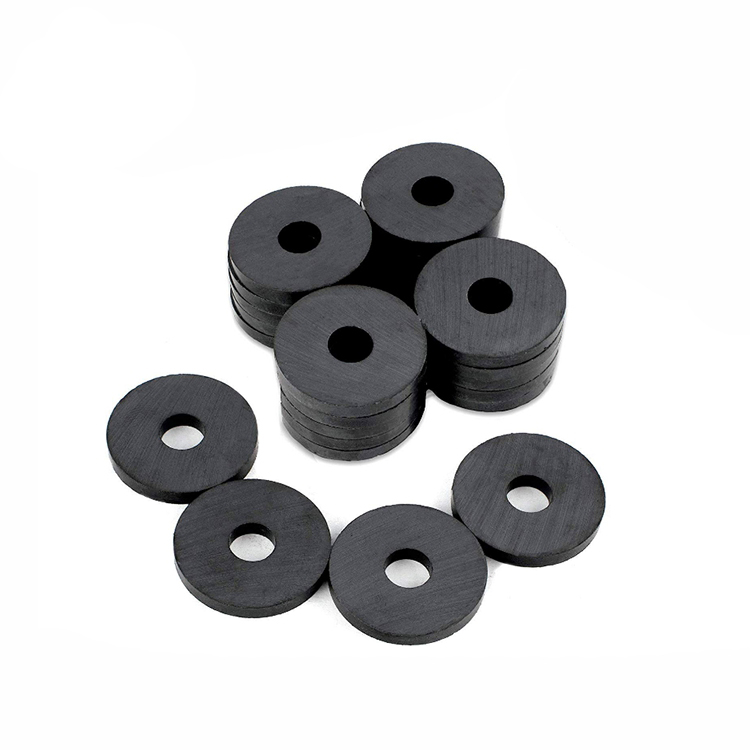
A ferrite (ceramic) disc magnet with a circular opening inside of it is known as a ring magnet. The other side of a ferrite (ceramic) ring magnet is seen as a slanted countersink that allows a screw head to slide inside. The angle is typically (but not always) 90 degrees.
A ring magnet called a Ferrite counterbore has a cylindrical flat-bottomed hole on one side that widens the magnet’s primary center hole so that a cap head screw can fit through it. The names ferrite pure rings, ferrite countersunk magnets, and ferrite counterbore magnets are also used to refer to ferrite ring magnets.
The ferrite magnet is magnetized in virtually every case in which a ferrite ring magnet is used.
all the way along its center. Assuming nothing to the contrary, all ferrite ring magnets, ferrite countersunk ring magnets, and ferrite counterbore ring magnets are radially magnetized. Magnets that have been axially magnetized have two smooth cylindrical end faces, one of which is a North and the other a South. Simply flipping the magnet over will alter the orientation of pure ferrite rings. North versions of the countersunk and counterbore ferrite ring magnets have a North at the countersunk/counterbore side (with a South at the other end, which looks like a regular ring); South versions have a South at the countersunk/counterbore side (with a North at the other end – which appears like a normal ring).
When ferrite ring magnets are used to attach onto objects made of ferromagnetic materials,
Any version of (for example, mild steel) could be used; however, occasionally arranging them in a N-S-N-S configuration may result in a slight improvement in performance as the magnets connect their polarity in a beneficial manner. Just make sure that the north face of one magnet is drawing in the south face of another in situations where magnets are drawing in other magnets (unlike poles attract; like poles repel). Please be careful not to overtighten the fasteners when installing ring magnets as this could result in the Ferrite ring magnet breaking. Ferrite (Ceramic) magnets are not intended for weight carrying because, like all magnets, they are brittle (e.g. high clamping forces) We manufacture unique magnets.
Strong Ceramic Magnets from AOMAG for Hobbies, Housework, and Scientific Tasks
A variety of magnet goods are available from AOMAG, all of which are of the highest caliber. We are dedicated to offering high-quality goods to our clients, always placing their needs first, and specializing in creating and marketing magnets in a range of colors and sizes.
Magnet strength, reluctance, and dependability are no longer concerns. We put a lot of time and effort into creating, testing, and ensuring the high quality of our industrial ring magnets.
Ceramic, which has a powerful attraction and can even last for decades, is used to make the magnet. Axial magnetization occurs in all magnets.
high levels of resilience to oxidation, corrosion, and thermal duress.
Circle-hole magnets can be utilized for a variety of tasks, such as raising, hanging, fastening, and science and artistic endeavors.
Ferrite Ring Magnet of a Substantial Dimension
This giant ferrite ring magnet is strong and long-lasting. To guarantee that you always get the best magnet, it is developed and produced using cutting-edge technology under stringent quality standards. Large-sized magnets have a broad range of uses and are excellent for use in all home, office, craft, hobby, science, and product manufacturing projects.
Thoughtful Advice:
Use strong magnets with caution as they could harm your fingertips.
Avoid using bank cards, credit cards, ID cards, timepieces, etc.
All magnets have a chance to crack and fracture, but with proper care, they can last a lifetime.
Please properly discard of it if it is broken. If ingested, the magnetized fragments will still be dangerously dangerous.
Our all-purpose gripping magnets are ferrite ringmagnets.
Would you like to connect a metal component firmly without using hammers, rivets, adhesive strips, or anything else similar? Our ferrite ringmagnets can be discreetly affixed to any metallic surface and are available in a variety of sizes and numbers.
The ferrite versions give a solid base that can be precisely adjusted to the size of the corresponding object, whether it be for the coin and bottle cap accumulation, as blackboard magnets in the classroom, or as basic refrigerator magnets.
Our rings, like all ferrite magnets, can endure extremely high and low temperatures if required.
They are therefore appropriate for external use.
Ring neodymium magnet—Zhaobao Magnet, a 30-year-old manufacturer of permanent neodymium magnets Thank you for your question! Our more than 60000m2 magnet plant has a yearly production capacity of more than 5000 tons of NdFeB magnets. Strong magnets can be made to order in a variety of forms, sizes, and characteristics. We have established supply alliances with numerous significant foreign companies over the course of our 30 years as a magnet provider, including Huawei, Disney, Apple, Samsung, Hitachi, etc. Our business is dedicated to R&D and manufacturing of NdFeB with high coercivity, low reversible temperature coefficient, and low weight loss characteristics as a neodymium magnet provider. It has 18 utility model patents and 25 innovation patents.
Are you having more problems with electromagnetic interference?
Electronic gadgets now run at hundreds of MHz, emitting harmonics in the GHz range. Complex RF problems can arise in an electrical system that is highly integrated. RF disturbance must be eliminated. Simple base and protection methods are insufficient.
The BandSorb® microwave absorbing materials were created by Schlegel Electronic Materials (SEM) and have a variety of electrical and magnetic properties that enable noise reduction from 5 MHz to 40 GHz. These materials are simple for designers to incorporate into very small areas.
This substance can be provided by SEM in a variety of forms for use from 1 GHz to millimeter waves. With our own in-house production and R&D team, we collaborate closely with our clients to offer specialized services.
Substance Characteristics of RF Absorbers
Both a silicone rubber elastomer and a dielectric foam absorber are options for the BandSorb absorbers.
There are several types of silicone rubber elastomers:
Silicone elastomer that is pliable, high-loss, magnetically loaded, and electrically non-conductive.
ST: resonant dampers with a minimum reflectivity of -20 dB.
SN: extremely thin, porous EMI/RF filter
HP: ferrite strips for wireless charging and RFID
Broadband bendable foam sheet absorption; light-weight carbon-impregnated dielectric foam.
A lightweight, high loss carbon-impregnated dielectric foam absorber called BandSorb FB is placed next to the silicone rubber substance. Compared to the smaller rubber absorbers, BandSorb FB offers a very affordable option.
Applications needing absorption over a broad frequency range, such as cavity resonance reduction and antenna cross-talk, can benefit from BandSorb.