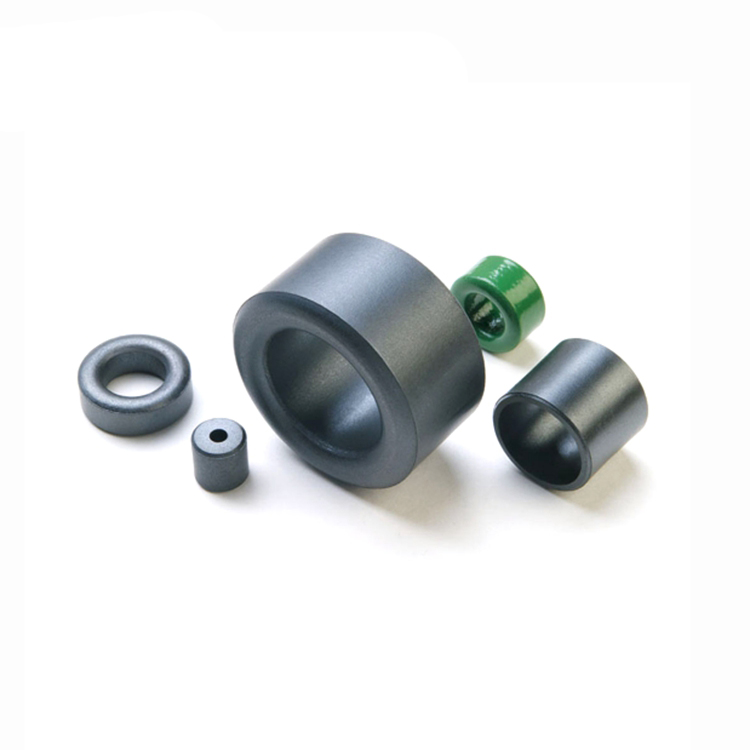
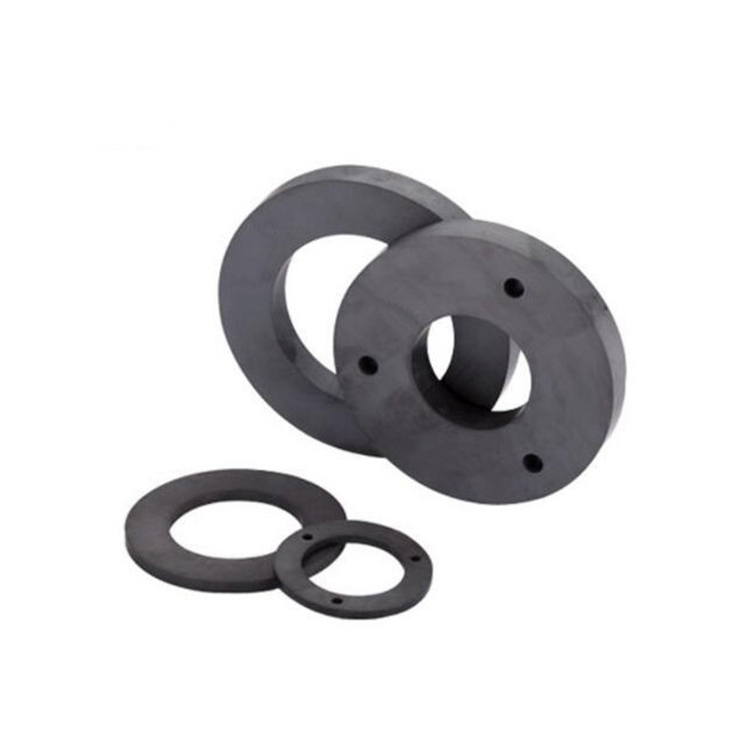
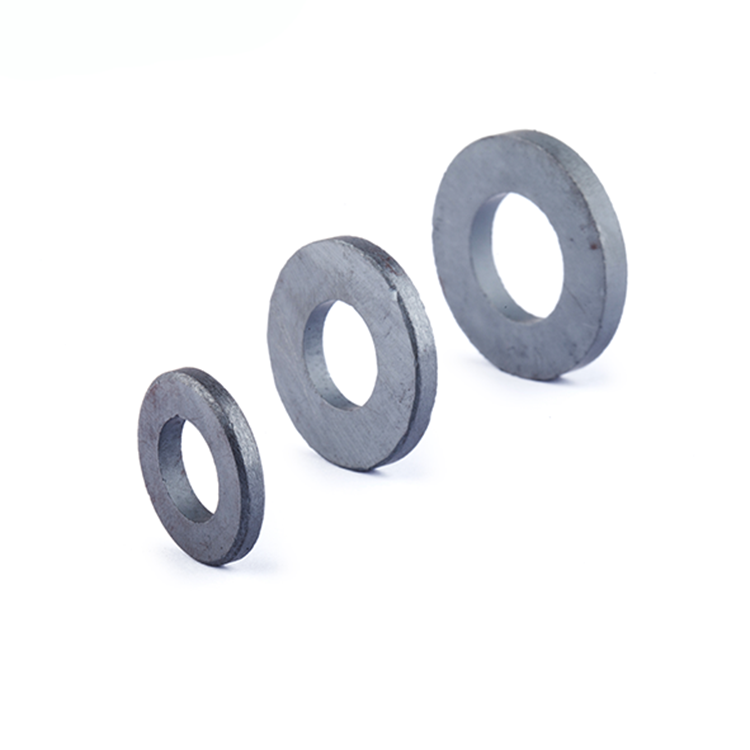
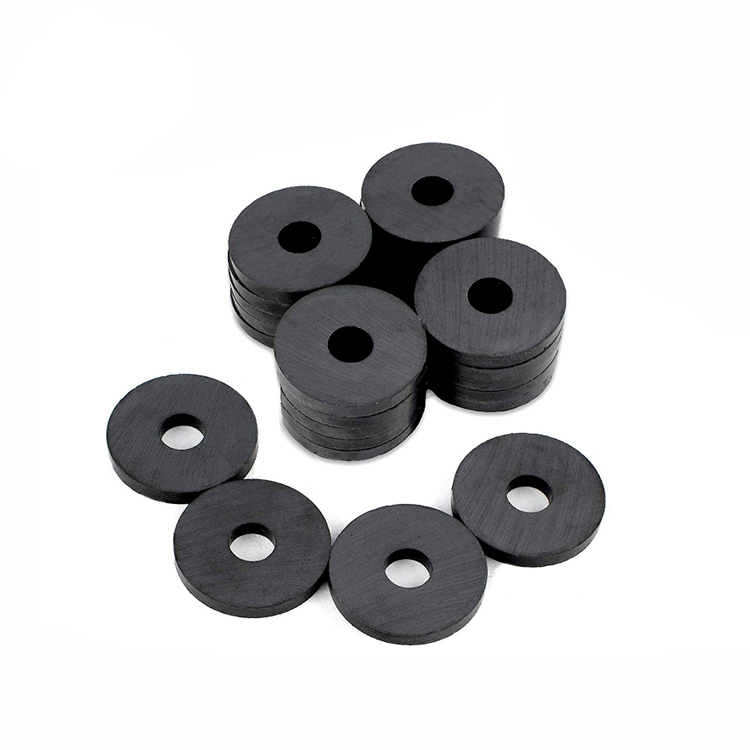
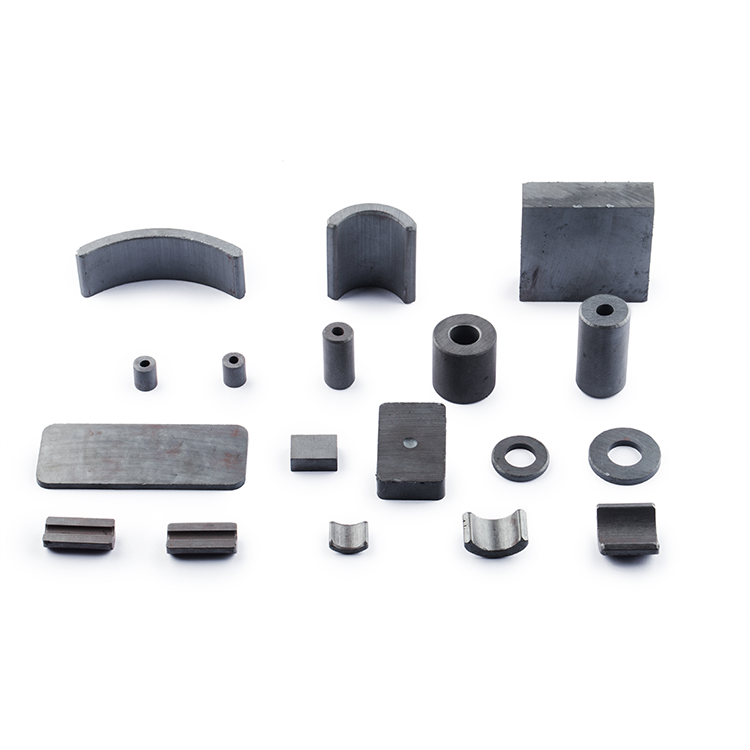
Purchase ceramic ring magnets right now online! There are many ceramic ring magnets in our inventory that come in a variety of sizes; not all of them are displayed on this page. Ceramic magnets, commonly referred to as “Ferrite” magnets, are within the permanent magnet family and are currently the least expensive hard magnets. Ceramic ring magnets resemble ceramic disc magnets but differ in that they include a hole in the center, making them a more adaptable magnet choice.
Loudspeakers, holding devices, door latches, light fixtures, torque motors, and other items frequently employ ceramic ring magnets.
Using our in-house production facilities and team of skilled engineers, we can custom cut or mill them to your exact requirements. Send us a request for a quotation or get in touch with us right away to let us know what you need, and we’ll work with you to find the best cost-effective solution for your project.
This two-pack of circular rings is ideal for crafting your own magnets and other DIY projects. Any light to medium weight object may be placed on refrigerators, lockers, whiteboards, or any ferrous metal surface by applying glue on the back of the object. Perfect for use at home, work, or school. Iron oxide and barium or strontium carbonate make up our robust 2023 Ceramic Ring Magnets. 2023 Ceramic Ring Magnets are a common option for a variety of consumer, commercial, and technical applications because they offer rather strong holding power for their price. affix glue on the back of a bulky project to create magnetic Ideal for use at home, school, work, and retail fantastic for crafters.
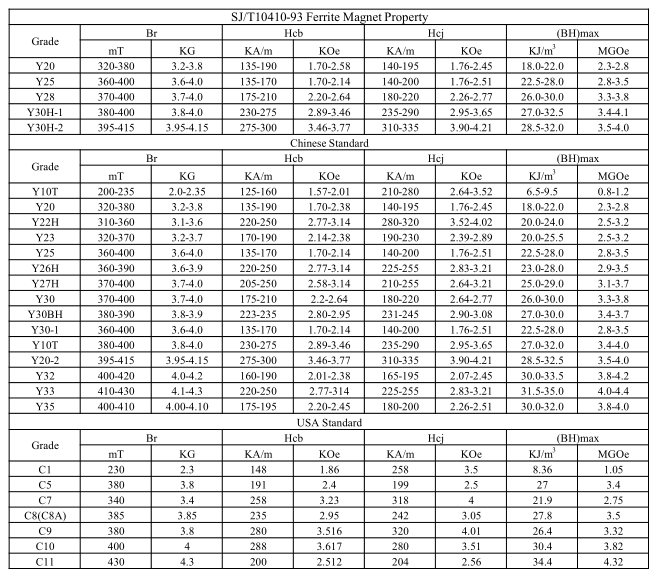
Ceramic Ring Specifications
For applications requiring affordable magnet power that also require strong holding capabilities at a reasonable price, 2023 Ceramic Ring Magnets are a viable option.
The hue of ceramic ring magnets is a deep charcoal gray, and they don’t seem metallic.
Applications requiring high temperatures (over 250° C) are not suitable for ceramic magnets.
We keep Grade 5 ceramic ring magnets in stock that are magnetic all the way through. Grade 8 is also available upon request; it is typically utilized in technical applications that are more demanding.
See our Chart of Properties for a comparison of Ceramic Grades 5 & 8.
A 2023 Ceramic Ring Magnets with a concentric hole within is known as a ferrite (ceramic) Ceramic Ring Magnets . A ferrite (ceramic) countersunk magnet is a ferrite ring magnet with one side looking like a regular ring and the other side looking like an angled countersink that allows a screw head to fit inside, the angle typically (but not always) being 90 degrees.
A ring magnet known as a “Ferrite counterbore ring magnet” has a cylindrical flat-bottomed hole on one side that widens the magnet’s primary center hole to accommodate a cap head screw. Other names for Ceramic Ring Magnets are ferrite countersunk magnets, ferrite counterbore magnets, and ferrite pure rings.
Since the Ceramic Ring Magnets is magnetized along its main axis, all Ferrite ring magnets are almost invariably axially magnetized. All ferrite ring magnets, ferrite countersunk ring magnets, and ferrite counterbore ring magnets are axially magnetized unless otherwise specified. Axially magnetized magnets have two flat circular end faces, one of which is designated as the North and the other as the South.
By simply flipping the magnet over, the polarity of pure Ceramic Ring Magnets may be altered. South versions of the countersunk and counterbore Ceramic Ring Magnets have a South at the countersunk/counterbore side (with a North at the other end, which appears like a normal ring), while North versions have a North at the countersunk/counterbore side (with a South at the other end, which appears like a normal ring).
Any version might be utilized in situations where ferrite ring magnets are clamping onto ferromagnetic surfaces (such as mild steel); however, sometimes putting the magnets in a N-S-N-S arrangement may result in a little improvement in performance as the magnets connect their magnetism in a favorable manner.
Just make sure that the North face of one magnet is drawing in the South face of another in situations where magnets are attracted to other magnets (unlike poles attract; similar poles repel). Please be careful not to overtighten the screws while installing ring magnets as this might result in the Ferrite ring magnet breaking. Like all magnets, ferrite (Ceramic) magnets are fragile and are not intended for load bearing (strong clamping pressures, for example). We manufacture unique magnets.
Magnetic Ceramic Rings
Loudspeaker systems were the initial use for Ceramic Ring Magnets , also known as ferrite ring magnets. Ring magnet sizes have changed throughout time in response to market need. They are now often employed in the printing sector as well as in magnetic rollers for separation applications. They play a crucial role in the quick-moving conveyor systems that are used in many ferrous-material processing facilities.
Browse our selection of ceramic ring magnets, which come in a range of widths and diameters. To find out more about the best magnet for your application, talk to an expert.
Description of Ceramic Ferrite Ring Magnet
Ceramic Ferrite ring magnets are cylindrical or disc magnets with a hole cut straight through the middle. One of the most economical magnetic materials is ceramic ferrite, used in ring magnets. It can function in moderate temperatures and has a fair to good resistance to corrosion.
Application of Ceramic Ferrite Ring Magnets
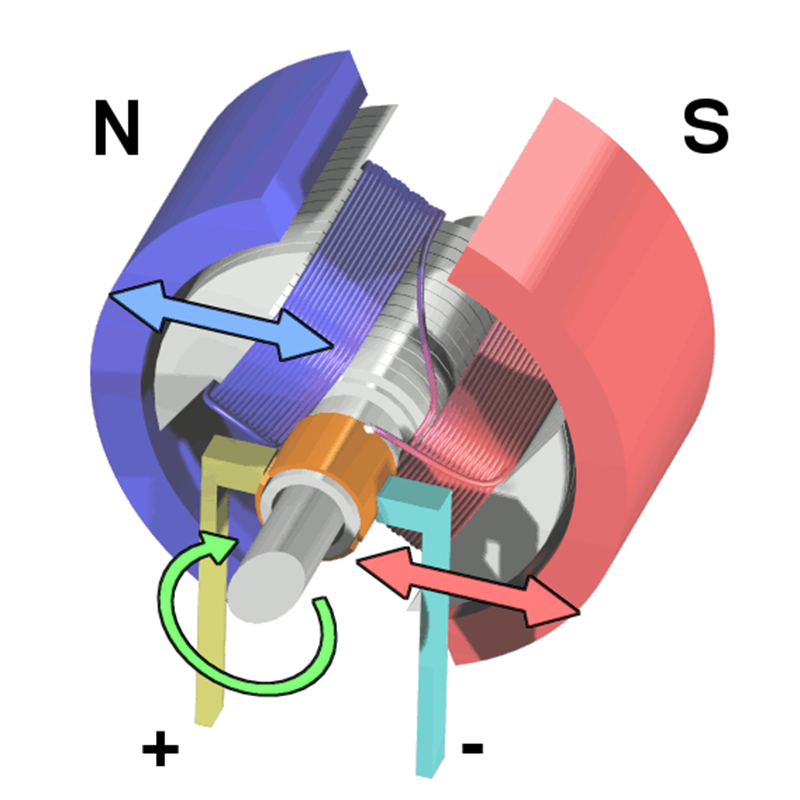
It is common to find ceramic ferrite ring magnets in ammeters, speakers, audio, phones, TVs, dynamos, and DC permanent magnet motors (used in automobiles), among other devices.
Ceramic Ferrite magnets are used in a variety of industrial applications, and Stanford Magnets specializes in producing and delivering them. In this sector, we have highly skilled engineering specialists and cutting-edge technologies. For a quote if you need a certain size, please get in touch with us.
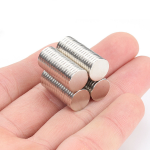
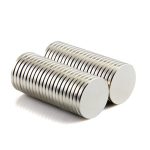
This small ceramic (ferrite) disc magnet is ideal for crafts, hobbies, souvenirs, fridge magnets & whiteboard magnets.
I was hoping these magnets were good strong ones when I purchased them and wow! They haven’t disappointed.
These are great quality magnets, great size and strength, super fast shipping, and easy to use the website.
Part of the content in this article is reproduced from other media for the purpose of transmitting more information and does not mean that this website agrees with its views or confirms the authenticity of its content. It shall not bear direct responsibility and joint liability for the infringement of such works.
For DIY projects and creating your own magnets, ceramic ring magnets are ideal. Any light to medium weight object may be placed on refrigerators, lockers, whiteboards, or any ferrous metal surface by applying glue on the back of the object.
Perfect for use at home, work, or school. Iron oxide and barium or strontium carbonate make up our robust ceramic ferrite magnets. Ceramic magnets are a popular option for a variety of consumer, commercial, and technical applications because they offer rather strong holding power for their price. The resistance of ceramic magnet alloys to external demagnetization forces is good. Excellent up to 400 degrees Fahrenheit at hot conditions.
Ceramic magnets are charcoal gray and normally come in discs, rings, blocks, and cylinders. They are made of strontium carbonate and iron oxide. Ceramic magnets may be used for a wide range of things, including speaker magnets, MRI systems, conveyor belt separators, and other things. Find a range of ceramic magnets at Grainger.
AVAILABLE HIGHEST ENERGY PRODUCT
Neodymium iron boron (NdFeB) or “neo” magnets are used in a wide range of industries and applications, and Electron Energy Corporation (EEC) is a favored source of these materials. The highest energy product available in permanent magnets currently comes from NdFeB magnets.
Customers have a wide range of alternatives when choosing materials depending on operating temperature and energy product needs thanks to the many grades of neodymium iron boron offered by EEC. High performance motors, brushless DC motors, sensors, and magnetic resonance imaging equipment are among the applications for NdFeB magnets. NdFeB magnets from EEC offer a practical option for high performance demands.
Industrial Magnets Made of High-Grade Ceramic Ferrite
Ceramic magnets are another name for permanent Ceramic Ring Magnets . Although ferrite magnets were originally developed in the 1940s, they weren’t commercially accessible until the 1950s.
Ceramic Ring Magnets are made from iron oxides and strontium or barium carbonate, which are both abundant on Earth and contribute to the large availability of ferrite. Once the raw ingredients have been combined, granulated, and thermally processed, the hexaferrite phase (SrFe12O19 or BaFe12O19) is the result. Strong permanent ferrite magnets are created by sintering this powdered granulate after it has been ground to a fine powder.
Permanent Ferrite Magnet Manufacturing
Pressing can be done with or without a magnetic field (isotropic magnets) in order to maximize the anisotropy of the magnet.
The result is then sintered in an oxidizing environment. Both oriented (anisotropic) and non-oriented (isotropic) grades of our magnets are offered.
The major modification of permanent ferrite magnets, which keeps these magnets in wide use even now, was a reversible behavior of B versus H in the second quadrant of the hysteresis loop, not a high remanence or high energy product.
Ceramic Ring Magnets often “work” in a device in the second quadrant of the hysteresis loop, which is where they provide energy to execute a reversible B versus H loop. This indicates that the magnet may be partially re-magnetized or demagnetized in that area of the loop, which typically happens in a device without losing qualities.
It is now clear why ferrite was successful in the 1950s, a time when industry was dominated by Alnico magnets and their extremely reversible behavior.
Characteristics of Industrial Ceramic Ring Magnets
Our ceramic ferrite industrial magnets’ water resistance, which is derived from oxides, is a significant characteristic. In addition, its reliance on coercive force is quite strange since it increases up to 180 °C, in contrast to all other hard magnetic materials, for which coercive force sharply declines above room temperature.