


Neodymium Magnets Small
Neodymium magnets small are highly versatile and useful in a wide range of applications due to their powerful magnetic properties. Here are some common uses:
Crafts and DIY Projects: neodymium magnets small are often used in crafting and DIY projects, such as making refrigerator magnets, magnetic jewelry, and magnetic closure mechanisms for boxes and doors.
Hobby and Model Making: Hobbyists and model makers use small neodymium magnets for various purposes, such as securing removable parts in model vehicles or aircraft, creating magnetic clasps for model buildings, or adding magnetic features to model train sets.
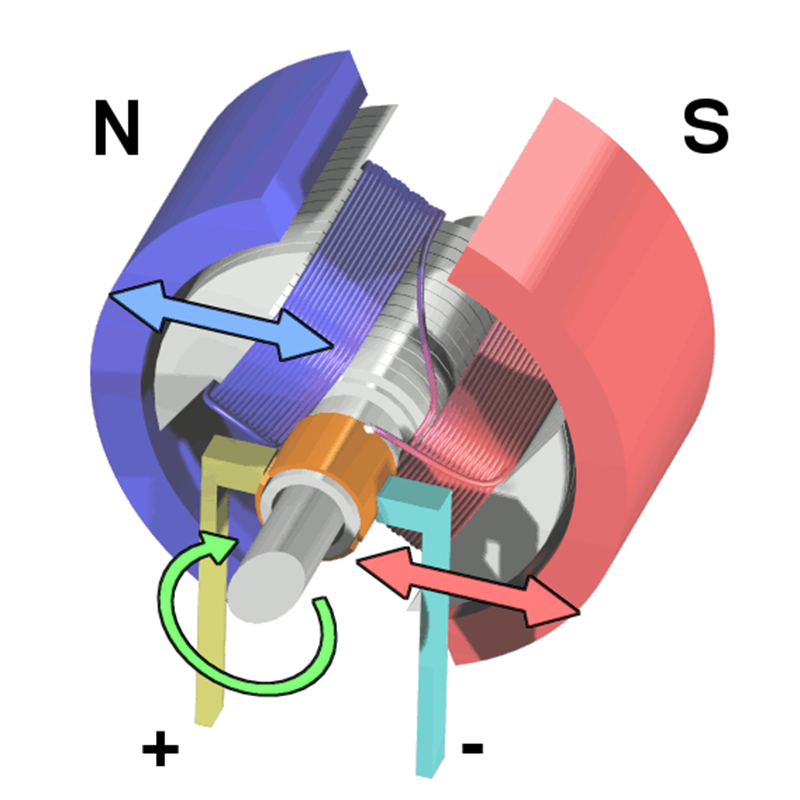
Electronics: neodymium magnets small are used in small electronic devices like headphones, speakers, and microphones to convert electrical energy into sound.
Medical Devices: In medical devices, small neodymium magnets are used in applications such as magnetic resonance imaging (MRI) machines, magnetic therapy devices, and prosthetics.
Sensor Applications: They are utilized in sensors for detecting magnetic fields, such as in compasses, automotive sensors, and industrial automation.
Home Improvement: neodymium magnets small can be used in various home improvement projects, including cabinet door latches, magnetic tool holders, and magnetic knife racks.
Educational Purposes: They are often used in educational settings to demonstrate magnetic principles and conduct experiments in physics classes.
Jewelry and Fashion Accessories: neodymium magnets small can be incorporated into jewelry and fashion accessories to create unique designs, such as magnetic clasps for bracelets and necklaces.
When working with neodymium magnets small, it’s important to handle them carefully due to their strong magnetic fields, which can cause pinching or even injury if mishandled. Additionally, they should be kept away from electronic devices and credit cards, as they can interfere with their functionality.

Everyone knows that the indicators for measuring the performance of neodymium magnets small ferromagnets include remanence Br, coercive force HcB, intrinsic coercive force HcJ and maximum magnetic energy product (BH)max. In addition, the demagnetization curve directionality and Hk are also used in magnetic applications. There are two indicators that engineers are very concerned about. Today I will introduce to you the meaning and influencing factors of these two indicators.
First, let’s review what is the intrinsic curve or J~H demagnetization curve. The intrinsic magnetic induction intensity generated after the permanent magnet material is magnetized under the action of an external magnetic field is called the intrinsic magnetic induction intensity Bi, also known as the magnetic polarization intensity J.
The relationship between the neodymium magnets small’s magnetic polarization intensity J and the external magnetic field intensity H can reflect the changes in the intrinsic magnetic properties of the permanent magnet material. It is called the intrinsic demagnetization curve, referred to as the intrinsic curve, and is also called the J~H demagnetization curve. (This article uses the demagnetization curve to express)
When the magnetic polarization intensity J on the demagnetization curve is 0, the corresponding magnetic field intensity is called the intrinsic coercive force HcJ. The value of intrinsic coercive force reflects the ability of permanent magnet materials to resist demagnetization.
Knee point Hk
From the figure, we can easily find that when the external magnetic field continues to increase, the magnetic induction intensity/magnetic polarization intensity of the neodymium magnets small decreases very slowly, but when the external magnetic field is greater than a certain value, the magnetic induction intensity of the magnet decreases rapidly.
Usually we call the point with Ji=0.9Br or 0.8Br on the demagnetization curve the bending point or knee point of the demagnetization curve. The corresponding magnetic field at this point is Hk, which is also called the knee coercive force. When the external magnetic field is greater than Hk, the magnet’s performance will suffer significant irreversible losses, which is why the Hk value is of great concern.
The debate about knee position
There has been a lot of discussion on whether the bending point of the demagnetization curve should be selected as Ji=0.9Br or Ji=0.8Br or other positions, and scholars have different attitudes. IEC accepted the definition of Hk proposed by M.Katter, but it only applies to NdFeB magnets with HcJ greater than 400kA/M (5000 Oe). The value of Hk is called HDx, where x represents the percentage reduction on the B axis, e.g. , HD10 means the point where the HD value is 10% below Br, that is, 0.9Br. (See IEC 60404-8-1:2015)
Squareness Q
We use the ratio of Hk to HcJ (Hk/HcJ) to represent the squareness Q of the demagnetization curve. The value range of Q is between 0 and 1. The closer Q is to 1, the closer the demagnetization curve is to a square (that is, the figure above) The shorter the orange line segment, the better). Generally, we believe that products with squareness Q>0.9 are qualified products.
Relationship between squareness, maximum magnetic energy product and recovery permeability
Q=4μ0(BH)max/Jr2, it can be seen that the squareness Q has a positive correlation with the maximum magnetic energy product (BH)max of the NdFeB permanent magnet material, that is, under the same Br conditions, the greater the Q, the maximum magnetic energy product ( The larger the BH)max, the Q value determines the maximum magnetic energy product (BH)max of the magnet.
Q=1/μrec, the squareness Q is inversely proportional to the magnet’s recovery permeability μrec. The larger Q is, the closer the recovery permeability μrec is to 1, and the stronger the material’s ability to resist interference from factors such as external magnetic fields and ambient temperature neodymium magnets small. The better its stability.
Factors affecting magnet squareness
The purity and proportion of raw materials, the uniformity of powder particles, sintering and pressing processes and other factors will affect the squareness of NdFeB neodymium magnets small. If the crystal grains grow abnormally or the grains are irregular, the squareness of the magnet will decrease. . Some researchers [1] studied the effects of rare earth and oxygen content on the squareness of the demagnetization curve of sintered Nd-Fe-B magnets and found:
1. Under the same process conditions, as the rare earth element content gradually increases, Br decreases, Hcj increases, (BH)max remains basically unchanged, and the squareness increases significantly from 92.72% to 98.80%.

2· Repeat the test on the sample and keep the system oxygen content at 0.01%, 0.02%, 0.03%, 0.04%, and 0.05% respectively during airflow milling, and the corresponding squareness is 98.53%, 98.68%, 95.41%, 90.55%, and 86.17 %. They are numbered 3-1#, 3-2#, 3-3#, 3-4#, and 3-5# respectively. The relationship between the squareness and the oxygen content of the magnet is as shown in the figure.

The demagnetization curve, squareness (Q), and knee point (Hk) are important parameters used to characterize the magnetic properties of materials, including neodymium magnets small.
Demagnetization Curve: This curve represents the relationship between the external magnetic field (H) applied to the material and the resulting magnetization (M) of the material. It shows how easily the material can be magnetized and demagnetized. In the case of neodymium magnets small, the demagnetization curve typically shows a steep increase in magnetization as the external magnetic field increases until it reaches saturation, where further increases in the applied field do not result in significant increases in magnetization.
Squareness (Q): Squareness (Q) is a measure of how square the hysteresis loop of the demagnetization curve is. In other words, it indicates how well the material retains its magnetization after being exposed to an external magnetic field. A high squareness indicates that the material retains its magnetization well and has a sharp transition between the magnetized and demagnetized states. For neodymium magnets small, a high squareness indicates strong magnetic properties.
Knee Point (Hk): The knee point (Hk) is the point on the demagnetization curve where the slope changes abruptly, indicating a significant decrease in magnetization with a small decrease in the applied magnetic field. It represents the coercivity of the material, which is the measure of its resistance to demagnetization. Neodymium magnets typically have a high knee point, indicating high coercivity and strong resistance to demagnetization.
In summary, these parameters provide important information about the magnetic properties of neodymium magnets, including their ability to retain magnetization (squareness) and resist demagnetization (knee point), which are crucial for their performance in various applications.
Magnetic moment is an important parameter that describes the magnetic strength of ferromagnetic materials, especially permanent magnet materials. The open-circuit magnetic moment is one of the factory qualification indicators of finished permanent magnets. The domestic permanent magnet industry uses the pull-out method to measure the magnetic moment. Generally, another important use of using this method to measure magnetic moment is to sample the uniformity of large permanent neodymium magnets small.
This test is basically required for permanent neodymium magnets small used in wind power generation and electric vehicles. Our country has formulated the standard GB3217-2013 for measuring the closed magnetic circuit magnetism of permanent magnet materials, but there is no relevant method standard for open circuit magnetic moment measurement that applies to the above requirements.
現在の国際規格はIEC60404-14(強磁性体の磁気双極子モーメント試験のための引っ張りまたは回転法)であり、私の国でもすでに同様の規格を策定中である。
厳密に校正されたコイル定数kのヘルムホルツコイルで開回路試料を測定することにより、磁束値を得ることができ、磁束値から材料の磁気モーメントMを計算することができる。
We need to remind everyone that in the process of production and trading, it is very common to measure the magnetic moment of finished products or permanent magnets with special shapes by pulling the coil under open circuit neodymium magnets small. However, companies generally build their own measuring devices and receive coils. Affected by various factors such as calibration and operating techniques, the measurement reproducibility is poor.
The calibration of the test coil requires passing a steady current in a zero magnetic field environment to test the magnetic field size, and then obtain the constants of the test coil. However, there are only a handful of truly zero-magnetic field laboratories around the world, so the calibration of test coils is difficult to promote in the industry neodymium magnets small. The lack of calibration of test coils will directly affect the accuracy and reliability of the test, which may in turn bring about some trade dispute.
Magnetic moment and remanence: have a functional relationship and are closely related to the size of the neodymium magnets small.
When the magnetic flux or magnetic moment of the magnet is known, if the shape and size of the magnet are known, the Br, HcB and (BH)max values of the magnet can be obtained by calculating the permeability coefficient Pc of the permanent magnet material; and vice versa neodymium magnets small. However, given the shape, dimensions and remanence, the magnetic moment of the magnet can be calculated.
透磁率係数 Pc
The permanent neodymium magnets small works in an open circuit state. Since the magnet in the open circuit state is under the action of the demagnetization field, the magnetic induction intensity of the permanent magnet in the working state is not at the Br point in the closed circuit state, but at a demagnetization curve lower than Br. A certain point on the magnet is called the operating point of the permanent magnet, such as point D in the figure above.
動作点は、減磁曲線の形状と動作条件下での磁石の減磁場の大きさに関係します。動作点Dと原点Oを結ぶ直線を負荷線と呼びます。その傾きは磁石の減磁率に関係します。負荷線の傾きは透磁率とも呼ばれ、Pc(パーミアンス係数)で表されます。
Pc=BD/ HD=μ0(1-1/N)またはPc=1-4π/N
The demagnetization factor is closely related to the geometric shape of the magnet, so the size of the Pc value is closely related to the shape and size of the neodymium magnets small. The more slender the magnetization direction, the smaller the demagnetization factor. The flatter the magnetization, the larger the demagnetization factor. 0< N<1 or 0<N<4π.
Given the size and remanence of sintered NdFeB, how to calculate the magnetic moment and flux?
1-形状とサイズから磁石の体積とPc値を計算する。
2- BrとBdiの関係からBdiを計算する。
注:Bdiは固有磁束密度、回復透磁率μrec=Br/HcB(焼結NdFeBでは一般に1.05が推定値として使用されている)を意味する。
3- Bdi=磁気モーメント/体積に従って、磁石の磁気モーメントを逆算する。
4.磁気モーメント M = k * Ф により、コイル定数 k が決まれば磁束 Ф をシミュレートして計算することができます。
ご注意ください:
The magnetic moment calculated according to the above method is an estimated theoretical value, which is often different from the actual measured value. This is affected by the crystal structure of the magnet itself, as well as the influence of the external environment and the test coil.
You can search for some magnetic moment calculators or calculation models on the Internet. In most of these calculators, the recovery magnetic permeability μrec is set to 1.05, which is not calculated using the remanence and coercive force of the magnet itself. Therefore, it is calculated The magnetic moment can only be used as a reference.