






Grandi magneti al neodimio
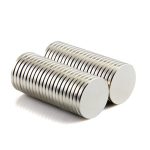
A big neodymium magnet can be incredibly powerful, capable of exerting strong magnetic forces. Neodymium magnets are made from an alloy of neodymium, iron, and boron, and they are the strongest type of permanent magnet commercially available. The size of a neodymium magnet can vary widely depending on its purpose and application.
However, “big” in this context often refers to Big Neodymium Magnets used in industrial settings or specialized equipment. These magnets are used in a variety of applications, including: Magnetic Separators: They are used in mining operations and recycling facilities to separate ferrous materials from non-ferrous materials.
MRI Machines: Big Neodymium Magnets are essential components of MRI machines, where they create a powerful magnetic field to produce detailed images of the body’s internal structures.
Wind Turbines: Big Neodymium Magnets are used in the generators of some wind turbines to convert mechanical energy into electrical energy.
Electric Motors: They are used in electric vehicle motors, industrial motors, and various other applications where high efficiency and compact size are required. Levitation
Systems: Big Neodymium Magnets are used in maglev (magnetic levitation) trains and other transportation systems for levitation and propulsion.
Due to their strength, handling large neodymium magnets requires caution. They can easily pinch fingers, and if two Big Neodymium Magnets come together forcefully, they can shatter or break, posing a danger from flying fragments.
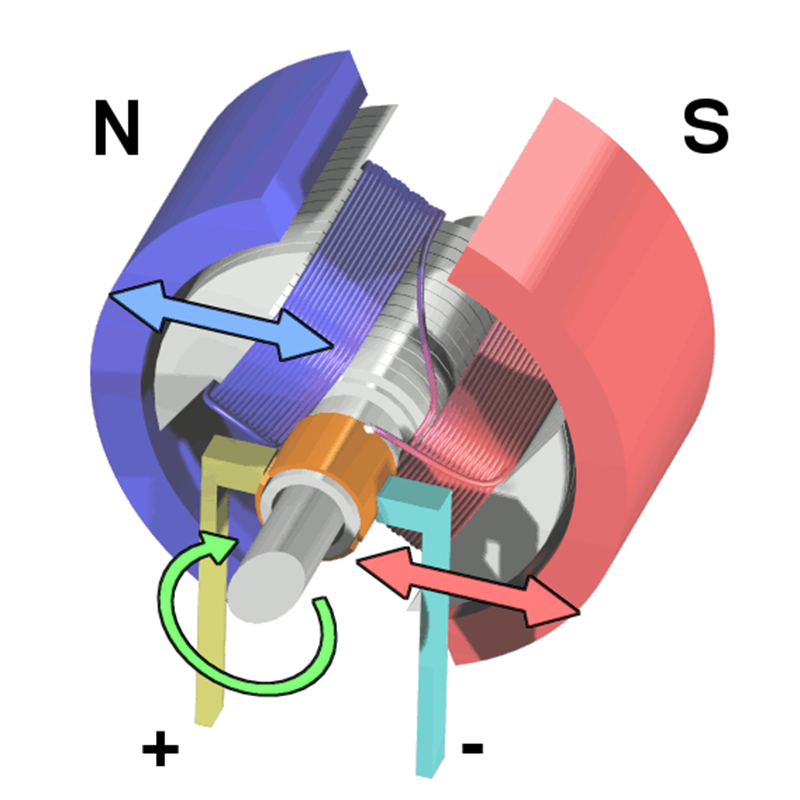
The generation of magnetic fields can be divided into two major aspects: one is based on moving current (electromagnetic induction), and the other is based on the spin of the basic particles of matter. The first is the magnetic effect of electric current that we are familiar with. After the wire is energized, the free electrons move in a direction to generate a magnetic field. The second type is the magnetic field generated by the material itself, which is what we will mainly introduce today.
Everything in the world is magnetic, from the tables and chairs around us to the planets and the sun in the universe. They are all magnetic, no matter what state they are in (crystalline, amorphous, liquid and gaseous), at high temperatures or Low temperature, high pressure or low pressure, all have magnetism. The difference is that some substances have strong magnetism and some substances have weak magnetism, but it can be said that there is no non-magnetic substance.
Substances can be divided into five categories according to the characteristics they exhibit in an external magnetic field: paramagnetic substances, diamagnetic substances, ferromagnetic substances, ferrimagnetic substances, and antiferromagnetic substances. What is the reason why materials are magnetic? What is the reason why different substances have the above different characteristics Big Neodymium Magnets? This starts with the atoms, the basis of matter.
Matter is made up of atoms, which are made up of nuclei and electrons. In an atom, electrons have an orbital magnetic moment because they move around the nucleus; electrons have a spin magnetic moment due to spin Big Neodymium Magnets. The magnetic moment of the atom mainly comes from the orbital magnetic moment and spin magnetic moment of the electron, which is the source of the magnetism of all materials. (The magnetic moment of the atomic nucleus is only 1/1836.5 of the magnetic moment of the electron, so the magnetic moment of the atomic nucleus is generally ignored)
The magnetic moment of a single isolated atom
The magnetic moment is a directional vector. The spin modes of electrons in atoms are divided into two types: up and down. In most substances, there are as many electrons with upward spin as there are downward spin. The magnetic moments they generate cancel each other out, and the entire atom is not magnetic to the outside world.
Only a few matter atoms have different numbers of electrons in different spin directions. In this way, after the magnetic moments of electrons with opposite spins cancel each other out, the spin magnetic moments of the remaining electrons are canceled out, and the entire atom has a total the magnetic moment. The magnetic moment of a single atom depends on the atomic structure, that is, the arrangement and number of electrons. Atoms of all elements in the periodic table have their own magnetic moments.
Magnetic moment of atoms in a crystal
Above we discussed the magnetic moment of a single atom, but in solid crystals or amorphous crystals, atoms are at crystal nodes. These atoms will be affected by the nuclear electric field and electron electrostatic field of neighboring atoms Big Neodymium Magnets. Therefore, the magnetic moment of the atoms in the crystal Moments are not the same as a single isolated atom. For example, iron, cobalt, and nickel are called 3D transition metals. In the crystal, the electrons of some atoms will become public electrons of adjacent atoms Big Neodymium Magnets.
The electronic structure of the atoms will change, and some orbital magnetic moments will be frozen. At this time, only the spin magnetic moment contributes to the magnetic moment of the atoms in the crystal, so the magnetic moment of the atoms in the crystal is different from the theoretical value Big Neodymium Magnets.
Magnetic moment of macroscopic matter
From the previous content, we already know that everything in the universe is magnetic, and magnetism mainly originates from atomic magnetism. Due to the different magnetic moments of different atoms, the interaction between the atomic magnetic moments of macroscopic substances leads to different arrangements of the atomic magnetic moments at room temperature Big Neodymium Magnets.
According to the magnetic properties of macroscopic substances, we divide them into paramagnetic substances, diamagnetic substances, Ferromagnetic substances, ferrimagnetic substances and antiferromagnetic substances, these characteristics include the following three.
1. Magnetization intensity M
The macroscopic magnetism of a substance is contributed by the magnetic moment of the atoms or molecules that make it up. We call the total magnetic moment of the material per unit volume the magnetization intensity of the material, represented by M, and the unit is A/m Big Neodymium Magnets.
Suppose the volume of a certain substance is V, it has n atoms, and the magnetic moment of each atom is μJ, then M=μJ1+μJ2+…+μJn, that is, M= ΣμJ/v.
2. Magnetization curve of magnetization intensity (M~H curve)
When the external magnetic field is zero, the atomic magnetic moments may be arranged chaotically, but when we apply a non-zero external magnetic field, under the action of the external magnetic field, each atomic magnetic moment can turn to the direction of the external magnetic field. This is When the material’s magnetization M changes.
The relationship curve between the change of magnetization intensity M and the change of external magnetic field H is called magnetization curve, abbreviated as M~H magnetization curve. The magnetization curves of different materials are also different Big Neodymium Magnets.
3. Magnetic susceptibility χ
On the M~H magnetization curve, the ratio of M to H at any point is called the magnetic susceptibility, represented by χ. χ=M/H, where the unit of M is A/m, and the unit of H is also A/m, so it is relative magnetic susceptibility and has no unit.
We use the size and arrangement of the above-mentioned atomic magnetic moments, the shape of the M~H magnetization curve, and magnetic susceptibility and other parameters to describe the magnetism of materials and classify materials.
Paramagnetic substances
It is a substance that can be magnetized according to the direction of the magnetic field when it is moved close to the magnetic field, but it is very weak and can only be measured with precision instruments.
If the external magnetic field is removed, the internal magnetic field will return to zero, causing it to be non-magnetic. Such as aluminum, oxygen, etc.
Each atom of a paramagnetic material has a magnetic moment, which makes the paramagnetic material have an inherent atomic magnetic moment; there is no interaction between adjacent atoms of a paramagnetic material, so at room temperature, the atomic magnetic moments are chaotically arranged, and the atomic magnetic moments The projected value of μJ is zero in any direction.
When there is an external magnetic field H, the atomic magnetic moment of this type of material can only rotate at a very small angle along the direction of the external magnetic field, and its magnetization intensity increases slowly with the increase of the external magnetic field. Its magnetic susceptibility χ>0, the value is generally 10-5~10-3 Big Neodymium Magnets.
In order to completely align the atomic magnetic moments of paramagnetic materials in the direction of the external magnetic field, according to rough estimates, this requires an external magnetic field strength of 109~1010 A/m, which is currently difficult to achieve with artificial magnetic fields.
Diamagnetic material
It is a substance with negative magnetic susceptibility, which means that the direction of the magnetic field after magnetization is opposite to the direction of the external magnetic field. All organic compounds are diamagnetic, and graphite, lead, water, etc. are all diamagnetic substances.
The projection of the atomic orbital magnetic moment and the spin magnetic moment of the diamagnetic material in the magnetic field is zero, which means that the diamagnetic material has no net atomic magnetic moment Big Neodymium Magnets, but under the action of the external magnetic field, the electron orbit will produce an induced additional Magnetic moment, and this induced magnetic moment is in the opposite direction to the external magnetic field, so negative magnetism appears Big Neodymium Magnets.
The magnetization direction of diamagnetic materials is negative, opposite to the external magnetic field, and its absolute value increases linearly with the increase of the external magnetic field.
Ferromagnetic substances
It is a kind of magnetic substance that can maintain its magnetized state even if the external magnetic field disappears after being magnetized under the action of an external magnetic field. So far, people have discovered a total of 83 metallic elements, 4 of which are above room temperature Big Neodymium Magnets. They are ferromagnetic elements, they are iron, cobalt, nickel and gadolinium; at extremely low temperatures, there are 5 elements that can be converted into ferromagnetic elements, they are terbium, dysprosium, holmium, erbium and thulium.
Atoms in ferromagnetic materials have inherent atomic magnetic moments, and some electrons are shared. The spin magnetic moments of adjacent atoms are arranged in the same direction and parallel to each other (also called spontaneous magnetization) Big Neodymium Magnets. The M~H magnetization curve of ferromagnetic materials is nonlinear, and the magnetic susceptibility χ changes with the change of the magnetic field. The magnetic susceptibility χ of ferromagnetic materials is very large, up to 105~107.

Antiferromagnetic material
It does not produce a magnetic field and is relatively uncommon. New antiferromagnetic materials are still being discovered. Most antiferromagnetic materials only exist at low temperatures and usually become paramagnetic if the temperature exceeds a certain value. For example, chromium, manganese, etc. are antiferromagnetic.
Atoms in antiferromagnetic materials also have inherent atomic magnetic moments, and some electrons are shared, but the magnetic moments of adjacent atoms are arranged in opposite directions (also called antiferromagnetic order). The M~H magnetization curve of ferromagnetic material is linear, and the magnetic susceptibility χ>0, its value is about 10-4~10-5, which is very small and is a constant.
That is to say, when antiferromagnetic material is magnetized in an external magnetic field , its atomic magnetic moment changes very little with the external magnetic field, which is the same as paramagnetic substances and belongs to weak magnetism Big Neodymium Magnets. The magnetic susceptibility χ of antiferromagnetic magnetic materials changes with temperature, as shown in the figure below, and Tn is called the Neel temperature.

Ferrimagnetic substances
Macroscopic magnetism is the same as ferromagnetism, except that the magnetic susceptibility is lower (magnetic susceptibility χ is 102~105). Typical ferrimagnetic materials such as ferrite, the most significant difference between them and ferromagnetic materials lies in the internal magnetic structure (magnetic susceptibility). moment arrangement).
The atomic magnetic moment of ferrimagnetic materials is not zero, and there is an indirect exchange interaction, or RKKY exchange interaction, between adjacent atomic magnetic moment Big Neodymium Magnets, causing the atomic magnetic moments of adjacent sublattices to be arranged antiparallel, but their adjacent sublattice The atomic magnetic moments of the array are different in size (see figure above).
Questo fenomeno è chiamato anche ordinamento ferrimagnetico o magnetizzazione spontanea ferrimagnetica. La curva di magnetizzazione M~H dei materiali ferrimagnetici è non lineare, simile a quella dei materiali ferromagnetici, tranne per il fatto che la suscettibilità magnetica è leggermente inferiore, ma è ancora fortemente magnetica Grandi magneti al neodimio.
Sopra abbiamo compreso la fonte del magnetismo dei materiali e il significato fisico del momento magnetico a livello microscopico. Il prossimo numero di Capire il magnetismo introdurrà il momento magnetico dei materiali magnetici a livello macroscopico, includendo la relazione tra momento magnetico, flusso magnetico, remanenza, ecc.