


Aimant Néodyme
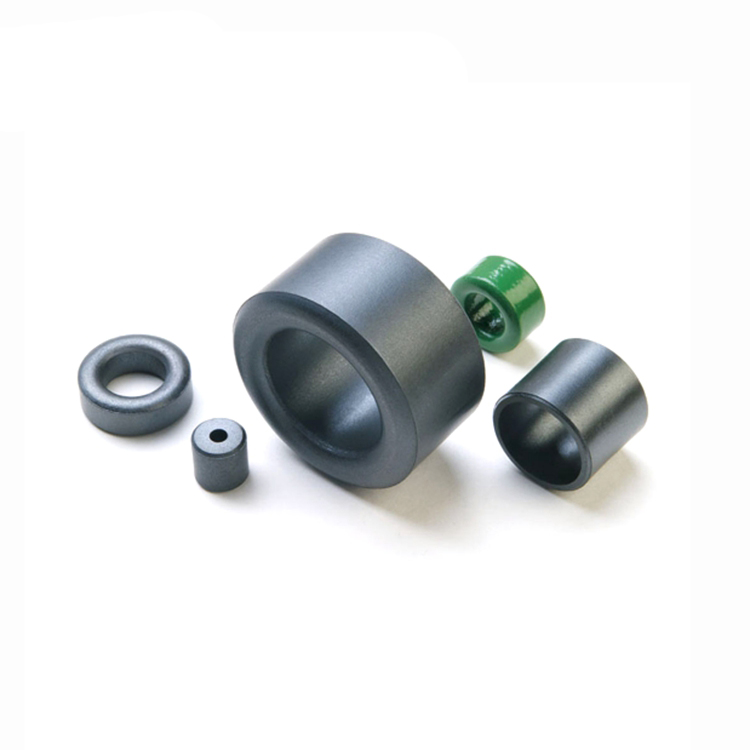
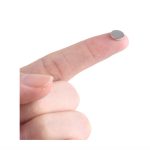
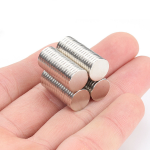
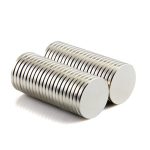
Magnet Neodymium which are strong permanent magnets made from an alloy of neodymium, iron, and boron. They are known for their immense strength compared to their size, making them popular in various applications such as electric motors, speakers, magnetic fasteners, and magnetic therapy products. Neodymium Magnet Neodymium are part of the rare-earth magnet family and are widely used due to their high magnetic properties. They are characterized by their ability to maintain their magnetization over long periods of time and their resistance to demagnetization.
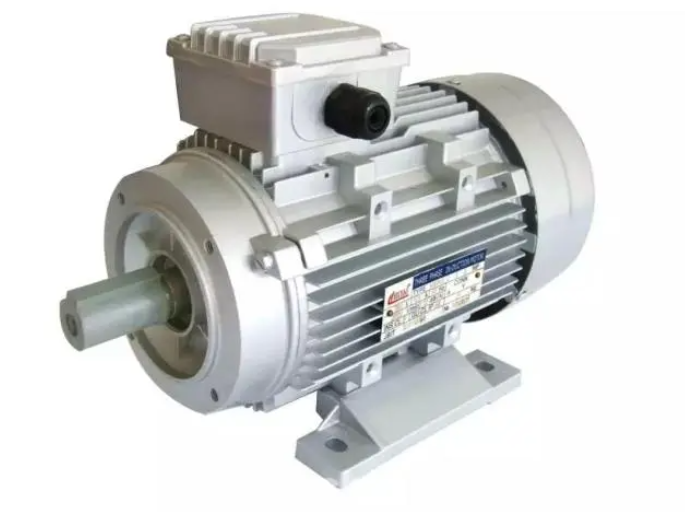
Permanent Magnet Neodymium motors use permanent magnets to generate the motor’s magnetic field and do not require excitation coils or excitation current. Compared with traditional electric excitation motors, they have significant advantages such as high efficiency and simple structure.
The application range of permanent Magnet Neodymium motors is extremely wide, covering almost all fields of aerospace, national defense, industrial and agricultural production, and daily life. With the development of high-performance permanent magnet materials and the rapid development of control technology, the application of permanent Magnet Neodymium motors will become More extensive. Today, I will take you to understand the impact of permanent magnet motors and permanent magnet material properties on motors.

Principle and structure of permanent magnet motor
Everyone knows that there are many types of motors, but the basic principles are to use electromagnetic and electromagnetic induction phenomena to realize the mutual conversion of electrical energy and kinetic energy. If you want to know more about the basic principles and structure of motors, you can click to view the basic principles and basics of motors. structure. Today we take permanent magnet DC motors and permanent magnet synchronous motors as examples to give you a brief introduction to permanent magnet motors.
1. Moteur à courant continu à aimant permanent
The working principle and structure of the permanent magnet DC motor are similar to those of ordinary DC motors, except that permanent magnet poles are used instead of current-excited magnetic poles. They can be divided into brushed motors and brushless motors based on different commutation methods. The former is mechanically commutated, and the latter is or electronic commutation.
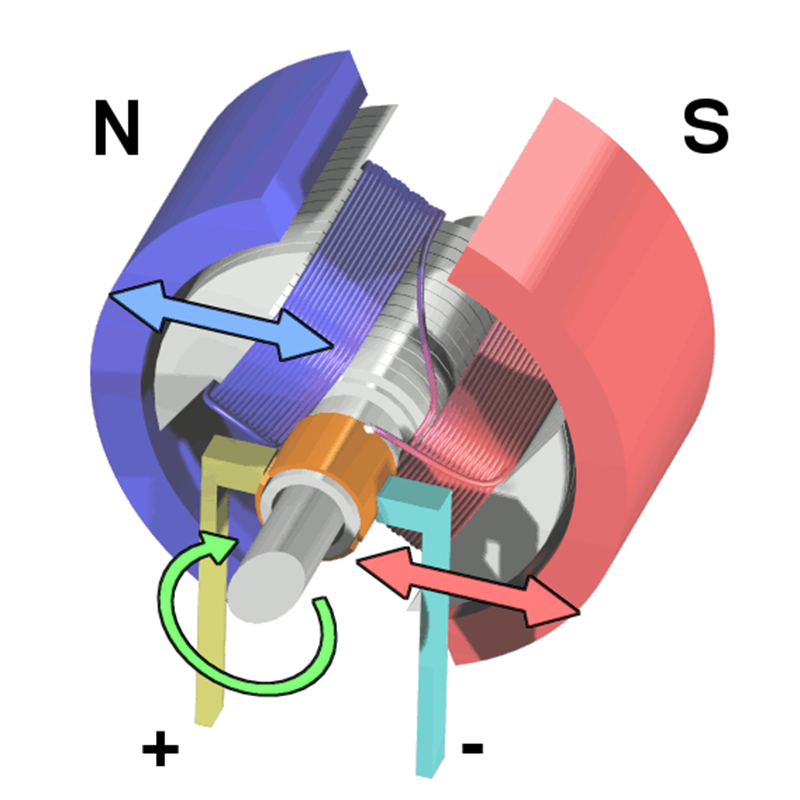
Taking a DC brush motor as an example, the permanent magnet poles are arranged on the same circle, and the blue magnetic lines represent the magnetic circuit of the motor.

The rotor of a permanent magnet brushed DC motor is composed of a rotor core, a rotor winding, a commutator, and a rotating shaft, which is the same as the rotor of an ordinary DC motor. Insert the rotor and brush assembly into the stator to form a permanent magnet DC motor.
Les moteurs à courant continu à aimant permanent de petite et moyenne puissance sont largement utilisés dans les vélos électriques, les motos électriques et les scooters.
2. Permanent magnet synchronous motor
In recent years, permanent Magnet Neodymium synchronous motors have developed rapidly. They are characterized by high power factor and high efficiency. They have gradually replaced the commonly used AC asynchronous motors in many occasions. Among them, the asynchronous starting permanent magnet synchronous motor has superior performance and is a very popular motor. The future of energy-saving motors.
The stator structure and working principle of the permanent magnet synchronous motor are the same as those of the AC asynchronous motor. The difference from the ordinary asynchronous motor lies in the rotor structure. The rotor is equipped with permanent magnet poles. The permanent magnets are arranged in various positions in the rotor.
The development of permanent Magnet Neodymium motors is closely related to the development of permanent magnet materials
The world’s first motor that appeared in the 1820s was a permanent magnet motor that generated an excitation magnetic field from permanent Magnet Neodymium. However, the permanent magnet material used at that time was natural magnetite (Fe3O4), which had a very low magnetic energy density. The motors made with it were bulky and were soon replaced by electric excitation motors.
With the rapid development of various motors and the invention of current magnetizers, people have conducted in-depth research on the mechanism, composition and manufacturing technology of permanent magnet materials, and have successively discovered various permanent Magnet Neodymium materials such as carbon steel, tungsten steel, and cobalt steel.
In particular, the AlNiCo permanent Magnet Neodymium that appeared in the 1930s and the ferrite permanent magnets that appeared in the 1950s have greatly improved their magnetic properties, and various micro and small motors are using permanent magnets for excitation. However, the coercivity of AlNiCo permanent magnets is low, and the remanent magnet density of ferrite permanent magnets is not high, which limits their application range in motors.
Until the 1960s and 1980s, samarium cobalt permanent magnets and neodymium iron boron permanent magnet materials came out one after another. Their high remanence density, high coercive force, high magnetic energy product and excellent magnetic properties of linear demagnetization curve are particularly suitable for Manufacture of motors, thus bringing the development of permanent Magnet Neodymium motors into a new historical period.
La relation entre la performance de l'acier magnétique et la performance du moteur
1. L'influence du magnétisme résiduel
For DC motors, under the same winding parameters and test conditions, the higher the residual magnetism, the lower the no-load speed and the smaller the no-load current; the greater the maximum torque, the higher the efficiency at the highest efficiency point. In actual tests, the level of no-load speed and the size of the maximum torque are generally used to judge the residual magnetism standard of magnets.
For the same winding parameters and electrical parameters, the reason why the higher the residual magnetism, the lower the no-load speed, and the smaller the no-load current is because the running motor generates sufficient reverse induction at a relatively low speed. Generates a voltage so that the algebraic sum of the electromotive force applied to the winding decreases.
2. L'influence de la force coercitive
During the operation of the motor, there are always effects of temperature and reverse demagnetization field. From the perspective of motor design, the higher the coercivity, the smaller the thickness direction of the magnet. The smaller the coercivity, the larger the thickness direction of the Magnet Neodymium. However, after the coercive force of the magnetic steel exceeds a certain level, it is of no use, because other components of the motor cannot work stably at that temperature. The coercive force only needs to meet the requirements, and meeting the requirements under the recommended experimental conditions is the standard. There is no need to waste resources.
3. L'influence de l'équerrage
The squareness only affects the flatness of the motor performance test efficiency curve. Although the flatness of the motor efficiency curve has not yet been listed as an important indicator standard, it is very important for the continuation distance of the wheel hub motor under natural road conditions. important. Because of different road conditions Magnet Neodymium, the motor cannot always work at the maximum efficiency point. This is one of the reasons why the maximum efficiency of some motors is not high but the driving distance is long.
A good hub motor should not only have a high maximum efficiency, but also the efficiency curve should be as horizontal as possible. The smaller the slope of efficiency reduction, the better. As the market, technology and standards for in-wheel motors mature, this will gradually become an important standard.
4. Impact de la cohérence des performances
Manque de cohérence du magnétisme résiduel : Même ceux qui ont des performances particulièrement élevées ne sont pas bons. En raison de l'incohérence du flux magnétique dans chaque section de champ magnétique unidirectionnel, le couple est asymétrique et des vibrations se produisent.
Force coercitive incohérente : Si la force coercitive des produits individuels est trop faible, une démagnétisation inverse est susceptible de se produire, ce qui entraîne une incohérence du flux magnétique de chaque aimant et une vibration du moteur. Cet effet est plus important pour les moteurs sans balais.
Effet de la forme et de la tolérance de l'aimant sur les performances du moteur
1. L'influence de l'épaisseur de l'acier magnétique
When the inner or outer magnetic circuit ring is fixed, when the thickness increases, the air gap decreases and the effective magnetic flux increases. The obvious manifestation is that under the same residual magnetism, the no-load speed decreases Magnet Neodymium, the no-load current decreases, and the maximum efficiency of the motor is reduced. improve. However, there are also disadvantages, such as the increase in commutation vibration of the motor and the relative steepening of the efficiency curve of the motor. Therefore, the thickness of motor magnets should be as consistent as possible to reduce vibration.
2. Influence de la largeur de l'aimant
For brushless motor magnets that are densely packed, the total cumulative gap cannot exceed 0.5 mm. If it is too small, it will not be installed. If it is too large, it will cause vibration and reduced efficiency of the motor Magnet Neodymium. This is because the position of the Hall element that measures the position of the magnet and the magnetic The actual position of the steel does not correspond, and the consistency of the width must be ensured, otherwise the efficiency of the motor will be low and the vibration will be large.
For brush motors, there is a certain gap between the magnets, which is reserved for the mechanical commutation transition area. Although there is a gap, in order to ensure the accurate installation position of the motor magnets, most manufacturers have strict magnet installation procedures to ensure installation accuracy. If the width of the magnet is exceeded Magnet Neodymium, it will not be installed; if the width of the magnet is too small, the positioning of the magnet will be misaligned, the vibration of the motor will increase, and the efficiency will decrease.
3. L'influence de la taille du chanfrein de l'acier magnétique et de l'absence de chanfrein
S'il n'y a pas de chanfrein, le taux de variation du champ magnétique au bord du champ magnétique du moteur sera important, ce qui entraînera des vibrations du moteur. Plus le chanfreinage est important, plus la vibration est faible. Toutefois, le chanfreinage entraîne généralement une certaine perte de flux magnétique.
For some specifications, when chamfering to 0.8, the magnetic flux loss is 0.5~1.5%. When the residual magnetism of brushed motors is low, appropriately reducing the chamfer size will help compensate for the residual magnetism, but the pulsation of the motor will increase Magnet Neodymium. Generally speaking, when the residual magnetism is low, the tolerance in the length direction can be appropriately enlarged, which can increase the effective magnetic flux to a certain extent and keep the performance of the motor basically unchanged.