





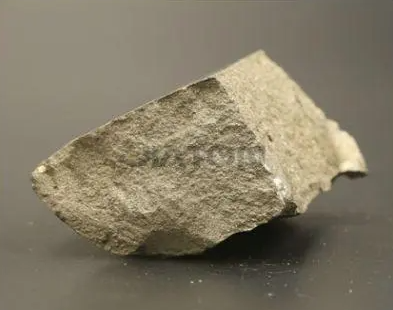
Gig Ndfeb Magnet
Big ndfeb magnet are generally used as magnetic field sources to provide a constant magnetic field within a certain space. For some precision instruments and magnetic devices, the stability of the big ndfeb magnet’s magnetic field is crucial, as it directly affects the accuracy and reliability of the instrument.
1. Stability of big ndfeb magnets
The external conditions that cause changes in magnetic properties include temperature, time, electromagnetic field, mechanical vibration or impact, radiation, chemical action, etc. Correspondingly, the stability of big ndfeb magnet includes performance requirements in terms of temperature stability, time stability, vibration and impact stability, electromagnetic field stability and chemical stability. It is generally described by the change in magnet performance parameters (such as the percentage change of remanence for every 1°C increase in temperature, and the annual decay of remanence at room temperature).
The changes in magnetic properties caused by changes in environmental conditions are mainly in two aspects:
The changes in magnetic properties caused by changes in magnetic domain structure (also called magnetic aging), this change is reversible, when the big ndfeb magnet is magnetized or magnetized again, most of the magnet’s performance can be restored.
The changes in magnetic properties caused by changes in the microstructure of the big ndfeb magnet (also called tissue aging), this change is irreversible, when the big ndfeb magnet is magnetized or magnetized again, the magnet’s performance cannot be restored.
The changes in magnetic properties of big ndfeb magnet caused by any changes in environmental conditions include magnetic aging and tissue aging.
Different environmental conditions for the use of big ndfeb magnet require different performance stability. For example, magnets used in spacecraft generally focus on performance stability under vibration and impact conditions, and also require stability under radiation, temperature and time conditions; big ndfeb magnet that work in acid and alkaline environments generally require chemical stability; and in places where the working environment temperature changes, attention is paid to whether the magnet has temperature stability.
2. Temperature stability of permanent big ndfeb magnets
Instruments and equipment made of permanent magnetic materials generally cannot work at a constant temperature, and changes in ambient temperature have a direct impact on the magnetic properties of magnets. In order to make the instruments and equipment work normally when the temperature changes, it is necessary to know the change in the magnetic properties of the magnet with temperature when designing the magnetic circuit.
In order to quantitatively reflect the influence of temperature on the performance of magnets, some temperature stability parameters related to ambient temperature have been defined, such as the remanence temperature coefficient αBr, the intrinsic coercivity temperature coefficient αHcJ, the reversible loss Lrev and irreversible loss Lirr of open-circuit magnetic flux density, the reversible temperature coefficient of open-circuit magnetic flux density, the heat-resistant temperature or the maximum continuous operating temperature Tm, etc.
Among them, the remanence temperature coefficient αBr and the intrinsic coercivity temperature coefficient αHcJ are one of the performance indicators that commercial permanent big ndfeb magnets must provide.
Remanence temperature coefficient and intrinsic coercivity temperature coefficient
As the name implies, the temperature coefficient is the relative rate of change of a physical quantity with temperature. In the temperature range from the reference temperature T0 to a certain high temperature T, the definitions of the remanence temperature coefficient and the intrinsic coercivity temperature coefficient are as follows, in units of %/℃.

Among them, Br(T) and Br(T0) are the remanence at temperature T and reference temperature T0 respectively (same for HcJ). Usually room temperature or 20℃ is selected as T0, and the value of high temperature T needs to be determined by both the supply and demand parties according to the use environment. If αBr is positive, it means that the remanence increases with increasing temperature; if it is negative, it means that the remanence decreases with increasing temperature.
The figure below is the reference value of the remanence temperature coefficient and intrinsic coercive force temperature coefficient of each brand of permanent magnets in the national standard for sintered NdFeB permanent big ndfeb magnet materials (GB/T 13560-2017).

Reversible temperature coefficient
Magnets usually work in an open circuit state with an air gap. The characteristics of open circuit remanence (or open circuit flux) changing with temperature are more practical. When the ambient temperature rises from room temperature T0 to a given temperature T1, the open circuit flux drops from B(T0) to B(T1). If the temperature returns to room temperature T0, the open circuit flux will generally return to a value of B`(T0) that is lower than B(T0), as shown in the figure below. Experiments have shown that when the temperature changes repeatedly between T0 and T1 and ΔT is not very large, the change of B is linear and reversible, that is, the PB`(T0) line in the figure below.
During the entire heating process, the total flux loss from room temperature to high temperature is hT=(B(T1)- B(T0))/B(T0)×100%, which can be decomposed into two parts: reversible flux loss hrev=(B(T1)-B`(T0))/B`(T0)×100% and irreversible flux loss hirr=(B`(T0)- B(T0))/B(T0)×100%.
From the PB`(T0) line, it can be seen that when the temperature changes in the range of T0 to T1, the change of B is linear. The average reversible loss of the open circuit flux is expressed by the reversible temperature coefficient α.

In the big concept of temperature coefficient, special attention should be paid to distinguishing the differences between the small concepts of temperature coefficient, reversible temperature coefficient and irreversible temperature coefficient big ndfeb magnet.
Aging treatment can significantly reduce hT, hirr, hrev and α. Aging treatment (heating at a certain temperature for a period of time) of permanent magnets before use or testing can eliminate the unstable structure of the magnet. The temperature and time of the aging treatment need to be determined according to the type and purpose of the big ndfeb magnet.
The reversible temperature coefficient αB (T) or the remanence temperature coefficient αBr (T) depends on the intrinsic magnetism of the material. By adding some elements, the relationship between the saturation magnetization intensity of the main magnetic phase and temperature can be changed, which can change the temperature coefficient of the big ndfeb magnet. For example, replacing part of Fe with Co in NdFeB magnets can significantly increase the Curie temperature of the main phase; replacing part of Nd with Dy, αB (T) will also be improved. Click on the role of dysprosium, terbium, gadolinium, holmium and other elements to learn more.
The above is an introduction to the temperature stability of permanent magnets by Understanding Magnets after integrating and summarizing relevant books, academic papers, Internet resources and other information. If there are any inaccuracies, please correct me.
When discussing neodymium-iron-boron (NdFeB) big ndfeb magnets, the following properties are crucial:
Remanence (Br):
Definition: Remanence is the measure of a magnet’s residual flux density when the external magnetizing field is removed. It indicates how strongly a magnet can retain its magnetic properties.
Typical Values: For NdFeB magnets, Br typically ranges from 1.0 to 1.4 Tesla. High-grade magnets like N52 can have a remanence around 1.35 Tesla.
Coercivity (Hc):
Definition: Coercivity is the measure of the resistance of a magnet to becoming demagnetized. It is the intensity of the external magnetic field required to reduce the magnetization of the material to zero.
Typical Values: NdFeB big ndfeb magnet generally have high coercivity, ranging from about 900 to 2,500 kA/m (kilooersteds). Higher coercivity values indicate better resistance to demagnetization. For example, N52 magnets typically have coercivity around 1,200 to 1,400 kA/m.
Reversible Temperature Coefficient (α):
Definition: This is the rate at which a magnet’s magnetic properties change with temperature. Specifically, it refers to the change in remanence (Br) with temperature. The coefficient is usually expressed in percent per degree Celsius (°C).
Typical Values: NdFeB big ndfeb big ndfeb magnet have a negative temperature coefficient, meaning their magnetic properties decrease as temperature increases. The reversible temperature coefficient for NdFeB magnets is typically around -0.1% to -0.15% per °C. Higher-grade big ndfeb magnet may have different coefficients depending on their specific formulation and processing.
Understanding these properties helps in selecting the right magnet for your application and predicting how it will perform under different conditions. For high-temperature applications, you might need magnets with higher thermal stability or protective coatings to mitigate performance losses.
Characteristics of Large NdFeB Magnets
Size and Strength:
Dimensions: Large NdFeB magnets can be several inches in diameter or length, depending on their application. The larger the magnet, the stronger it will be, though practical size limits depend on manufacturing capabilities.
Magnetic Force: The strength of the magnetic field generated by a large NdFeB magnet is substantial. For instance, a large magnet with a high grade (like N52) can generate a magnetic field strong enough to cause significant forces on ferromagnetic materials.
Applications :
Industrial Uses: Large NdFeB magnets are often used in industrial applications such as magnetic separators, large motors, and generators.
Research and Development: They are also used in scientific research where strong magnetic fields are required.
Handling and Safety:
Handling: Large NdFeB magnets are heavy and can snap together with great force, potentially causing injury or damage. Handling should be done with appropriate tools and safety precautions.
Safety Concerns: The strong magnetic fields can affect electronic devices, magnetic strips, and even metal objects. Keep them away from such items and be cautious of nearby metal objects.
Temperature Considerations:
Thermal Stability: Large NdFeB magnets are sensitive to temperature. Ensure that the magnet’s temperature coefficient is suitable for your application to avoid significant loss in magnetic strength.
Manufacturers and Suppliers:
Custom Orders: For very large or custom-designed magnets, you may need to contact specialized manufacturers. Companies like Arnold Magnetic Technologies, Magcraft, and K&J Magnetics offer custom solutions and may help with very large magnets.
Cost:
Pricing: Large NdFeB magnets can be expensive due to their size and strength. Pricing can vary significantly based on size, grade, and custom requirements.
Example Specifications
Here’s an example of what you might find for a large NdFeB magnet:
Grade: N52 (one of the strongest grades)
Size: For instance, a block magnet might be 4 x 2 x 1 inches.
Remanence (Br): Approximately 1.35 Tesla
Coercivity (Hc): Around 1,200 – 1,400 kA/m
Temperature Coefficient: Approximately -0.1% per °C
In Summary
When referring to a “gig” NdFeB magnet, it’s essential to specify exact dimensions and applications to ensure that you get a magnet that meets your needs. Large NdFeB magnets are powerful tools and require careful handling and consideration of their magnetic properties and temperature stability.