




About Neodymium Magnets and Their Applications
¿Qué son los imanes de neodimio?
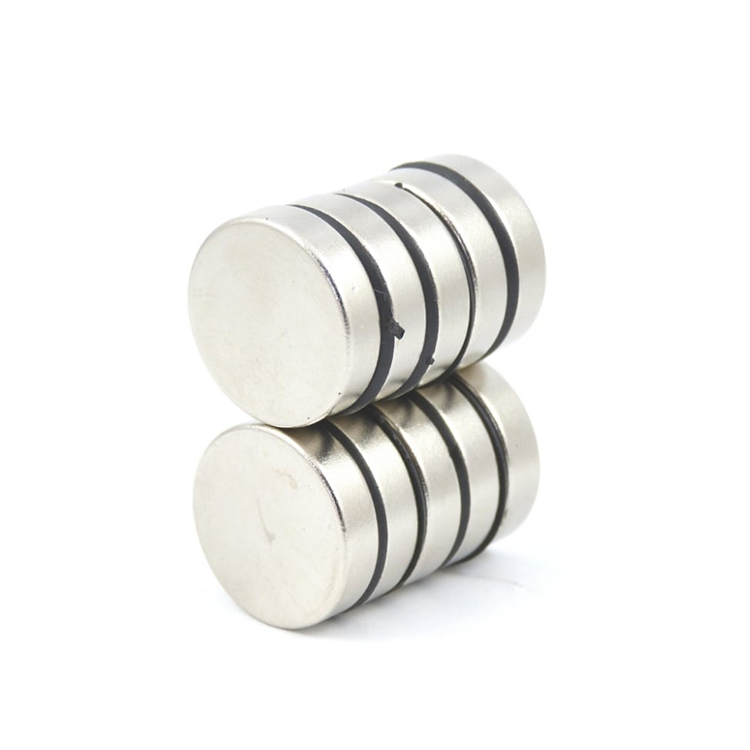
Neodymium magnets (NdFeB magnets) are the strongest type of permanent magnets available. They are made from an alloy of neodymium (Nd), iron (Fe), and boron (B). These rare-earth magnets are known for their high magnetic strength, small size, and lightweight properties, making them essential in modern technology and industry.

Key Properties of Neodymium Magnets
- Alta fuerza magnética
Neodymium magnets have the strongest magnetic field among all permanent magnets. They provide a strong pull force even in small sizes, making them more efficient than traditional ceramic or ferrite magnets.
- Compact & Lightweight
Because of their high strength-to-size ratio, neodymium magnets allow manufacturers to create smaller and lighter devices without sacrificing performance.
- Coating & Corrosion Resistance
Neodymium magnets are prone to rust and oxidation, so they are usually coated with nickel, zinc, gold, or epoxy to enhance durability.
- Brittle but Durable
Despite their strength, neodymium magnets are brittle and can crack or chip if dropped or subjected to sudden impact.
- Temperature Sensitivity
Standard neodymium magnets start losing their magnetism above 176°F (80°C). However, high-temperature versions can withstand up to 572°F (300°C).

Applications of Neodymium Magnets
- Electronics & Consumer Devices
Hard Drives – Used to store digital data by controlling the read/write head.
Headphones & Speakers – Enhance sound quality by creating a strong, stable magnetic field.
Smartphones & Tablets – Found in internal components such as vibration motors and wireless charging systems.
- Renewable Energy & Power Generation
Wind Turbines – Used in generators to convert wind energy into electricity.
Electric Vehicles (EVs) – Found in high-performance motors for hybrid and electric cars.
- Industrial & Manufacturing Uses
Magnetic Lifting Equipment – Helps lift heavy metal objects in factories and scrapyards.
Magnetic Separators – Used in recycling and food processing to remove metal contaminants.
Magnetic Fasteners – Common in tool holders, cabinet latches, and jewelry clasps.
- Medical Applications
MRI Machines – Generate strong magnetic fields for detailed body imaging.
Magnetic Therapy Devices – Used in alternative medicine for pain relief treatments.
- Science, Education, & Research
Magnetic Levitation (MagLev) Trains – Reduce friction by using magnets to lift and propel trains.
Scientific Experiments – Used in particle accelerators and physics research.
- Security & Defense
Magnetic Locks – Provide high-security locking mechanisms for doors and safes.
Weapon Systems – Used in military applications like guided missile systems.
Consideraciones de seguridad
⚠️ Strong Attraction Force – Can cause serious injury if fingers get caught between magnets.
⚠️ Swallowing Hazard – Small neodymium magnets are extremely dangerous if ingested, as they can attract each other inside the body and cause internal injuries.
⚠️ Impact Sensitivity – They are brittle and can break or chip if dropped.
⚠️ Interference Risk – Can disrupt pacemakers, credit cards, and other electronic devices.

What are Neodymium Rare Earth Magnets?
These are no ordinary fridge magnets! Neodymium magnets are the strongest permanent magnets available, and even if you’ve never heard of them before, you probably use them every day. They’re sometimes called NdFeB or Neo magnets, and despite being so strong, they’re also very light, which is why they’re so popular in a wide variety of applications. It’s hard to believe, but many of the technological advances that have occurred over the past few decades wouldn’t be possible without these rare earth magnets!
How strong are Neodymium magnets?
Very strong. They’ll blow your mind! A 2 gram (0.07 ounce) Neodymium magnet with an 8 mm (0.315 inch) diameter and 5 mm (0.197 inch) length can produce over 1700 grams (3.75 pounds) of force. They’re so strong that they’ve replaced other types of magnets in many applications. For