



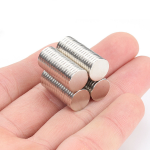

Neodymium magnets are the strongest type of permanent magnet currently available. They are made from an alloy of neodymium, iron, and boron (NdFeB), and they have a wide range of applications in industries such as electronics, manufacturing, and medicine. The pull force of a neodymium magnet is one of its most important properties, and it is important to understand how this force is affected by different factors.
This article will explore the pull force of N40 neodymium magnets that are 1/4 inch x 1/4 inch in size. We will discuss the factors that affect pull force, how pull force is measured, and some of the applications where knowing the pull force is important.

Factors Affecting Pull Force
The pull force of a neodymium magnet is affected by a number of factors, including:
- Magnet grade: Neodymium magnets are available in a variety of grades, which are denoted by a letter N followed by a number. The higher the number, the stronger the magnet. N40 is a medium-grade neodymium magnet, and it is a good choice for a wide range of applications.
- Magnet size and shape: The size and shape of a magnet will also affect its pull force. Larger magnets will generally have a greater pull force than smaller magnets. The shape of the magnet can also play a role, with some shapes being more efficient at generating pull force than others.
- Material of the surface the magnet is attached to: The pull force of a magnet will be strongest when it is attached to a ferrous material, such as iron or steel. The pull force will be weaker when the magnet is attached to a non-ferrous material, such as wood or plastic.
- Distance between the magnet and the surface: The pull force of a magnet will decrease as the distance between the magnet and the surface increases. This is because the magnetic field weakens with distance.
Typical Pull Force for an N40, 1/4 in x 1/4 in Magnet
It is difficult to give a definitive answer to the question of how much pull force an N40 neodymium magnet that is 1/4 inch x 1/4 inch can exert. This is because the pull force will be affected by the factors mentioned above. However, according to some sources, the pull force of an N40, 1/4 inch x 1/4 inch magnet can range from around 6 pounds to 10 pounds.
It is important to note that these are just general guidelines, and the actual pull force of a particular magnet may vary. The best way to determine the pull force of a magnet is to test it yourself using a pull force gauge.
How Pull Force is Measured
The pull force of a magnet is measured using a device called a pull force gauge. A pull force gauge is a mechanical device that consists of a hook on one end and a force sensor on the other end. The magnet is attached to the hook, and the force sensor is used to measure the amount of force required to pull the magnet away from a ferrous plate.
There are a number of different standards for measuring pull force, but the most common standard is the ASTM International standard D1014. This standard specifies the test conditions that must be used in order to ensure accurate and repeatable measurements of pull force.
Applications Requiring Knowledge of Pull Force
There are many applications where it is important to know the pull force of a magnet. Here are a few examples:
- Engineering: Engineers use magnets in a wide variety of applications, and it is important for them to know the pull force of the magnets they are using in order to ensure that the magnets can withstand the forces that will be applied to them.
- Manufacturing: Manufacturers use magnets in many different products, and it is important for them to know the pull force of the magnets they are using in order to ensure that the products are functional and safe.
- Hobbyists: Hobbyists often use magnets in their projects, and it is important for them to know the pull force of the magnets they are using in order to choose the right magnet for the job.
Schlussfolgerung
The pull force of a Neodym-Magnet is an important property that needs to be considered when selecting a magnet for a particular application. The pull force of a magnet is affected by a number of factors, including the magnet grade, size and shape, the material of the surface the magnet is attached to, and the distance between the magnet and the surface. The best way to determine the pull force of a magnet is to test it yourself using a pull force gauge.