







Magnet Basics
Magnet basics are fundamental to understanding how magnets work in both everyday applications and advanced technologies. Here’s a quick recap and expansion on the key points:
- What is a Magnet?
A magnet is an object that produces a magnetic field around itself. This magnetic field exerts a force on certain materials, causing them to either attract or repel the magnet, depending on the poles involved.
- Magnetic Poles
Every magnet has two poles:
North pole (N): The side of the magnet that points toward the Earth’s geographic North when freely suspended.
South pole (S): The opposite side, which points toward the Earth’s geographic South when suspended.
- Opposites Attract, Like Poles Repel
Opposite poles attract: The north pole of one magnet will attract the south pole of another magnet.
Like poles repel: Two north poles or two south poles will repel each other.
- Ferromagnetic Materials
Magnets primarily interact with materials called ferromagnetic materials, which include:
Iron: The most common material magnets attract.
Nickel: Found in some alloys and used in various magnet-related technologies.
Cobalt: Less common but still ferromagnetic.
Rare Earth Metals: Such as neodymium, used in strong permanent magnets.
- المغنطة
Magnetic materials are made up of tiny regions called magnetic domains, which are essentially little magnets themselves. In most materials, these domains are randomly oriented, but when a material becomes magnetized, the domains align in the same direction, turning the whole material into a magnet.
- Magnet Uses
Magnets have a wide range of applications, including:
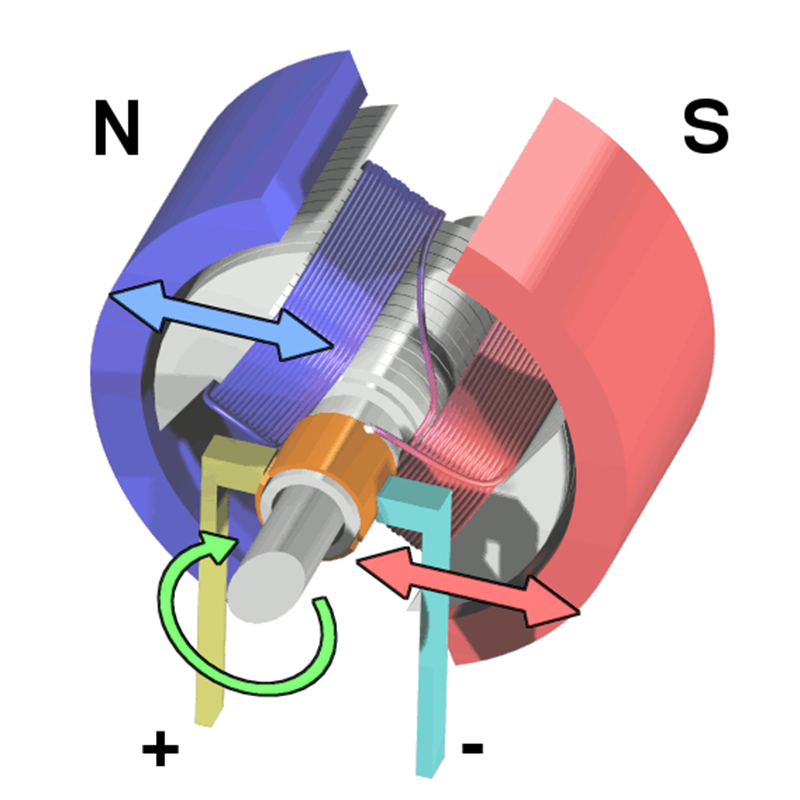
In motors: Electric motors use magnets to convert electrical energy into mechanical motion.
In computers: Hard drives use magnets to store data.
In magnetic resonance imaging (MRI): Magnets are used in medical imaging technology to create detailed images of the inside of the body.
In everyday items: Refrigerator magnets, magnetic hooks, speakers, and many other household gadgets.
- Types of Magnets
Permanent magnets: Magnets that retain their magnetic properties without needing external energy.
Temporary magnets: Materials that become magnetized when exposed to a magnetic field but lose their magnetism once the field is removed.
Electromagnets: Magnets that are created by passing an electric current through a coil of wire (like in motors or transformers).

When will magnets attract or repel each other?
Magnets will attract or repel each other based on the orientation of their poles. Here’s how it works:
Attraction
Opposite poles attract: If you bring the north pole of one magnet close to the south pole of another magnet, they will attract each other.
This happens because opposite magnetic poles generate opposite magnetic fields, and when these fields interact, they pull toward each other to minimize the energy between them.
Repulsion
Like poles repel: If you bring two north poles together (or two south poles together), they will repel each other.
The magnetic fields of like poles push against each other because their fields are aligned in such a way that they try to keep apart.
So, to summarize:
North to South → Attraction
North to North or South to South → Repulsion
This principle is pretty straightforward but forms the basis of how magnets work in many technologies, from simple fridge magnets to complex devices like electric motors and MRI machines.
That’s how magnets work, but why?
The “why” behind how magnets work is rooted in the fundamental physics of magnetic fields and electromagnetic forces. The simplest explanation ties back to the properties of atoms and their behavior at a microscopic level.
- Magnetic Fields and Electrons
Magnets work because of the movement of electrons within atoms. Electrons have an inherent property called spin, which generates a tiny magnetic field.
In most materials, the spins of the electrons are oriented in random directions, so the magnetic fields cancel each other out. However, in ferromagnetic materials (like iron), the electron spins tend to align in the same direction, creating a net magnetic field. This is why ferromagnetic materials can become magnets—they have regions called magnetic domains where the electron spins are aligned in the same direction, and these regions add up to create a large, noticeable magnetic field.
- Magnetic Poles and Force
Now, about why opposite poles attract and like poles repel:
Opposite poles attract: Magnetic fields are vector fields, meaning they have both magnitude and direction. The magnetic field of a north pole points outward, while the field of a south pole points inward. When the north pole of one magnet is brought near the south pole of another, their magnetic fields naturally align in a way that pulls them toward each other, minimizing the system’s energy.
Like poles repel: When you try to bring two like poles together (north to north or south to south), the magnetic fields point in the same direction. This means the fields push against each other rather than aligning. The interaction between these fields creates a repulsive force. It’s the same idea as pushing the same poles of two bar magnets together—they resist each other.
- Mathematical Explanation: The Law of Magnetic Forces
The underlying mathematical explanation comes from Maxwell’s equations in electromagnetism, which describe how electric and magnetic fields interact. Specifically, the Lorentz force law describes how charged particles experience a force due to magnetic fields. The behavior of the magnetic field around a magnet follows the same principles, with opposite magnetic fields attracting and like fields repelling to minimize the system’s potential energy.
- Why Does the Force Act This Way?
It all comes down to the way fields interact at the quantum level and how nature tends to “seek balance.” Just like how gravitational forces pull objects together to minimize energy, magnetic fields “want” to align in such a way that energy is minimized. Opposites attract because that’s the most stable arrangement, and like poles repel to maintain balance and prevent instability.

In Summary:
Attraction (North to South): Opposite poles create magnetic fields that align in a way that pulls them together, minimizing energy.
Repulsion (North to North or South to South): Like poles create magnetic fields that push against each other, resisting alignment and minimizing overlap.
This fundamental behavior is a result of both quantum mechanics (the behavior of electrons and their magnetic moments) and classical electromagnetism (how magnetic fields interact).
Does that help clarify the “why” behind magnet behavior? Feel free to ask more if you’d like to dive deeper into any part of it!