





The two main advantages of the rare earth ndfeb magnets molding technique over the conventional powder metallurgy method are oxidation prevention and magnetic field direction. The preparation of sintered NdFeB is mostly dependent on the molding process, which also sets the magnet’s size, shape, and orientation. There are two main types of molding: wet pressing and dry pressing.

1. Wet molding
In functional ceramics as well as other disciplines, the wet molding process is commonly employed. Using mineral oil as a solvent and methyl oleate as a surfactant, Hitachi created a high-performance magnet in 2001 with Br = 1.46 T (14.6 kG) and 1.20 MA/m (15.1 kOe). Organic reagents have a lubricating action that can enhance the powder’s fluidity and orientation, resulting in the formation of a very uniform compact. But wet molding is a very inefficient and complicated procedure. The wet molding approach is being abandoned because the significant amount of solvent emitted during the sintering process will harm the vacuum system and residual carbon would impair the magnet’s function.
2. Dry molding
After years of practice and improvement by magnetic material practitioners, dry molding has become the preferred method for large-scale mass production. The magnetic powder is oriented by a magnetic field in a mold cavity of a certain shape, and the indenter is closed to complete the pressure. However, as the density of the green body increases, the orientation will inevitably be destroyed. Dry molding can be divided into parallel pressing and vertical pressing according to the corresponding relationship between the magnetic field direction and the pressing direction. The vertical pressing method is more widely used because it causes less damage to the powder orientation rare earth ndfeb magnets.
In China, a two-step pressing method is often used, that is, the green compact density is pressed to 3.8-4.1g/cm3, and then equal pressure reduction (about 180MPa) is used to increase the green compact density (about 4.5g/cm3) without destroying the existing orientation level. In this way, various types of molds such as automatic molds and combined molds can be tried, with high production efficiency and stable performance. However, the methods of vertical press pressing, isostatic pressing, post-grinding, and slicing processing have the following shortcomings:
(1) Due to the limitation of the deformation amount of the blank and the oxide layer, the processing allowance of the blank is large and the yield rate is low;
(2) The secondary pressing method requires vacuum sealing after the green body, which has a long process cycle and a low degree of automation;
(3) The orientation degree will still be damaged during the mold closing and pressing process.
The product has developed a near-net molding process and a processing-free molding process to directly produce products that are equal to or close to the shape of the final product. Currently, the main directions for improvement are: first, to cancel isostatic pressing and realize automated production from molding to sintering; second, to use pressureless molding and other methods to further improve the degree of orientation; and finally, for tile-shaped, ring-shaped, thin sheets, and various complex shapes rare earth ndfeb magnets.
1. One-time molding process
By increasing the pressure of the molding press, the density of the green body is increased to above 4.2g/cm3, thereby eliminating isostatic pressing. After being pressed by the fully automatic molding press, it is automatically stacked into the sintering box by a robot and transported through a sealed channel protected by inert gas. To the continuous sintering furnace, the furnace is entered through the gate valve, which realizes automated production and reduces labor costs. The entire process is carried out in a low-oxygen environment, which is conducive to the stability of the process and performance rare earth ndfeb magnets.
2. Pressureless molding

In order to eliminate the damage to the orientation degree during the molding process, the orientation is carried out in a loose state or a micro-pressure state, and the mold is used for vacuum or high-pressure sintering. This method has high requirements on mold material, magnetic permeability and inner cavity wall roughness. However, because the powder gap is too large, it is difficult to densify solely by capillary action during the sintering process, and it is easy to shrink and deform rare earth ndfeb magnets.
3. Isostatic pressure pulse magnetic field molding of rubber film
The rubber mold filled with magnetic powder is placed in the metal mold. Through the pulse magnetic field orientation, the metal indenter compresses the rubber film and magnetic powder. Due to the restriction of the metal mold cavity, the rubber mold expands toward the inner cavity and applies its isostatic pressure to the powder. On the sample, since there is no relative movement between the inner wall of the mold cavity and the powder, the orientation is well maintained. However, due to the difference in hardness and Young’s modulus between the rubber film and the steel mold, the compact is prone to non-uniform deformation rare earth ndfeb magnets.
4. Near-net molding process (single piece pressing)
The parallel press has far more orientation damage than the vertical press because its magnetic field orientation matches the pressing direction. Furthermore, the product pressing area is reduced as a result of the orientation pole’s size restriction. Nonetheless, the parallel pressing method may form and press cylinders, rings, special-shaped goods, and single-piece items all at once because of the benefits of feeding and orientation. Its excellent magnetic characteristics and great pressing precision optimize material consumption by lowering processing allowance. The criteria for powder fluidity, press (servo control accuracy, magnetic field size and homogeneity, automatic powder distribution, etc.), mold, and sintering process are higher in the single-piece pressing process rare earth ndfeb magnets.
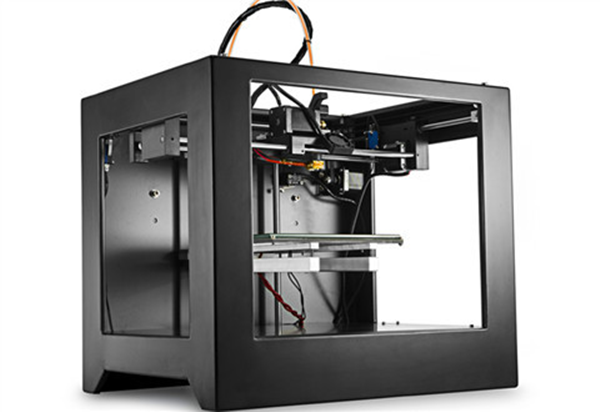
5.3D printing technology

3D printing is an additive manufacturing technology that uses powdered metal to print layer by layer to construct workpieces. If a regional directional magnetic field can be used to orient the main phase grains, and the low-temperature melted grain boundary phase particles wrap the main phase grains to achieve densification of the magnet, theoretically it will be possible to realize magnets of various sizes and complex shapes with high orientation and uniform grain boundary distribution. It is no longer difficult to achieve near net shape of steel and prepare various products such as radiating magnetic rings and obliquely magnetized steel at the same time.
Therefore, as soon as 3D printing technology came out, it attracted the attention of rare earth ndfeb magnets researchers. However, in addition to assisting sintering and densification, the grain boundary phase plays an important role in magnetic properties, especially coercive force rare earth ndfeb magnets. At present, the influence mechanism of the composition, distribution and crystal structure evolution of the grain boundary phase on the magnetic properties has not yet been fully revealed. The design of the auxiliary phase particle composition and grain boundary size still requires the efforts of technical research and development personnel.
Rare earth ndfeb magnets
Rare earth ndfeb magnets (Neodymium Iron Boron) is a type of permanent magnet material known for its strong magnetic properties. The molding process for rare earth ndfeb magnets involves several steps:
1, Raw Material Preparation: The process begins with the preparation of raw materials, which typically include neodymium, iron, boron, and other minor additives like dysprosium or terbium to enhance the magnetic properties. These materials are mixed together in precise proportions to achieve the desired magnetic characteristics.
2, Milling: The mixed raw materials are then milled to produce a fine powder. Milling ensures that the particles are well mixed and homogenized, which is crucial for achieving consistent magnetic properties in the final rare earth ndfeb magnets product.
3, Pressing: The milled powder is compacted into the desired shape using a pressing process. This step is often done using a hydraulic press or mechanical press. The powder is typically placed into a mold cavity and subjected to high pressure to compress it into a solid shape, such as a cylinder or block.
4, Sintering: The pressed compact is then sintered in a furnace. Sintering involves heating the compacted powder to a high temperature, typically above the Curie temperature of the material, but below its melting point. This causes the particles to bond together, forming a solid material with enhanced magnetic properties rare earth ndfeb magnets.
5,Heat Treatment: After sintering, the material may undergo additional heat treatment processes to further improve its magnetic properties and stabilize its microstructure. This step is particularly important for controlling the grain size and optimizing magnetic performance.
6,Machining and Surface Treatment: Once the sintered material has cooled, it may undergo machining processes to achieve the final desired shape and dimensions. Surface treatments such as coating or plating may also be applied to protect the magnet from corrosion and enhance its durability.
7,Quality Control: Throughout the entire process, quality control measures are implemented to ensure that the final product meets the required specifications for magnetic properties, dimensional accuracy, and structural integrity.
8,Testing: Finally, the finished magnets are subjected to various tests to evaluate their magnetic performance, such as magnetic flux density, coercivity, and remanence. Other tests may also be conducted to assess mechanical properties and ensure rare earth ndfeb magnets product reliability.
Overall, the molding process of sintered rare earth ndfeb magnets involves a series of carefully controlled steps to produce high-quality magnets with superior magnetic properties suitable for various applications, ranging from consumer electronics to industrial machinery.