


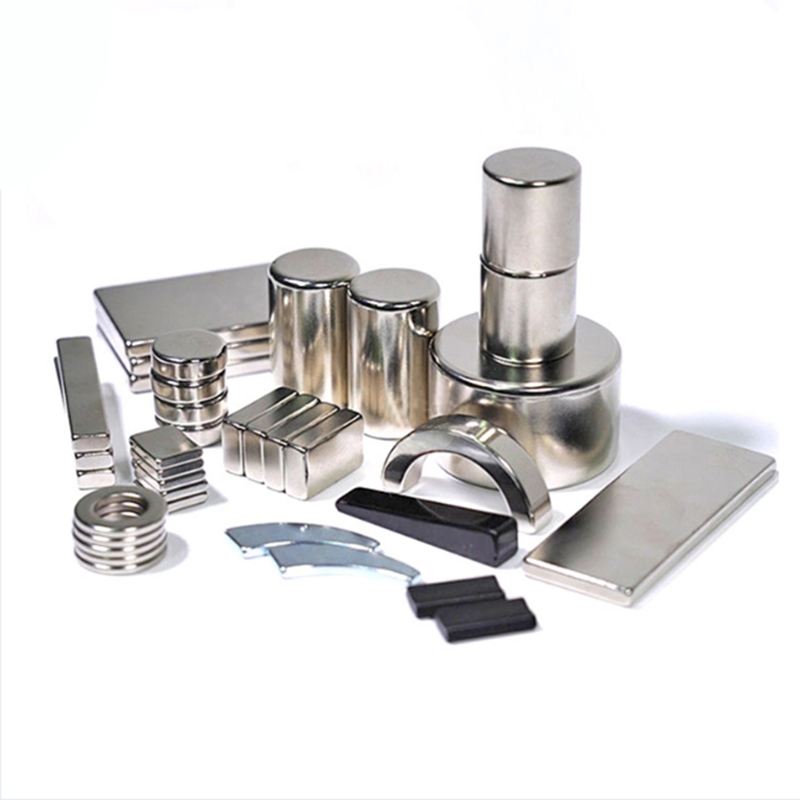
-Why is coating necessary for best ndfeb magnets?
How should I select the coating material? Nickel plating, zinc plating, or other materials? What distinguishes one covering from another?
This essay will inform you about the problems associated with best ndfeb magnets coatings nowadays.
Powder metallurgy is the process used to create best ndfeb magnets. Because of their small internal holes and cavities and high chemical activity, they are a powder that oxidizes and corrodes readily in air. The performance and lifespan of the entire machine will be impacted when the material corrodes or the components sustain damage, as the magnetic qualities will eventually be diminished or even eliminated. As a result, rigorous anti-corrosion treatment needs to be done before usage.

At present, the anti-corrosion treatment of best ndfeb magnets generally adopts electroplating, chemical plating, electrophoresis, phosphating and other methods. Among them, electroplating, as a mature metal surface treatment method, is the most widely used.
The electroplating quality of best ndfeb magnets is closely related to pre-treatment
Pre-treatment and electroplating are steps in the best ndfeb magnets electroplating process. The pre-treatment of best ndfeb magnets electroplating has a direct impact on its quality. Ultrasonic cleaning is often done in between the abrasive grinding, chamfering, immersion chemical degreasing, pickling oxide film, mild acid activation, and other steps of this pre-treatment procedure.
The best ndfeb magnets can be electroplated once the aforementioned process has exposed a clean, basic surface appropriate for electroplating. An incomplete pre-treatment procedure might introduce latent faults into the finished electroplated product, leading to issues including peeling and blistering of the electroplated layer.
Pre-plating NdFeB items is more challenging than it is for regular steel parts. The surface’s loose, rough, and porous nature readily “harbors dirt” as the cause. The best ndfeb magnets goods will be harmed if this “dirt” is not entirely eliminated.
Negative effects are caused by the bonding force between the substrate and the NdFeB layer. Currently, NdFeB plating is pre-treated mostly via multi-channel ultrasonic cleaning. The ultrasonic wave cavitation effect eliminates all traces of oil, acid, alkali, and other materials from the NdFeB micropores. Furthermore, the acid in best ndfeb magnets is also helped to disappear by ultrasonic cleaning. The surface-produced boron dust from washing further removes the potential risk of bonding.
Coating types and characteristics of NdFeB magnets

NdFeB electroplating adopts different electroplating processes according to the different use environments of the products, and the surface plating is also different, such as zinc plating, nickel plating, copper plating, tin plating, precious metal plating, etc.
Generally, zinc plating, nickel plating + copper plating + nickel, nickel plating + copper + electroless nickel plating are the three processes that are mainstream. Only zinc and nickel are suitable for direct plating on the surface of NdFeB magnets, so multi-layer plating technology is generally implemented after nickel plating. Nowadays, the technical difficulty of direct copper plating of NdFeB has been broken through. Direct copper plating and then nickel plating is the development trend. This kind of plating design is more conducive to achieving the thermal demagnetization index of best ndfeb magnets components to meet customer needs.

Nickel (Ni): Nickel coating is one of the most widely used coatings for best ndfeb magnets. It offers excellent corrosion resistance, durability, and a shiny appearance. Nickel-coated magnets are suitable for a wide range of applications, including industrial, automotive, and consumer electronics.
Zinc (Zn): Zinc coating provides moderate corrosion resistance and is cost-effective. It is commonly used for indoor applications or in environments with low humidity. Zinc-coated magnets have a silver-gray appearance and are often used in consumer electronics, magnetic closures, and small motors.
Epoxy Resin: Epoxy resin coating is applied as a thin layer to protect magnets from moisture, chemicals, and mechanical damage. Epoxy-coated magnets are commonly used in applications where exposure to harsh environments is expected, such as marine environments, automotive sensors, and medical devices.
Gold (Au): Gold coating offers excellent corrosion resistance and aesthetic appeal. It is often used in high-end applications where appearance is important, such as jewelry, luxury goods, and premium electronic devices.
Silver (Ag): Silver coating provides good corrosion resistance and conductivity. It is used in applications requiring both magnetic properties and electrical conductivity, such as electrical contacts and connectors.
Copper (Cu): Copper coating offers good electrical conductivity and is often used in applications where both magnetic and electrical properties are important, such as electromagnetic coils and transformers.
Phosphate: Phosphate coating provides a durable and corrosion-resistant surface for magnets. It is commonly used as a base layer for subsequent coatings or as a pre-treatment before painting or plating.
Black Oxide: Black oxide coating provides a dark, matte finish and offers moderate corrosion resistance. It is often used for decorative purposes or to reduce light reflection in optical applications.
The choice of coating depends on factors such as the application requirements, operating environment, desired appearance, and budget considerations. It’s important to select a coating that provides adequate protection while maintaining the desired performance characteristics of the magnet. Additionally, proper surface preparation and application techniques are crucial to ensure the effectiveness and durability of the coating.
ZN vs Nickel Plated
The most commonly used coatings for best ndfeb magnets powerful magnets are zinc plating and nickel plating. They have obvious differences in appearance, corrosion resistance, service life, price, etc.:
Difference in polishability:
Nickel plating is superior to zinc plating in terms of polishing, and the appearance is brighter. Those with high requirements on product appearance generally choose nickel plating, while some magnets are not exposed, and those with relatively low requirements on product appearance are generally galvanized.
Difference in corrosion resistance:
Zinc is an active metal and can react with acid, so its corrosion resistance is poor; after nickel plating surface treatment, its corrosion resistance is higher.
Difference in service life: Due to different corrosion resistance, the service life of zinc plating is lower than that of nickel plating. The main reason is that the surface coating easily falls off after a long time of use, causing the magnet to oxidize, thereby affecting the magnetic performance.
Difference in hardness:
Nickel plating is higher than zinc plating. During use, it can greatly avoid collisions and other situations, which may cause the NdFeB powerful magnets to fall off, break, etc.
Price difference:
Galvanizing is extremely advantageous in this regard. The prices from low to high are galvanizing, nickel plating, epoxy resin, etc.
When choosing best ndfeb magnets, you need to consider which coating to use based on factors such as operating temperature, environmental impact, corrosion resistance, product appearance, coating bonding strength, and adhesive effect.
1, Magnetic Properties: The “best” best ndfeb magnets typically have high magnetic properties, such as high remanence (Br), high coercivity (Hc), and high energy product (BHmax). Higher grades (e.g., N52) generally offer stronger magnetic fields but may have lower temperature stability.
2, Temperature Stability: Consider the operating temperature range of your application. best ndfeb magnets lose magnetic strength at elevated temperatures, so choose magnets with higher Curie temperatures or those containing elements like dysprosium or terbium for improved temperature stability if needed.
3, Coatings: NdFeB magnets are prone to corrosion, so choose magnets with appropriate coatings to protect them from environmental factors. Common coatings include nickel, zinc, epoxy, and gold. Select a coating based on your application’s operating environment and exposure to moisture or chemicals.
4, Size and Shape: Choose NdFeB magnets in sizes and shapes that fit your application’s design requirements. NdFeB magnets can be manufactured in various shapes such as discs, blocks, rings, and arcs. Consider the dimensions and geometry needed for optimal performance.
5, Supplier Reputation: Purchase best ndfeb magnets from reputable suppliers known for providing high-quality products and reliable customer service. Ensure the supplier follows strict quality control measures and provides technical support when needed.
6, Cost: Consider the cost-effectiveness of different grades and sizes of best ndfeb magnets based on your application budget. Balance the desired magnetic properties with cost considerations to find the most suitable option.
7, Application Requirements: Evaluate your application’s specific requirements, such as magnetic field strength, operating conditions, and mechanical constraints. Work closely with magnet suppliers or engineers to select best ndfeb magnets that best meet these requirements.
8, Ultimately, the “best” best ndfeb magnets are those that offer the optimal balance of magnetic properties, temperature stability, durability, and cost-effectiveness for your particular application. Assess each factor carefully to make an informed decision.
Corrosion Resistance:Zinc Coating (Zn): Zinc coatings offer moderate corrosion resistance and are suitable for indoor applications or environments with low humidity and minimal exposure to moisture or corrosive substances. They provide basic protection against oxidation.
Nickel Coating (Ni): Nickel coatings provide superior corrosion resistance compared to zinc coatings. They are more durable and offer better protection against moisture, humidity, and various corrosive substances. Nickel coatings are suitable for both indoor and outdoor applications.
Appearance:Zinc Coating (Zn): Zinc coatings typically have a silver-gray appearance and may develop a dull patina over time with exposure to air and moisture.
Nickel Coating (Ni): Nickel coatings have a bright, shiny appearance and offer better aesthetic appeal compared to zinc coatings. They maintain their appearance well over time and are often preferred for applications where visual appearance is important.
Magnetic Performance:Zinc Coating (Zn): Zinc coatings have minimal impact on the magnetic performance of the underlying magnet. They do not significantly affect the magnetic properties.
Nickel Coating (Ni): Nickel coatings can have a slight impact on the magnetic properties of the underlying magnet, particularly in terms of surface flux density. However, this impact is generally minimal and acceptable for most applications.
Cost:Zinc Coating (Zn): Zinc coatings are generally more cost-effective compared to nickel coatings, making them a preferred choice for applications with budget constraints.
Nickel Coating (Ni): Nickel coatings are typically more expensive than zinc coatings due to their superior corrosion resistance and aesthetic properties.
Applications of best ndfeb magnets:Zinc Coating (Zn): Zinc-coated magnets are commonly used in indoor applications such as consumer electronics, magnetic closures, and small motors where moderate corrosion resistance is sufficient.
Nickel Coating (Ni): Nickel-coated magnets are preferred for a wide range of applications