

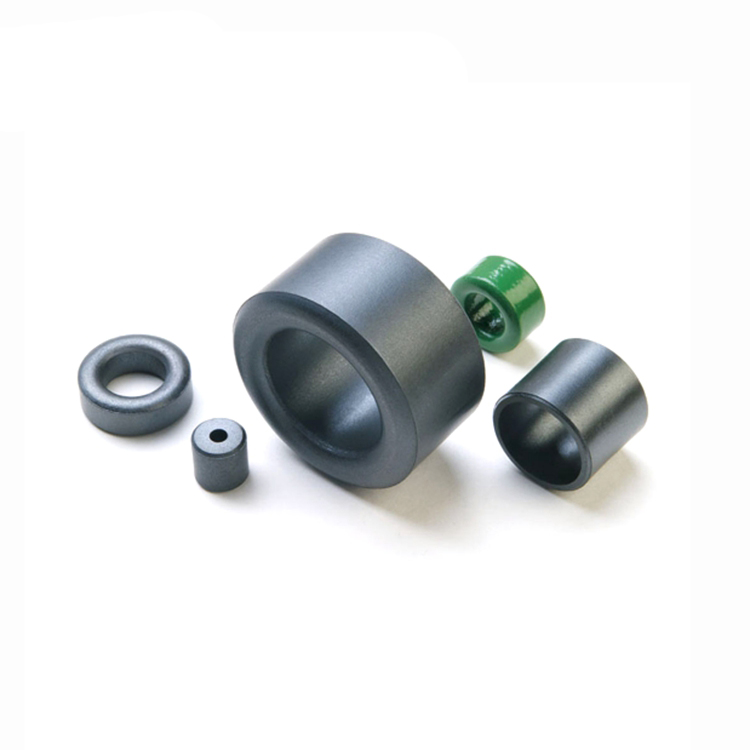

The magnetic efficiency of the permanent magnet rotor is the primary factor to be taken into account during the planning stage.
As soon as the proper magnetic design is created, the design team collaborates with production to take the structure into consideration.
(i.e., the method used to fasten the magnets to the shaft). The group has two choices after that:
Charged magnets create inherent challenges during assembly due to their fragility and possibly fatal magnetic fields;
Bunting offers a post-assembly magnetizing solution in response to the introduction of novel manufacturing processes;
employing charged magnets for assembly.
Construction of a magnetic magnet with a flat bottom that sits on a level surface is the most controlled and secure alternative.
However, to attach the magnet, a more intricate and expensive faceted shaft is needed.
The cost of machining the shaft is decreased when a straightforward magnet arc is used and has an ID that is round and fits the outside diameter of a
typical shaft. (OD).
Magnet Protection
Any sort of circumferential confinement is subject to the same manufacturing considerations. (such as when using carbon fiber). The magnet rotor has to have a flat, rounded surface before the wrap is applied, whether it is constructed of heat-shrunk metallic tubing or carbon fiber (wrapped or pressed).
Magnetising
The technological engineering team at Bunting created the post-assembly magnetization technology with the intention of streamlining
production and enhancing security.
After that, a sophisticated magnet system is built, demagnetized, and powered.
After construction, magnetization has various benefits.
The magnet system involves less effort to build and is simpler to use.
Additionally, there is less chance that a mistake will be made during developing.
(For instance, the wrong polarity orientation). When every magnetic component has the precise magnetic field and orientation that it
needs, a condition known as post-magnetization takes place.
The article “Post Assembly Magnetization for the Automotive Sector” covers all of the advantages of post-assembly magnetization.
A magnet rotor made of arc magnets with “Curved Bottom” and “Flat Bottom” cannot be post-magnetized, though.
This is due to the fact that “Curved Bottom” and “Flat Bottom” arc magnets are unable to achieve magnetic saturation.
Post-assembly magnetization is feasible when there is a small air gap between “Chord” arc magnets and “Bread Loaf” arc magnets.
However, magnetizing is not only conceivable but also enormously simplified when a Surface Mount Halbach rotor is combined with a
transition magnet.
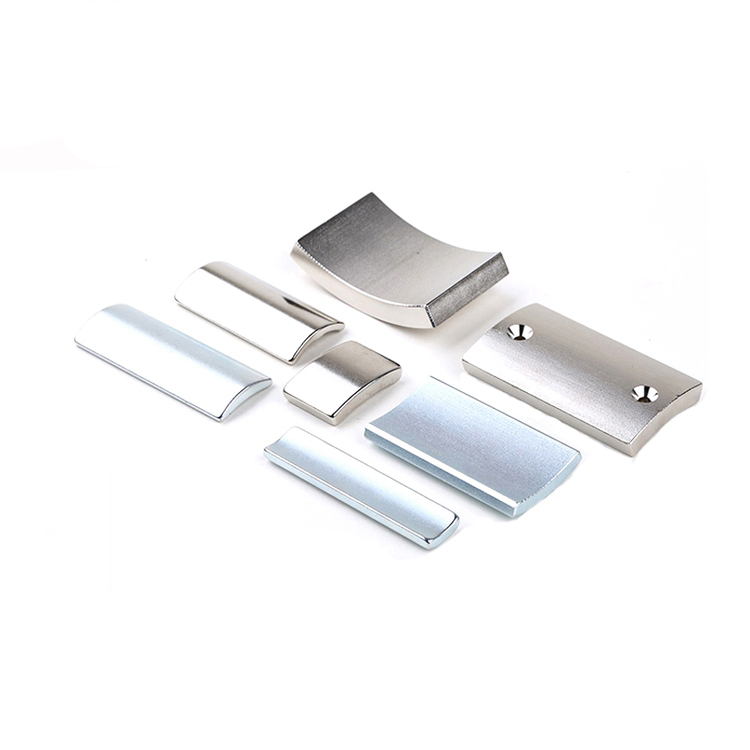
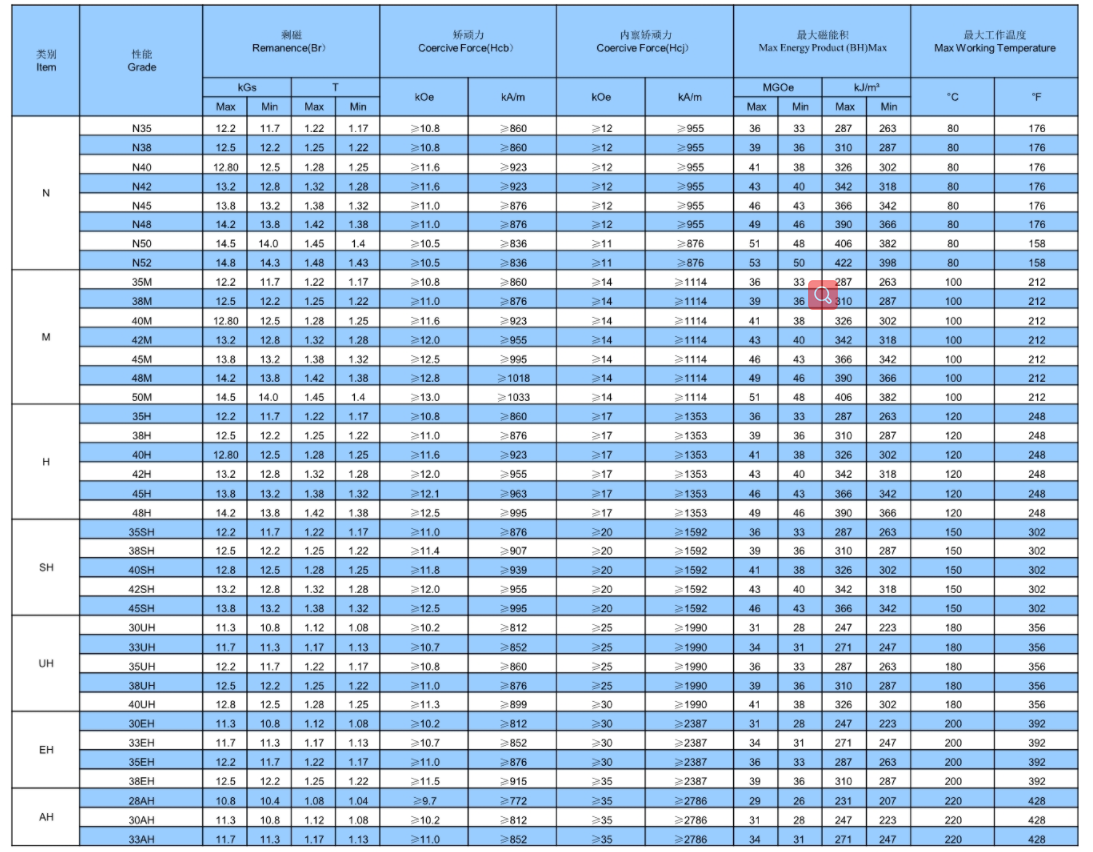
Size and quality of an arc neodymium magnet can be changed
temperature resistance for some specific engine uses up to 220°C
Grade ranges from N28 to N52. a magnetic field,
Both the coating’s substance and its size can be altered at the request of the customer.
It is also possible to fulfill some specialized temperature resistance requests.
We create specialized high-temperature magnets that can withstand 220 °C.
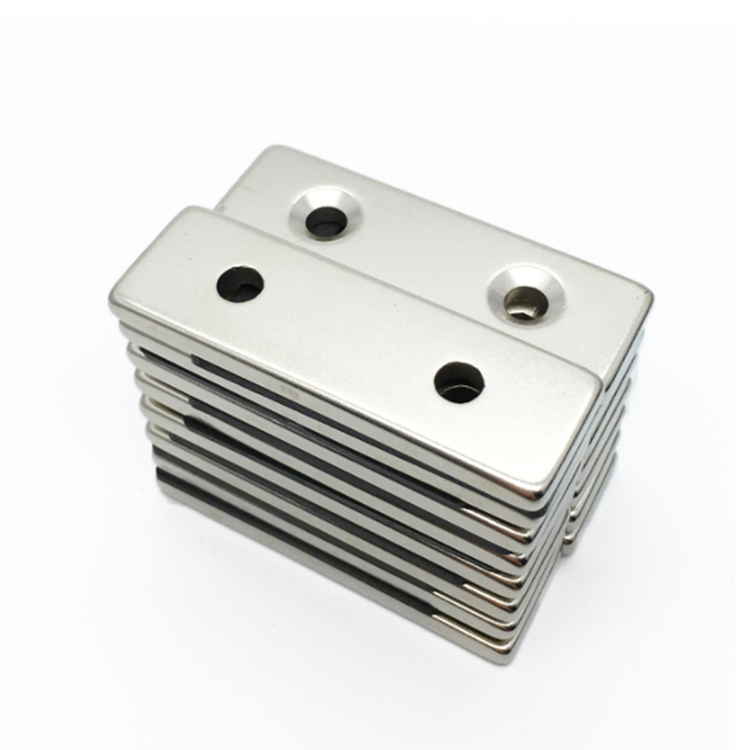
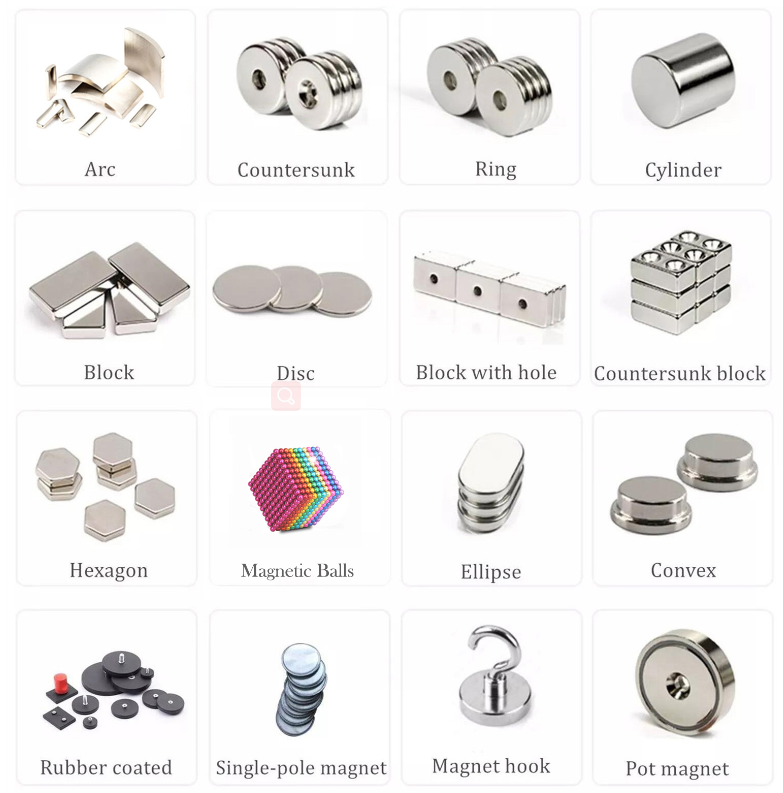
Variously shaped neodymium countersink magnets
Grade ranges from N28 to N52. a magnetic field,
The type of covering and its dimensions are flexible to accommodate customer requests.
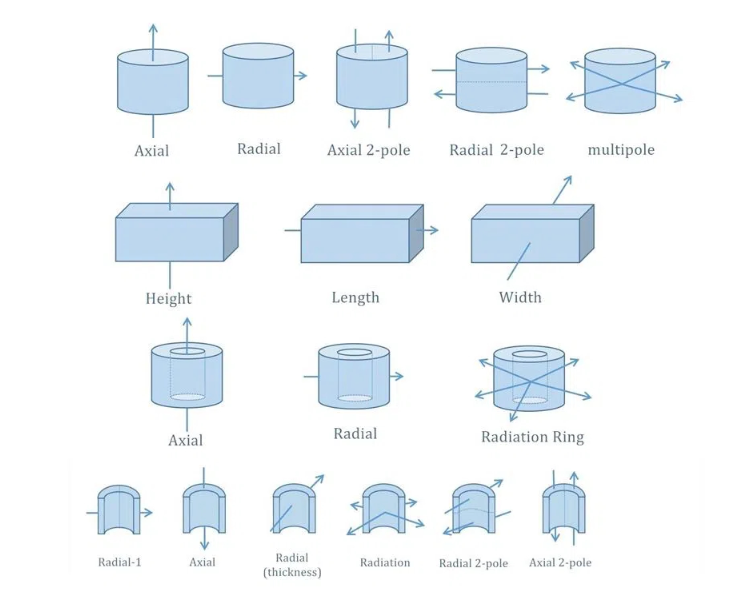
الاتجاه المغناطيسي
The magnet will release some of its saved energy when it draws toward or attaches to something. It will then store or preserve the energy expended by the person moving the object away.
Every magnet has a face that faces north and a face that faces south on its opposite ends. The north face of one magnet will always be attracted to the south face of another.
الطلاء
The rust and oxidation resilience of the NdFeB magnet is weak.
Surface electroplating treatment is therefore required.
Different finishes are chosen based on various use scenarios:
Neodymium Magnet for Arc
The third generation of rare earth permanent magnets includes neodymium magnets, which are now the strongest magnets on the market.
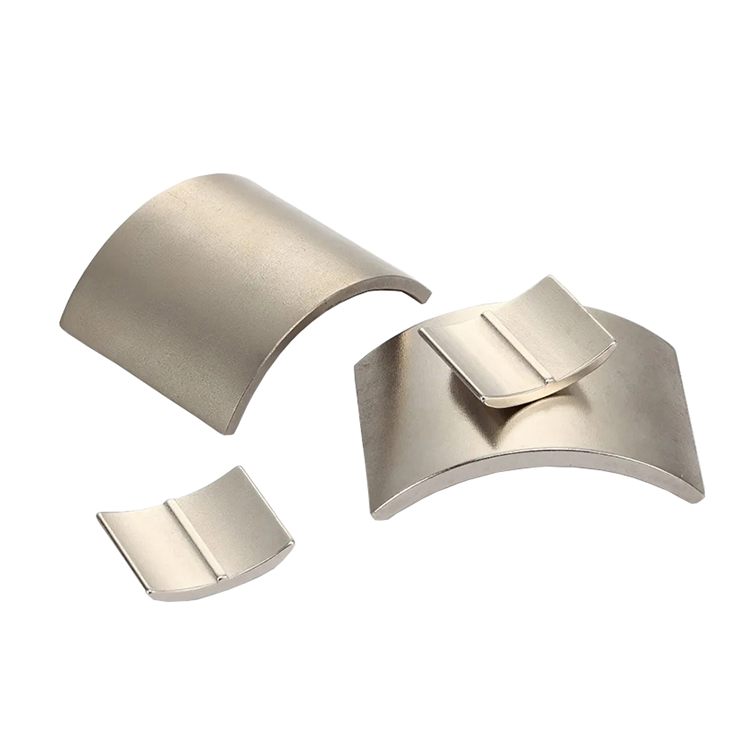
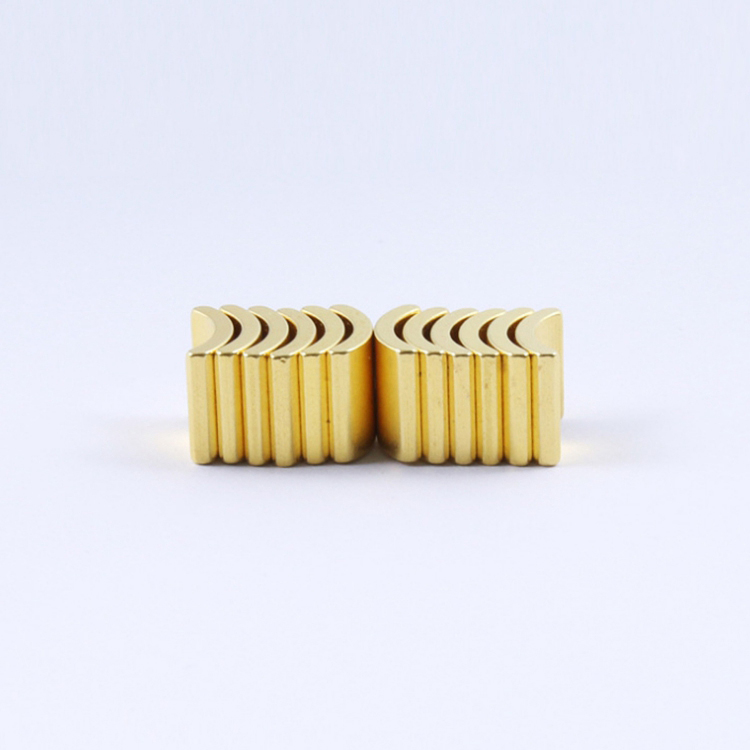
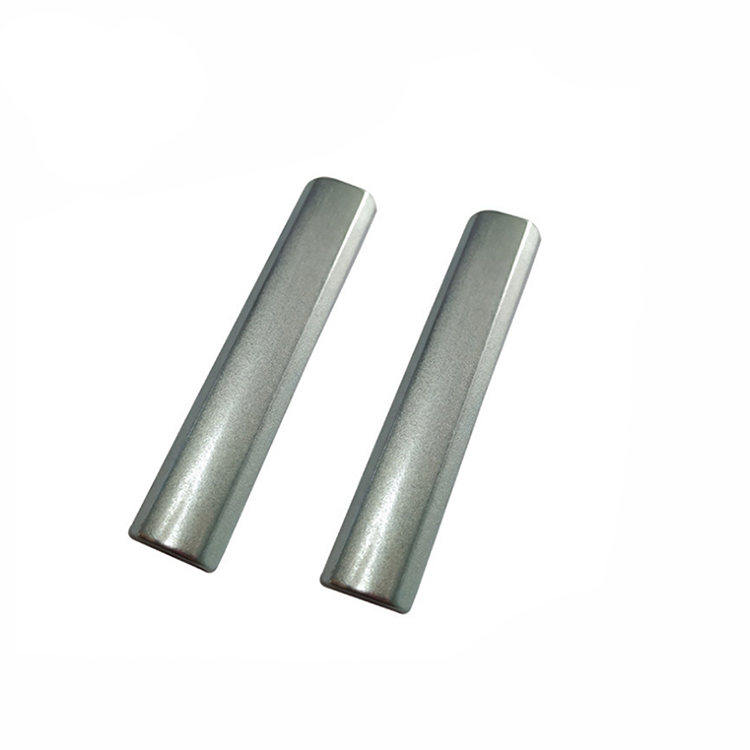
A unique kind of cemented Neodymium magnet is a neodymium arc magnet, also known as a neodymium curved magnet.
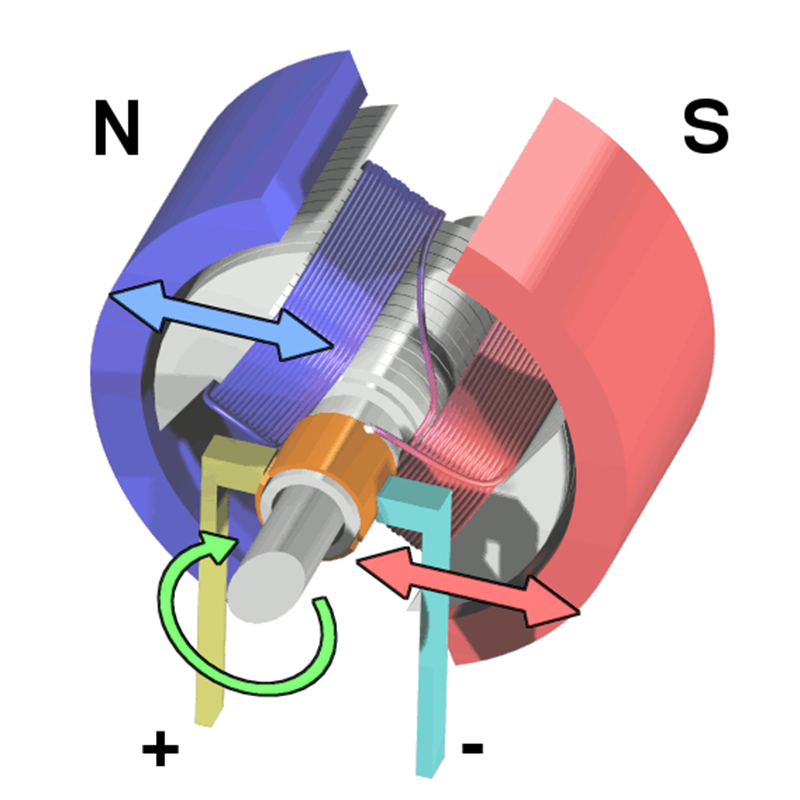
Rotor and stator built of neodymium arc magnets are used in almost all permanent magnet (PM) motors, generators, and magnetic
connection components.
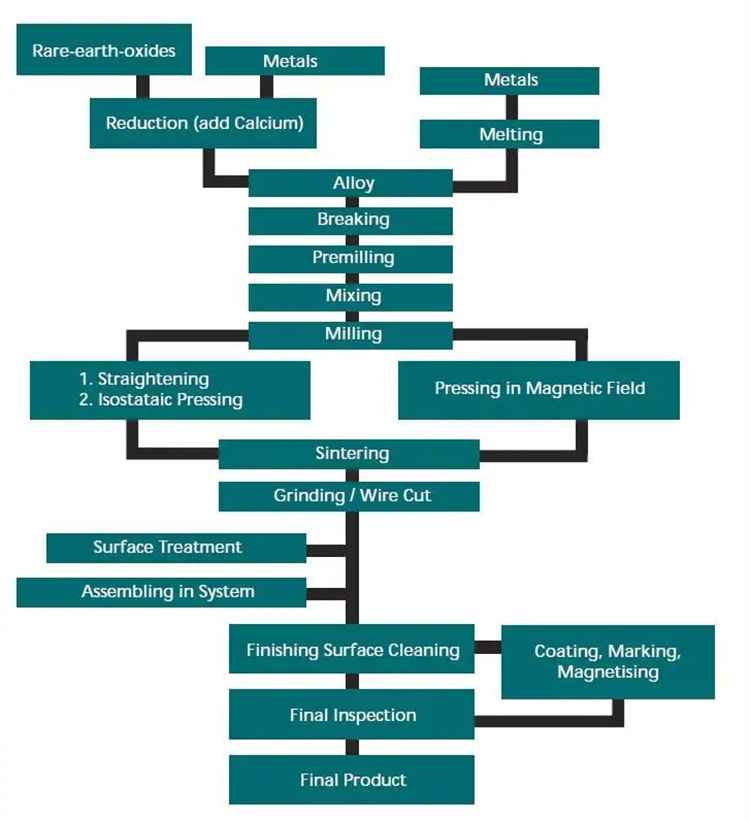
Neodymium Arc Magnet Production
Due to technological limitations in the magnetic field direction molding procedure, neodymium arc magnets are always produced from
samples.
Twisted magnets are often made by wire-cutting or duplicate grinding.
Wire-cutting is commonly criticized for its ineffective output and expensive processing costs, despite the fact that it is well suited for the
machining of unique magnet shapes. Duplicate grinding, on the other hand, is more effective and less expensive but only offers a limited
amount of spatial usefulness.
Magnet makers should choose the best machining strategy based on the size, form, material utilization, manufacturing efficiency, and
processing costs of the final product.
Neodymium Arc Magnet Tuning: How to Boost Motor Performance
The vast majority of the time, neodymium arc magnets are used as motor magnets.
Performance of the motor is greatly influenced by the magnet’s construction, design, magnetic qualities, and surface protective coating.
Grooved motors find it challenging to avoid the cogging torque that results from the interaction of the stator teeth and the magnet.
To lessen torque ripple, shaking, and disturbance brought on by cogging torque, curved magnets in either commonly used axial flux motors or radial
flux motors can be modified into a skewed form.
Eddy current frequently raises the temperature of the stationary magnet, which also causes demagnetization.
The motor’s operational efficiency suffered as a result.
A laminated arc magnet may considerably reduce eddy current loss by joining several thin magnet sections together without changing the motor’s
performance or original design.
Arc magnets are a part of both ring magnets and disc magnets.
The unusual name “section magnets” is another name for arc magnets.
Neodymium arc magnets are used in permanent magnet motors, generators, rotors, stators, couplings, wind turbines, and other equipment.
These products generate a lot of heat and energy when utilized quickly.
Built-in arc magnets must thus be able to withstand high temperatures.
There are several uses for the arc magnets that China Rare Earth Magnet Limited produces.
We possess a variety of manufacturing expertise, cutting-edge production tools, and qualified engineering personnel.
Send us an email with your request if you’re looking for neodymium arc magnets, section magnets, motor magnets, or anything else.
Use the neodymium arc magnet search example below.
Use the example of a neodymium arc magnet search below.
Sort: permanent rare earth magnets
Neodymium magnets can have a focused direction or a non-concentric circle since they are made of sintered metal.
The maximum operating temperature range is 80-220 °C, and the dimensions are OR * IR * T * Angle * OR * IR * Chord length * T * OD * ID * T * Angle.
Please let it know.
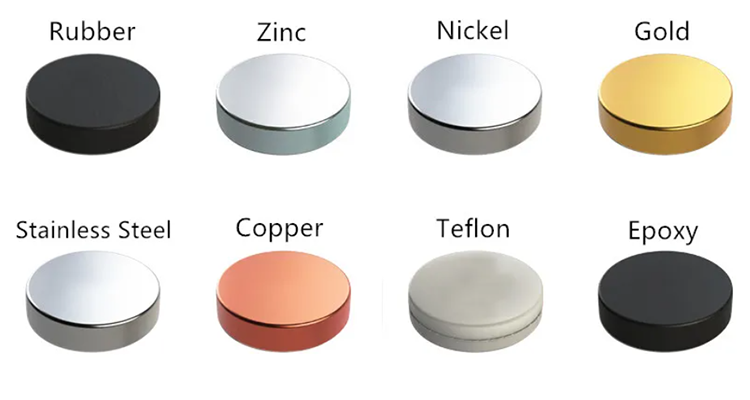
Ni-Cu-Ni, bare Zn, black urethane, etc. are a few examples of materials that use the N50M/N30/N35/N38UH (Magnetic Property Sheet) coating. (Images of Various Coatings)
Whether or not anything is drawn
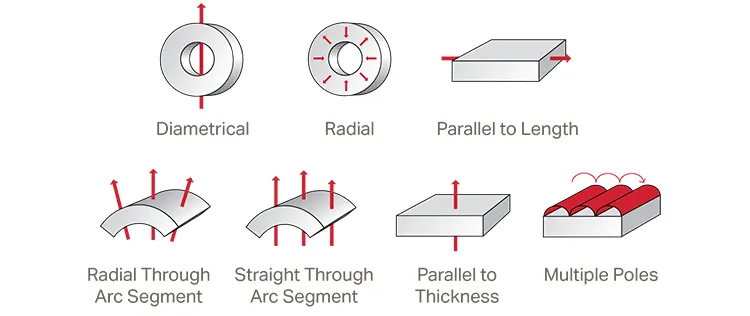
For instance, the use of girth, width, or breadth can be used to magnetize. (Drawing Map)
Sample and big batch volumes (measured in units)
Engineering models are necessary and essential while creating arc-shaped magnets. To prevent any misconceptions regarding the measurements and locations, kindly send over a comprehensive sketch with all the relevant information, a tolerance, and any additional requirements.
Neodymium magnets are made up mostly of Neodymium, Iron, and Boron. The iron in the magnet will corrode if left exposed to the elements. It is normally preferred to coat the magnet to prevent it from corrosion and to reinforce the fragile magnet material. There are other coating possibilities, however nickel is the most prevalent and typically favored. Our nickel-plated magnets are triple-plated with nickel, copper, and nickel again. Our magnets are substantially more durable than the more conventional single nickel plated magnets due to the triple coating. Zinc, tin, copper, epoxy, silver, and gold are some more coating choices. Our gold-plated magnets are really triple-plated with nickel, copper, nickel, and a top layer of gold.
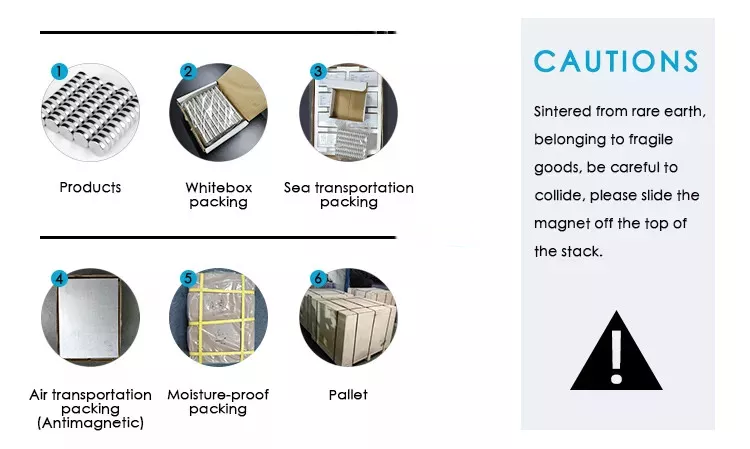
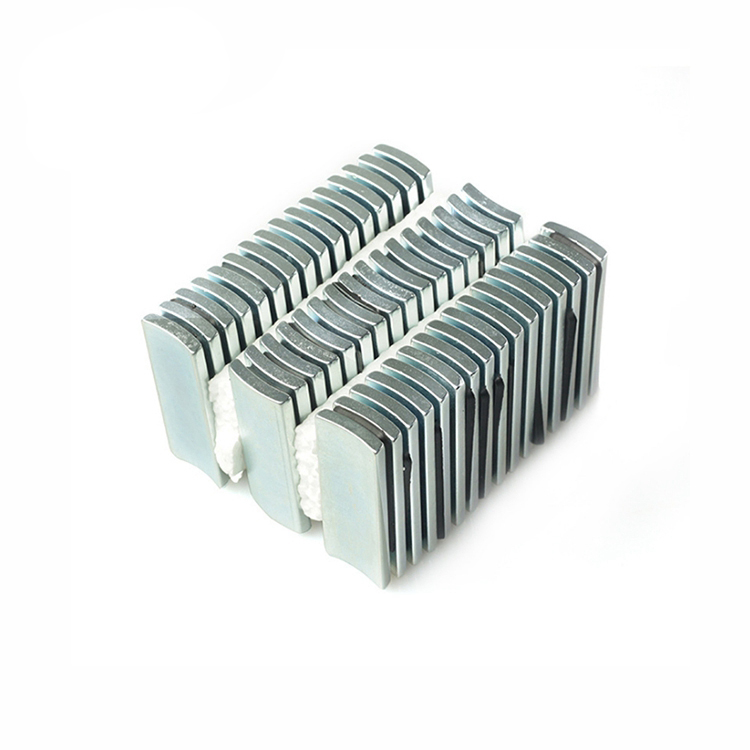
Strong packaging inside
* With foam inside for protect magnets
* With iron plate around for air shipment
* Suitable for air / sea / express shipping
Out side packing
* WIth poly-bag for water-proof
* With clear label for detail of magnets
* With Packing strip for protect carton