




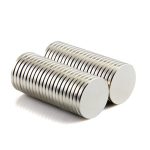

Large permanent magnets
The direct-drive large permanent magnets wind turbine uses the fan impeller to directly drive the generator to rotate, eliminating the speed-increasing gearbox required by the traditional AC excitation doubly-fed asynchronous wind turbine, and avoiding gearbox failure and maintenance during operation.
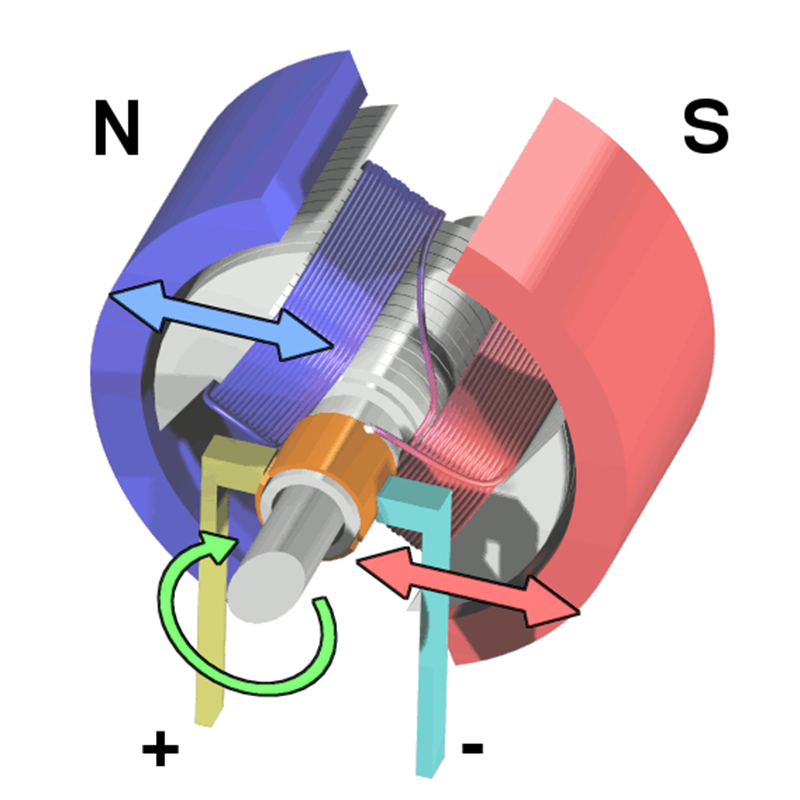
At the same time, the permanent large permanent magnets wind turbine adopts permanent magnet excitation, has no field winding, and does not have collector rings and brushes on the rotor; therefore, it has a simple structure and reliable operation. From 1993, Germany’s Enercon GmbH developed the first large-scale direct-drive permanent magnet wind turbine, to 2008, Xinjiang Goldwind Technology Co., Ltd. produced hundreds of 1.5 MW direct-drive permanent magnets. The development of wind turbines and permanent magnet wind turbines is in the ascendant. The overall level of China’s permanent magnet wind turbines is at the forefront of the world.
The working environment of wind turbines is very harsh. They must be able to withstand high temperatures, severe cold, wind and sand, humidity and even salt spray. The design life of wind turbines is generally twenty years.
At present, both small wind turbines and megawatt-level permanent magnet wind turbines use sintered NdFeB permanent magnets. Therefore, the selection of the magnetic parameters of NdFeB permanent large permanent magnets and the requirements for the corrosion resistance of the magnets are very important.
2. Typical magnetic properties of sintered NdFeB used in permanent magnet wind turbines.

NdFeB large permanent magnets are called the third generation rare earth permanent magnet and is the permanent magnet material with the highest magnetic performance so far. The main phase of sintered NdFeB alloy is the intermetallic compound Nd2Fe14B, and its saturation magnetic polarization intensity (Js) is 1.6T. Since the sintered NdFeB permanent magnet alloy is composed of the main phase Nd2Fe14B and the grain boundary phase, and the orientation of the Nd2Fe14B grains is limited by process conditions, the current maximum remanence of the magnet can reach 1.5T.
The German vacuum smelting company (Vacuumschmelze GmbH) produces NdFeB magnets with a maximum magnetic energy product (BH) max of 57MGOe. Domestic NdFeB manufacturers can produce N50 grade large permanent magnets with a maximum magnetic energy product of 53 MGOe (Editor’s note: This article was published in 2010. With the development of technology, N54 grade magnets are currently on the market, with a maximum magnetic energy product of 53MGOe. 55MGOe). Increasing the proportion of the main phase of the alloy, increasing the orientation of the grains and the density of the magnet can increase the maximum magnetic energy product of the magnet; however, it will not exceed the theoretical value of the maximum magnetic energy product of single crystal Nd2Fe14B, 64MGOe.
The demagnetization curve of NdFeB at room temperature is approximately a straight line. Therefore, when designing large permanent magnets motor, high-grade NdFeB (that is, the material has a high (BH) max) is often selected to obtain a high air gap magnetic density. When the motor is running, due to the existence of the alternating demagnetizing field and the demagnetizing effect caused by the instantaneous large current when the load changes suddenly, it is required to select NdFeB magnets with sufficiently high coercive force.
وتؤدي إضافة عناصر مثل الديسبروسيوم (التيربيوم) إلى السبيكة إلى زيادة القوة القسرية الجوهرية (jHc) لمغناطيس NdFeB، ولكن تقلّ قوة إعادة التماسك (Br) للمغناطيس وفقًا لذلك. ولذلك، فإن مغناطيسات NdFeB عالية الأداء لتوربينات الرياح تأخذ في الاعتبار كلاً من قوة الإكراه والبقايا.
3. Temperature stability of NdFeB permanent magnets
Wind turbines work in the wilderness and are subject to severe heat and cold; at the same time, motor losses also cause the temperature of the motor to rise. The sintered NdFeB magnets given in the above table can work at 120℃. The Curie temperature of NdFeB large permanent magnets alloy is about 310°C. When the temperature of the magnet exceeds the Curie point, it changes from ferromagnetic to paramagnetic. Below the Curie temperature, the remanence of NdFeB decreases as the temperature increases, and its remanence temperature coefficient α (Br) is -0.095~-0.105%/℃. The coercive force of NdFeB also decreases as the temperature increases, and its coercive force temperature coefficient β (jHc) is -0.54~-0.64%/℃. Select an appropriate coercive force so that the magnet still has a sufficiently high coercive force at the maximum operating temperature of the motor design; otherwise, demagnetization will occur.

تتكامل قوة البقايا والقوة القسرية لمواد المغناطيس الدائم NdFeB. يمكن أن تؤدي إضافة العناصر الأرضية النادرة الثقيلة الديسبروسيوم (Dy) والتيربيوم (Tb) إلى السبيكة إلى زيادة القوة القسرية للمغناطيس بشكل كبير. ومع زيادة القوة القسرية، تنخفض تبعًا لذلك قوة البقايا والحد الأقصى لمنتج الطاقة المغناطيسية. من الواضح أن اختيار المغناطيسات عالية الإكراه لتوربينات الرياح يجب أن يكون على حساب المغناطيسية المتبقية والحد الأقصى لمنتج الطاقة المغناطيسية.
4. Consistency of magnetic properties of wind power NdFeB large permanent magnets
NdFeB large permanent magnets are manufactured using a special powder metallurgy process, in which the main manufacturing process is completed under a protective atmosphere or vacuum. The NdFeB green body is pressed in a very strong (~1.5T) magnetic field. The size of NdFeB magnets is limited by these special process conditions.
large permanent magnets wind turbine usually uses thousands of NdFeB magnets, and each magnetic pole of the rotor is composed of many pieces of magnets. The consistency of the rotor magnetic poles requires the consistency of the magnetic steel, including the consistency of dimensional tolerances and magnetic properties. The so-called consistency of magnetic properties includes that the deviation of magnetic properties between different individuals should be small, and it also includes that the magnetic properties of a single magnet should be uniform.
لمغناطيسية الصلب المغناطيسي نوعان: المغناطيسية الظاهرية والمغناطيسية الجوهرية. يمكن قياس ما يسمى بالمغناطيسية الظاهرية للفولاذ المغناطيسي من خلال قياس التدفق المغناطيسي للدائرة المفتوحة وشدة المجال المغناطيسي السطحي. وترتبط المغناطيسية الظاهرية للفولاذ المغناطيسي بشكل الفولاذ المغناطيسي وحالة مغنطة الفولاذ المغناطيسي. يتم اختبار الخصائص الجوهرية للفولاذ المغناطيسي عن طريق قياس منحنى إزالة المغنطة للعينة. ويُعد منحنى إزالة المغنطة جزءًا من حلقة التباطؤ المغناطيسي التي تعكس خصائص إعادة المغنطة للمادة المغناطيسية الدائمة. ولقياس منحنى إزالة المغنطة لعينات الفولاذ المغناطيسي فإن الشرط هو أن تكون العينة ممغنطة بالتشبع قبل القياس.
To test whether the magnetism of a single large permanent magnetsis uniform, it is necessary to cut the magnet into several small pieces and measure their demagnetization curves. During the production process, to test whether the magnetism of a furnace of magnet steel is consistent, it is necessary to extract magnet steel from different parts of the sintering furnace as samples and measure the demagnetization curve of the sample. Because the measuring equipment is very expensive, and it is almost impossible to ensure that every piece of magnetic steel being measured is intact. Therefore, full product inspection cannot be done. The consistency of NdFeB magnetic properties must be guaranteed by production equipment and process control.
5. مقاومة التآكل في NdFeB
NdFeB alloy contains active rare earth elements and is easy to oxidize and rust. In applications, unless the NdFeB is encapsulated and isolated from air and water, surface anti-corrosion treatment of NdFeB is required large permanent magnets. Common anti-corrosion coatings include electronickel plating, electrophoretic zinc plating and electrophoretic epoxy resin. Surface phosphating treatment can prevent NdFeB corrosion in a short period of time in a relatively dry environment.
Rare earth intermetallic compounds can react with hydrogen under certain pressure and temperature. After NdFeB absorbs hydrogen, it releases heat and fragments. Hydrogen fragmentation in the production process of NdFeB utilizes this characteristic of NdFeB. From a usage perspective, the hydrogen fragmentation of NdFeB is harmful. Strictly speaking, the corrosion of NdFeB starts from its processing process. Degreasing after cutting and grinding, pickling before electroplating, and the electroplating process all have an impact on the surface layer of NdFeB. Improper processing may result in unqualified coating quality (such as pinholes) and weak bonding between the NdFeB large permanent magnets surface layer and the coating.
It is worth noting that although the magnetic properties of the same brand of NdFeB large permanent magnets produced by different manufacturers are basically the same, there will be differences in the composition of the alloys, especially the difference in the microstructure of the magnets. Magnetic steel with excellent performance and good corrosion resistance has the characteristics of fine and uniform grains and high large permanent magnets density. In the two metallographic photos of sintered NdFeB magnets below, the magnet shown on the left has fine and uniform grains, while the magnet shown on the right has larger and uneven grains.
6. Reliability test of NdFeB large permanent magnets
The design life of the wind power generator is twenty years, which means that the magnets are required to be used for twenty years without significant attenuation of their magnetic properties and no significant corrosion of the magnets. The following test and detection methods can be used by manufacturers and users of wind electromagnetic steel to evaluate and inspect magnets.
اختبار فقدان الوزن: استخدم قطعة سوداء مستطيلة الشكل مقاس 10 مم × 10 مم × 10 مم × 12 مم كعينة (ارتفاع 12 مم هو اتجاه المغنطة)، وضعها في بيئة ذات جو قياسي 2، ورطوبة 100%، و120 درجة مئوية. بعد 48 ساعة، أخرجها وأزل طبقة الأكسيد. عند إزالتها، يكون فقدان الوزن أقل من 0.2 مجم/سم2.
اختبار إزالة المغنطة الحرارية: 120 ℃ × 4 ساعة، فقدان التدفق المغناطيسي للدائرة المفتوحة أقل من 3%.
اختبار الصدمة الساخنة والباردة: بعد ثلاث دورات من درجات الحرارة المرتفعة والمنخفضة من -40 درجة مئوية إلى 120 درجة مئوية، يكون فقدان التدفق المغناطيسي للدائرة المفتوحة أقل من 3%.
اختبار رش الملح واختبار درجة الحرارة والرطوبة هما طريقتان لتقييم الطلاء الكهربائي والطلاءات الأخرى المضادة للتآكل.
أما الخواص الفيزيائية الأخرى، مثل معامل التمدد الحراري والتوصيل الحراري والمقاومة والقوة الميكانيكية، فلها درجات متفاوتة من التأثير على قابلية استخدام الفولاذ المغناطيسي وموثوقيته.

Large permanent magnets, often referred to as bulk magnets, are used in a variety of applications across different industries. These magnets are characterized by their significant size and magnetic strength, and they serve various purposes due to their unique properties. Here are some common applications of large permanent magnets:
Magnetic Separators: Large permanent magnets are used in magnetic separators to remove ferrous contaminants from materials such as food products, minerals, and recycled materials. These magnets attract and capture ferrous particles, ensuring product purity and quality.
Magnetic Lifters and Lifting Systems: Large permanent magnets are employed in magnetic lifters and lifting systems to lift and move heavy ferrous objects safely and efficiently. These systems find applications in industries such as manufacturing, construction, and shipbuilding.
Magnetic Couplings: Large permanent magnets are utilized in magnetic couplings to transmit torque through a non-magnetic barrier, such as a wall or casing. These couplings are commonly used in pumps, mixers, and other rotating equipment to eliminate the need for mechanical seals, reducing the risk of leaks and contamination.
Magnetic Bearings: Large permanent magnets are incorporated into magnetic bearing systems to provide frictionless support and stabilization for rotating machinery, such as turbines, motors, and flywheels. Magnetic bearings offer advantages such as reduced maintenance, improved efficiency, and enhanced reliability.
Magnetic Resonance Imaging (MRI): In medical imaging, large permanent magnets are employed in MRI machines to generate strong and uniform magnetic fields for imaging purposes. These magnets create the necessary conditions for the alignment and relaxation of hydrogen atoms in the body, enabling detailed images to be produced.
Particle Accelerators: Large permanent magnets are used in particle accelerators, such as cyclotrons and synchrotrons, to steer and focus charged particles along their trajectories. These magnets create magnetic fields that bend and control the paths of particles, facilitating scientific research in fields such as physics, chemistry, and materials science.
Wind Turbine Generators: In wind energy systems, large permanent magnets are utilized in direct-drive generators to convert mechanical energy from the wind into electrical energy. These generators eliminate the need for gearboxes, resulting in simpler and more reliable wind turbine designs.
Maglev Transportation Systems: Large permanent magnets are employed in magnetic levitation (maglev) transportation systems to create magnetic fields that levitate and propel vehicles along guideways. Maglev trains, for example, use large magnets to achieve high-speed and frictionless travel.
These are just a few examples of the diverse range of applications for large permanent magnets. Their unique properties, including high magnetic strength, stability, and durability, make them indispensable in various industrial, scientific, and technological fields.