



Why do Magnets Need Coating?
Magnets need coating primarily for protection and performance enhancement. Here are the key reasons:
Corrosion Resistance – Many magnets, especially neodymium (NdFeB), are highly susceptible to oxidation and rust, which can degrade their strength over time. A coating prevents exposure to moisture and air.
Mechanical Durability – Magnets are often brittle and can chip or break upon impact. A protective layer helps reinforce their structure and extend their lifespan.
Electrical Insulation – Some coatings provide insulation, preventing electrical conductivity in applications where it could cause issues.
Chemical Protection – Exposure to harsh chemicals or extreme environmental conditions can weaken magnets. Coatings act as a barrier.
Improved Aesthetics – Coatings give magnets a smooth, polished appearance, making them more visually appealing for consumer products.
Enhanced Functionality – Some coatings add additional properties, like making magnets more resistant to high temperatures or improving adhesion for bonding applications.
Common magnet coatings include nickel, zinc, epoxy, Teflon, and gold, each chosen based on the magnet’s application.

What are Rubber Coated Magnets?
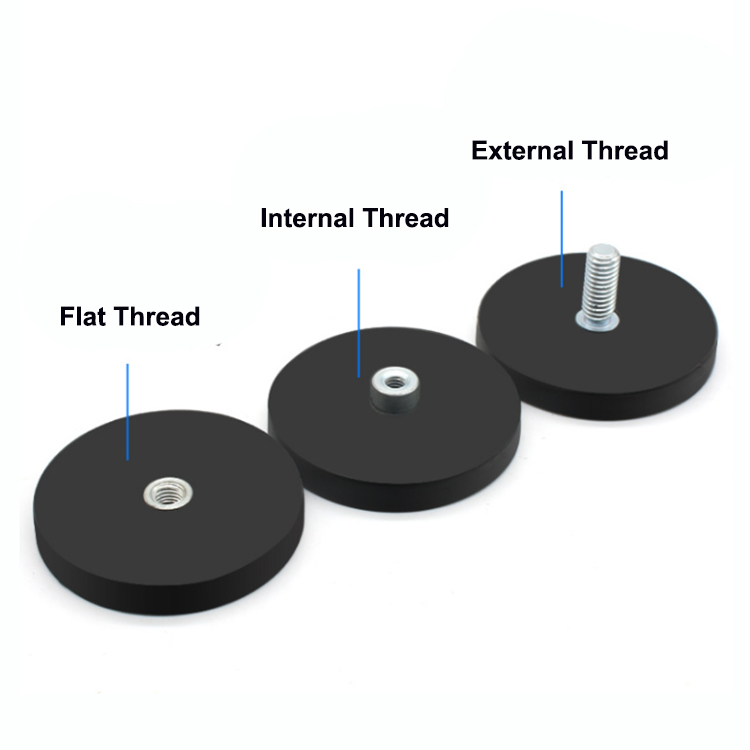
Rubber-coated magnets are magnets encased in a layer of rubber or elastomeric material, providing additional durability, grip, and protection. These magnets are commonly used in applications where a standard metal-coated magnet might be too brittle, slippery, or prone to scratching surfaces.
Key Benefits of Rubber-Coated Magnets:
Enhanced Durability – The rubber coating protects the magnet from impact, chipping, and cracking, making it ideal for rough environments.
Corrosion Resistance – The rubber layer shields the magnet from moisture and chemicals, preventing rust and degradation.
Non-Slip Grip – Unlike smooth metal coatings, rubber increases friction, helping the magnet stay in place on surfaces prone to movement or vibration.
Surface Protection – Rubber prevents scratches and damage to delicate surfaces, making it ideal for automotive, industrial, and consumer applications.
Weather Resistance – Many rubber-coated magnets can withstand outdoor conditions, making them suitable for marine, automotive, and signage applications.

Common Uses of Rubber-Coated Magnets:
Mounting and Holding Applications – Used in car mounts, tool holders, and sign attachments.
Automotive and Industrial Uses – Ideal for securing objects in vehicles or machinery without damaging surfaces.
Marine and Outdoor Applications – Provides rust protection for prolonged exposure to water and humidity.
Magnetic Bases and Hooks – Used where extra grip is needed to hold objects securely.
Magnet Types in Rubber Coating:
Typically, neodymium (NdFeB) or ferrite magnets are used inside rubber coatings, depending on the required strength and durability.
Rubber-coated magnets offer several benefits that make them ideal for various applications, from industrial use to consumer products. Here are the key advantages:
- Enhanced Durability
The rubber coating protects the magnet from impacts, chipping, and cracking, making it more durable than bare magnets.
Ideal for harsh environments where the magnet may experience mechanical stress.

- Resistência à corrosão
The rubber layer acts as a barrier against moisture, chemicals, and oxidation, preventing rust and degradation.
Perfect for outdoor, marine, and humid environments.
- Scratch Protection
Unlike metal-coated magnets, rubber-coated ones won’t scratch or damage surfaces.
Great for automotive, electronics, and delicate metal surfaces.
- Stronger Grip & Friction
The rubber increases friction, preventing magnets from sliding on smooth surfaces.
Useful for mounting applications, vehicle attachments, and signage.

- Weather & Temperature Resistance
Withstands exposure to water, UV rays, and temperature changes better than bare magnets.
Ideal for outdoor signage, automotive accessories, and industrial settings.
- Versatile Applications
Used in automotive, industrial, marine, DIY, and household applications.
Available in various forms like sheets, strips, hooks, and threaded magnets for different needs.
- Safer Handling
The rubber coating makes the magnet less sharp and easier to handle, reducing injury risk.
Useful in workshops, schools, and home applications.