




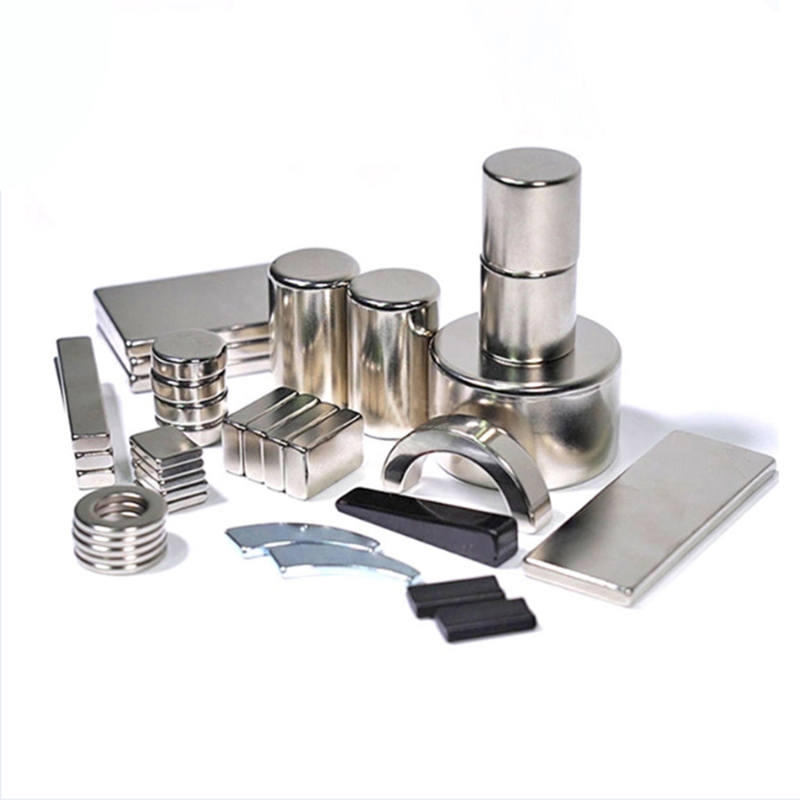
fusão de metais de terras raras
Os processos de hidrometalurgia e pirometalurgia são ambos utilizados para fundir as terras raras.
A maior parte de todo o processo na hidrometalurgia das terras raras é efectuada em solução e solvente. Por exemplo, as técnicas de separação química, como a extração por solventes e a permuta iónica, são utilizadas na decomposição de concentrados de terras raras, na separação de óxidos de terras raras, de compostos de terras raras e de metais de terras raras isolados. O método de extração por solventes orgânicos, um procedimento geral para a separação comercial de elementos únicos de terras raras de elevada pureza, é o mais frequentemente utilizado. O processo hidrometalúrgico é complexo, a pureza do produto é elevada e existem muitos artigos que podem ser produzidos utilizando esta técnica.
O rendimento é elevado e o processo pirometalúrgico é simples. Na fundição a fogo de terras raras, as ligas de terras raras são produzidas principalmente por redução térmica de silício, os metais ou ligas de terras raras são produzidos por eletrólise de sal fundido e as ligas de terras raras são produzidas por redução térmica de metais. A produção a altas temperaturas é um aspeto típico da pirometalurgia.
O método utilizado para produzir terras raras
Os dois principais produtos do sector das terras raras são o carbonato de terras raras e o cloreto de terras raras. Atualmente, estes dois produtos são produzidos principalmente através de dois métodos diferentes. O primeiro método é um método de torrefação com ácido sulfúrico concentrado, enquanto o segundo é o método da soda cáustica, também conhecido como método alcalino.
O método utilizado para produzir terras raras
Os dois principais produtos do sector das terras raras são o carbonato de terras raras e o cloreto de terras raras. Atualmente, estes dois produtos são produzidos principalmente através de dois métodos diferentes. O primeiro método é um método de torrefação com ácido sulfúrico concentrado, enquanto o segundo é o método da soda cáustica, também conhecido como método alcalino.
A significant portion of the rare earth elements in nature cohabit with apatite and phosphorite minerals in addition to different rare earth minerals. The estimated 100 billion tons of phosphate rock deposits that exist worldwide have an average rare earth concentration of 0.5. In the world, there are thought to be 50 million tons of rare earth related with phosphate rock. Due to the mine’s low rare earth content and unique occurrence state, numerous recycling processes have been researched both domestically and abroad. These processes can be divided into wet methods and thermal methods; in wet methods, the decomposition acid can be either nitric acid, hydrochloric acid, or sulfuric acid. Every type of rare earth recovery from the phosphorus chemical process is directly tied to the way that phosphate rock is processed. The rare earth recovery rate during thermal manufacturing might approach 60%.
It is now focusing on the development of low-quality phosphate rock due to the ongoing exploitation of phosphate rock deposits. The primary process used by the phosphorus chemical industry is the sulfuric acid wet-process phosphoric acid process. One area of inquiry now is the recovery of rare earth in phosphoric acid produced by wet processing of sulfuric acid. The procedure of managing the enrichment of rare earth in phosphoric acid and then utilizing organic solvents to extract rare earth is more favorable than the earlier discovered methods in the manufacturing of sulfuric acid wet-process phosphoric acid.
The method of obtaining rare earths
Solubility of sulfuric acid
Cerium group, which includes lanthanum, cerium, praseodymium, neodymium, and promethium and is rarely soluble in sulfuric acid double salt;
Samarium, Europium, Gadolinium, Terbium, Dysprosium, and a weakly soluble double salt of sulfuric acid comprise the Terbium group.
Separation by extraction
light rare earth elements such as lanthanum, cerium, praseodymium, neodymium, and promethium (P204 mild acidity extraction);
Samarium, europium, gadolinium, terbium, and dysprosium are among the middle rare earth elements (P204 low acidity extraction);
Heavy rare earth elements: holmium, yttrium, erbium, thulium, ytterbium, lutetium, and scandium (P204 acidity extraction).
Since many elements have extremely similar physical and chemical characteristics and since rare earth elements are frequently accompanied by impurity elements, the extraction procedure for rare earth elements is more difficult. Step method, ion exchange, and solvent extraction are the three most often utilized extraction techniques.
stepwise approach
A stepwise technique is a way of separating and purifying substances based on how differently they dissolve in different solvents. This technique is used to separate all naturally occurring rare earth elements, including the Curies’ discovery of radium, from yttrium (Y) through lutetium (Lu), in a single step. This method’s operational process is rather intricate. It has taken more than 100 years to separate all the rare earth elements once, and repeating processes have been performed 20,000 times. Work intensity and process complexity are both quite high for chemists. Therefore, using this approach does not allow for the mass production of a single rare earth.
Ion switching
The inability of the stepwise process to create a single rare earth in substantial quantities hampered research on rare earth elements. The ion exchange chromatography (Ion exchange technique) was successfully investigated and subsequently utilized for the separation of rare earth elements in order to assess the rare earth elements included in nuclear fission products and remove the rare earth elements in uranium and thorium. Multiple elements can be separated using the ion exchange approach in a single step. High-purity items can also be acquired. The fact that it cannot be processed continuously, the lengthy operating cycle, and the high cost of resin regeneration and exchange are its drawbacks.
As a result, the primary technique for separating significant quantities of rare earth has been abandoned in favor of solvent extraction. Law supplants. However, because ion exchange chromatography has the exceptional property of producing high-purity single rare earth products, it is currently necessary to separate and prepare a rare earth product by ion-exchange chromatography in order to prepare ultra-high purity single products and the separation of some heavy rare earth elements. vapor extraction
Organic solvent liquid-liquid extraction, or simply solvent extraction, is the process of employing organic solvents to extract and separate the extract from the immiscible aqueous solution. It is a technique for moving materials from one liquid phase to another during a mass transfer operation. Analytical, organic, pharmaceutical, and petrochemical chemistry have all used solvent extraction in the past. Solvent extraction, however, has achieved significant advancements in the nuclear fuel business, rare metallurgy, and other sectors during the past 40 years as a result of the advancements in atomic energy science and technology as well as the demand for the manufacture of ultra-pure materials and rare elements.
extractants, and the extraction procedure for separating rare earth elements. The solvent extraction method has a number of advantages over other separation techniques like fractional precipitation, fractional crystallization, and ion exchange including a good separation effect, large production capacity, practical rapid continuous production, and simple implementation of automatic control. As a result, it progressively replaces other methods as the primary way to separate rare earth.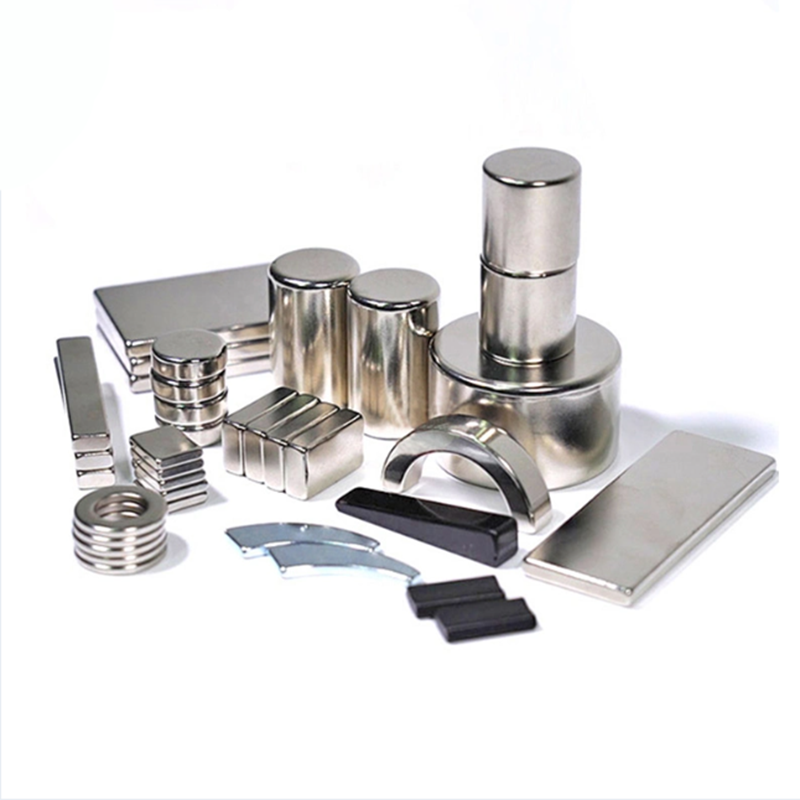
purification using rare earth
production input
Mixed rare earth metals and solitary rare earth metals are the two main categories of rare earth metals. The mixture of rare earth metals closely resembles the original composition of rare earth in the ore.
The metal that has been extracted and purified from each rare-earth is the single metal. Because of their high heat generation and stability, rare earth oxides (apart from samarium, europium, ytterbium, and thulium oxides) are challenging to convert into a single metal using conventional metallurgical techniques. As a result, the chlorides and fluorides of rare-earth metals are currently the most widely utilized raw materials for their synthesis.
Electrolysis of molten salt
Molten salt electrolysis is frequently used in the industrial bulk synthesis of mixed rare earth metals. Chloride electrolysis and oxide electrolysis are the two types of electrolysis. Depending on the element, different processes are used to create different rare earth metals. Due to their high vapor pressure, samarium, europium, ytterbium, and thulium are not suited for electrolytic preparation.
other elements can be created.
The most popular technique for producing metals is chloride electrolysis, particularly the mixed rare earth metal process, which is straightforward, inexpensive, and low-investment. However, the major drawback is the production of chlorine, which pollutes the environment. The cost of oxide electrolysis is somewhat greater, but it does not produce any hazardous gases. Neodymium and praseodymium, two single rare earths with greater manufacturing costs, are often electrolyzed with oxides.
decrease of vacuum
Only typical industrial grade rare earth metals can be produced using the electrolysis process. Rare earth metals are often manufactured through vacuum thermal reduction in order to produce products with minimal impurities and high purity.
where can i find neodymium magnet? Samarium, europium, ytterbium, and thulium, however, are unable to apply this technique. Rare earth fluoride is only partially reduced by the redox potential of samarium, europium, ytterbium, thulium, and calcium. Usually, the high vapor pressure of these metals and the low vapor pressure of lanthanum metal are used to manufacture these metals. These four different types of rare earth oxides are combined with lanthanum metal particles, crushed, and reduced in a vacuum furnace. Lively, lanthanum reduces samarium, europium, ytterbium, and thulium to metals, which are then gathered on the condensation and simple to separate from the slag.
Produtos relacionados