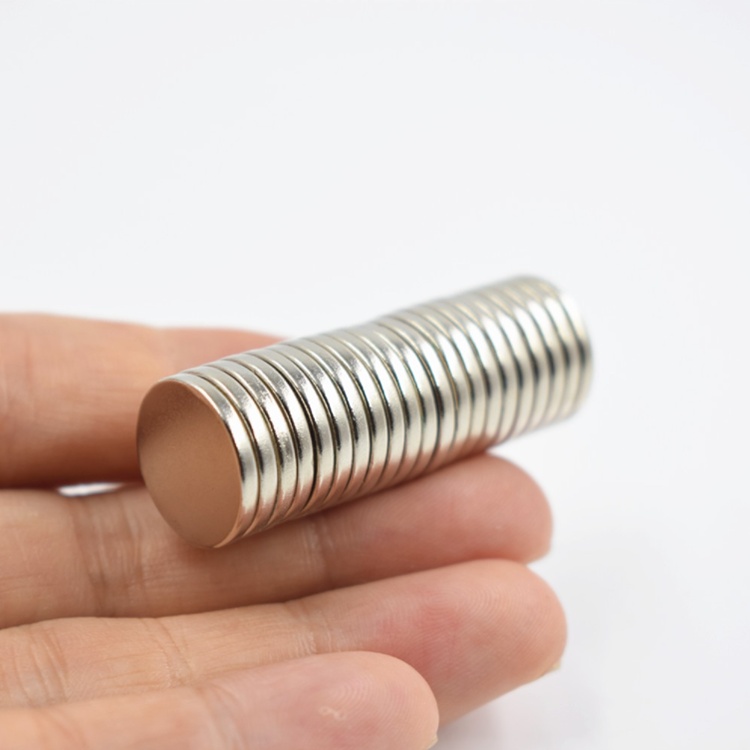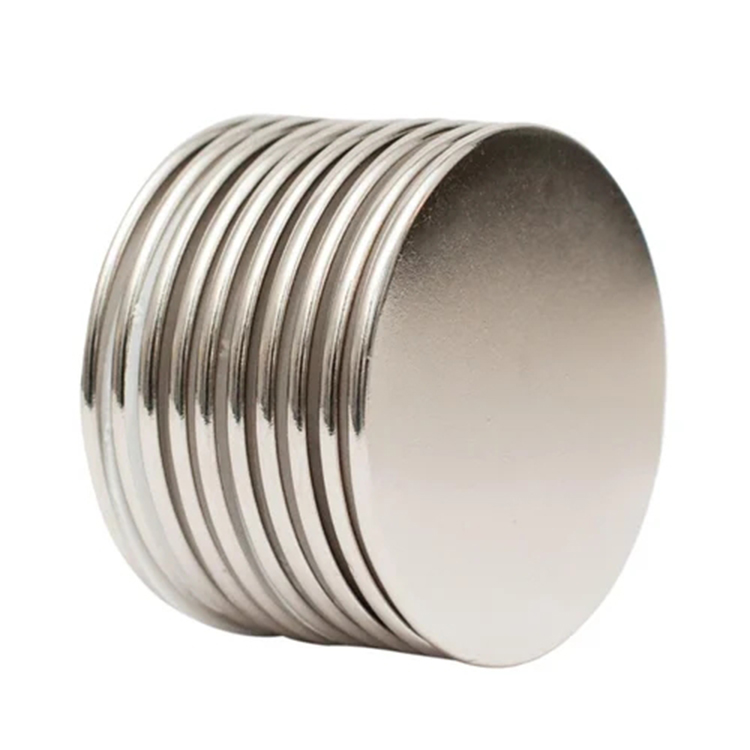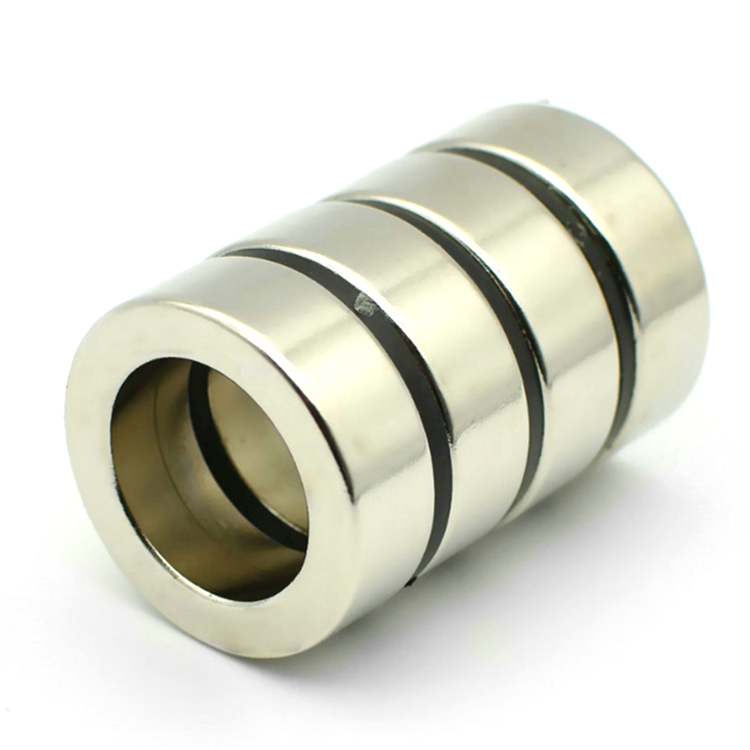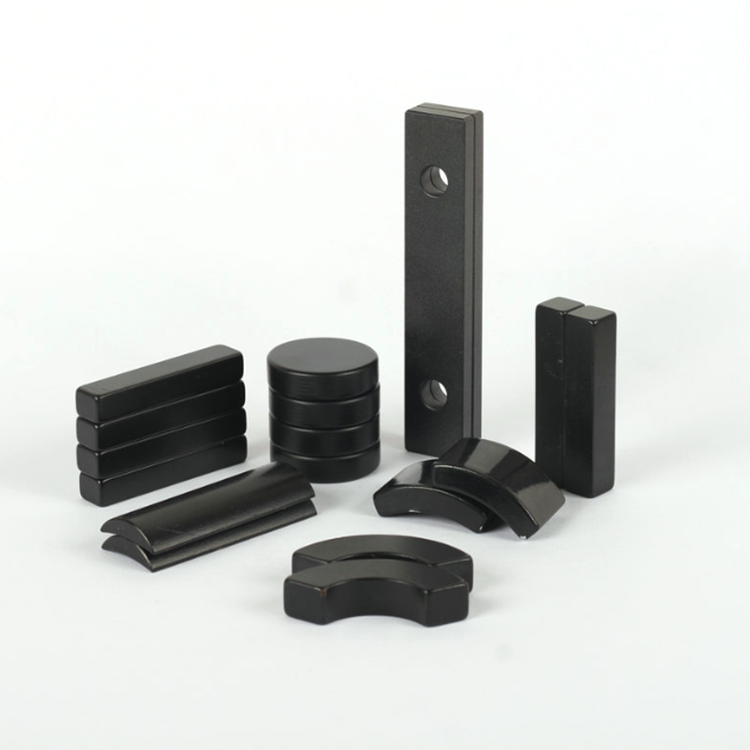



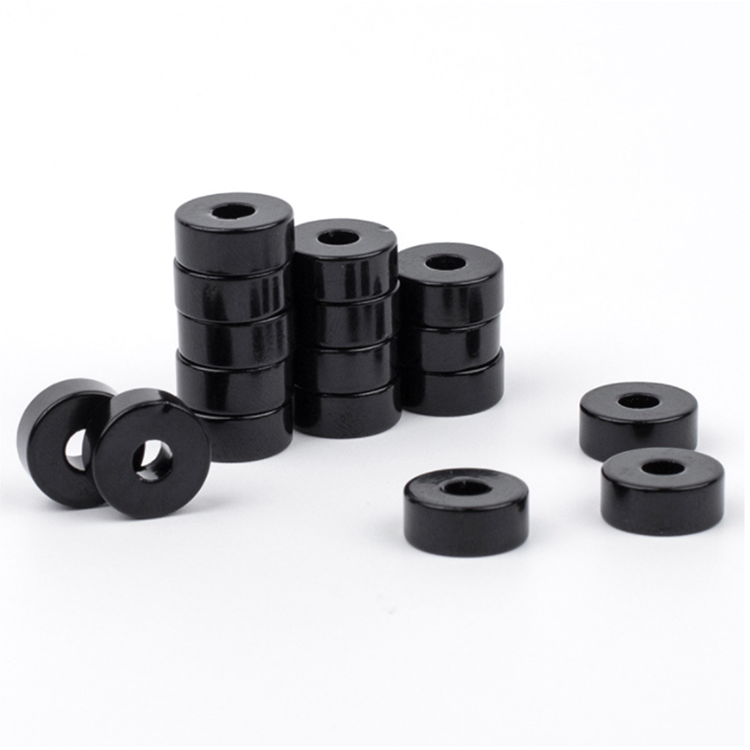
Bonded magnets appeared in the 1970s. At that time, SmCo had reached commercialization. The market situation of sintered NdFeB permanent magnets was very good, but it was difficult to precisely process them into special shapes, and they were prone to cracking, damage, There are problems such as falling edges and corners, and it is not easy to assemble, which limits its application. In order to solve this problem, the permanent magnet is crushed and mixed with plastic, and pressed in a magnetic field. This is probably the most primitive manufacturing method of bonded magnets. Bonded Nd-Fe-B magnets have been widely used due to the advantages of low cost, high dimensional accuracy, large degree of shape freedom, good mechanical strength, and light weight.
1. Processo de produção:
Bonded NdFeB is made of permanent magnet powder mixed with adhesive materials such as rubber or light-weight plastic, and is directly molded into permanent magnet parts of various shapes according to user requirements.
The preparation of magnetic powder is a key process for processing NdFeB permanent magnets, and the performance of magnetic powder directly affects the magnetic properties of permanent magnets. The methods for preparing Nd-Fe-B magnetic powder include mechanical crushing method, frit quenching method, HDDR method, gas spray method and mechanical alloying method. At present, the mainstream process adopts the HDDR method, which prepares high-performance rare earth permanent magnet powder through the process of hydrogenation-decomposition-dehydrogenation-recombination: firstly, the alloy is broken into coarse powder, put into a vacuum furnace, and crystallized at a certain temperature. The alloy absorbs hydrogen and undergoes a disproportionation reaction, and then extracts the hydrogen to recombine it into a rare earth permanent magnet powder with extremely small crystal grains. This method can obtain fine grains with an average particle size of 0.3 μm, thereby obtaining magnetic powder with high coercive force.
There are currently 4 processes for compression molding of bonded NdFeB: calendering, injection molding, extrusion and compression molding, among which calendering and injection are more mainstream.
1. Calendering is to uniformly mix the magnetic powder and the binder according to a certain volume ratio, roll it into the required thickness and then cure it to make the finished product. Generally, vinyl resin and nitrile rubber are used as the binder. The surface of the product needs Do plating protection.
2. Injection molding is to mix magnetic powder with binder (thermoplastic resin), heat and knead, granulate, dry, and then send it to the heating chamber for heating through a spiral guide rod, inject it into the mold cavity at a certain speed for molding, and cool After that, the finished product is obtained. Due to the high resin content, a protective film can be formed on the surface of the magnet. Generally, there is no need for surface anti-corrosion treatment, unless there is a high requirement for surface anti-corrosion ability.
3. Extrusion molding is basically the same as injection molding, the only difference is that the heated pellets are extruded into the mold through a cavity for continuous molding.
4. Compression molding is to mix the magnetic powder and binder according to the proportion, granulate and add a certain amount of coupling agent, press and form in the mold, and solidify at 120°~150° to finally get the finished product.
Product performance
Adding binder, the magnetic performance is lower than that of sintered NdFeB magnet: Bonded NdFeB magnet is to use binder to bond magnetic powder into a large magnet, and its density is generally only 80% of the theoretical one. The sintered NdFeB magnet is heated at high temperature through a complicated process, so in terms of magnetism, bonded NdFeB magnets are weaker than sintered NdFeB magnets.
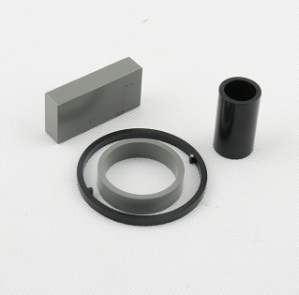
The product has high precision and great freedom of shape: sintered NdFeB is produced by powder sintering. Generally, only blanks can be produced after sintering, and then mechanical processing (such as wire cutting, slicing, grinding, etc.) can be made into various shaped magnets. Compared with sintered NdFeB permanent magnets, the production process of bonded NdFeB permanent magnets is simpler, without secondary processing, and its products have high dimensional accuracy and no deformation; at the same time, the shape has a large degree of freedom, and various shapes can be manufactured according to actual use needs Products, such as long strips, sheets, tubes, rings or other complex shapes, are easy to mass-automatically produce and have high mechanical strength.
Isotropic magnets, easy to magnetize in any direction: Bonded NdFeB magnets are isotropic magnets, with the same magnetic properties in all directions, so it is convenient to make multi-pole or even infinite-pole overall magnets, which is usually difficult to achieve for sintered magnets.
Product application
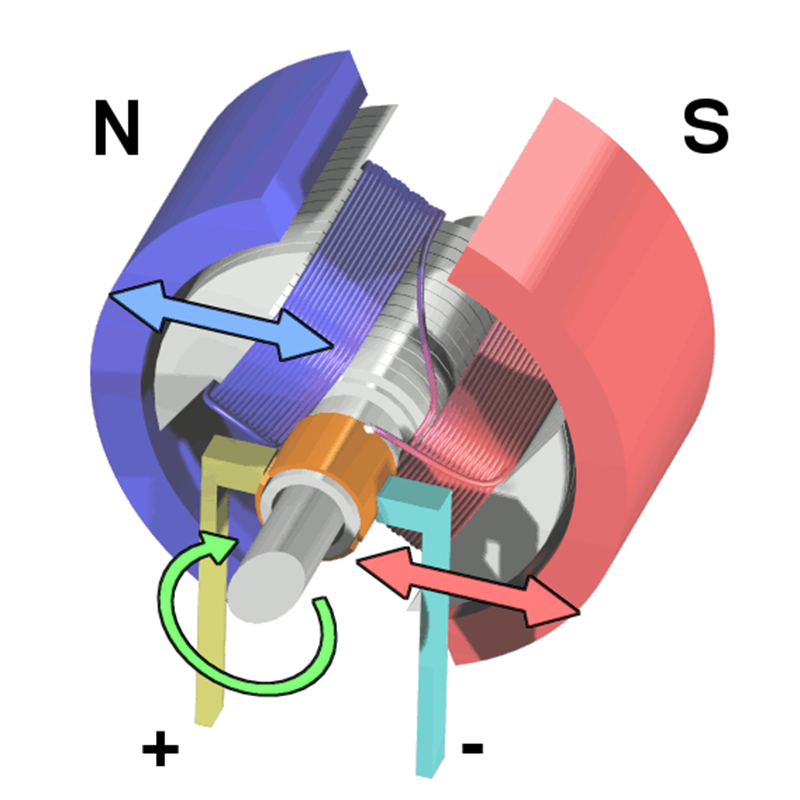
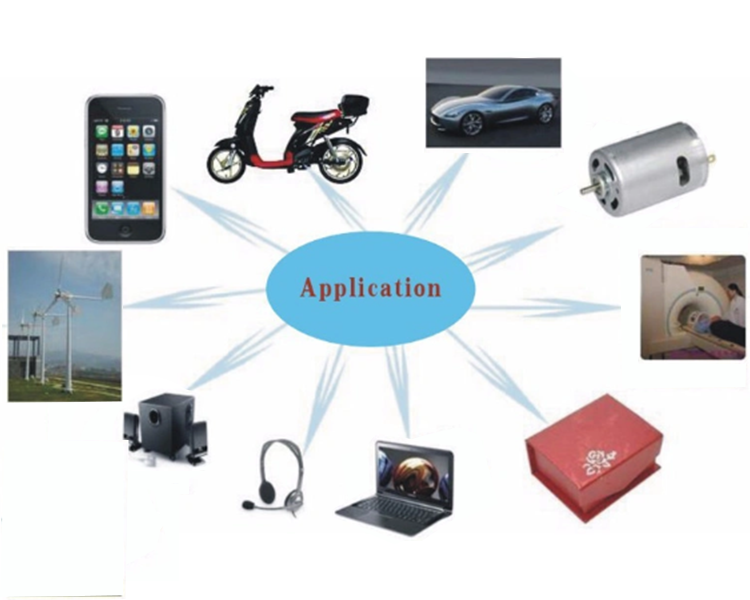
The magnetic performance of bonded NdFeB magnets is not as good as that of sintered NdFeB magnets, but it is easy to manufacture multi-stage magnetized ring magnets, with excellent performance consistency and uniformity, and it is easy to integrate with other metal or plastic parts , much higher than the magnetic properties of bonded ferrite, is widely used in various types of micro-motor and sensor systems. The specific uses of bonded NdFeB can be divided into:
Digital products: hard disk drive magnets (HDD) – this is currently the largest application area for bonded NdFeB
Office OA products: drive motors for printers, motors for scanners, synchronous feed motors (STP) for copiers, magnetic rollers for laser printers, etc.
Automotive motors and magnetic sensor products: including EPS power steering sensor magnets, wiper motors, window shaker motors, seat adjuster motors, etc.
Other types of industrial and household motors: mainly include various servo motors, electric tool motors, air-conditioning refrigeration motors, etc.
Due to the huge difference in magnetic properties and molding, the intersection of bonded NdFeB and sintered NdFeB is not large. Bonded NdFeB is mainly used in the fields of hard disk drive spindle motors and small power micro motors, while sintered NdFeB is more used in high power drive motors and other fields.
Hot pressed NdFeB
Hot-pressed NdFeB can achieve magnetic properties similar to those of sintered NdFeB without adding heavy rare earth elements. It has the advantages of high density, high orientation, good corrosion resistance, and high coercive force, but its mechanical properties are not as good as those of sintered NdFeB. Fortunately, due to patent monopoly and high processing costs, only GM, Japan’s Daido and Europe’s Delta have production technology in the market, and only Japan’s Daido can realize mass production of hot-pressed NdFeB products. In February 2018, Yinhe Magnet built the first hot-pressed NdFeB production line in China, with a production capacity of 300 tons per year, and mass production is expected soon.
The hot-pressed NdFeB permanent magnet material is prepared by hot-pressing or thermo-rheological technology. Firstly, according to a certain proportion of ingredients, the NdFeB quick-quenching method is used to prepare the NdFeB quick-quenching belt, and then it is crushed into powder with a certain particle size. Then, in an inert gas or vacuum environment, compact it at a certain temperature and press it into a blank. At this time, the product is an isotropic magnet blank; in an inert gas or vacuum environment, replace or change the mold, increase the temperature, and reprocess The isotropic magnet blank is subjected to thermal rheology to generate anisotropy, and an anisotropic magnet blank is obtained. Finally, the isotropic magnet blank or anisotropic magnet blank is machined and magnetized (magnetized) to obtain the final isotropic magnetic or anisotropic hot-pressed NdFeB permanent magnet material.
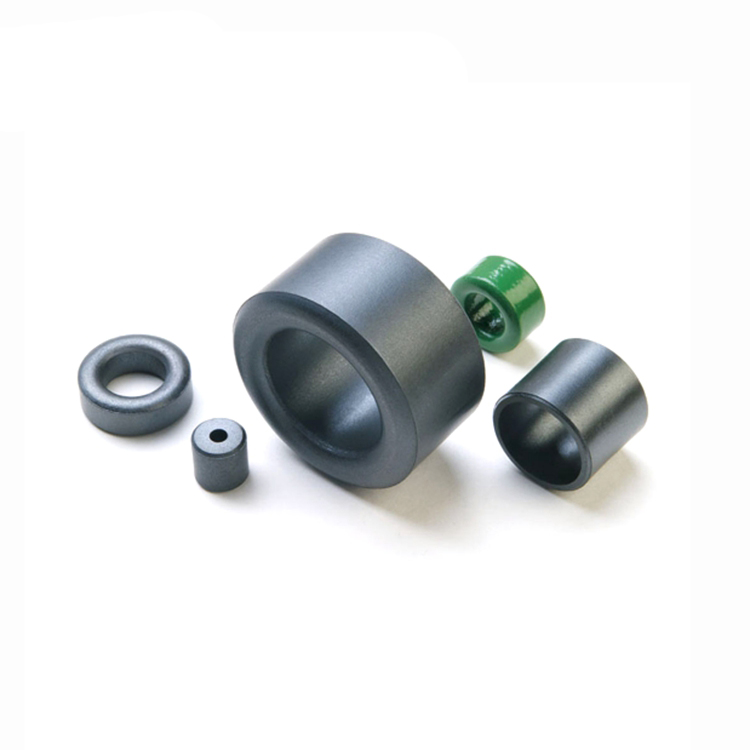
Due to the limitations of molding technology, hot-pressed NdFeB can only be made into rings at present, and the application range is limited to a certain extent. At present, it is mainly used in automotive EPS motors and other fields. The hot-pressed NdFeB magnet has high magnetic performance, the magnetic ring is oriented radially, and the radial magnetic performance is uniform, which can make the motor run quietly and the torque output is smooth.
The replacement of sintering by hot pressing is mainly concentrated in the field of high-performance NdFeB with low dysprosium and high coercivity. This is the most profitable part of sintered NdFeB enterprises. Sintered NdFeB enterprises need to race against time and carry out technological upgrades. Including new processes represented by dysprosium and PLP.
Sintering, bonding, and hot-pressing NdFeB have their own advantages
Sintered NdFeB
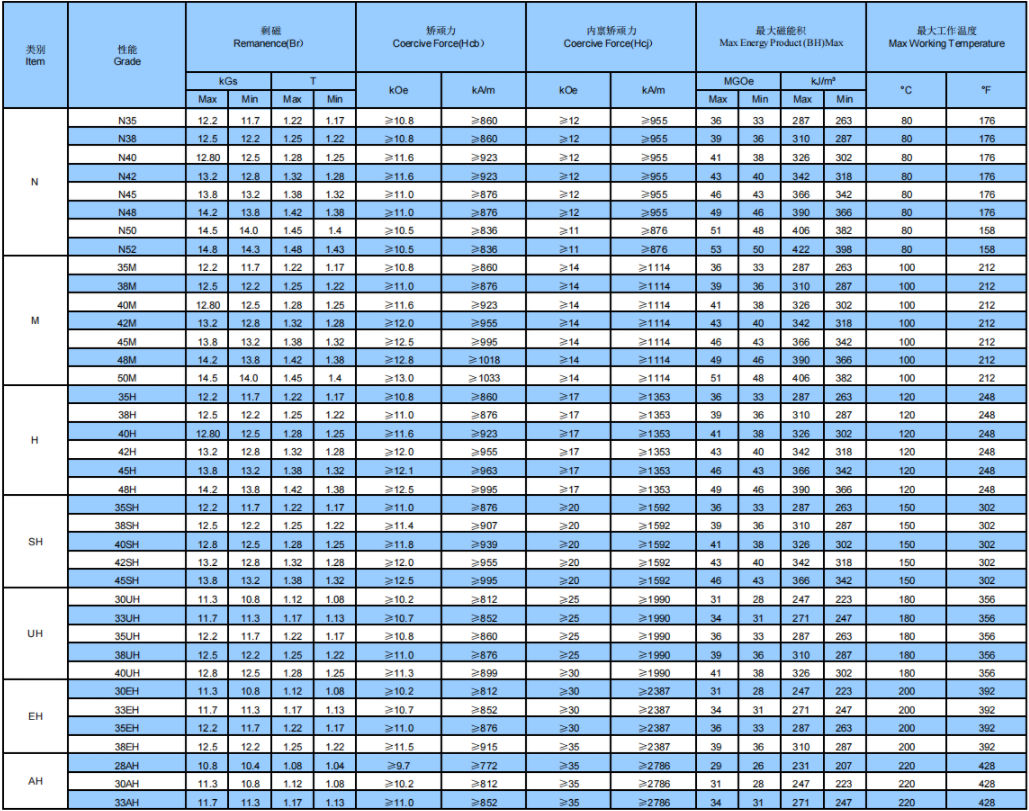
Advantages: extremely high magnetic performance, it is the magnetic material with the largest magnetic performance at present, and the maximum magnetic energy product is as high as 55MGOe (N54).
Disadvantages: In order to adapt to the high temperature working environment, some grades of sintered NdFeB will add medium and heavy rare earth dysprosium and terbium to improve the intrinsic coercive force and working temperature of the magnet, but this will lead to higher unit cost of the product; preparation The process is complicated (sintered into a blank first and then machined), the loss in the processing process is high, and the yield is affected.
Bonded NdFeB
Advantages: The product has high dimensional accuracy and flexible shape; it does not contain medium and heavy rare earths, and the unit cost is low; it is directly formed, and the loss during processing is low.
Disadvantages: low magnetic properties, the current product maximum energy product is about 12MGOe; intrinsic coercive force and low working temperature.
Hot pressed NdFeB
Advantages: In the case of basically not using medium and heavy rare earths, it can achieve extremely high magnetic properties. At present, the maximum magnetic energy product of the product can reach 43MGOe; the loss in the processing process is low.
Disadvantages: At present, it can only be made into a ring shape, which greatly limits the application range of hot-pressed NdFeB; due to the high technical barriers of hot-pressed NdFeB, currently only Japan’s Daido Electronics has achieved mass production in the world, and its monopoly makes its price high .
There is currently little crossover between the three in application
Hot-pressed most magnetic materials can only be made into a ring shape, which limits its application range. At present, it is mainly used in the field of automotive EPS motors; even considering the rapid growth of hot-pressed NdFeB in the automotive EPS market and the demand for sintered NdFeB Compared with sintered NdFeB, the hot-pressed NdFeB market is extremely small, so the impact on the growth rate of sintered NdFeB demand is relatively small.
Due to the huge difference in magnetic properties and molding, the intersection of bonded and sintered NdFeB is not large. Bonded NdFeB is mainly used in the fields of hard disk drive spindle motors and small power micro motors. Sintered NdFeB Iron boron is more used in fields such as driving motors with higher power.
Produtos relacionados