






Neodymium Permanent Magnets
Neodymium permanent magnets are generally used as magnetic field sources to provide a constant magnetic field within a certain space. For some precision instruments and magnetic devices, the stability of the magnet’s magnetic field is crucial, as it directly affects the accuracy and reliability of the instrument.
1. Stability of permanent magnets
The external conditions that cause changes in magnetic properties include temperature, time, electromagnetic field, mechanical vibration or impact, radiation, chemical action, etc. Correspondingly, the stability of magnets includes performance requirements in terms of temperature stability, time stability, vibration and impact stability, electromagnetic field stability and chemical stability. neodymium permanent magnets are generally described by the change in magnet performance parameters (such as the percentage change of remanence for every 1°C increase in temperature, and the annual decay of remanence at room temperature).
As alterações nas propriedades magnéticas causadas por mudanças nas condições ambientais são principalmente em dois aspectos:
The changes in magnetic properties caused by changes in magnetic domain structure (also called magnetic aging), this change is reversible, when the neodymium permanent magnets are magnetized or magnetized again, most of the magnet’s performance can be restored.
The changes in magnetic properties caused by changes in the microstructure of the magnet (also called tissue aging), this change is irreversible, when the neodymium permanent magnets are magnetized or magnetized again, the magnet’s performance cannot be restored.
The changes in magnetic properties of neodymium permanent magnets caused by any changes in environmental conditions include magnetic aging and tissue aging.
Different environmental conditions for the use of magnets require different performance stability. For example, neodymium permanent magnets used in spacecraft generally focus on performance stability under vibration and impact conditions, and also require stability under radiation, temperature and time conditions; neodymium permanent magnets that work in acid and alkaline environments generally require chemical stability; and in places where the working environment temperature changes, attention is paid to whether the magnet has temperature stability.
2. Temperature stability of permanent magnets
Instruments and equipment made of permanent magnetic materials generally cannot work at a constant temperature, and changes in ambient temperature have a direct impact on the magnetic properties of neodymium permanent magnets. In order to make the instruments and equipment work normally when the temperature changes, it is necessary to know the change in the magnetic properties of the magnet with temperature when designing the magnetic circuit.
A fim de refletir quantitativamente a influência da temperatura no desempenho dos ímanes, foram definidos alguns parâmetros de estabilidade térmica relacionados com a temperatura ambiente, tais como o coeficiente de temperatura de remanência αBr, o coeficiente de temperatura de coercividade intrínseca αHcJ, a perda reversível Lrev e a perda irreversível Lirr da densidade do fluxo magnético em circuito aberto, o coeficiente de temperatura reversível da densidade do fluxo magnético em circuito aberto, a temperatura resistente ao calor ou a temperatura máxima de funcionamento contínuo Tm, etc.
Among them, the remanence temperature coefficient αBr and the intrinsic coercivity temperature coefficient αHcJ are one of the performance indicators that commercial permanent magnets must provide.
Coeficiente de temperatura de remanência e coeficiente de temperatura de coercividade intrínseca
As the name implies, the temperature coefficient is the relative rate of change of a physical quantity with temperature. From the reference temperature T0 to a certain high temperature T, the definitions of the remanence temperature coefficient and the intrinsic coercivity temperature coefficient are as follows, in units of %/℃.

Among them, Br(T) and Br(T0) are the remanence at temperature T and reference temperature T0 respectively (same for HcJ). Usually room temperature or 20℃ is selected as T0, and the value of high temperature T needs to be determined by both the supply and demand parties according to the use environment. If αBr is positive neodymium permanent magnets, it means that the remanence increases with increasing temperature; if it is negative, it means that the remanence decreases with increasing temperature.
The figure below is the reference value of the remanence temperature coefficient and intrinsic coercive force temperature coefficient of each brand of permanent magnets in the national standard for sintered NdFeB neodymium permanent magnets materials (GB/T 13560-2017).

Coeficiente de temperatura reversível
Magnets usually work in an open circuit state with an air gap. The characteristics of open circuit remanence (or open circuit flux) changing with temperature are more practical. When the ambient temperature rises from room temperature T0 to a given temperature T1, the open circuit flux drops from B(T0) to B(T1) neodymium permanent magnets.
If the temperature returns to room temperature T0, the open circuit flux will generally return to a value of B`(T0) that is lower than B(T0), as shown in the figure below. Experiments have shown that when the temperature changes repeatedly between T0 and T1 and ΔT is not very large, the change of B is linear and reversible, that is, the PB`(T0) line in the figure below neodymium permanent magnets.

Durante todo o processo de aquecimento, a perda total de fluxo da temperatura ambiente para a temperatura elevada é hT=(B(T1)- B(T0))/B(T0)×100%, que pode ser decomposta em duas partes: perda de fluxo reversível hrev=(B(T1)-B`(T0))/B`(T0)×100% e perda de fluxo irreversível hirr=(B`(T0)- B(T0))/B(T0)×100%.
A partir da linha PB`(T0), pode ver-se que, quando a temperatura varia entre T0 e T1, a variação de B é linear. A perda reversível média do fluxo em circuito aberto é expressa pelo coeficiente de temperatura reversível α.

In the big concept of temperature coefficient, special attention should be paid to distinguishing the differences between the small concepts of temperature coefficient, reversible temperature coefficient and irreversible temperature coefficient neodymium permanent magnets.
Aging treatment can significantly reduce hT, hirr, hrev and α. Aging treatment (heating at a certain temperature for a period of time) of permanent magnets before use or testing can eliminate the unstable structure of the magnet. The temperature and time of the aging treatment need to be determined according to the type and purpose of the neodymium permanent magnets.
The reversible temperature coefficient αB (T) or the remanence temperature coefficient αBr (T) depends on the intrinsic magnetism of the material. By adding some elements, the relationship between the saturation magnetization intensity of the main magnetic phase and temperature can be changed, which can change the temperature coefficient of the magnet. For example, replacing part of Fe with Co in NdFeB magnets can significantly increase the Curie temperature of the main phase; replacing part of Nd with Dy, αB (T) will also be improved. Click on the role of dysprosium, terbium, gadolinium, holmium and other elements to learn more.
These terms relate to how the magnetic properties of materials change with temperature, particularly for permanent magnets like neodymium magnets. Let’s define each term:
1. **Remanence Temperature Coefficient**: Remanence refers to the magnetic flux density remaining in a magnetized material after the magnetic field is removed. The remanence temperature coefficient (often denoted as α_Br or α_r) measures how the remanent magnetic flux density (Br) changes with temperature neodymium permanent magnets. It quantifies the rate of change of the magnetic field strength that remains in the material after the magnetizing field is removed, as the temperature changes.
– A positive remanence temperature coefficient means that the remanent magnetic flux density increases with temperature.
– A negative coefficient means that the remanent magnetic flux density decreases with temperature neodymium permanent magnets.
– The coefficient helps engineers and scientists understand how stable the magnet’s remanence is over a range of temperatures, which is crucial for applications where consistent magnetic performance is required.
2. **Coercivity Temperature Coefficient**: Coercivity is the measure of the resistance of a material to becoming demagnetized. The coercivity temperature coefficient (often denoted as α_Hc) measures how the coercive force (Hc) changes with temperature.
– A positive coercivity temperature coefficient means that the coercive force increases with temperature, indicating better stability against demagnetization.
– A negative coefficient means that the coercive force decreases with temperature, indicating reduced stability against demagnetization neodymium permanent magnets.
– This coefficient is important in applications where the magnet’s ability to resist demagnetization is critical, such as in electric motors and generators.
3. **Reversible Temperature Coefficient**: The reversible temperature coefficient (often denoted as α_rev) refers to the rate of change of the intrinsic coercivity (Hci) with temperature. Intrinsic coercivity measures the resistance of a material to demagnetization due to its own inherent properties, independent of the magnet’s shape or size.
– A positive reversible temperature coefficient means that the intrinsic coercivity increases with temperature.
– A negative coefficient means that the intrinsic coercivity decreases with temperature.
– This coefficient is particularly important in understanding how the magnetic properties of the material itself (not influenced by external factors like magnet shape) change with temperature.
These coefficients are critical for designing and selecting materials for magnets used in various applications, ensuring their performance remains stable across different temperature environments neodymium permanent magnets. For neodymium magnets, which are widely used in high-performance applications, understanding these temperature coefficients helps engineers optimize their use and reliability.
Neodymium magnets are a type of rare-earth magnet known for their incredible strength. Here are some key points about neodymium permanent magnets:
Composition: Neodymium magnets are made primarily of neodymium (Nd), iron (Fe), and boron (B). These elements together create a very strong magnetic field relative to their size.
Strength: They are the strongest type of permanent magnets commercially available, exceeding even the strength of samarium cobalt magnets.
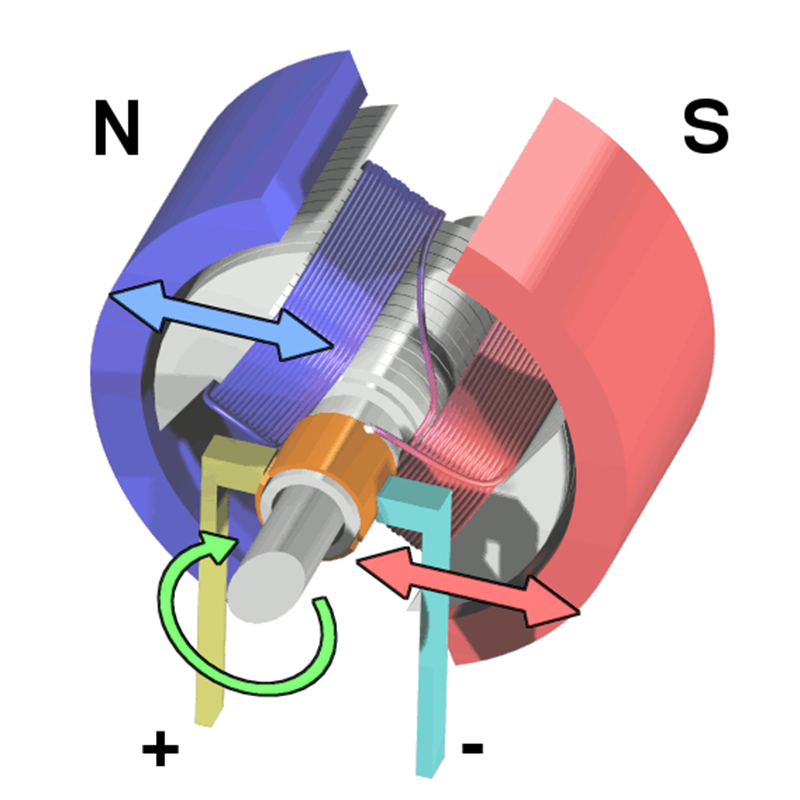
Applications: Due to their strength, neodymium magnets are used in a wide variety of applications:
Electric motors (especially in electric vehicles)
Máquinas de imagiologia por ressonância magnética (MRI)
Separadores magnéticos
Magnetic resonance spectrometers
Head actuators for computer hard disks
Audio equipment (such as microphones and speakers)
Magnetic bearings and couplings
Magnetic therapy products
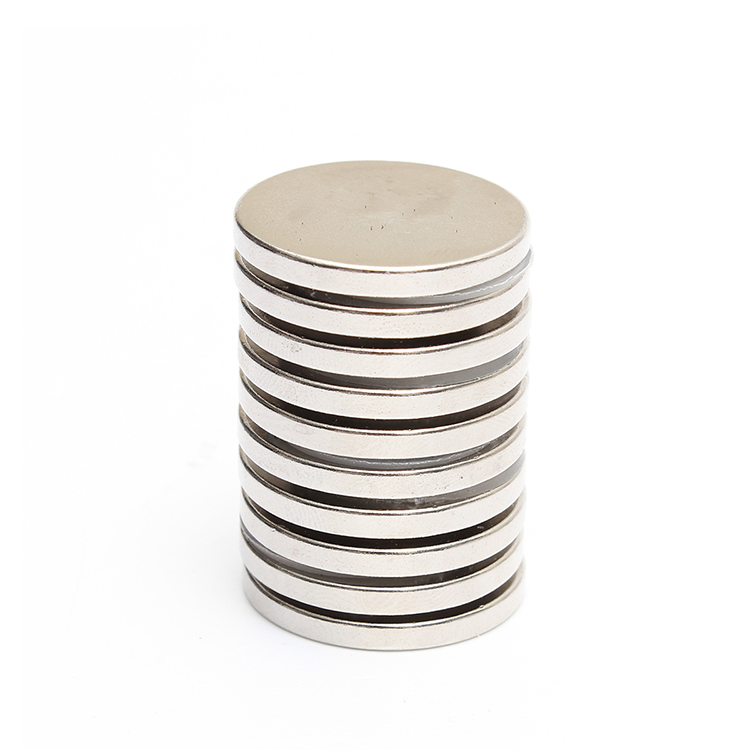
Shapes and Sizes: Neodymium magnets come in various shapes and sizes, including discs, blocks, rings, and spheres. They can be custom-made to fit specific industrial or consumer needs.
Coatings: To protect against corrosion and to provide a smooth surface, neodymium magnets are often coated with nickel, copper, or a combination of nickel and copper.
Handling Precautions: Due to their strength, neodymium magnets can attract each other with considerable force and are brittle, so they can chip or shatter if mishandled. Careful handling is necessary, especially with larger magnets.
Environmental Impact: Mining and processing neodymium can have environmental implications, especially due to the extraction of rare-earth elements and the chemicals involved in the process. Recycling neodymium magnets is important to reduce environmental impact.
Overall, neodymium magnets are crucial components in many modern technologies due to their exceptional magnetic properties, despite some challenges in their production and handling.