


Neodymium magnets vs. ferrite magnets: which is better?
If you’re looking to buy magnets online, you’ll quickly discover that they come in many different materials and alloys. Neodymium and ferrite magnets are the most common, but you can also find alnico, samarium cobalt, and neodymium magnets in many different grades (N35, N42, N54, etc.).
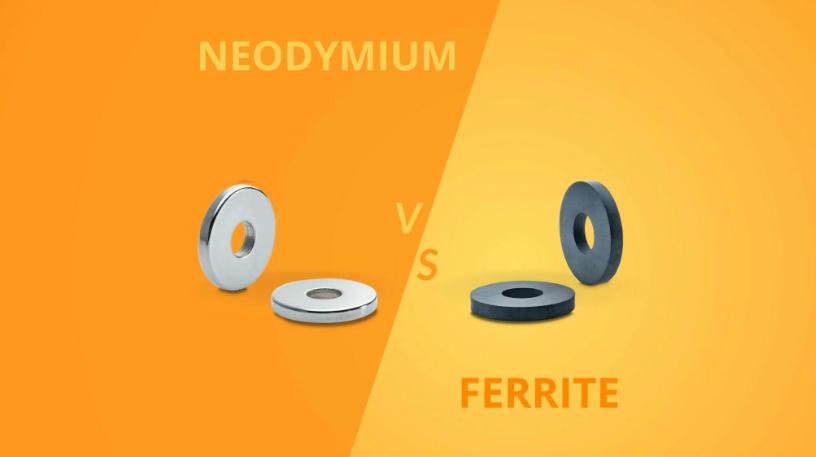
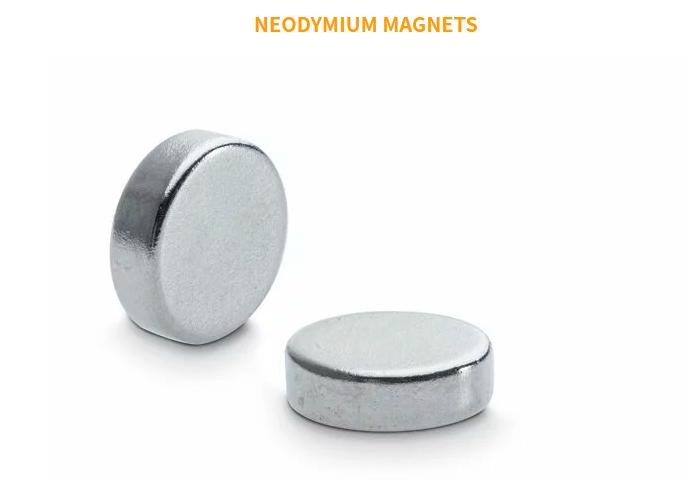
Ímanes de neodímio were first developed in 1982. Their main components are neodymium, iron, and boron; this compound is known as NdFeB. Neodymium magnets are the strongest magnets available on the market. In fact, they are 10 times more powerful than comparably sized ferrite magnets! The main advantages of neodymium magnets are their cost-effectiveness and excellent mechanical properties.
Neodymium magnets are very brittle and must be handled with care.
A disadvantage is their relatively low maximum heat resistance, reaching only 80°C for standard models and up to 200°C for specialized models.
Ferrite is Japan’s oldest magnetic material, invented in 1930 by Dr. Kato Yogoro and Dr. Takei Takeshi of the Tokyo Institute of Technology.
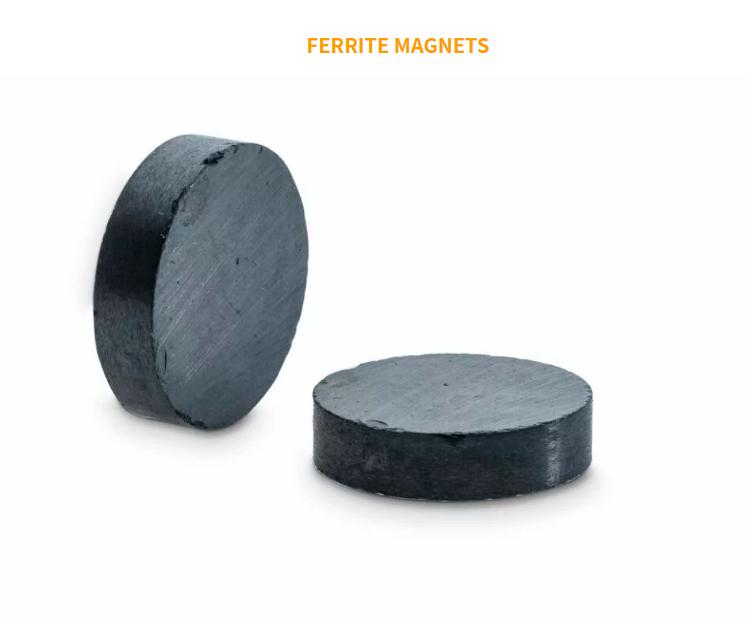
Ímanes de ferrite, also known as ceramic magnets, are permanent magnets made from the compound “ferrite,” which consists of a ceramic material and iron oxide (Fe2O3). Its chemical composition is SrO-6(Fe2O3). These magnets do not adhere as well as neodymium magnets, but they can withstand higher temperatures, such as 250°C.
Another important characteristic of ferrite is its ease of magnetization and resistance to demagnetization by external magnetic fields. Last but not least, all ferrite magnets are extremely corrosion-resistant and require no additional protective coating, whereas neodymium magnets are susceptible to rust.
Neodymium Magnets vs. Ferrite Magnets
Advantages of Neodymium Magnets
The strongest material on the market.
Optimally suited for delivering extremely high power in a small size.
A wide range of coating options makes them easily customizable and adaptable to technical or aesthetic needs.
Disadvantages of Neodymium Magnets
Higher price and frequent price fluctuations.
Standard models have a maximum temperature resistance of only 80°C.
Susceptible to corrosion when exposed to moisture.
Advantages of Ferrites
Lower price and less price fluctuations.
Can withstand temperatures up to 250°C.
Ferrites are chemically resistant and suitable for outdoor use.
Disadvantages of Ferrites
Poor adhesion.
Difficult to use in decorative applications and integrate into interior designs.
Ferrite magnets can still demagnetize when in contact with stronger neodymium magnets!
Frequently Asked Questions and Summary about Neodymium and Ferrite Magnets
Which Magnet Has the Strongest Magnetic Force?
Neodymium magnets are the strongest common magnets available. They are stronger than ferrite magnets, but also more expensive. Neodymium magnets range in strength from N28 to N55.
What do the N28, N30, N35, N38, N40, N42, N48, N50, N52, and N55 labels on neodymium magnets represent?
The letter N in a neodymium magnet is followed by a number (usually 28 to 55) that indicates the magnet’s strength (magnetic intensity), which relates to the magnetic flux output per unit volume. The higher the number, the stronger the magnetism. For reference, a small N45 3 x 2mm neodymium magnet sheet has a holding force of 0.18 kg, while an N48 has a holding force of 0.25 kg (39% higher!!!).
Which magnets are more heat-resistant?
Ferrite magnets are the preferred solution for heat resistance. They can withstand temperatures up to 180°C without compromising their magnetic force or durability.
Neodymium magnets perform well at room temperature, but their performance degrades as temperatures rise. Beyond the 100°C threshold, their holding power drops dramatically, reaching a limit of 320°C where they fail completely. Special alloys are available to mitigate this degradation, though they are expensive and designed for specialized applications. Neodymium magnets exposed to temperatures above 80°C suffer permanent performance loss, as do standard ferrite magnets, but to a lesser extent, but only at temperatures above 180°C. Specialized alnico and samarium magnets can withstand even higher temperatures, reaching 525°C and 650°C, respectively.
Which magnets are more corrosion-resistant?
Ferrite magnets are very corrosion-resistant. They are made of iron oxide, so they won’t corrode even when immersed in water. Neodymium magnets, on the other hand, are more susceptible to corrosion. To prevent magnets from aging, a protective coating can be added, typically nickel or copper-nickel plating, or a plastic polymer coating.
Which magnets are the cheapest?
Ferrite magnets are the cheaper option among commercial magnets. Neodymium magnets are more expensive (but also stronger), primarily due to their rare earth element composition and manufacturing process. For reference, a 40x20x10 mm block of neodymium N35 nickel-plated magnet costs 5 euros, while a ferrite magnet of the same size costs less than 1 euro.
Should I buy ferrite or neodymium magnets?
It all depends on your needs. Neodymium magnets have a shiny, smooth, metallic appearance. They have stronger magnetic force, but are also more expensive. Furthermore, they are more susceptible to corrosion, oxidation, and high temperatures.
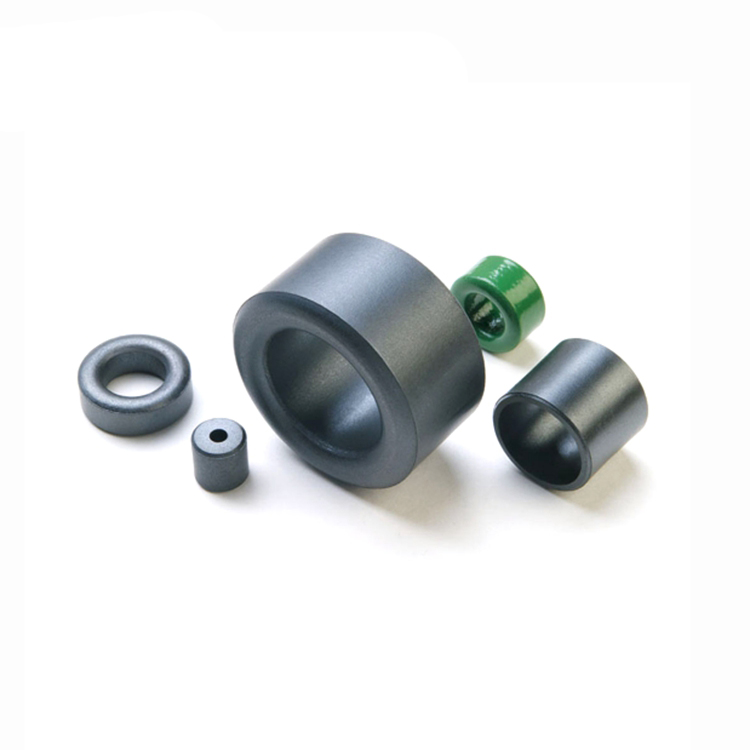
Ferrite magnets are darker and unpolished. They are the cheapest commercial magnets and offer excellent heat and corrosion
Block magnets are one of ALB Magnets’ most popular and versatile magnets.
Compared to disc magnets of the same thickness, block magnets have a larger surface area and stronger magnetic force—our block magnets range in strength from 0.6 lbs to approximately 1,082 lbs! We also sell a variety of countersunk block magnets with holes so you can attach them to other materials with screws, nails, or bolts.
Home Organization
Magnetic Storage Racks
Magnetic storage racks can be used to display and store a variety of items, from knives and other metal cookware, spices, keys, bathroom items, tools in the garage or shed, certain toys, and even clutter in drawers.
Magnetic storage racks can solve many of your home’s storage problems.
Cabinet Locks
We’ve prepared a simple DIY tutorial on how to make magnetic locks for your cabinets.
Whether in the kitchen, bathroom, or studio, these locks prevent cabinet doors from opening on their own and provide resistance when children are around, preventing them from accessing areas where hazardous chemicals or tools may be stored.
With just five materials (a drill, a screwdriver, a pencil, screws, and a 1″ x 1/2″ x 1/8″ NdFeB countersunk block magnet), you can transform your home!
50x25x12mm Rectangular Strong NdFeB Magnet n52
Demonstrations and Fun
Diameter Levitation Demonstration
Learn how to levitate pyrolytic graphite using NdFeB magnets in the third demonstration in this post! This simple demonstration uses only four 1″ x 1″ x 1/2″ block magnets and pyrolytic graphite, both available from ALBMagnets.
Simply arrange four block magnets of equal diameter as shown in the video and place a thin layer of graphite on top.
The smaller the graphite flake, the higher it will levitate above the magnets.
Levitating Model Train Track
Build your own magnetically levitated train and track with this instructable! While this demonstration doesn’t quite replicate the same technology as maglev trains, it utilizes the repulsive magnetic field of a permanent block magnet to give you an idea of the concept.
Geocaching Activity
Geocaching is a fun outdoor activity for both children and adults.
You can use a 4mmx2mmx1mm block magnet to hide smaller caches in various locations, such as the back of a stop sign or on a metal bench, and use a metal container with a magnet attached.
If your container is plastic, you can glue a magnet to it and then attach it to the metal cache.
Be sure to choose a block magnet with enough pulling force to support the weight of the cache!