






Halbach Magnet Array
Halbach magnet array is a special arrangement of permanent magnets that creates a strong and uniform magnetic field on one side while minimizing the magnetic field on the other side. It was invented by physicist Klaus Halbach in the 1980s.
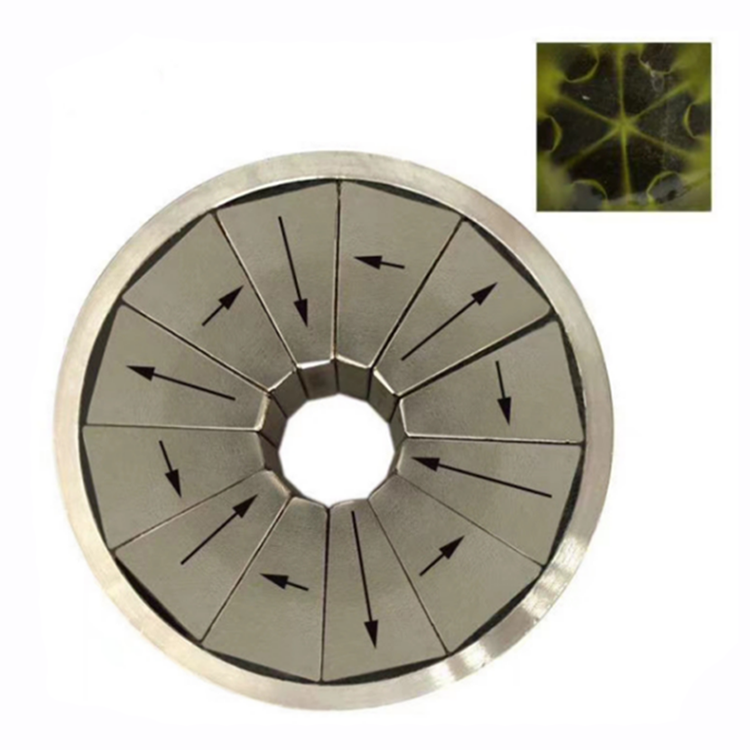
In a Halbach array, the magnetic field is concentrated on one side and canceled out on the other side due to the arrangement of the halbach magnet arrays. This is achieved by arranging the magnets in a specific pattern where the magnetic moments of adjacent magnets are oriented in such a way that they reinforce each other on one side and cancel each other out on the other side.
Halbach arrays find applications in various fields including magnetic levitation systems, particle accelerators, magnetic bearings, magnetic resonance imaging (MRI) machines, and more. They are particularly useful in situations where a strong and uniform magnetic field is required on one side while minimizing the magnetic field on the other side, such as in MRI machines where the patient needs to be exposed to a strong magnetic field while minimizing exposure for the operator or surrounding environment.
The annular Halbach array is a specially shaped magnet structure. Its design idea is to combine multiple magnets with the same shape and different magnetization directions into a circular ring magnet to enhance the uniformity and stability of the magnetic field on the working surface or center halbach magnet array. sex.
The halbach magnet array motor using the Halbach array structure has an air gap magnetic field that is closer to a sinusoidal distribution than the traditional permanent magnet motor. When the amount of permanent magnet material is the same, the Halbach permanent magnet motor has a higher air gap magnetic density and smaller iron loss. In addition, Halbach circular array is also widely used in permanent magnetic bearings, magnetic refrigeration equipment, magnetic resonance and other equipment.

Ring-shaped Halbach magnet arrays offer the following advantages:
1. Powerful magnetic field: Ring-shaped halbach magnet array magnets adopt a ring-shaped magnet design, which allows the magnetic field to be concentrated and focused throughout the entire ring structure. Compared with ordinary magnets, ring magnets can produce a higher intensity magnetic field.
2. Space saving: The ring structure of the ring Halbach magnet allows the magnetic field to loop in a closed ring path, thereby reducing the space occupied by the magnet. This makes ring magnets more convenient to install and use in some situations.
3. Uniform magnetic field distribution: Due to the special design structure of the ring-shaped halbach magnet array, the magnetic field is distributed relatively uniformly in the circular path. This means that when using ring magnets, the intensity of the magnetic field changes relatively little, which is beneficial to improving the stability of the magnetic field.
4. Multi-polar magnetic field: The design of the ring-shaped halbach magnet array can generate multi-polar magnetic fields, allowing more complex magnetic field configurations to be achieved in specific application scenarios. This provides greater flexibility and operability for experiments and applications with special needs.
5. Energy saving and environmental protection: The design materials of ring-shaped halbach magnet array usually use materials with high energy conversion efficiency. At the same time, the waste of energy can also be reduced through reasonable design and optimization of the magnetic circuit structure to achieve the purpose of energy saving and environmental protection.

Under traditional technology, various types of halbach magnet array are mostly pre-magnetized and then assembled when used in applications. However, due to the changeable force directions between the permanent halbach magnet array of the Halbach permanent magnet array and high assembly accuracy, the permanent magnets after pre-magnetization are Magnets often require special molds during assembly.
The overall magnetization technology adopts the method of assembly first and then magnetization. The permanent magnets are non-magnetic during assembly, and the halbach magnet array can be assembled without custom molds.
At the same time, the overall magnetization technology can also improve magnetization efficiency, reduce energy costs and Reducing assembly risks has broad application prospects. However, due to the technical difficulty, it is still in the exploratory stage. The mainstream of the market is still produced by pre-magnetization and then assembly.
The usage scenarios of ring-shaped halbach magnet arrays mainly include the following aspects:
1. Medical imaging: Ring-shaped Halbach magnets are also commonly used in medical imaging equipment, such as magnetic resonance imaging (MRI) equipment. This kind of magnet can generate a stable magnetic field, which is used to locate and excite the atomic nuclei in the object being detected, thereby obtaining high-resolution image information.
2. Particle accelerator: Ring-shaped halbach magnet array can also be used in particle accelerators to guide and control the motion paths of high-energy particles. This kind of magnet can generate a powerful magnetic field to change the trajectory and speed of particles, thereby achieving particle acceleration and focusing.
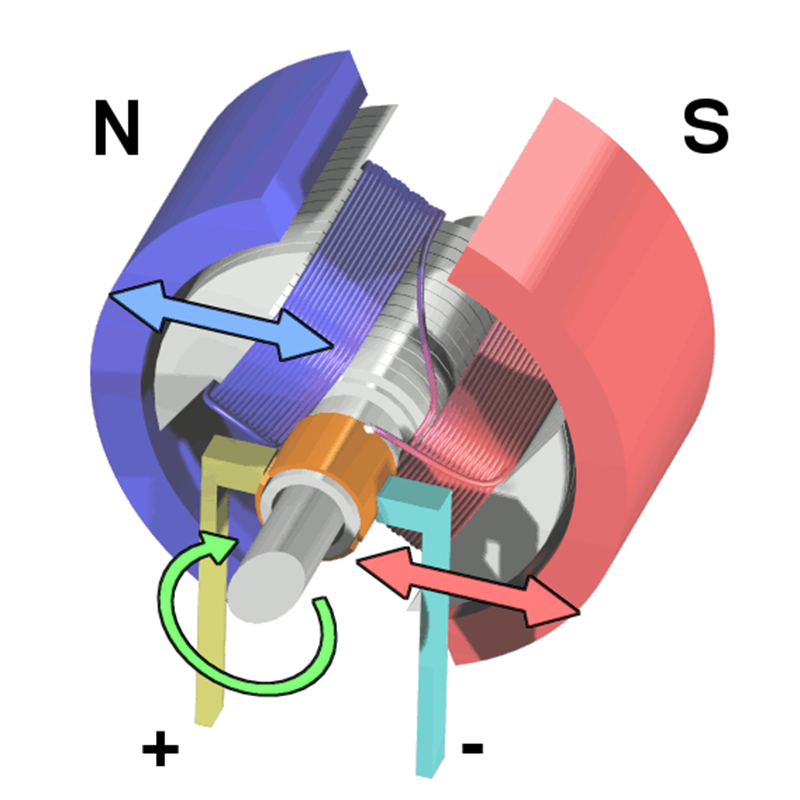
3. Ring motor: Ring-shaped halbach magnet array can also be used in motor design to generate driving torque. This kind of magnet can generate different magnetic fields by changing the direction and size of the current, thereby driving the motor to rotate.
4. Laboratory research: Ring-shaped Halbach magnets are often used in physics laboratories to generate stable and uniform magnetic fields for research in magnetism, materials science, etc.
When selecting a toroidal halbach magnet array, the following are important considerations:
1. Magnetic field requirements: According to actual needs, determine the magnetic field strength required for the magnet to meet the application requirements. This will determine the size, material and design of the magnet chosen.
2. Size restrictions: Consider the limitations of the magnet installation space and determine the appropriate outer diameter, inner diameter and height to ensure appropriate selection.
3. Temperature requirements: Determine the maximum temperature limit when the magnet is operating to select appropriate materials and cooling measures.
4. Corrosion resistance: Consider the corrosion resistance of the magnet in special environments and select suitable materials and coatings to protect the magnet.
5. Stability requirements: For applications that require maintaining a stable magnetic field, choose magnets with higher magnetic field stability and lower magnetic field drift rate.
6. Magnet weight: According to the requirements of the application scenario, consider the weight limit of the magnet and outer ring to facilitate installation and transportation.
7. Cost-effectiveness: Comprehensively consider the performance and price of the magnet, and select a more cost-effective magnet to meet the application requirements to the greatest extent.
It should be noted that the above are only considerations for the general selection of toroidal Halbach magnets. The specific selection also requires precise analysis and selection based on the requirements and specific conditions of the specific application.
Using a Halbach magnet array involves designing and arranging the magnets in a specific configuration to achieve the desired magnetic field pattern. Here are the general steps involved in using a Halbach magnet array:
Design: Determine the requirements of the magnetic field you need for your application. This includes the strength, uniformity, and direction of the magnetic field.
Magnet Selection: Choose the appropriate permanent magnets for your Halbach array based on factors such as magnetic strength, size, and material properties.
Configuration: Arrange the magnets in a Halbach array configuration. This typically involves arranging the magnets in a pattern where the magnetic moments of adjacent magnets are oriented to reinforce the magnetic field on one side while canceling it out on the other side.
Assembly: Once you have determined the configuration of the magnets, assemble them accordingly. This may involve mounting the magnets on a support structure or embedding them in a specific material, depending on your application.
Testing and Adjustment: After assembling the Halbach magnet array, test the magnetic field to ensure it meets the desired specifications. If necessary, make adjustments to the configuration or placement of the magnets to achieve the desired magnetic field pattern.
Integration: Integrate the Halbach magnet array into your application or device. This may involve incorporating it into a larger system or assembly.
Operation: Once integrated, operate the Halbach magnet array according to the requirements of your application. Monitor its performance to ensure it continues to meet the desired magnetic field characteristics over time.
It’s important to note that designing and using a Halbach magnet array can be complex and may require expertise in magnetism and engineering. Additionally, safety precautions should be followed when handling strong magnets, and any specific guidelines or recommendations from the magnet manufacturer should be adhered to.
Halbach magnet arrays find applications in various fields due to their ability to generate strong and uniform magnetic fields on one side while minimizing the magnetic field on the other side. Some common applications include:
Magnetic Levitation Systems: Halbach magnet arrays are used in magnetic levitation (maglev) systems for transportation, such as high-speed trains and maglev roller coasters. The strong and uniform magnetic field produced by the Halbach array helps to levitate and propel the vehicle along the track without the need for wheels or traditional propulsion methods.
Particle Accelerators: In particle accelerators, such as synchrotrons and cyclotrons, Halbach magnet arrays are used to focus and guide charged particles along their trajectories. The precise control and uniformity of the magnetic field provided by the Halbach array are essential for the efficient operation of these devices.
Magnetic Bearings: Halbach magnet arrays are utilized in magnetic bearing systems for various applications, including flywheels, motors, and high-speed rotating machinery. The uniform magnetic field generated by the Halbach array helps to stabilize and control the position of the rotating components without physical contact, reducing friction and wear.
Magnetic Resonance Imaging (MRI): In MRI machines, Halbach magnet arrays are used to generate the strong and uniform magnetic field required for imaging. The uniformity of the magnetic field is crucial for obtaining high-resolution and artifact-free images of the human body.
Electric Motors and Generators: Halbach magnet arrays can be employed in electric motors and generators to improve efficiency and power density. By optimizing the magnetic field distribution, Halbach arrays can enhance the performance of these devices while reducing size and weight.
Research and Development: Halbach magnet arrays are utilized in various research and development applications, including material testing, magnetic confinement in fusion reactors, and experimental physics setups. Their ability to produce controlled and uniform magnetic fields makes them valuable tools for scientific experimentation and exploration.
Overall, Halbach magnet arrays offer a versatile solution for applications requiring precise control and manipulation of magnetic fields, ranging from transportation and energy systems to medical imaging and scientific research.