




5 mm Disc Magnet
With the continuous development of science and technology, motor technology is also constantly innovating. Especially nowadays, the industrial field has continuously put forward higher expectations and requirements for the servo characteristics of motors, and hollow cup motors have come into being.
Hollow cup motors are DC permanent 5 mm disc magnet servo and control motors, and can also be classified as micro motors. Hollow cup motors have outstanding energy-saving characteristics, sensitive and convenient control characteristics, and stable operating characteristics, and their technological advancement is very obvious. As a high-efficiency energy conversion device, it represents the development direction of motors in many fields.

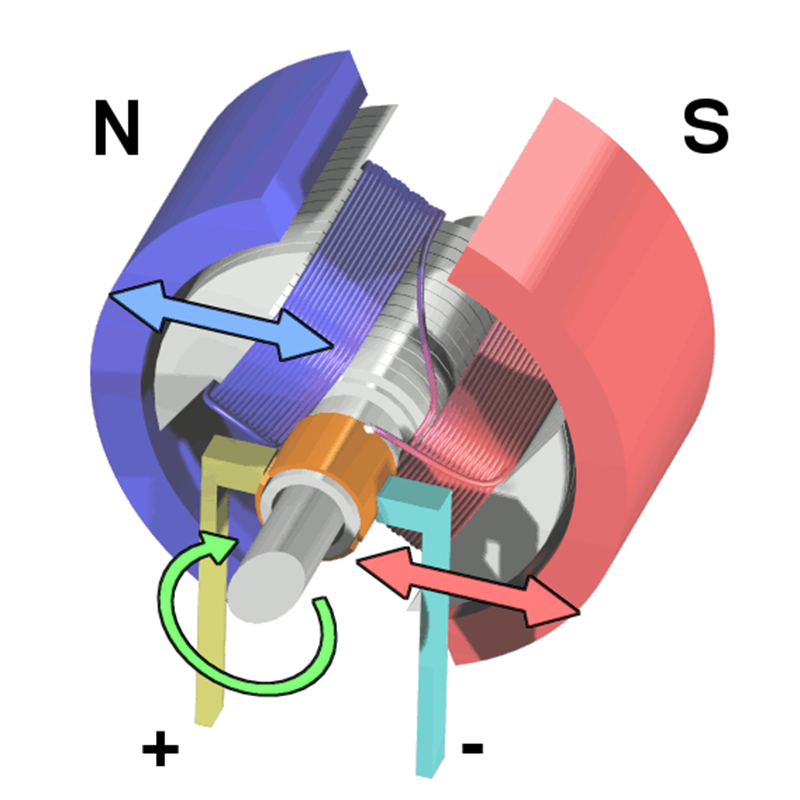
The rotor is directly wound with wires, without any other structure to support the windings. The windings themselves are made into a cup shape, which constitutes the structure of the rotor (as shown below). Due to the change in the rotor structure, the running characteristics of the motor have been greatly improved. It not only has outstanding energy-saving characteristics, but more importantly, it has control and drag characteristics that iron core motors cannot achieve.
Hollow cup motors are divided into two types: brushed and brushless. The rotor of the brushless hollow cup motor has no iron core, and the stator of the brushless hollow cup motor has no iron core. Common hollow cup motor models in the market have diameters of Φ4, Φ6, Φ7, Φ8, Φ10, Φ12, Φ15, etc.
Advantages and applications of hollow cup motors
Hollow cup motors have a series of advantages such as high power density, high efficiency, no torque lag, no cogging effect, low starting torque 5 mm disc magnet, no radial force between the rotor and the stator, smooth speed curve, low noise, and good heat dissipation.
The application of hollow cup motors has developed rapidly in the past ten years after entering the large industrial and civilian fields from the military and high-tech fields, especially in industrially developed countries, and has involved most industries and many 5 mm disc magnet products.
A fast-response follow-up system is required. Such as rapid adjustment of the flight direction of missiles, follow-up control of high-magnification optical drives, fast automatic focusing, highly sensitive recording and detection equipment, industrial robots, bionic prostheses, etc. Hollow cup motors can meet their technical requirements well.
Products that require smooth and long-lasting dragging of drive components. For example, various portable instruments 5 mm disc magnet, personal equipment, instruments and equipment for field operations, electric vehicles, etc., the same set of power supply can extend the power supply time by more than double.
Various aircraft, including aviation, aerospace, aircraft models, etc. The advantages of hollow cup motors, such as light weight, small size, and low energy consumption, can be used to minimize the weight of aircraft.
Various civil electrical appliances and industrial products. Using hollow cup motors as actuators can improve the product grade and performance.
Because the hollow cup 5 mm disc magnet motor is small in size, many products with relatively small volume requirements use hollow cups as power elements. For example; toy gifts (toy cars, aircraft models, etc.), beauty massage products (face brushes, induction instruments, facial massagers, etc.), daily necessities (electric toothbrushes, shampoo brushes, hair straighteners, etc.).
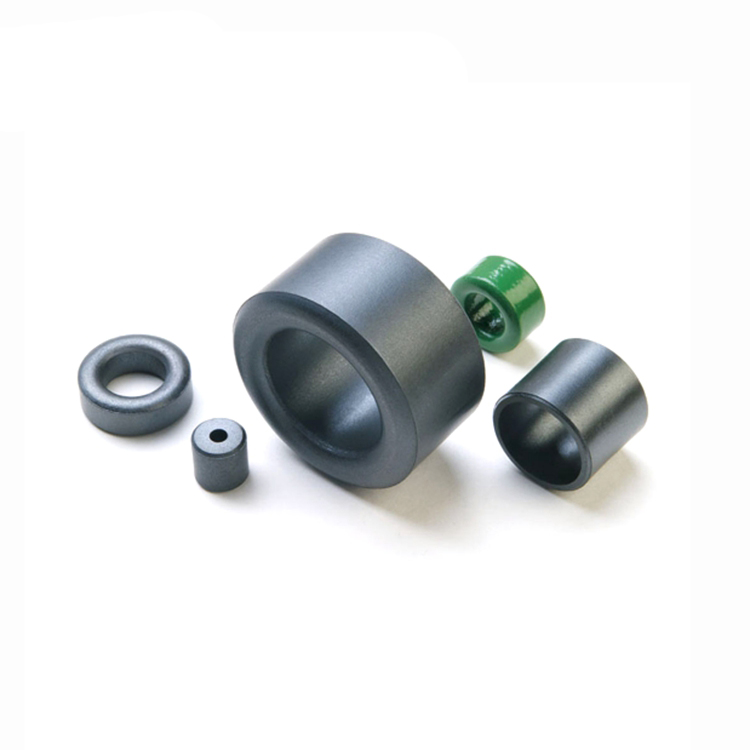
Sintered NdFeB permanent magnets are generally used in coreless motors. They have the characteristics of high remanence, high coercivity, and high magnetic energy product. They are the most suitable permanent 5 mm disc magnet materials for coreless motors on the market. Under the same size of motor and winding data, the strength of the magnetic steel performance directly affects the motor speed. Common NdFeB magnets suitable for coreless motors are ring-shaped, with performance such as N40, N45, etc., and temperature resistance of about 100°C.

The permanent magnet motor uses permanent 5 mm disc magnet to generate the magnetic field of the motor. It does not require an excitation coil or excitation current. It has high efficiency and simple structure. It is a very good energy-saving motor. Compared with traditional electric excitation motors, permanent magnet motors have significant advantages such as simple structure, reliable operation, small size, light weight, low loss, and high efficiency.
The application range of permanent 5 mm disc magnet motors is extremely wide, covering almost all fields of aerospace, national defense, industrial and agricultural production, and daily life. With the development of high-performance permanent magnet materials and the rapid development of control technology, the application of permanent magnet motors will become More extensive.
Everyone knows that there are many types of motors, but the basic principles are to use electromagnetic and electromagnetic induction phenomena to realize the mutual conversion of electrical energy and kinetic energy 5 mm disc magnet. If you want to know more about the basic principles and structure of motors, you can click to view the basic principles and basics of motors. Structure, DC motor and AC motor.
The first motor in the world that appeared in the 1820s was a permanent 5 mm disc magnet motor that used permanent magnets to generate excitation magnetic fields. However, the permanent magnet material used at that time was natural magnetite (Fe3O4), which had a very low magnetic energy density. The motor made of it was large in size and was soon replaced by the electric excitation motor.
With the rapid development of various motors and the invention of current magnetizers, people have conducted in-depth research on the mechanism, composition and manufacturing technology of permanent 5 mm disc magnet materials, and have successively discovered a variety of permanent magnet materials such as carbon steel, tungsten steel (maximum magnetic energy product of about 2.7kJ/m3), and cobalt steel (maximum magnetic energy product of about 7.2kJ/m3).
In particular, the aluminum-nickel-cobalt permanent 5 mm disc magnet (maximum magnetic energy product of up to 85kJ/m3) that appeared in the 1930s and the ferrite permanent magnet (maximum magnetic energy product of up to 40kJ/m3) that appeared in the 1950s have greatly improved their magnetic properties, and various micro and small motors have used permanent magnet excitation. However, the coercivity of AlNiCo permanent 5 mm disc magnet is low (36-160 kA/m), and the remanent magnetic density of ferrite permanent magnets is not high (0.2-0.44 T), which limits their application in motors.
Until the 1960s and 1980s, samarium cobalt permanent magnets and neodymium iron boron permanent 5 mm disc magnet came out one after another. Their high remanent magnetic density, high coercivity, high magnetic energy product and excellent magnetic properties of linear demagnetization curve are particularly suitable for manufacturing motors, thus ushering in a new historical period for the development of permanent 5 mm disc magnet motors.

1) Influence of residual magnetism
For DC motors, under the same winding parameters and test conditions, the higher the residual magnetism, the lower the no-load speed and the smaller the no-load current; the greater the maximum torque, the higher the efficiency at the highest efficiency point. In actual tests, the no-load speed and the maximum torque are generally used to judge the residual magnetism standard of the magnetic steel.
For the same winding parameters and electrical parameters, the higher the residual magnetism, the lower the no-load speed and the smaller the no-load current, because the running motor, at a relatively low speed, generates enough reverse induced voltage, which reduces the algebraic sum of the electromotive force applied to the winding.
2) Influence of coercive force
During the operation of the motor, there are always the effects of temperature and reverse demagnetization field. From the perspective of motor design, the higher the coercive force, the smaller the thickness direction of the magnetic steel can be, and the smaller the coercive force, the larger the thickness direction of the magnetic steel.
However, after the magnetic steel exceeds a certain coercive force, it is useless, because other components of the motor cannot work stably at that temperature. The coercive force can meet the requirements, and it is not necessary to waste resources to meet the requirements under the recommended experimental conditions.
3) The influence of squareness
Squareness only affects the flatness of the efficiency curve of the motor performance test. Although the flatness of the motor efficiency curve has not yet been listed as an important indicator standard, it is very important for the driving distance of the hub motor under natural road conditions. Because of different road conditions, the motor cannot always work at the maximum efficiency point.
This is one of the reasons why the maximum efficiency of some motors is not high but the driving distance is long. A good hub motor should not only have a high maximum efficiency, but also the efficiency curve should be as horizontal as possible, and the smaller the slope of efficiency reduction, the better. As the market, technology and standards of hub motors mature, this will gradually become an important standard.
4) The influence of performance consistency
Inconsistent remanence: Even if there are some particularly high performance, it is not good. Due to the inconsistent magnetic flux of each unidirectional magnetic field segment, the torque is asymmetric and vibration occurs.
Inconsistent coercive force: In particular, the coercive force of some products is too low, which is easy to produce reverse demagnetization, resulting in inconsistent magnetic flux of each magnetic steel and motor vibration. This effect is more significant for brushless motors.
1. Influence of magnet thickness
When the inner or outer magnetic circuit is fixed, when the thickness increases, the air gap decreases, the effective magnetic flux increases, the same residual magnetism, the no-load speed decreases, the no-load current decreases, and the maximum efficiency of the motor increases 5 mm disc magnet; however, there are also disadvantages, such as the increase of motor commutation vibration and the relative steepness of the motor efficiency curve. Therefore, the thickness of the motor magnet should be as consistent as possible to reduce vibration.
2. Influence of magnet width
For closely spaced brushless motor magnets, the total cumulative gap cannot exceed 0.5 mm. If it is too small, it will not be installed. If it is too large, it will cause motor vibration and reduced efficiency. This is because the position of the Hall element that measures the position of the magnet does not correspond to the actual position of the magnet. In addition, the width consistency must be ensured, otherwise the motor will have low efficiency and large vibration.
For brushed motors, there is a certain gap between the magnets, which is reserved for the mechanical commutation transition zone. Although there is a gap, most manufacturers have strict magnet installation tooling to ensure the installation accuracy in order to ensure the accurate installation position of the motor magnet. If the width of the magnet exceeds the limit, it will not be installed 5 mm disc magnet; if the width of the magnet is too small, the magnet will be misaligned, the vibration of the motor will increase, and the efficiency will decrease.
3. The influence of the size of the chamfer and the size of the non-chamfer
If the magnet is not chamfered, the magnetic field change rate of the edge of the magnetic field of the motor will be large, causing the motor to vibrate. The larger the chamfer, the smaller the vibration 5 mm disc magnet. However, chamfering generally causes a certain loss of magnetic flux. For some specifications, when the chamfer is 0.8, the magnetic flux loss is 0.5~1.5%.
For brushed motors with low residual magnetism, appropriately reducing the size of the chamfer is conducive to compensating for the residual magnetism, but the motor’s pulse vibration increases. Generally speaking 5 mm disc magnet, when the residual magnetism is low, the tolerance in the length direction can be appropriately enlarged, which can increase the effective magnetic flux to a certain extent and keep the performance of the motor basically unchanged.