Magnete per pentole
One of the most perplexing “white whales” being sought after by theoretical scientists is the illusive magnetic monopole, which is a magnetic field with only one pole.
The magnetic monopole has been on scientists’ thoughts even longer than the Higgs boson due to its possible influence on contemporary physics. And now that two phenomena that resemble the magnetic monopole have combined, our greatest chance of discovering it just grew weirder.
If you’re not acquainted with the magnetic monopole, it’s a fictitious particle that quantum physics has long anticipated but that no one has ever been able to demonstrate actually exists.
And that’s an issue, at least for some scientists, because the perceived absence of magnetic monopoles is complicating our comprehension of the nature of magnetic monopoles.
The gravitational force, electromagnetic force, strong nuclear force, and weak nuclear force are the four basic factors that control our universe.
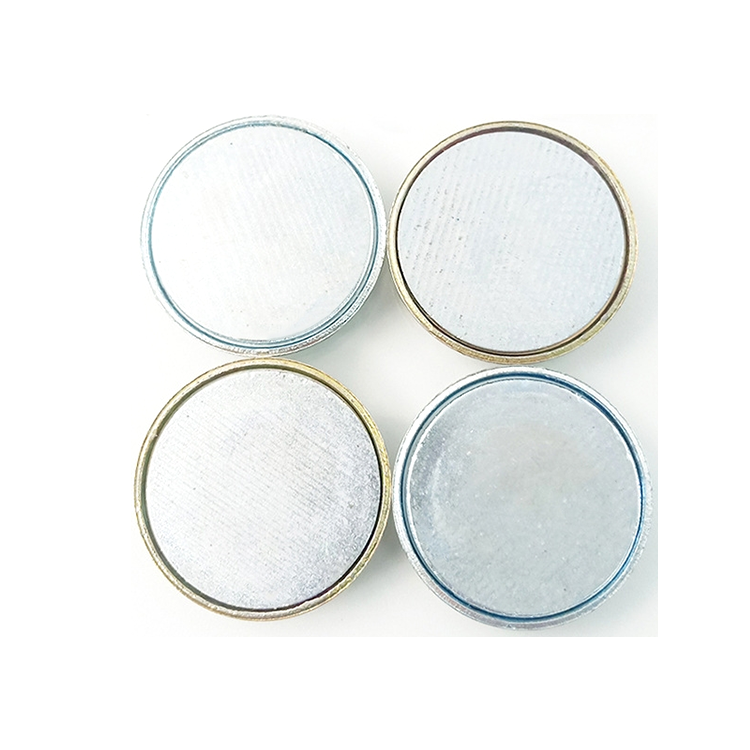
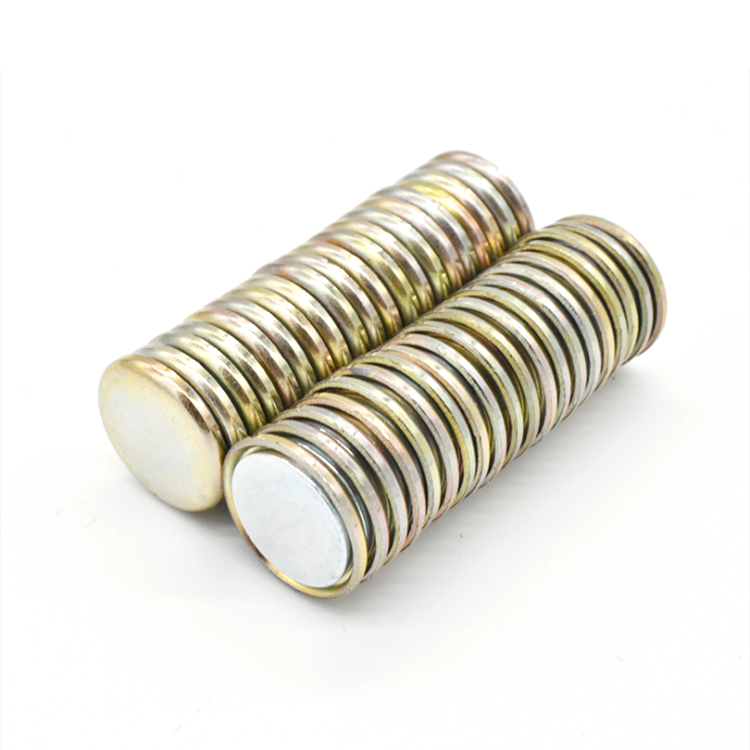
Pot Magnete al neodimio
The electromagnetic force is a result of the interaction of electricity and magnetism, but the two are not as closely related as their ideal coupling might lead one to think.
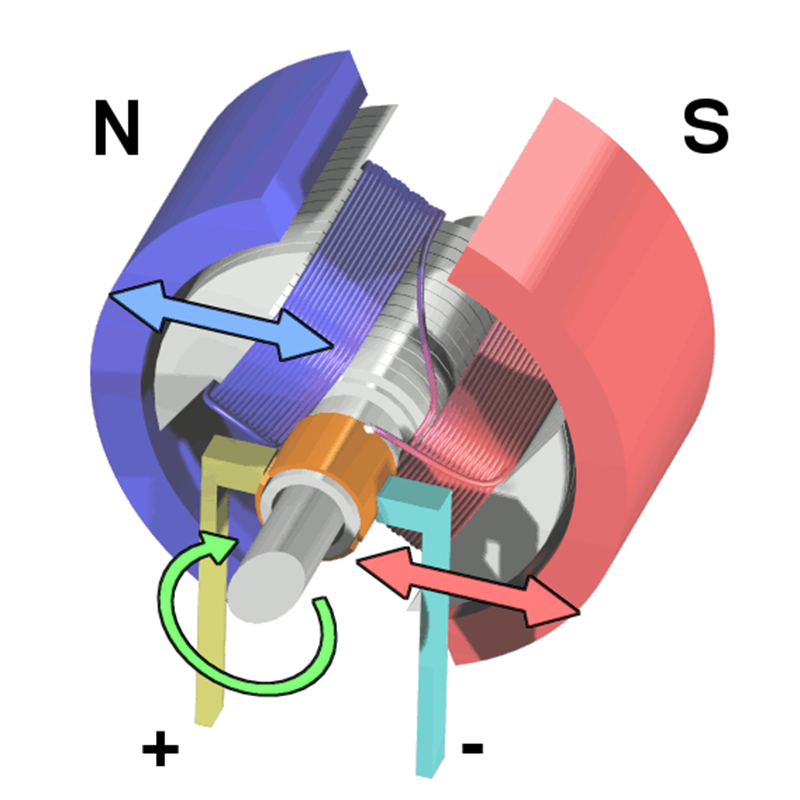
Weirdly, even if you split a magnet in half, each component would still have its own north and south poles. Everyone is aware that magnets have these poles.
That magnet would always have two poles (dipole) instead of one no matter how many times you sliced it in half, all the way down to the atomic level (monopole).
A magnetic monopole has not yet been discovered in nature; we have never discovered one.
a magnet with a true north or south pole. And that’s odd because electric monopoles, also known as electric charges, are all around us.
Additionally, the basic formulae that explain the nature of electromagnetism handle electricity and magnetism in symmetrical ways. If the total of the components is symmetrical, how can the individual parts be asymmetrical?
Monopole dipole
Magnete al neodimio unipolare
Magnetic diplole, on the left. Magnetic monopole, as shown. Photograph by Maschen/Wikimedia
Australian particle scientist T’Mir Danger Julius from Swinburne University of Technology describes that “electric monopoles exist in the shape of particles that have a positive or negative electric charge, such as protons or electrons” for The Conversation.
“We have never seen magnetic monopoles, but we can discover electric monopoles in the shape of charged particles.”
It took researchers more than 80 years to produce a manufactured magnetic monopole particle in the lab, despite Paul Dirac’s 1930s theory that such particles might occur in nature.
A team from Amherst College in Massachusetts and Aalto University in Finland revealed in 2014 that they had successfully created the artificially synthesized Dirac monopole that Dirac had prophesied.
It was a significant accomplishment, but even though it demonstrated the possibility of such a particle existing in the universe, we are still far from knowing whether it actually does. The researchers described their Dirac monopole as a “analogue” of a magnetic monopole, i.e., something that resembles but differs from the actual thing.
The researchers discovered another magnetic monopole counterpart the following year.
According to the research team, each copy exhibits a distinct characteristic of the fictitious magnetic monopole:
The quantum monopole has a point-like structure in its own field approximating that of the magnetic monopole particle itself, in contrast to the Dirac monopole experiment, which mimics the motion of a charged particle near a monopolar magnetic field.
The same experts have been tinkering with their analogues in the present and have discovered an unexpected result: one can suddenly change into the other in less than a second.
Although the experiment was quite detailed, in general, the team used a very diluted gas of rubidium atoms that was cooled to almost absolute zero, where it created a Bose-Einstein condensate, a state of matter where atoms act like they are in a vacuum.
The scientists developed their quantum monopole in this non-magnetized form.
The team explains that the quantum monopole is an example of a so-called topological point defect, which is a singular point in space surrounded by a structure in the condensate’s non-magnetized state that cannot be eliminated by constant reshaping.
They then progressively began to magnetize the system to observe what would occur once it entered a magnetized state and discovered that in addition to the quantum monopole being annihilated, a Dirac monopole was also created in the process.
The quantum monopole is on the left, and the Dirac monopole is on the right, as you can see below. The brightness reflects the orientation of the atoms’ interior magnetic states, and the colors indicate.
pole of devastation
Ollikainen Tuomas
Mikko Möttönen from Aalto University states, “I was leaping in the air when I saw for the first time that we get a Dirac monopole from the decay.”
“The monopoles we have been making over the years are nicely tied together by this finding.”
The researchers now have a tantalizing clue for where the two kinds of models could meet in the center to approximate a true magnetic monopole even more closely. What this means for their hunt for a real magnetic monopole is not yet obvious.
Similar to the illusive dark matter, the discovery of a magnetic monopole would lead to the discovery of an entirely new branch of physics. And these experts have come closer than anyone else has to understanding.
pole of devastation
Ollikainen Tuomas
Mikko Möttönen from Aalto University states, “I was leaping in the air when I saw for the first time that we get a Dirac monopole from the decay.”
“The monopoles we have been making over the years are nicely tied together by this finding.”
The researchers now have a tantalizing clue for where the two kinds of models could meet in the center to approximate a true magnetic monopole even more closely. What this means for their hunt for a real magnetic monopole is not yet obvious.
Similar to the illusive dark matter, the discovery of a magnetic monopole would lead to the discovery of an entirely new branch of physics. And these experts have come closer than anyone else has to understanding
The north and south poles of magnets can be separated by cutting the magnet in half, producing two smaller magnets with independent north and south poles. But some scientists believe that there may be undetected exotic magnetic particles that defy this law.
The search for these fictitious entities, known as magnetic monopoles, with a single north or south pole is currently in full gear. Using information from particle accelerators and the remains of stars, two teams of researchers have now further narrowed down the particles’ potential weights and traits.
Receive breaking science news in your email
Every Thursday, headlines and summaries of the most recent Science News stories are sent to your email folder.
Your email address is in this field.
LOG ON
There is solid evidence that magnetic monopoles exist.
According to some scientists. Electric charge is quantized, or why it always seems to appear in integer multiples of an electron’s charge instead of a continuous spectrum of values, which is explained by the presence of the particles. Magnetic monopoles are therefore widely used. James Pinfold, a particle physicist at the University of Alberta in Edmonton, Canada, believes that “a number of people assume they should exist.”
The underpinnings of physics would be altered if even a single magnetic monopole was discovered. Despite the fact that the formulae regulating electricity and magnetism are exact duplicates of one another, there is a significant distinction between the two phenomena. No known object has a magnetic charge, only protons and electrons contain positive and negative electric charges, respectively.
The first would be a magnetic monopole, which, if found, would ultimately put electricity and magnetism on an equal basis.
For many years, researchers have been looking in vain for magnetic monopoles. The hunt has been revitalized by recent work at the Large Hadron Collider at the Geneva-based CERN particle physics laboratory. It is possible that magnetic monopoles will form there as protons collide with a record-breaking energy of 13 trillion electron volts.
Sadly, despite examining six times as much data as the project’s prior efforts, Pinfold and colleagues’ most recent investigation with the Monopole and Exotics Detector at the LHC, or MoEDAL (pronounced “medal”), failed to uncover any magnetic monopoles. However, the new study has imposed some of the strictest limitations on the potential for interaction between the fictitious particles to date.