


Permanent Magnetic Materials
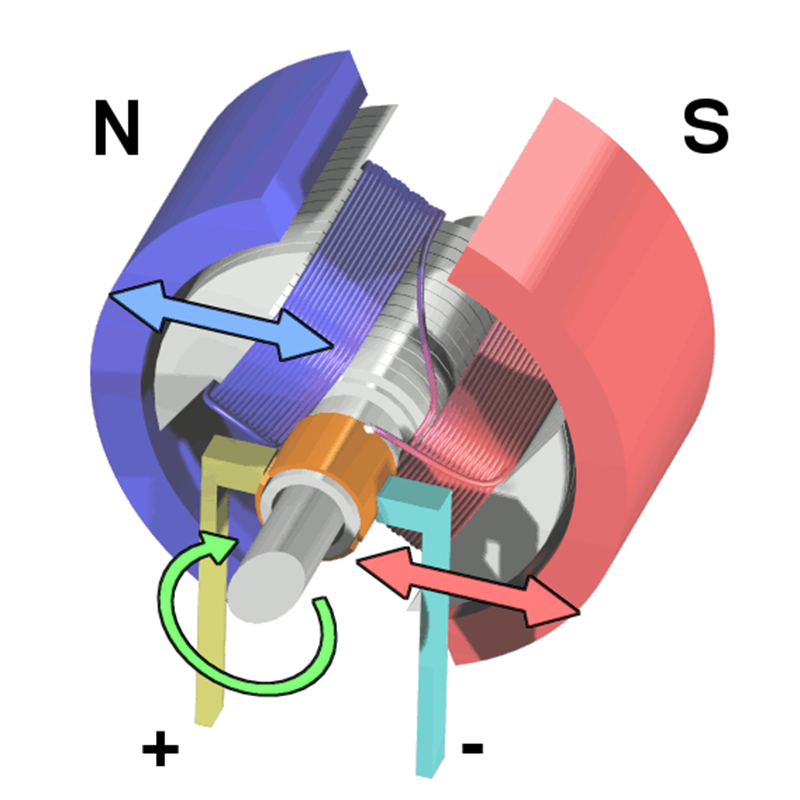
Permanent magnetic materials are substances that can retain their magnetization after being magnetized. They are widely used in electric motors, generators, magnetic storage devices, and various industrial applications.

Types of Permanent Magnetic Materials
Neodymium Iron Boron (NdFeB)
Properties: Highest magnetic strength, brittle, susceptible to corrosion.
Advantages: Strongest commercially available magnet, compact size, high energy density.
Disadvantages: Poor temperature resistance, requires coating for protection.
Applications: Electric motors, headphones, hard drives, medical devices.
Samarium Cobalt (SmCo)
Properties: High-temperature stability, corrosion-resistant, brittle.
Advantages: Operates at temperatures up to 350°C, strong magnetic properties.
Disadvantages: Expensive, lower magnetic strength than Neodymium.
Applications: Aerospace, military, high-performance motors.
Alnico (Aluminum-Nickel-Cobalt)
Properties: High-temperature stability, moderate magnetic strength.
Advantages: Withstands temperatures up to 500°C, mechanically strong.
Disadvantages: Lower magnetic strength, expensive.
Applications: Sensors, loudspeakers, automotive and aerospace industries.
Ferrite (Ceramic) Magnets
Properties: Low cost, good corrosion resistance, moderate strength.
Advantages: Affordable, widely available, suitable for outdoor use.
Disadvantages: Lower energy density compared to rare-earth magnets.
Applications: Loudspeakers, refrigerator magnets, small motors.
Comparison of Permanent Magnetic Materials
| Materiale | Forza magnetica | Temperature Resistance | Resistenza alla corrosione | Costo | Common Applications |
|---|---|---|---|---|---|
| NdFeB | Very High | Up to 200°C | Low (needs coating) | Alto | Motors, electronics |
| SmCo | Alto | Up to 350°C | Alto | Very High | Aerospace, military |
(1) Aluminum-nickel-cobalt permanent magnet alloy
It is mainly composed of iron, nickel and aluminum, and also contains copper, cobalt, titanium and other elements. It has high remanence and low temperature coefficient, and its magnetic properties are stable. There are two types: cast alloy and powder sintered alloy. From the 1930s to the 1960s, it was widely used in the instrumentation industry to manufacture magnetoelectric instruments, flow meters, micro motors, relays, etc.
(2) Iron-chromium-cobalt permanent magnet alloy
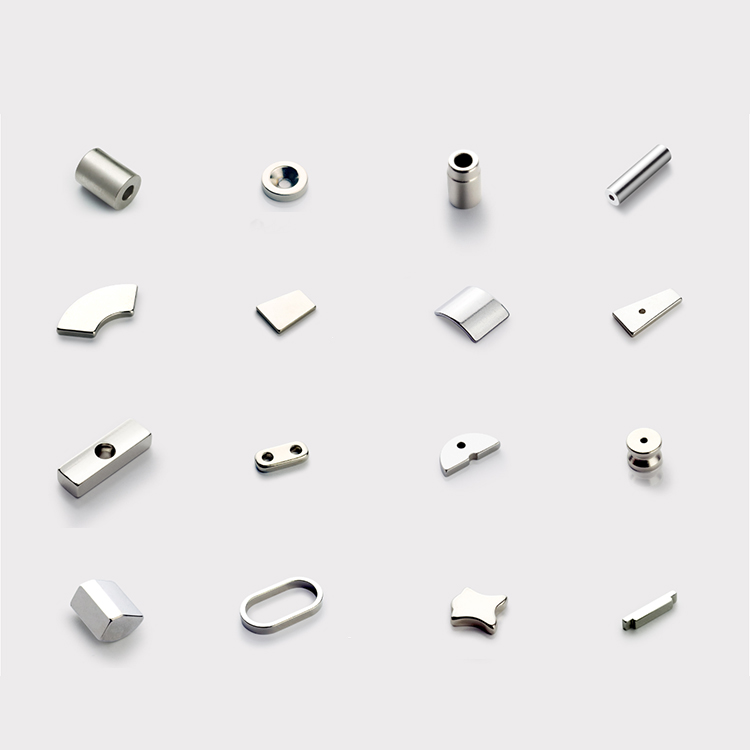
It is mainly composed of iron, chromium and cobalt, and also contains molybdenum and a small amount of titanium and silicon. It has good machinability and can be subjected to cold and hot plastic deformation. Its magnetic properties are similar to those of aluminum-nickel-cobalt permanent magnet alloy, and its magnetic properties can be improved by plastic deformation and heat treatment. It is used to manufacture various small magnets with small cross-sections and complex shapes.
(3) Permanent magnet ferrite
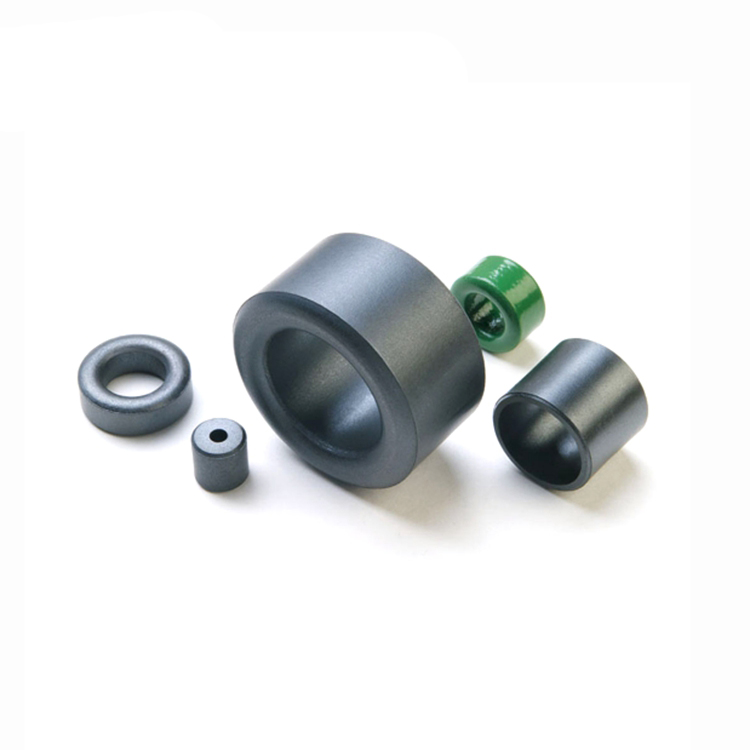
It mainly includes barium ferrite and strontium ferrite. They have high resistivity and coercivity, and can be effectively used in atmospheric air gap magnetic circuits. They are particularly suitable for permanent magnets of small generators and motors. Permanent ferrite does not contain precious metals such as nickel and cobalt. It has abundant raw materials, simple process and low cost. It can replace permanent magnetic systems such as aluminum, nickel and cobalt to make magnetic separators, magnetic thrust bearings, speakers, microwave devices, etc. However, it has low maximum magnetic energy product, poor temperature stability, brittle texture, easy to break, and not resistant to impact and vibration. It is not suitable for use as a measuring instrument or magnetic device with precision requirements.
(4) Rare earth materials
Mainly rare earth cobalt permanent magnetic materials and neodymium iron boron permanent magnetic materials. The former is an intermetallic compound formed by rare earth elements such as cerium, praseodymium, lanthanum and neodymium and cobalt. Its magnetic energy product can reach 150 times that of carbon steel, 3 to 5 times that of aluminum nickel cobalt permanent magnetic materials, and 8 to 10 times that of permanent ferrite. It has low temperature coefficient, stable magnetic stability, and coercive force up to 800kA/m.
It is mainly used in low-speed torque motors, starting motors, sensors, and magnetic bearing magnetic systems. NdFeB permanent magnet material is the third generation of rare earth permanent magnet material. Its remanence, coercive force and maximum magnetic energy product are higher than the former. It is not easy to break and has good mechanical properties. The alloy density is small, which is conducive to the lightness, thinness, smallness and ultra-miniaturization of magnetic components. However, its high magnetic temperature coefficient limits its application.

(5) Composite material
It is composed of permanent magnet material powder and plastic material used as a binder. Because it contains a certain proportion of binder, its magnetic properties are significantly lower than those of the corresponding magnetic material without binder. Except for metal composite permanent magnet materials, other composite permanent magnet materials are limited by the heat resistance of the binder and have a low operating temperature, generally not exceeding 150°C. However, composite permanent magnet materials have high dimensional accuracy, good mechanical properties, good uniformity of performance of each part of the magnet, and are easy to carry out radial orientation and multi-pole magnetization of the magnet. It is mainly used in the manufacture of instruments and meters, communication equipment, rotating machinery, magnetic therapy equipment and sports equipment.