





2024 neodymium magnet n52
Let’s take you through the relationship between surface magnetism and magnet performance.

The concept and measurement of surface magnetism
Surface magnetism, also known as surface field and surface magnetic field, refers to the magnetic induction intensity at a certain point on the surface of the magnet. The unit is Gauss Gs or Tesla T (1T=10000Gs).
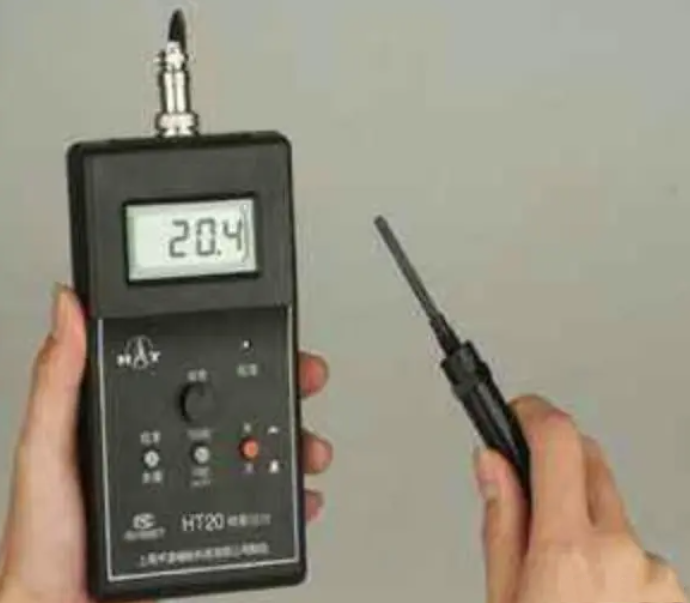
Surface magnetism is the most easily directly measured parameter in daily life. When the size of the magnet is certain, people often judge and compare the performance of the magnet by comparing the surface magnetism neodymium magnet n52. For some magnets that are particularly large or small in size and have special shapes, they are not suitable for routine measurement.
At this time, measuring the magnetism of the meter becomes very important. Regarding surface magnetism, the following two points are what everyone must know:
Surface magnetism is the value measured when the Gaussmeter contacts a certain point on the surface of the neodymium magnet n52. It is a data reflection of the magnet itself on the measurement tool and does not represent the overall performance of the neodymium magnet n52.
The surface magnetism at different positions on the magnet surface is different. For neodymium magnet n52 that are not multi-pole magnetized and have regular shapes, the center surface magnetism is generally measured. Surface magnetism is easily affected by the external environment.
For the same neodymium magnet n52, the center surface magnetism measured using gaussmeters from different manufacturers may be different. For the same magnet, measured in different environments, the measured surface magnetism may also be different. . (The N pole and S pole center surface magnetism of the same magnet are also different~)
It can be seen from the above two points that surface magnetism measurement is not objective and is not a parameter that can fully reflect the performance of the magnet. It is not recommended to be used as an evaluation index when trading products neodymium magnet n52.

The relationship between surface magnetism and magnetic properties
What is the relationship between surface magnetism and magnet performance parameters (such as remanence Br, coercive force Hc and maximum magnetic energy product (BH)max, etc.) neodymium magnet n52? Can you find the mathematical formula? These two questions are questions that readers often ask.
The answer to the first question is yes, but in the past some people only made empirical statistics. For example, for a sintered NdFeB cylinder with an aspect ratio of 1, the remanent Br is 2 to 3 times its surface field, but this statement A strictly quantitative relationship cannot be established.
The relationship between surface magnetism and residual magnetism
Residual magnetism refers to the magnetic induction intensity retained in the ferromagnet when the external magnetic field is used to magnetize the ferromagnet to a saturated state and then gradually reduces the external magnetic field to zero. Its full name is residual magnetic induction intensity (represented by Br). The remanence is determined by the characteristics of the magnet itself. The remanence of the same neodymium magnet n52 is unchanged under specific conditions and has a single value.
Residual magnetism determines the surface magnetism of a magnet to a certain extent, but magnets with the same residual magnetism do not have the same surface magnetism. The surface magnetism is also affected by the shape, size and magnetization method of the neodymium magnet n52.
For two neodymium magnet n52 with the same shape, performance, and size, the one with higher residual magnetism has stronger surface magnetism. For two magnets with different shapes, properties or sizes, the residual magnetism cannot be determined simply by the surface magnetism.
The surface magnetism of neodymium magnet n52 is lower than the residual magnetism
The residual magnetism is tested in a closed-circuit state, while the surface magnetism is tested with a Gauss meter in an open-circuit condition. At the same time, the magnet itself has a demagnetizing field, so the maximum surface magnetism of a single neodymium magnet n52 is much smaller than its remanent magnetism.
At present, the maximum residual magnetism of sintered NdFeB neodymium magnet n52 is around 14000Gs, so we can say with certainty that the maximum surface magnetism of a single NdFeB magnet cannot exceed 14000Gs. (Note that it is a “single magnet”. In some magnetic assemblies and magnet arrays, the surface magnetism of the magnet can be improved through special magnetic circuit design)
Calculation of surface magnetism
Since the sintered NdFeB neodymium magnet n52 has an extremely high magnetic anisotropy field and the magnetization vectors are all aligned in the easy magnetization direction, we can regard it as a uniformly magnetized body. In this way, the current shell model can be applied to calculate the magnetic field generated by the magnet in space. magnetic field.
At present, many surface magnetism calculation models on the Internet are based on this principle to derive calculation formulas. However, there are two assumptions in this. One is that the magnet is a completely uniform magnetized body, and the other is that the demagnetization curve is completely a straight line. The actual situation is not completely true. , so there is a certain difference between the calculated results and the actual measured results. In addition to residual magnetism, the surface magnetism of magnets is greatly affected by the shape and size. The calculation formulas for surface magnetism applicable to magnets of different shapes are different.


surface magnetism can be calculated, but it’s important to understand that surface magnetism is just one aspect of a magnet’s overall performance. The overall performance of a magnet is influenced by various factors including its material composition, shape, size, and magnetization direction, among others.
Surface magnetism, or surface magnetic field strength, refers to the strength of the magnetic field at the surface of a magnet. This can be calculated using mathematical models and formulas neodymium magnet n52, such as those derived from Maxwell’s equations, which describe the behavior of electromagnetic fields. However, accurately calculating the surface magnetism of a magnet can be complex, especially for magnets with irregular shapes or non-uniform magnetization.
The relationship between surface magnetism and overall magnet performance depends on the specific application. In some cases, surface magnetism may be a critical factor, such as in magnetic sensors where the proximity of a magnetic field to the sensor’s surface is important neodymium magnet n52. In other cases, such as in magnetic separators or magnetic couplings, the overall strength and distribution of the magnetic field throughout the volume of the magnet may be more important than surface magnetism alone.
In summary, while surface magnetism can be calculated using mathematical models, it is just one aspect of a magnet’s overall performance, and the relationship between surface magnetism and neodymium magnet n52 performance depends on the specific application and requirements.
The chemical composition analysis of NdFeB materials generally includes:
1-Analisi della composizione chimica delle materie prime, compresa la composizione chimica delle materie prime dei metalli delle terre rare, nonché la composizione chimica del Fe puro industriale, delle leghe B-Fe e di altri metalli, come Ga, Al, Nb, Zr, ecc;
2-The chemical composition of the neodymium magnet n52. If there is an unknown magnet or there is a problem with the magnet, it needs to be analyzed. If the product quality is normal, there is no need to analyze it. The chemical composition of the magnet includes rare earth metal elements, such as Nd, Pr, Ce, Dy, Ho, Gd, Tb, etc., and other metal elements, such as Cu, Al, Nb, Zr, Ga, Co, Ti, etc.;
3-Analisi del contenuto di altri elementi non metallici, come idrogeno, ossigeno, carbonio e altri elementi.
In questo articolo presentiamo principalmente l'analisi della composizione delle materie prime e dei magneti. Nel prossimo numero parleremo dell'analisi di idrogeno, ossigeno e carbonio nei magneti.
The composition analysis of neodymium magnet n52 is the same as that of steel materials and non-ferrous metal materials, including traditional analysis methods and modern physical analysis methods.
The traditional analysis method is to use the color, mass and volume changes of the reactants produced by the chemical reaction between a certain element in the material and a certain substance to conduct chemical analysis. This method is time-consuming and labor-intensive, and personal experience has a significant impact on the analysis results. It is rarely used in the quality control of neodymium magnet n52 materials.
Modern physical analysis methods mainly use the wavelength and intensity of the spectral lines emitted when electrons in atoms of a certain element jump in different shells to analyze the elements and content contained in the material.
Modern physical analysis methods mainly use instruments for analysis, which can analyze multiple elements at the same time. The analysis speed is fast, but the cost is also high. There are three main categories of modern physical analysis methods neodymium magnet n52: plasma spectrometry, atomic absorption spectrometry, and atomic fluorescence spectrometry. Plasma spectroscopy analysis is more commonly used in the composition analysis of steel materials, rare earth metals and compound materials, and rare earth permanent magnet materials.
ICP atomic emission spectroscopy analysis
ICP emission spectroscopy is an analysis method that combines inductively coupled plasma (ICP) and atomic emission spectroscopy (AES). It is abbreviated as ICP-AES spectroscopy. It is simplified to ICP emission. Spectral analysis.
1. Basic principles
The emission spectrometer is based on the atoms or ions of the element being measured neodymium magnet n52, which are excited in the light source to produce characteristic radiation. By judging the existence and intensity of these characteristic radiation, it can conduct qualitative and quantitative analysis of each element.
The ICP emission spectrum analysis process is mainly divided into three steps, namely emission, spectroscopy and detection.
The plasma emission light source (ICP) is used to evaporate, dissociate or decompose the pattern into an atomic state neodymium magnet n52. The atoms may be further ionized into an ion state, and the atoms and ions are excited and emit light in the light source;
Use a spectrometer to break down the light emitted by a light source into a spectrum arranged by wavelength;
The photoelectric device is used to detect the spectrum, and the pattern is qualitatively analyzed according to the measured wavelength, and quantitatively analyzed according to the emission intensity neodymium magnets n52.
2. Analyzable elements and application scope
Among the 109 elements in the periodic table, 74 elements can be measured by ICP emission spectrometer, including 3d, 4d, 5d transition metals and La series rare earth metals. Elements that cannot be detected include fluorine, helium, inert gas elements, carbon elements, Oxygen, nitrogen, hydrogen and all radioactive elements.
Measurable elements can be subjected to constant analysis (0.x%~20%), micro analysis (0.00x%~0.0x %), and trace analysis (0.0000x%~0.000x %, but separation and enrichment are required) neodymium magnet n52. However, elements with a content of more than 30% cannot be analyzed.
3. Types of ICP emission spectrometers
ICP emission spectrometers are divided into three categories according to different excitation types and detection systems:
Inductively coupled plasma optical emission spectrometer (ICP for short), including sequential scanning type, multi-channel simultaneous type neodymium magnets n52, full spectrum direct reading type, etc.
Spark/arc direct reading spectrometer, referred to as direct reading spectrometer, including large type and portable type