Renforcement des aimants à disque NdFeB
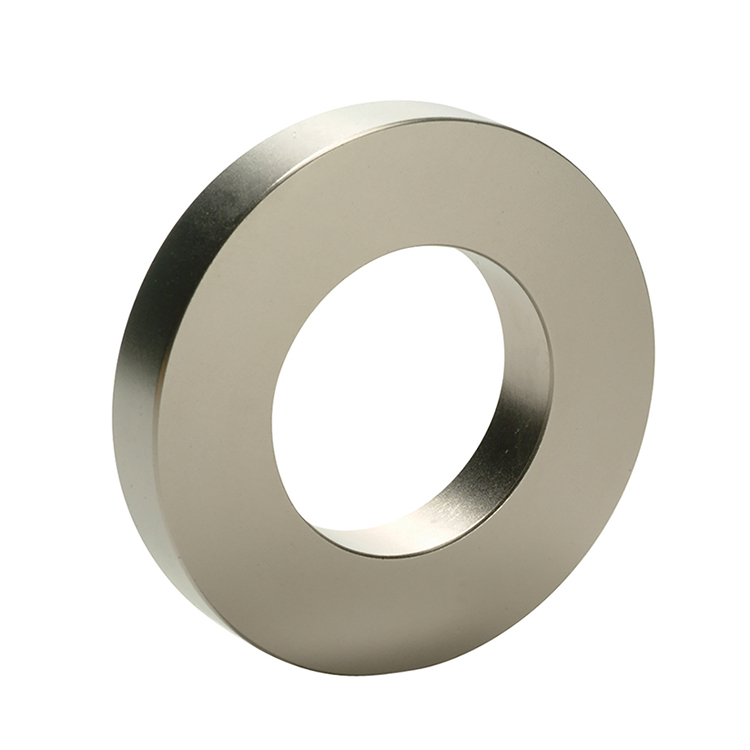
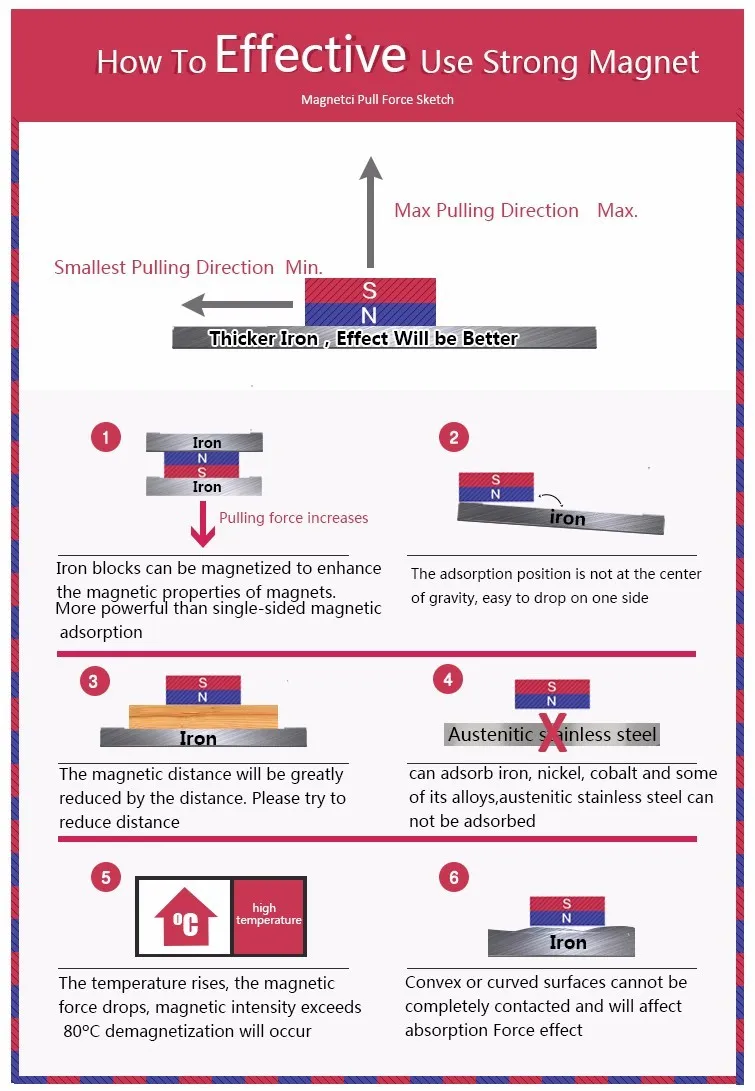
If more pull force is needed, you can increase the thickness of the magnets (possibly stacking them if testing), the diameter of the magnet (especially if there is a space between the magnets), the distance (usually an air gap) between attracting magnets, the magnet grade (e.g., N48 instead of N30), or any combination of the above. For example, to hold a door closed, you might have a magnet system at the top corner and an additional one at the bottom, doubling the possible performance. In other cases, you might be able to double your performance by simply duplicating your magnet system in another spot. Keep in mind that it usually requires 5 times less work.
It should be noted that applications where best neodymium magnets pole faces can slide apart have less holding force (if feasible, turn them so that they pull directly away from each other to make the draw force greater). This is because it normally takes 5 times less effort to slide magnets apart than it does to pull them apart.
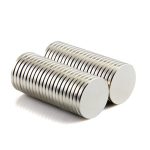
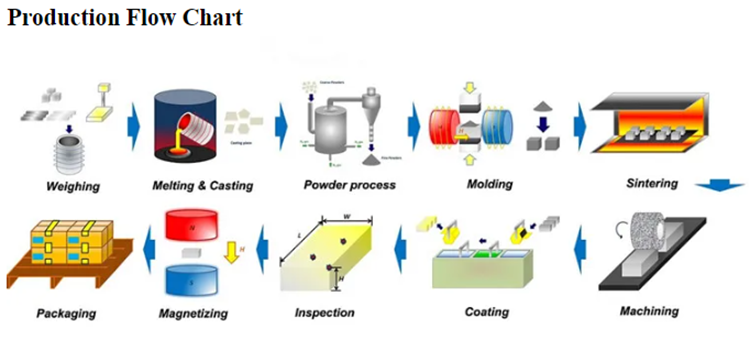
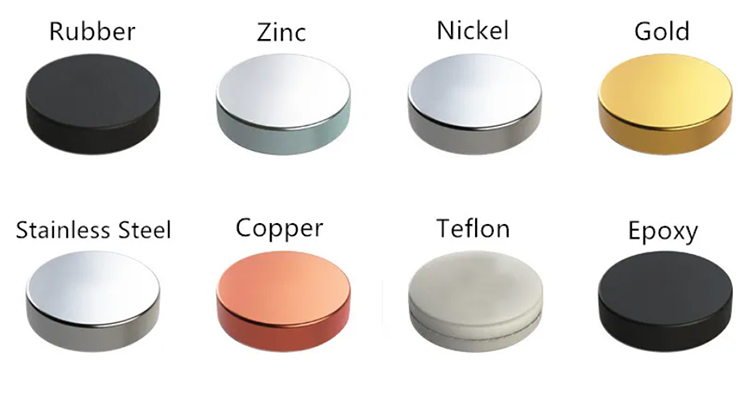
Sauf indication contraire, le nickelage des aimants à disque en néodyme NdFeB est généralement une triple couche de NiCuNi ; d'autres revêtements sont disponibles sur demande. Le dispositif de retenue est soit inclus dans les aimants à disque en néodyme, soit livré en rangées avec un dispositif de retenue à chaque extrémité. N'hésitez pas à nous contacter si vous avez des questions sur la taille ou le type d'aimant que vous devriez acheter ou si vous avez besoin d'une assistance technique.
Applications typiques des disques en néodyme
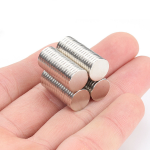
Simple holding uses for NdFeB discs bulk neodymium magnets include jewelry clasps, door closures, crafts, point-of-sale holding, notice boards, and folder closures. Additionally, they may be applied to more intricate design projects like machinery for levitation, motors, and audio equipment.
Aimants Nd-Fe-B
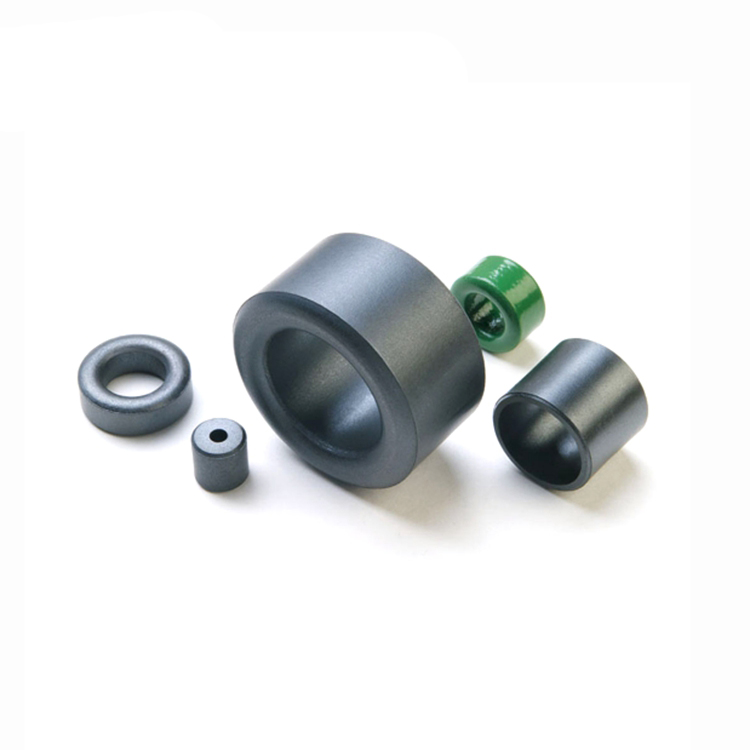
Les aimants permanents les plus puissants, les plus significatifs et les plus largement utilisés aujourd'hui sont les aimants en néodyme. On distingue les aimants NdFeB frittés et les aimants au néodyme collés, en fonction des différents processus de production.
Sintered and bonded NdFeB magnets are produced and supplied by China Rare Earth giant neodymium magnets Limited in a range of grades, dimensions, and forms. Thank you for viewing our YouTube video. We also provide certain pertinent devices, such as digital gauss meters and magnetic pole detectors that can detect the N and S poles of magnets and measure their surface fields (Gauss values).
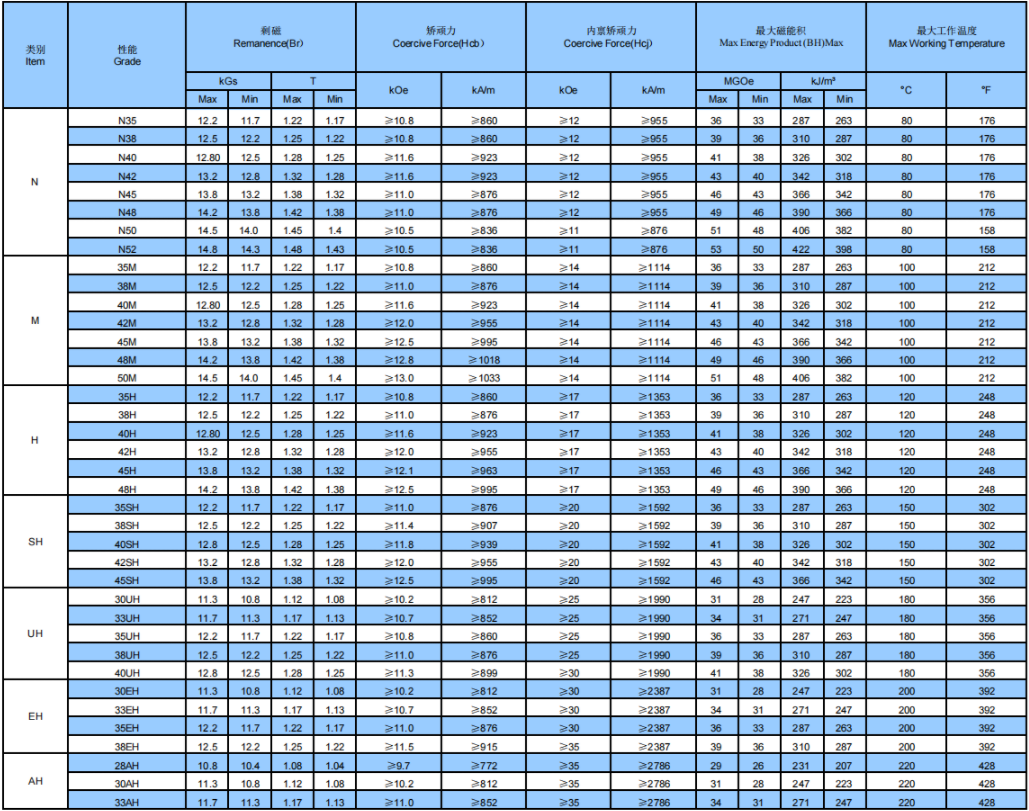
Aimants frittés NdFeB - Caractéristiques magnétiques
Aimants en NdFeB avec des liens : Caractéristiques magnétiques
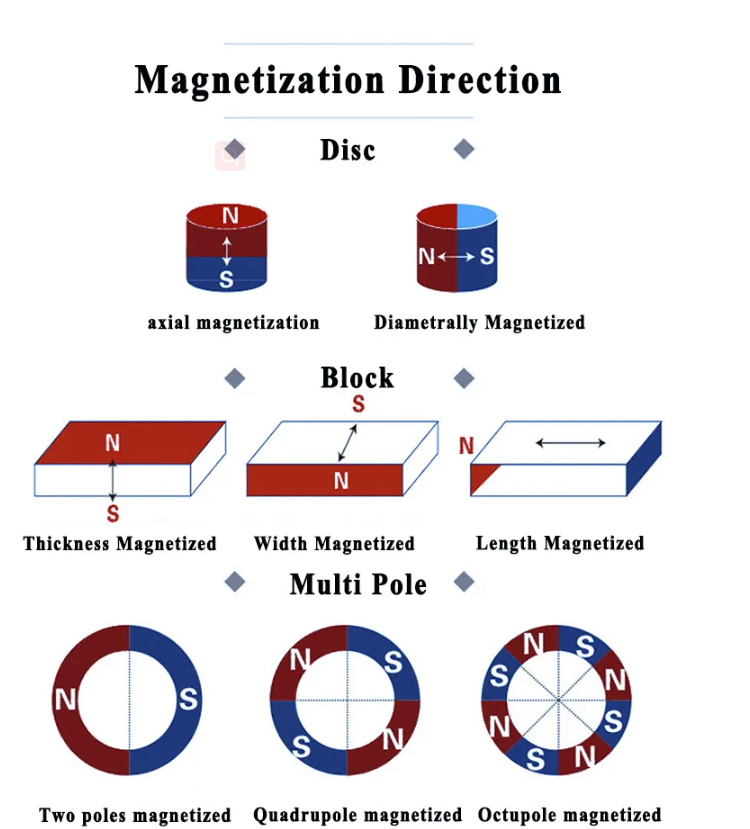
Direction du revêtement et de la magnétisation
Mise à jour de la classification des postes : aimants en néodyme frittés, collés et aimants HAST
Les aimants frittés sont plus résistants que les aimants NdFeB collés.
Par rapport aux aimants NdFeB collés, les aimants NdFeB frittés sont plus puissants. Les aimants N35-N52, N30M-N50M, N30H-N48H, N30SH-N45SH, N28UH-N40UH, N28EH-N38EH et N28AH-N35AH sont les catégories d'aimants NdFeB frittés (télécharger la fiche des propriétés magnétiques du NdFeB fritté). Les aimants N52 sont les aimants permanents les plus puissants en dessous d'une température de 80°C. Les clients ou les utilisateurs peuvent nous passer commande des meilleurs aimants NdFeB en fonction de leurs besoins et de leurs objectifs spécifiques.
Bonded neodymium magnets are produced by China Rare Earth Magnet Limited using the “compression molding” or “injection molding” processes.
Because they have variable magnetic properties and physical qualities, bonded NdFeB magnets come in a variety of grades. (Download Magnetic Property Sheet of Bonded NdFeB) The grades of compression molded bonded NdFeB magnets are designated as BNP-6 through BNP-12. Injection molded bonded NdFeB magnet grades include the following:
And the BNI-3 through BNI-7 designations refer to the grades of injection-molded, bonded NdFeB magnets. Black epoxy is the coating that is most frequently utilized on bonded NdFeB magnets.
This magnet is not a toy; if caution and safety precautions are not taken, it might cause significant harm. Some equipment that contains magnetic or ferrous material, including but not limited to: watches, cellphones, speakers, headphones, compasses, pacemakers, electrical gadgets, storage media, credit cards, etc., may be damaged or disturbed by this magnet. Don’t give this magnet to anyone who hasn’t read about and completely comprehended the risks and hazards associated with neodymium magnets. Watch out for ferrous metal objects that might jolt toward the magnet or the other way around. Always keep this magnet in a secure location that is out of children’s or pets’ reach.
Before we continue with the amazing strength of this Neodymium Magnets N52 beast’s introduction, a stern caution and emphasis on safety are required. This enormous magnet ought to be classified under the heading “Very Serious Warning”!
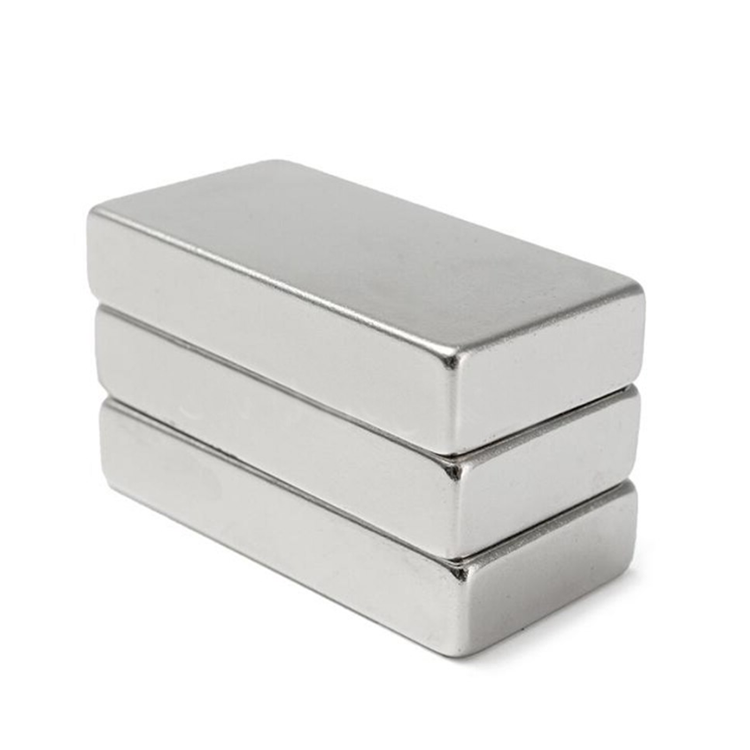
Never, ever leave large neodymium magnets alone, especially if there are kids around. When handling this magnet, keep all other magnets out of the way to prevent unpleasant incidents. Use of this magnet as a toy, practical joke, or other mischief WILL result in significant injuries, and the repercussions won’t be amusing either. – Such magnets demand a lot of work and specialized gear to separate into 2 parts. Therefore, do not join two parts together without placing at least 20 mm of solid wood, plastic, or non-ferrous separator in the gap. (Carboard is not advised) Even with a substantial spacer, use great caution while attempting to assemble two or more pieces of these magnets since the draw force that causes them to “jump” is very powerful.
Never place this magnet on a ferrous metal object that has a narrow recessed area since you might not be able to remove it, meaning it might become stuck there forever. Wear thick gloves when handling large-sized neodymium magnets to prevent or reduce injury in the event that magnets slam onto fingers or hands. Neodymium magnets should be removed from ferrous metal by sliding them to the edge and then prying them off. If the magnet became stuck in a small recessed space, however, it would be very difficult or impossible to remove. – Safety goggles are also advised to guard against magnet splinters that may break off in the event of a high impact collision mishap. – When handling this magnet, be mindful of any nearby ferrous objects.
The powerful magnetic field might harm some electrical equipment or magnetic storage media.(For instance, cellphones with compass, magnetic-stripe credit/bank cards)
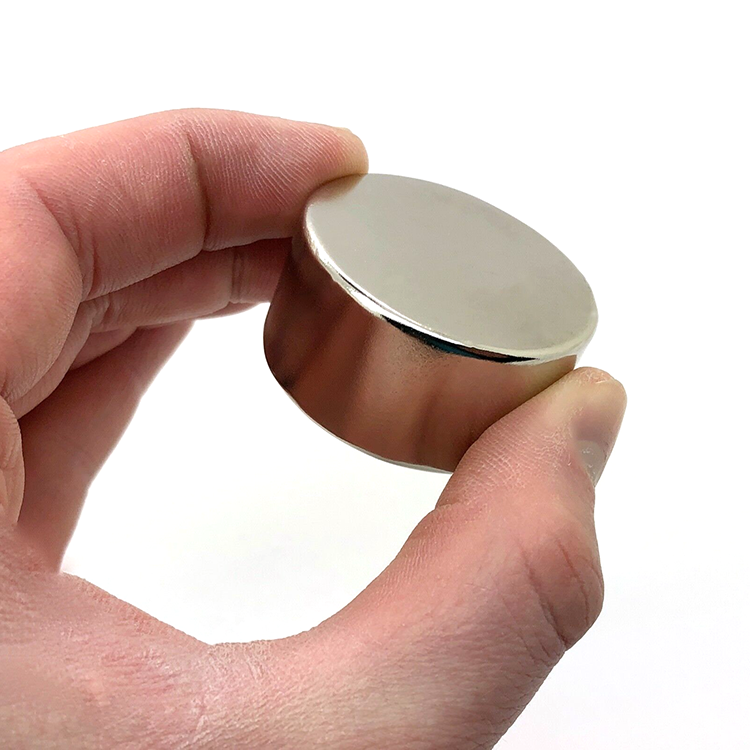
This gigantic magnet measuring 50x50x25mm, grade N52, is a unique specimen in the limited but potent world of neodymium magnets. We nickname this magnet The Kraken because it presents a formidable struggle to remove it from a column of these enormous neodymium magnets, even with a thick 20mm plastic spacer. Although it appears to be an innocent-looking piece of straightforward geometry devoid of any discernible tentacles, the danger and devastation this monster is capable of inflicting gave it its name. The Kraken is four times larger than its closest rival, the 25mm Cube Neodymium Magnet, in terms of size.
What is the purpose of this enormous magnet?
– Power supply and windmill
Hold metal parts for machining; separate ferrous components; use magnetic fields to bridge wide gaps in science projects or experiments; and design furniture with novel characteristics.
– Magnetic sculptures and art
– Magical Exercise – To just hold and observe the majesty of such immense power (the strongest permanent magnet in the world
Neodymium, with the chemical symbol Nd, is the 60th element on the periodic table. It belongs to the Lanthanides class and is a rare earth metal. The resulting magnets, with the chemical formula Nd14Fe21B, are the strongest ones currently on the market when combined with iron (Fe) and boron (B). Neo, Neod, and NIB magnets are other names for neodymium magnets. To stop the iron in neodymium magnets from rusting, nickel-copper-nickel coating is often used. The substance used to create neodymium magnets is fragile. These magnets lack steel’s tensile strength. They resemble fragile earthenware more closely. Two magnets can crack and break if you let them crash into each other. For both big and tiny magnets, this is true.