Fournisseurs d'aimants en ferrite Arc
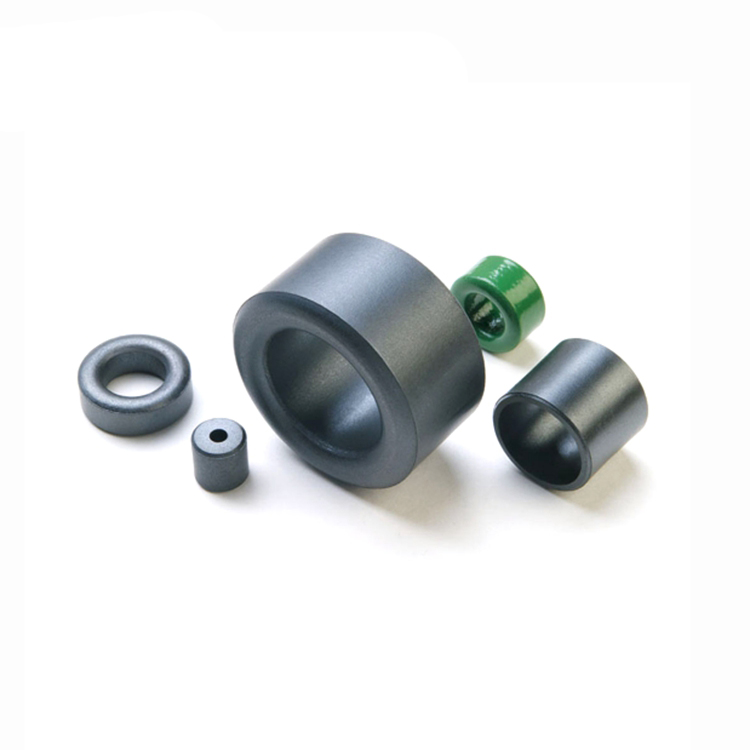
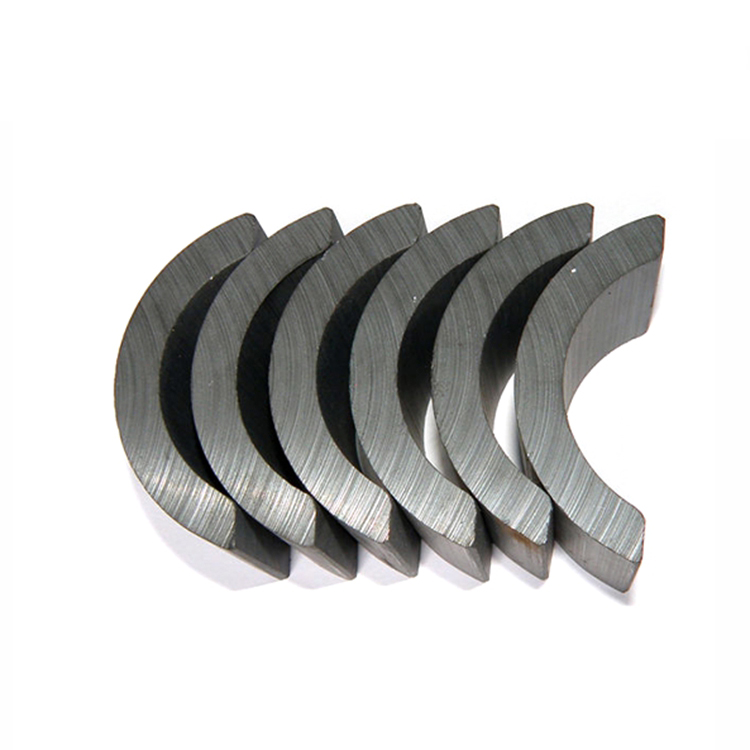
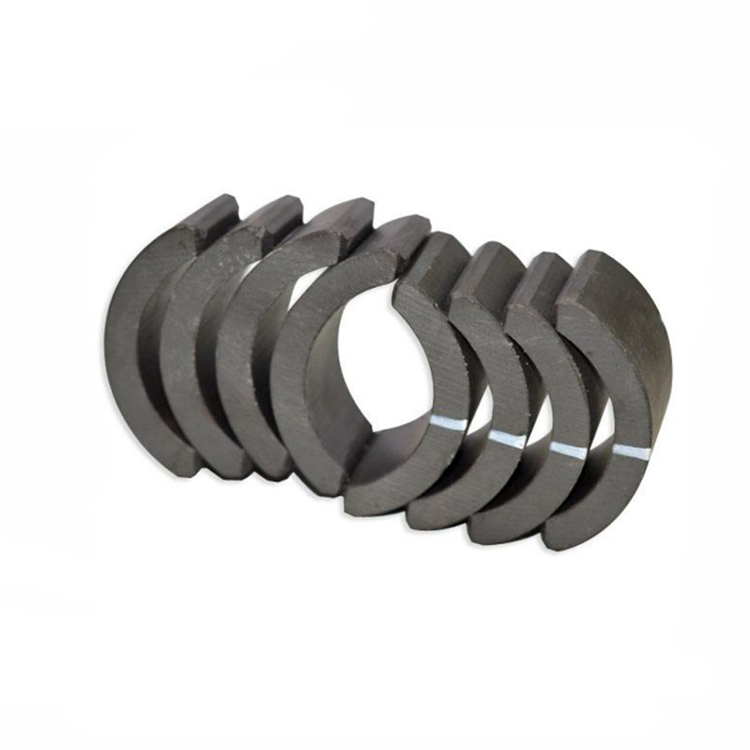
Arc Ferrite Magnets Company, known as ferrit, has a distinctive “pencil lead” color (i.e. a dark grey colour).
In terms of magnetic properties, they are ferrimagnetic (good magnetic field and power, but, size for size, not as powerful as NdFeB or SmCo). They are used in practically all industries, including automotive, sensor, machine, aerospace, military, advertising, electrical/electronic, academic, design house, and R&D. They are particularly common in motor, generator, loudspeaker, and maritime designs. Ferrite magnets may operate at temperatures as high as +250 °C (and in some circumstances, even +300 °C). Currently, 27 different grades of ferrite magnets are available.
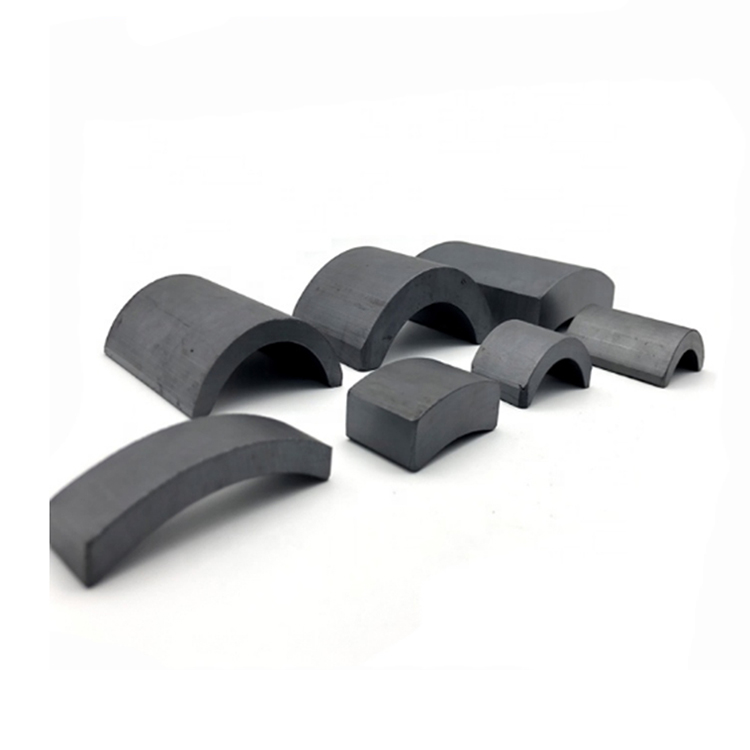
Il existe actuellement 27 qualités différentes d'aimants en ferrite. Actuellement, C5 (également connu sous le nom de Feroba2, Fer2, Y30 et HF26/18) et C8 sont les deux qualités les plus courantes (également connu sous le nom de Feroba3, Fer3 et Y30H-1). Pour les applications telles que les aimants overband, le C 5 / Y30 est un choix courant d'aimant en ferrite. Pour des applications telles que les moteurs et parfois les haut-parleurs, C8 / Y30H-1 est une option préférable (C8 a un Br similaire à C5 mais a un Hc et un Hci plus élevés). Les aimants en ferrite peuvent être fabriqués dans une grande variété de formes et de dimensions. Le matériau ferrite isolant électriquement ne permet pas l'érosion par étincelle de fil, de sorte que l'usinage aux dimensions voulues n'est possible qu'au moyen de procédures de meulage. Par conséquent, les blocs, les disques, les anneaux, les arcs et les tiges sont les formes principales.
Arc Ferrite Magnets Market produces ceramic substance called ferrite, which is created by combining and burning a lot of iron(III) oxide (Fe2O3, rust) with a little amount of one or more other metallic elements, such as barium, manganese, nickel, and zinc. Since they are both insulators and electrically non-conductive, they are both easily magnetized or drawn to a magnet. The ability to resist demagnetization allows for the division of ferrite into two groups.
High coercive forces make hard ferrite difficult to demagnetize. Permanent magnets are created using them for products like refrigerator magnets, loudspeakers, and tiny electric motors.
Low coercive means that soft ferrite quickly alters its magnetization and functions as a magnetic field conductor. They are used to create effective magnetic cores, known as ferrite cores, for high-frequency inductors and transformers, as well as in a variety of microwave components, in the electronics industry.
Being mostly composed of corroded iron (iron oxide), Arc Magnetic Ferrite compounds are very inexpensive and have great corrosion resistance. They can be produced using both high and low coercive forces, are extremely stable, and are challenging to demagnetize.
Features of Ferrite vs. Neodymium magnets
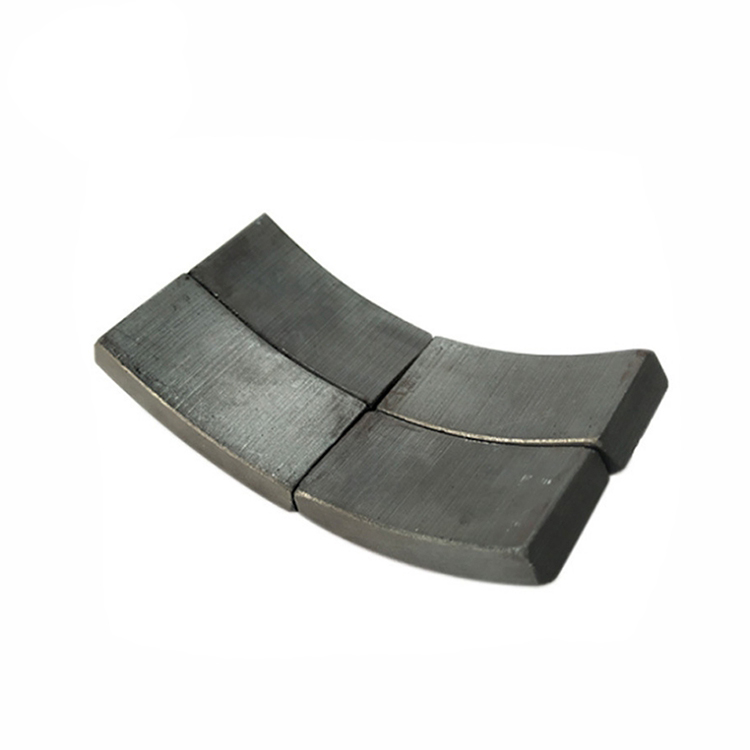
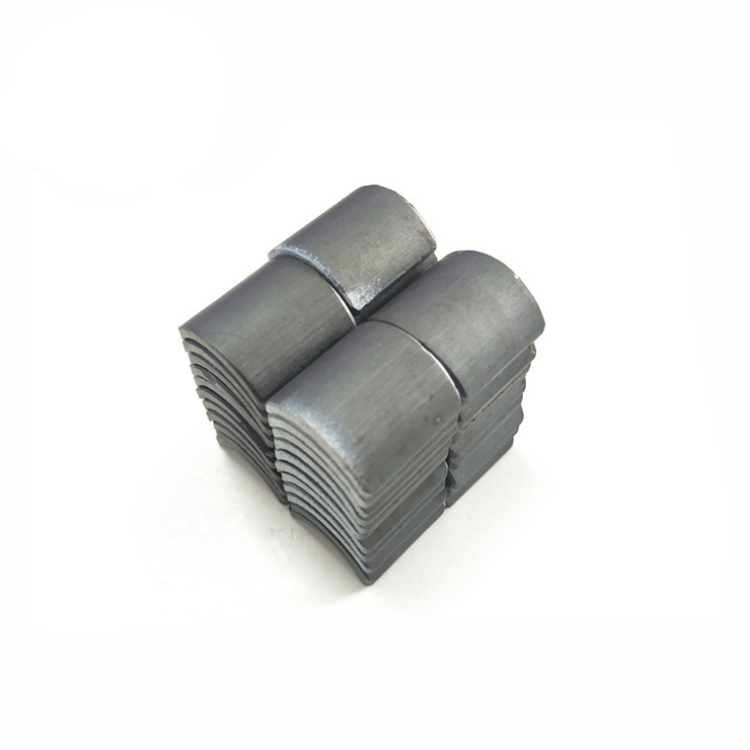
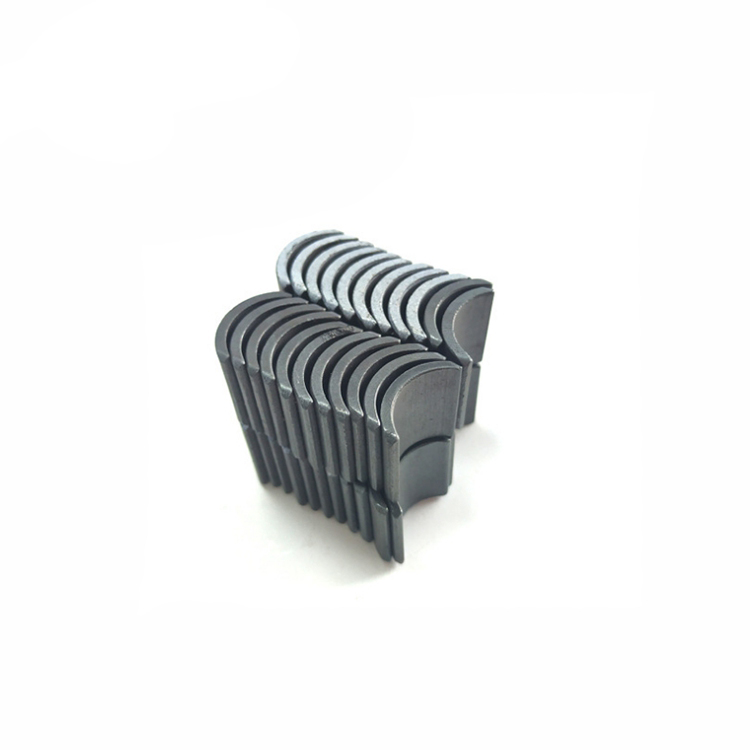
Updated Posts Photos of Typical Shapes like a Block, Disc, Ring, and Arc.
Introduction of Arc Ferrite Magnets Company or Suppliers,
Arc Fan Ferrite Magnet Y35, also known as ceramic magnets, are permanent magnets that use strontium carbonate and iron oxide as their primary ingredients. They are not manufactured from rare earth elements.
Ferrite magnets can be produced by die pressing followed by sintering, but they can only be created in a limited range of forms and sizes. Between -40°C and 250°C is where it typically operates. Due to their affordability, ease of production, superior corrosion and demagnetization resilience, and cheap cost, ceramic magnets are the most widely used permanent magnet materials. Anisotropic or isotropic production methods are both possible. Anisotropic magnets include C3, C5, and C8.
We advise solid NdFeB magnets like N52 if you require the strongest magnetic elements.
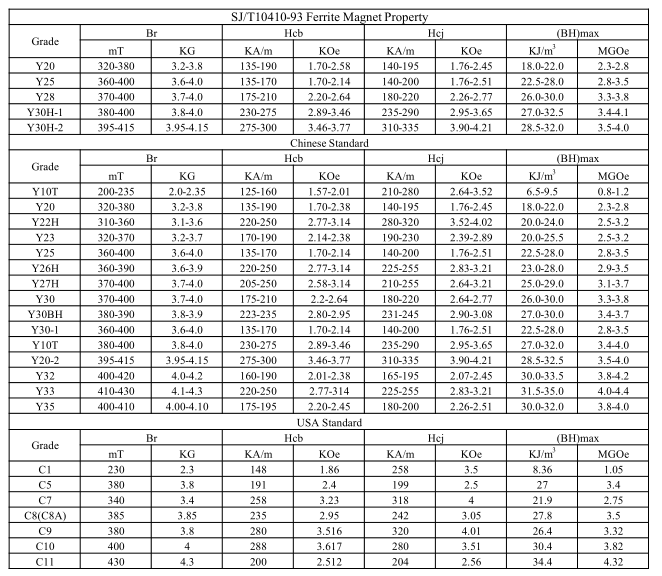
Type: Permanent Magnet Specification & Magnetic Properties
Sintered Ferrite, Y30, Y30BH, Y33, and other grades. (Download Magnetic Property Sheet of Sintered Ferrite Magnets)
Direction de l'aimantation
Shape, Size, and Tolerance: Can create complicated and unique designs as needed by customers.
Applications include those in industry, motors, speakers, air conditioners, hobbies, everyday living, and cows.
Caractéristiques
The process of powder metallurgy is used to create ferrite magnets. They have characteristics that make them particularly ideal for use as the magnetic circuit structure of dynamic working circumstances, including low remanence, tiny magnetic permeability, greater coercive force, and strong resistance to demagnetization. The rigid and brittle ferrite substance can be cut with silicon carbide instruments.
Although weakly magnetic, isotropic ferrite permanent magnets can be attracted in various directions. Sintered ferrite magnets that are anisotropic have powerful magnetic performance, but they can only be magnetized in the specified direction.
Aimants en ferrite ou en néodyme
Voici les principales différences entre les aimants NdFeB et les aimants en ferrite :
1. Ferrite magnets have a loose look, no metal luster, and are typically provided unplated. Ferrite magnets are typically oxides, very solid, and difficult to corrode. They are also typically black in appearance. NdFeB magnets are metals that are readily oxidized and are frequently coated to prevent rusting. NdFeB has a silvery-white surface that may also have metallic sheen or other hues.
2. NdFeB and ferrite have very different magnetic energies. NdFeB magnets have a magnetic energy output of up to 53MGOe, compared to 6MGOe for ferrite magnets.
3. Ferrite magnets are significantly less expensive than Nd-Fe-B magnets in terms of cost. While neodymium iron boron primarily consists of rare earth and iron, ferrite primarily consists of ferrous oxide.
4. In contrast to neodymium magnets, which are susceptible to demagnetization in high temperatures, ferrite magnets exhibit superb temperature resilience and do not easily lose their magnetic properties.
5. L'aimantation multipolaire des aimants en ferrite est simple, mais l'aimantation multipolaire des aimants en néodyme est plus difficile.
Remark: Ferrite magnets are suitable for low frequency working environments due to their high penetration, low cost, and high temperature resilience. They are frequently employed in speech boxes and amplifiers.
Neodymium magnets have a wide range of uses due to their tiny size, light weight, and powerful magnetic strength. They also have excellent mechanical properties. They are extensively used in electronic technology and contemporary industry because they are economical.
Ferrite magnets are aferromagnetic clay materials that are non-conductive and made of iron oxides like haematite (Fe203) and magnetite (Fe304), as well as other metal oxides like barium and strontium.
Although the earliest research on this material traces to the 1940s, real applications weren’t first noted until the early 1950s.
Ferrites are frequently categorized as “soft” or “hard” in terms of their magnetic characteristics, with low or high magnetic coercivity serving as persistent magnets in the first scenario and ferromagnetic cores in the second.
They work well in low-cost situations where measurements are unimportant.
Use them on the following to get the best results:
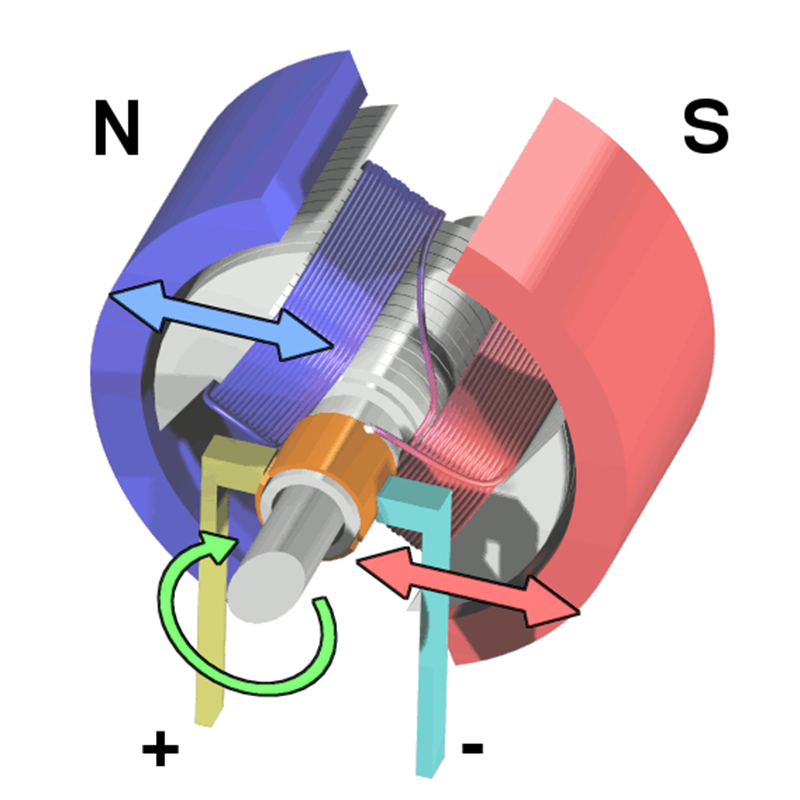
brushes for DC motors
without any additional needs, brushless motors
One of the most affordable magnetic materials is ceramic ferrite magnets. It can function in moderate temperatures and has a fair to good resistance to corrosion. Ceramic Ferrite magnets are low energy devices that are often utilized in mild steel assemblages.
Powder technology methods are employed in the production of ceramic magnets. The main raw material, strontium carbonate and iron oxide, are combined to make ferrite. By weight, ferrite magnets account for almost 75% of all magnet usage worldwide. For the majority of DC motor types, automotive sensors, magnetic resonance imaging, and magnetic separators, ferrite magnets are the preferred option.
The production and distribution of ceramic ferrite magnets used in a variety of industrial applications is the area of expertise for Stanford Magnets. In this domain, we possess cutting-edge technology, extensive expertise, and skilled engineering professionals. For a quote, please contact us if you need a certain size. Sintered permanent magnets made of barium or strontium ferrite are ceramic (ferrite) magnets. Aside from its strong demagnetization resistance, this family of magnets offers the widely recognized benefit of being inexpensive.
Because ferrite magnets are so hard and fragile, they need to be machined using specific methods. Additionally, they must be machined without a magnet. These materials can be machined to specifications by us.
Anisotropic grades need to be magnetized in the direction of orientation since they are orientated in the direction of production. Isotropic grades are unoriented and may be magnetized in either direction, albeit the pressing dimension—which is often the shortest dimension—will always have a somewhat stronger magnetic field.
Ferrite magnets are the most extensively used permanent magnets on the market today because of their inexpensive cost and wide range of uses, from toys and crafts to motors and loudspeakers.
Hard ferrite (ceramic) magnets are crucial components of magnetic materials that are used in the electrical, electronic, automotive, and motorcycle industries, among other sectors. In addition, they find extensive use in the fields of medicine, metallurgy and mining, oil energy, industrial automation, and civil engineering. Elements of iron oxide, barium, and strontium make up ceramic magnets. Compared to other non-rare earth permanent magnets, this class of magnets has a greater magnetic flux density, a higher coercive force, and a stronger resistance to demagnetization and oxidation. The primary benefit of these magnets is their affordability, which is why hard ferrite magnets are so often used in permanent magnet applications. Ferrite magnets are extremely hard and brittle since they are ceramic. These magnets need the use of certain machining methods.
With a maximum energy product range of 0.8-5.3 MGOe, ferrite magnets, commonly referred to as ceramic magnets, have the lowest magnetic field strength of all permanent magnetic materials. However, because they are by far the most affordable to produce in big quantities, they are frequently employed in commercial, high volume manufacturing runs when space—and hence, the magnet’s size—is not a constraint.
Typically, ferrite magnets are produced in single blocks of up to 152 x 101 x 25 mm (6 x 4 x 1 in). Today, two varieties of ferrite magnets are produced: barium ferrite (BaO.6Fe203) and strontium ferrite (SrO.6Fe203). Since it offers the finest magnetic characteristics, strontium ferrite is the most often used.
Since ferrite magnets are essentially already made of rust (iron oxide), they are non-conductive and will not corrode further. They may be utilized at temperatures as high as 250 degrees Celsius without experiencing any performance loss. They also retain their performance in extreme temperatures.
Rare earth and ferrite magnets won’t function together in the same application, though, since ferrite magnets are easily demagnetized by greater magnetic fields. Specifically, as the operating temperature increases, their resistance to demagnetization gets stronger, which makes them very helpful for electric motors.
A permanent magnet composed of a mixture of iron oxide and ceramic material is called a ferrite magnet, sometimes referred to as a ceramic magnet. Its strong magnetic qualities, corrosion resistance, and demagnetization make it a popular and reasonably priced form of magnet.
Typically, ferrite magnets are created via a technique known as powder metallurgy, in which the raw components are finely powdered and then shaped using a die. After being crushed, the magnet is sintered in a furnace at a high temperature to fuse the particles and form a solid magnet.