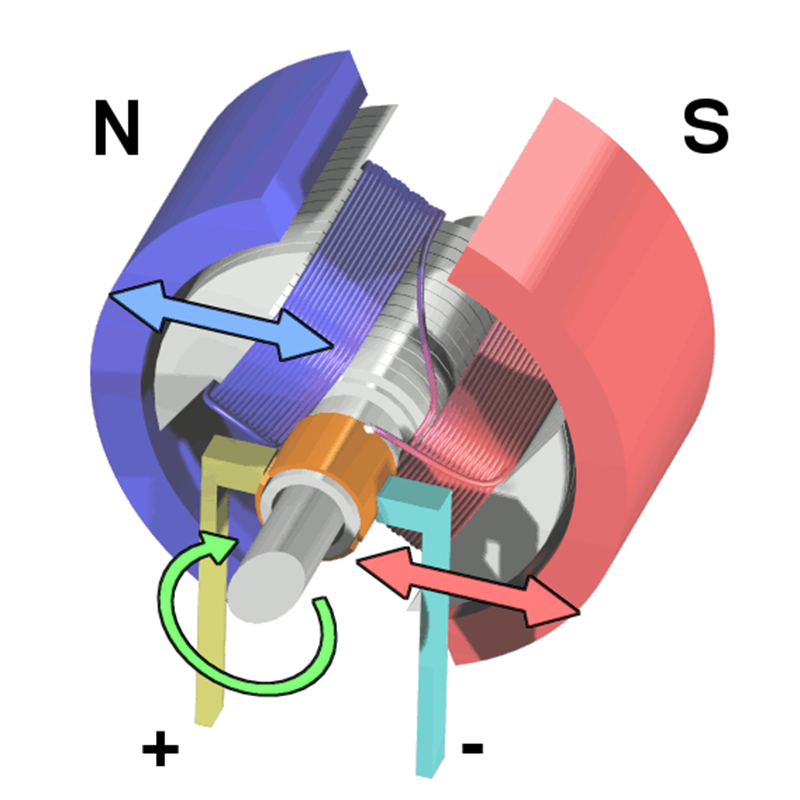
The technical revolution, often known as the second industrial revolution, was a fundamental stage in the evolution of society. In particular, the invention of electricity and generators sped up human growth since they made it possible to expand industrial machines and introduce significant quality-of-life advancements like electrical lights and household appliances.
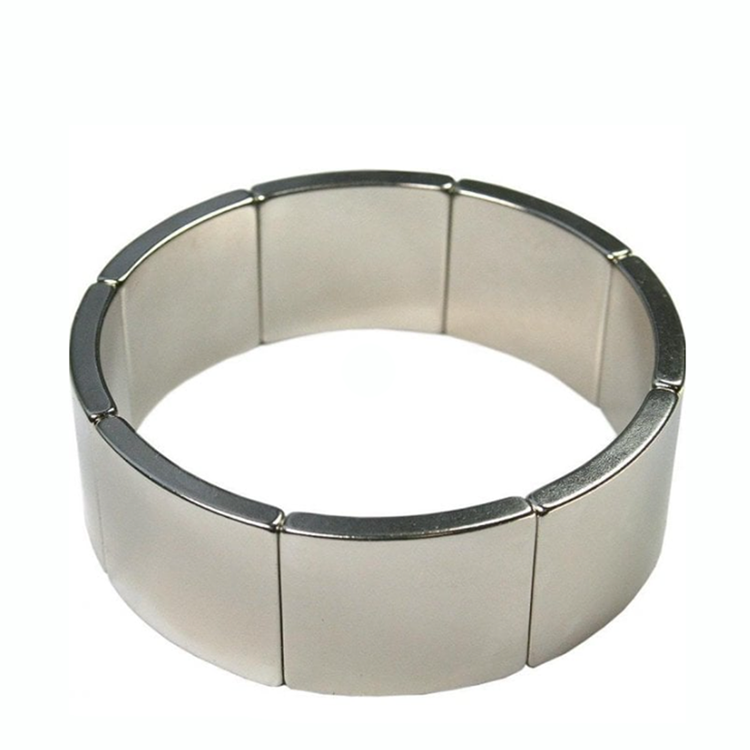
Disco, Cilindro, Bloque, Anillo, Avellanado, Segmento, Trapezoide y formas irregulares y más. Formas personalizadas disponibles
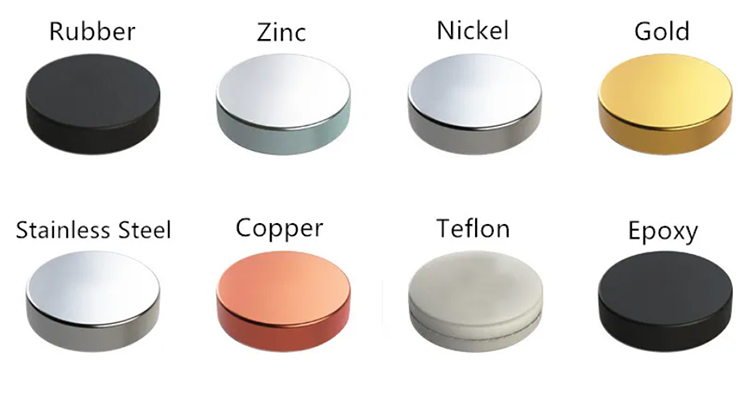
Revestimiento
Ni, Zn, Au, Ag, Epoxi, Pasivado, etc.
Aplicación
Sensores, motores, filtros de automóviles, soportes magnéticos, altavoces, generadores eólicos, equipos médicos, etc.
Muestra
Si está en stock, muestra gratuita y entrega el mismo día; si no está en stock, el plazo de entrega es el mismo que el de la producción en serie.
The discovery of magnetic materials and how they interact with electromagnetic fields was a crucial part of the scientific breakthrough. James Clerk Maxwell first used the term, and it was later discovered that magnetic fields were produced by the motion of charged particles like electrons. Thus, the creation of the electromagnet and the ensuing widespread usage of electricity were made possible by the formulation of Maxwell’s equations. Read on to discover more.
Define Magnetic Materials Usually, when we think about magnets, we image the classic bar magnet, which has a north and south pole. But many of the materials we encounter every day have the ability to act as magnets; it simply depends on their intrinsic makeup. A magnetic substance can be described as the following.
Materials that are magnetic can be impacted by the electromagnetic fields that surround them.
But what is it about magnetic materials that makes them the only ones able to feel the effects of an outside magnetic field? Let’s look more closely at the structure of a solid magnetic substance to better comprehend this.
Atoms are the fundamental units that make up all the materials that surround us, as we have already discussed. These atoms have a superposition of protons and neutrons in their nuclei, which are located in the center of their internal structure. A magnetic field surrounds charged particles like electrons as they flow, as James Maxwell discovered in 1865. Therefore, a small magnetic field is produced nearby the nucleus as a result of the electrons’ precession. We refer to this as the atomic dipole.
We can see a clearer understanding of the atomic dipole’s interior structure from the preceding figure. We can observe that the resultant north pole of this atomic dipole is in the upwards direction, to the top of the page indicated by the blue arrow, using the right-hand grip rule, where we curl our fingers in the direction of the current and our thumb points in the direction of the north pole.
Expanding from the atomic dipole structure, magnetic materials also include something called magnetic domains. These are formations made up of nearby atomic dipoles that are all facing the same way. These magnetic domains each feature a continuous loop-shaped internal magnetic field.
The magnetic material is shown in the above picture as a rectangular form with internal magnetic domains denoted by arrows in pink. The arrows are mostly pointing in different directions as we can see, which tells us that the domains are substantially out of alignment and that the material is not producing a cohesive magnetic field.
Tipos de materiales magnéticos
Let’s go closer to understanding how we may categorize common materials now that we have defined the internal structures of magnetic materials.
The strongest magnetic materials are those that fall within the category of ferromagnets. They are able to display this ability because the magnetic domains that make up the material are susceptible, which means that the domains can align when subjected to an external magnetic field. Due to the influence of the external field, which induces the domains to align in the same direction, the material’s total magnetic field is increased as a result of the interaction of the individual magnetic fields from the domains.
Additionally, spontaneous magnetization is a special characteristic of ferromagnetic materials. This happens when, in the absence of an outside field, the domains spontaneously align with one another. This often happens when the material is exposed to an extremely cold environment, which cools the substance’s atoms and reduces their strong vibrations. The Curie temperature, which specifies the point below which a substance may spontaneously become magnetized, is unique to each ferromagnetic material.
Because they retain their magnetic characteristics in the absence of an external field and are simple to magnetize, ferromagnetic materials are the best choice when creating powerful magnets like electromagnets or bar magnets.
When exposed to an external field, paramagnets display a significantly lower magnetic field than ferromagnetic materials do, as well as an attractive force toward the external field. This results from an unequal distribution of electrons around the atomic dipole. Additionally, unlike ferromagnets, due to the internal atomic dipoles of the material vibrating as a result of the thermal energy of the material, they get out of alignment when an external field is removed.
All materials possess the feature of diamagnetism, which can be thought of as the opposite of paramagnetism. Unlike ferromagnetism and paramagnetism, which both demonstrate an attractive force toward the external field, diamagnetism results from the internal structure of the material. However, the repulsive force produced by diamagnetic materials is often quite weak, making it impossible for us to see it in daily life.
Properties of Magnetic Materials Therefore, how do we define anything as a magnet? Let’s go through several characteristics that magnets have in common.
Magnetic Transparency A substance’s magnetic permeability is a gauge of how magnetized it gets in reaction to an outside field. It describes how quickly magnetic domains align inside the material when subjected to a field in the setting of magnetic domains. An example of a substance with a high magnetic permeability is a ferromagnetic material, which may be magnetized very quickly. As opposed to that,
The internal magnetic domains of a material may be seen aligned in the image above, which tells us the substance is magnetized. However, as the magnetic permeability of the material depends on the internal electrical structure, it is silent on that subject.
a magnetic sensitivity Similar to permeability in that it demonstrates how a material responds to an external field, magnetic susceptibility instead demonstrates whether the material’s internal magnetic field is aligned with or against the external field. When ferromagnetic and paramagnetic materials are magnetized, an attractive force is felt, suggesting that their fields are aligned with the external fields.
When a material’s field is aligned against an external field, such as a diamagnet, it will suffer a repulsive force.
Magnetic Materials Examples Let’s return to the bar magnet, a basic example of a magnet that is frequently used in physics practicals. We may attach this magnet to other magnets, such as a magnet attached to a refrigerator door or a magnet used to pick up paperclips, so we know that it remains magnetic even in the absence of a magnetic field. This indicates that they are composed of ferromagnetic components, such as iron, cobalt, nickel, and a variety of other ferromagnetic elements.
The needle of a compass is yet another crucial use of ferromagnets! If you have ever used a traditional compass, you are aware that the needle always points in the direction of true north, regardless of which way you are facing. This is because the Earth has its own natural magnetic field, which causes the magnetized needle to constantly be drawn to the north pole, making it the ideal tool for locating stranded mariners.
Material for Magnetic Shielding We have discussed many kinds of magnetic materials in this article thus far, as well as how they respond to an external magnetic field. However, because magnetic fields have an impact on all materials in some way.
The compass needle is a prime illustration of another important application for ferromagnets. If you’ve ever used a traditional compass, you’ll be aware that the needle always points in the direction of true north, regardless of which way you’re facing. The magnetized needle is constantly drawn to the north pole since the Earth has its own natural magnetic field, which makes it the ideal tool for locating missing mariners at sea.
Material for Magnetic Shielding We have discussed many kinds of magnetic materials in this article thus far, as well as how they respond to an external magnetic field. But given that all materials are affected by magnetic fields in some way, are there any that can prevent the field lines from penetrating through?In homes with several wires running simultaneously to one another, magnetic shielding is crucial because the magnetic field created by the current in one wire might impact the others and skew the signal. Because magnets always form full dipoles, where the field lines from the north pole always reach the south pole of the magnet, it is impossible to insulate magnetic field lines.
the magnet to create a whole loop. Therefore, instead of attempting to divert the field lines, we try to prevent their escape. The exterior field lines will align with the field lines of the covering material when these wires are encased in a material with a high magnetic permeability, allowing them to create complete loops without escaping.gh?