


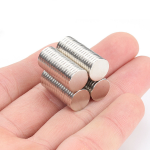
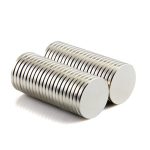

N35 neodymium magnets
Air transportation has certain particularities. In order to ensure safety, both people and cargo need to undergo security inspections before boarding. If you carry magnetic materials, such as neodymium iron boron strong magnets, when taking a flight, or the customer is in a hurry and wants the goods to be delivered by air freight, can we bring the magnets on the plane at this time?

Since weak stray magnetic fields can interfere with aircraft navigation systems and control signals, the International Air Transport Association (IATA) classifies magnetic cargo as Category 9 dangerous goods and must be restricted during collection and transportation n35 neodymium magnets. Therefore, some air cargo containing magnetic materials now requires magnetic testing to ensure the normal flight of the aircraft. Magnetic materials, audio materials and other instruments containing magnetic accessories must undergo magnetic testing.
Air freight standards
According to the relevant provisions of IATA902: If the maximum magnetic field strength measured at a distance of 2.1m from the object does not exceed 0.159A/m (200nT, which is equal to 2mGs = 0.002Gs), the item is not restricted as a magnetic material and can be used as a General cargo handling.
If the maximum magnetic field strength measured at a distance of 2.1m from the object being measured exceeds 0.159A/m, but any magnetic field intensity at a distance of 4.6m from the surface of the object being measured is less than 0.418A/m, the goods can be accepted and transported as dangerous goods.
If the intensity of any magnetic field at a distance of 4.6m from the surface of the item being measured is greater than 0.418A/m, the item is strictly prohibited from being transported by air n35 neodymium magnets.
How to meet air freight standards
In order to meet the above air transport requirements, the magnets shipped by air need to be demagnetized. Although it is called demagnetization, it is not actually a demagnetization process for the n35 neodymium magnets . Instead, special shielding packaging is used to make the magnetism displayed by the package meet the specified aviation safety transportation requirements.
Shielding packaging generally uses high magnetic permeability materials, such as cold-rolled sheets, galvanized sheets, etc. If the amount of magnetic material is large, it must be packaged in several layers. The magnetic permeability of high magnetic permeability materials is very high. According to the Faraday electric cage principle, the magnetic field mainly circulates in the box after packaging, and very little leaks out. Pack in cartons or wooden boxes outside the shielded packaging.

Magnetic detection
Airlines or logistics companies that carry magnetic materials will require customers to conduct magnetic testing and issue an “Air Transport Conditions Identification Report” to ensure the normal flight of the aircraft n35 neodymium magnets. Air freight appraisals can generally only be issued by qualified professional appraisal companies recognized by the civil aviation administration of the country, and generally need to send samples to the appraisal company for professional testing and then issue an appraisal report.
If it is not convenient to send n35 neodymium magnets samples, professionals from the appraisal company will conduct on-site testing and then issue an appraisal report. The validity period of the appraisal report is generally for the current year. After the new year, it usually needs to be redone.
During magnetic testing, customers need to pack the goods according to air transport requirements. The testing will not damage the packaging of the goods. In principle, the goods are not unpacked for testing, but stray magnetic fields are detected on 6 sides of each piece of goods.
If the goods fail the magnetic inspection, special attention needs to be paid. First, with the consent of the customer, the magnetic inspection staff will be entrusted to unpack the goods and inspect them, and then make relevant reasonable suggestions based on the specific situation. If the shielding can meet the air transportation requirements, the n35 neodymium magnets will be shielded according to the customer’s entrustment, and relevant fees will be charged.
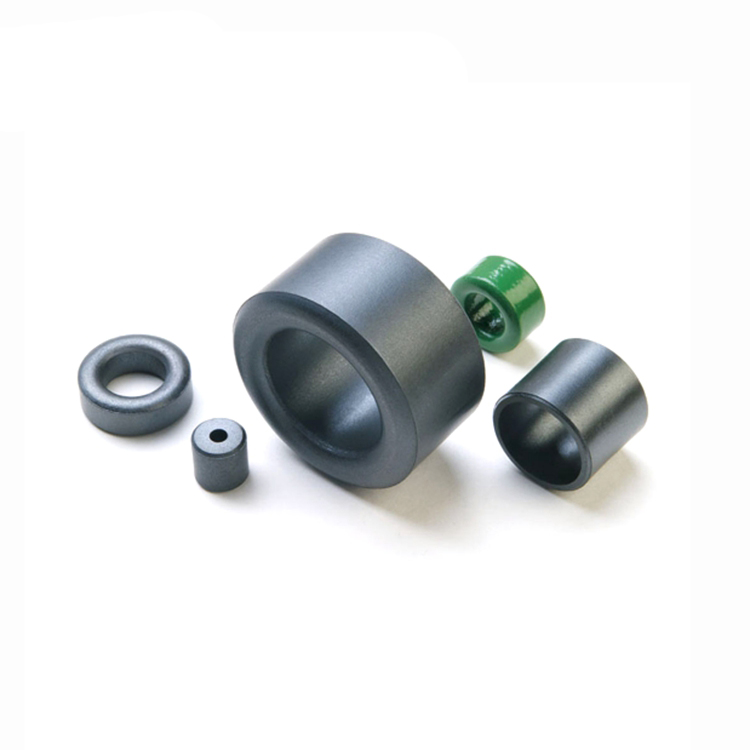
N35 neodymium magnets are a common grade of neodymium magnets.
The “N35” designation indicates the material’s magnetic properties. Here’s what it means: N: This letter represents the material’s magnetic properties. In this case, it stands for neodymium. 35: This number indicates the maximum energy product of the magnet, measured in Mega-Gauss-Oersteds (MGOe). So, n35 neodymium magnets have a maximum energy product of around 35 MGOe. N35 neodymium magnets are strong, but not the strongest available.
They offer a good balance between magnetic strength and cost, making them widely used in various applications such as: Crafts and DIY projects: Due to their strength and small size, N35 magnets are commonly used in crafts, model making, and other DIY projects. Magnetic closures: They are used in magnetic clasps for jewelry, bags, and clothing.
Electronics: N35 neodymium magnets are used in small electronic devices like speakers, sensors, and actuators. Hobby and science experiments: They are popular for various hobby and science projects, including experiments with magnetism and levitation. Keep in mind that while N35 neodymium magnets are strong, there are higher grades available (such as N52), which offer even greater magnetic strength.
Transporting magnetic materials on a plane can be done, but there are regulations and safety considerations to keep in mind, especially if you’re shipping large quantities or powerful magnets. Here’s a general outline of how you might do it:
Packaging:
Choose appropriate packaging: Use strong and secure packaging that can withstand the forces of handling and transportation. For smaller quantities, individual magnets can be packed in plastic or foam to prevent them from sticking together or damaging other items.
Insulate the magnets: To prevent unintended attraction, you can separate the magnets with non-magnetic materials like cardboard, plastic, or foam.
Labeling: Ensure proper labeling on the packaging to indicate that it contains magnetic materials. Follow any regulations for shipping hazardous or magnetic materials.
Regulations and Safety:
Check airline regulations: Different airlines may have varying policies regarding the transportation of magnetic materials. Ensure you comply with their regulations to avoid any issues.
Check transportation regulations: Some countries have specific regulations regarding the transportation of magnetic materials. Make sure you are aware of and comply with these regulations n35 neodymium magnets.
Safety precautions: Be aware of the potential hazards associated with strong magnets, such as damage to electronic devices and interference with medical devices like pacemakers. Take necessary precautions to prevent accidents.
Shipping Methods:
Courier services: Use reputable courier services that are experienced in shipping magnetic materials. They can provide guidance on packaging requirements and help ensure compliance with regulations.
Priority shipping: Opt for priority shipping services to ensure your package reaches customers quickly. This may come with additional costs but can be worth it for faster delivery.
Communication with Customers n35 neodymium magnets:
Inform customers: Make sure your customers are aware that they are receiving magnetic materials and provide any necessary safety information.
Tracking: Provide tracking information so customers can monitor the progress of their shipment.
Customer support: Be available to answer any questions or concerns customers may have about their shipment.
By following these guidelines and ensuring compliance with regulations, you can safely transport magnetic materials on a plane and quickly reach your customers.
Teslameter measures the surface magnetic field of n35 neodymium magnets.
Tesla meters include Hall effect Tesla meter, coil method Tesla meter and rotating coil method Tesla meter. Hall effect teslameter is commonly used in the testing of permanent magnet material products. The Hall effect is a phenomenon in which a sheet-shaped semiconductor carrying a current is placed in a magnetic field perpendicular to the direction of the current n35 neodymium magnets.
The semiconductor will generate a transverse magnetic field, that is, it will generate an electromotive force in the direction perpendicular to the magnetic field and the current. (Related reading: How the Hall element works) When the Hall device and the passing current are constant, the Hall voltage is proportional to the measured magnetic field, so the Hall effect can measure the magnetic field n35 neodymium magnets.
When using a Hall effect teslameter to measure the surface magnetic field of a magnet’s magnetic poles, you need to pay attention to the following issues: 1. The plane of the Hall probe must be perpendicular to the direction of the magnetic field, so the plane of the Hall probe must be close to the surface of the magnetic pole; 2. . The surface field at different positions of the magnetic pole in an open-circuit magnetic field is non-uniform, so the surface magnetic field at a specified fixed position should be measured.
A flux meter measures the magnetic flux of n35 neodymium magnets.
Magnetic flux cannot be measured directly, but it can be calculated and determined by measuring the moved electromotive force of the coil through Maxwell’s equations. The magnetic flux meter measuring the magnetic flux of the sample has been widely used as a comparative measurement method in the detection of n35 neodymium magnets products. The disadvantage of this method is that when measuring small-sized samples, the degree of the flux meter is related to the position of the sample in the measuring coil.
Permanent n35 neodymium magnets with ultra-high coercivity are either small in size or complex in shape. For some thin or tile-type n35 neodymium magnets, it is very difficult to measure their surface field with a Tesmeter or measure the magnetic flux value with a flux meter. Difficult because the measured values are very scattered and have poor repeatability. For such thin magnets or special-shaped magnets (such as tile-shaped or sector-shaped), only the method of measuring magnetic moment can be used.