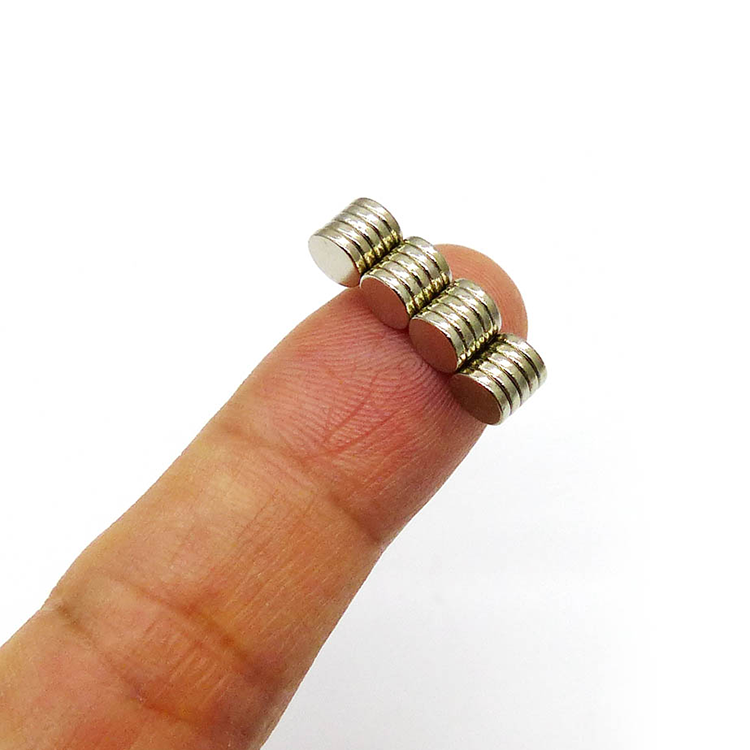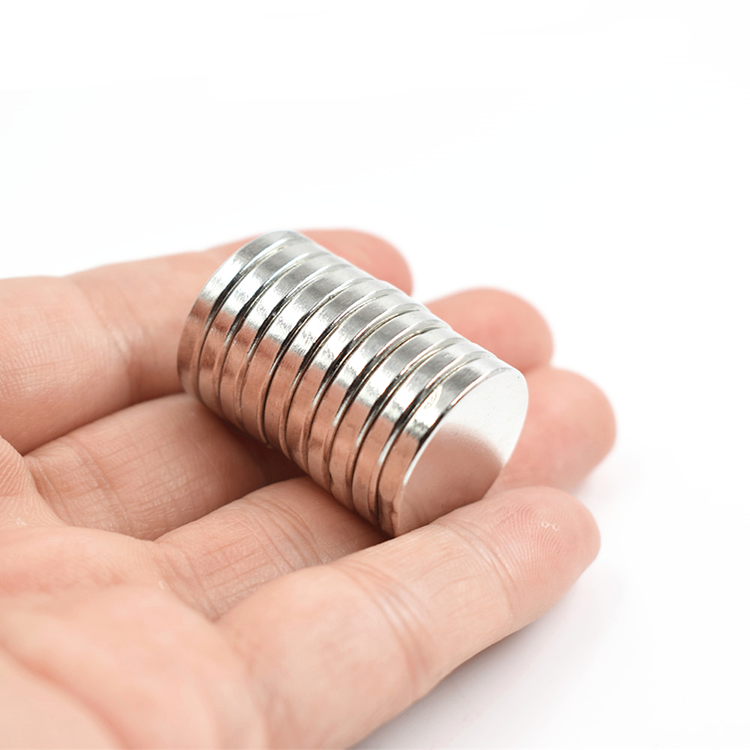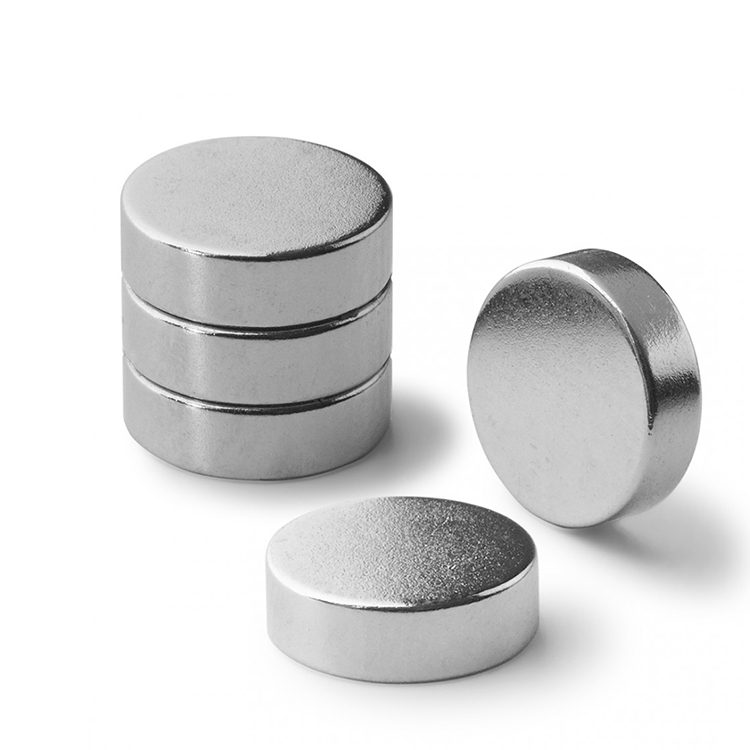


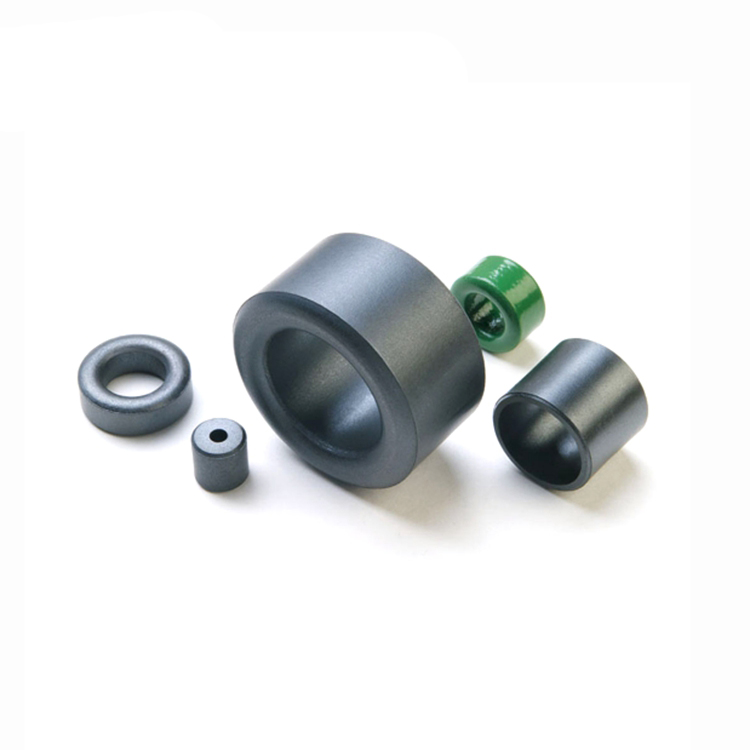

Bonded NdFeB is made by adding NdFeB magnetic powder into binder
Bonding is actually injection molding; sintered NdFeB is formed by vacuuming and heating at high temperature. Generally, only blanks can be produced after sintering, and then mechanically processed. (such as wire cutting, slicing, grinding, etc.) to become magnets of various shapes.
Sintered NdFeB is a brittle and hard material that is difficult to process
It has large loss during processing, high cost, poor dimensional accuracy, and poor corrosion resistance. The surface needs electroplating treatment. But the advantage is higher performance!
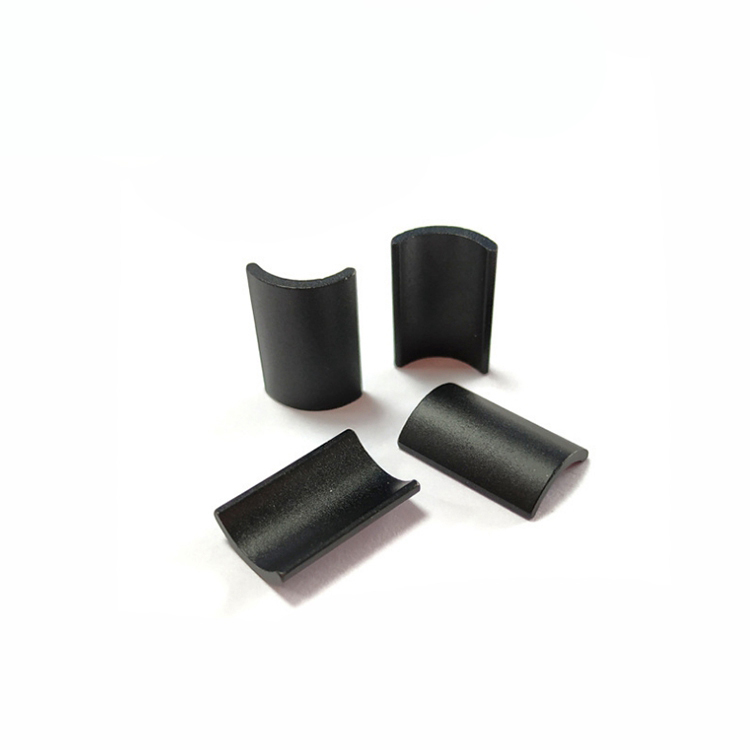
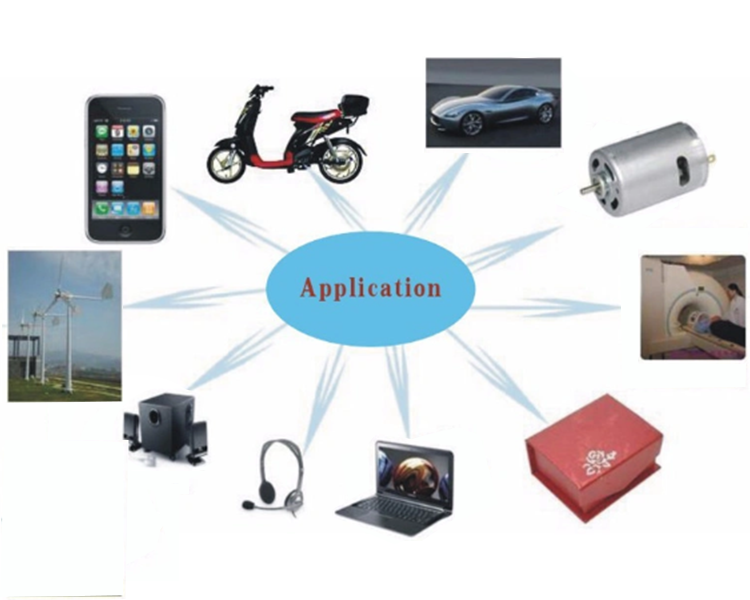
First of all, in terms of application fields, the production and application development of bonded NdFeB permanent magnet materials is late, the application area is not wide, and the dosage is small. It is mainly used in office automation equipment, electrical equipment, audio-visual equipment, instruments, small Motors and measuring machinery are widely used in mobile phones, CD-ROM, DVD-ROM drive motors, hard disk spindle motors HDD, other micro-special DC motors and automation instruments and meters. Sintered NdFeB permanent magnets have been widely used in modern industry and electronic technology. The more common ones are permanent magnet motors, speakers, magnetic separators, computer disk drives, and magnetic resonance imaging equipment.
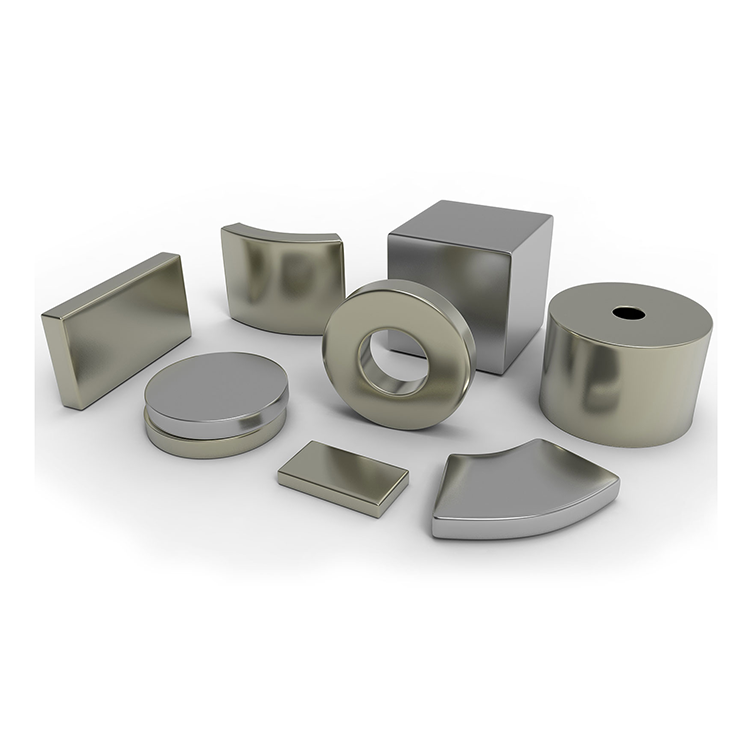
What are the specific differences between them in terms of production and processing technology, density, magnetism, surface treatment, and price?
Compared with the density of the two, the density of bonded NdFeB is about 6 grams per cubic centimeter. The density of sintered NdFeB is about 7.5 g/cm3.
Compared with the magnetic force of the two, the bonded NdFeB material contains less neodymium, so the performance is not as high as that of sintered NdFeB. Generally, the thinner magnetic ring is made of bonded NdFeB.
Compared with the surface treatment of the two, sintered NdFeB is usually galvanized or nickel-plated, and the surface treatment of bonded NdFeB is usually black epoxy.
Comparing the prices of the two, the price of bonded NdFeB will be much cheaper. Mass production of bonded NdFeB requires a mold, while sintered NdFeB does not.
1. Bonded NdFeB
Bonded NdFeB, composed of Nd2Fe14B, is a synthetic magnet. Bonded NdFeB magnets are magnets made by mixing quick-quenched NdFeB magnetic powder and binder through “compression molding” or “injection molding”.
Bonded magnets have high dimensional accuracy, can be made into magnetic components with relatively complex shapes, and have the characteristics of one-time molding and multi-pole orientation. Bonded NdFeB has high mechanical strength and can be molded together with other supporting components during molding.
2. Sintering
Sintering, which refers to transforming powdery materials into dense bodies, is a traditional process. People have long used this process to produce ceramics, powder metallurgy, refractory materials, ultra-high temperature materials, etc. Generally speaking, the dense body obtained by sintering after the powder is formed is a polycrystalline material, and its microstructure is composed of crystals, glass bodies and pores. The sintering process directly affects the grain size, pore size, and grain boundary shape and distribution in the microstructure, which in turn affects the properties of the material.
How to distinguish bonded NdFeB magnets from sintered NdFeB magnets?
In fact, both magnets belong to NdFeB magnets, which are distinguished according to different production processes. Bonded NdFeB magnets are actually formed by injection molding, while sintered NdFeB magnets are formed by high temperature heating after vacuuming.
Bonded NdFeB magnets are injection molded and contain adhesives, and their density is generally only 80% of the theoretical value. Sintered NdFeB magnets are heated at high temperature through complex processes, so the magnetic attenuation of bonded NdFeB magnets is about 30% relative to that of sintered NdFeB magnets.
Sintered NdFeB magnets are anisotropic magnets produced by powder sintering. Under normal circumstances, only blanks can be produced by sintering, and then various shapes of magnets can be produced by machining (such as wire cutting, slicing, grinding, etc.). Sintered NdFeB is a hard and brittle material, which is difficult to process. Large loss, high cost, poor dimensional accuracy and poor corrosion resistance. The surface needs electroplating treatment. But the advantage is high performance, reaching more than 50m.
All in all, the magnetic performance of bonded NdFeB magnets is only about 5% of that of sintered NdFeB magnets. At present, the energy product of sintered NdFeB magnets can reach more than 50m, while the energy product of bonded magnets is generally less than 10m, and the best is only 12m. The performance of the magnetic powder used in the bonded magnet is generally 15m, at most only 10.5m. Therefore, sintered NdFeB is more widely used than bonded NdFeB.
NdFeB magnetic materials, as the result of the development of rare earth permanent magnet materials, are known as the “Magnetic King” due to their excellent magnetic properties. NdFeB magnetic materials are alloys of praseodymium neodymium metal, boron iron and so on. Also known as magnetic steel. NdFeB has extremely high magnetic energy product and coercive force, and the advantages of high energy density make NdFeB permanent magnet materials widely used in modern industry and electronic technology, so that instruments and meters, electroacoustic motors, magnetic separation and magnetization Miniaturization, light weight, and thinning of equipment such as equipment become possible.
NdFeB magnets can be divided into bonded NdFeB magnets and sintered NdFeB magnets. The difference between the two is mainly in the process. Bonded NdFeB is made by adding NdFeB magnetic powder into a binder. Bonding is actually injection molding, while sintering is vacuumized and heated at high temperature! The sintered NdFeB permanent magnet material adopts the powder metallurgy process. The smelted alloy is made into powder and pressed into a compact in a magnetic field. The compact is sintered in an inert gas or vacuum to achieve densification. In order to improve the coercive force of the magnet , usually requires aging heat treatment.
Sintered NdFeB permanent magnet materials have excellent magnetic properties and are widely used. The more common ones are permanent magnet motors, speakers, magnetic separators, computer disk drive tables, etc.
Bonded NdFeB magnets are magnets made by mixing quick-quenched NdFeB magnetic powder and binder through “compression molding” or “injection molding”. It has the advantages of high remanence, high coercive force, high magnetic energy product, easy processing of various sizes and minimum specifications, etc. It is mainly used in office automation equipment, electrical machinery, audio-visual equipment, instrumentation, small motors and measuring machinery and other fields.
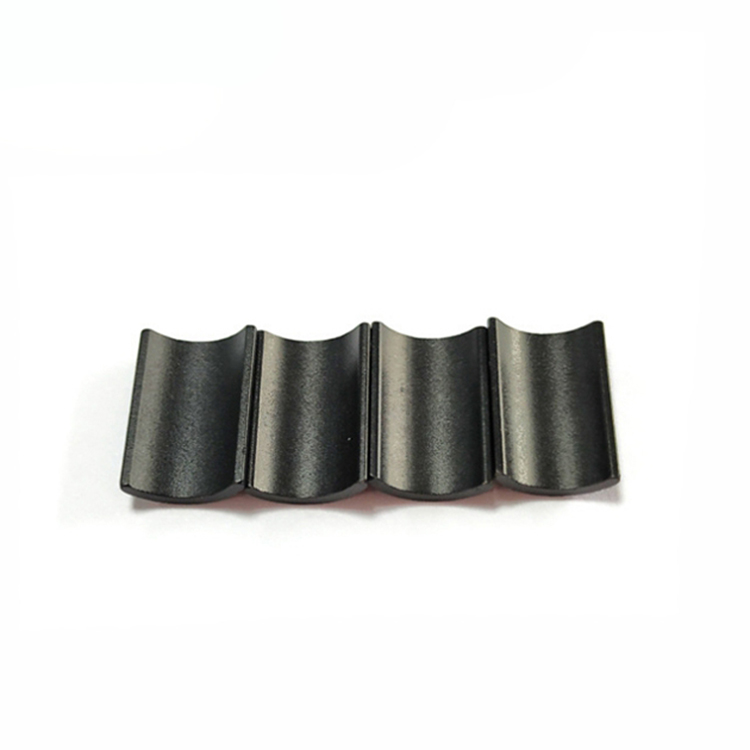
1. Comparison of bonded and sintered NdFeB production processes.
① Bonded NdFeB is made by adding NdFeB magnetic powder into a binder. Bonding is actually injection molding.
② Sintered NdFeB is formed by vacuuming and heating at high temperature. Generally, only blanks can be produced after sintering, and then mechanical processing (such as wire cutting, slicing, grinding, etc.) can become magnets of various shapes. (Sintered NdFeB is a brittle and hard material that is difficult to process. It has a large loss during processing, high cost, poor dimensional accuracy, and poor corrosion resistance. The surface needs electroplating treatment. But the advantage is high performance!)
2. Compare the density of the two, which one is higher?
①The density of bonded NdFeB is about 6 g/cm3. ②The density of sintered NdFeB is about 7.5 g/cm3.
3. Comparing the magnetic force between the two, which one is stronger?
The bonded NdFeB material contains less neodymium, so the performance is not as high as that of sintered NdFeB.
4. The surface treatment comparison of bonded and sintered NdFeB.
①Sintered NdFeB is usually galvanized or nickel-plated; ②The surface treatment of bonded NdFeB is usually black epoxy.
5. Compared with the price of bonded and sintered NdFeB, which one is cheaper
The price of bonded NdFeB will be relatively cheaper. Mass production of bonded NdFeB requires a mold, but sintered NdFeB does not.
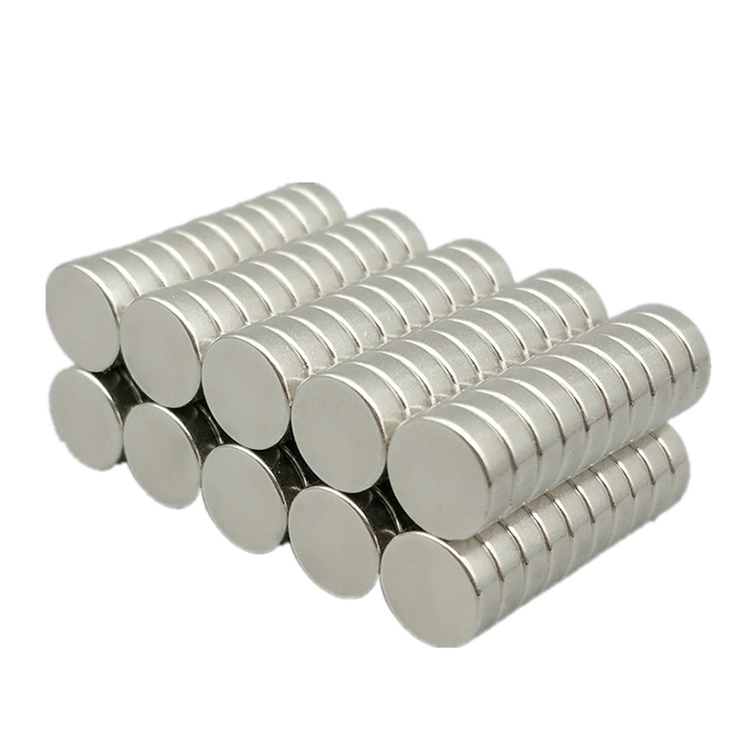
Bonded magnets perform poorly for two reasons:
First of all, bonded magnets are isotropic, that is, regardless of magnetization along any direction, the magnetic field strength is the same (also related to the shape), while sintered magnets are anisotropic. In the production process of sintered magnets, there is a process It is called magnetic field orientation, so when magnetizing, it can only have high magnetic field strength when magnetized along the direction of orientation, and there is no magnetism when magnetized along other directions. Theoretically speaking, the isotropic remanence is one-half of the anisotropic remanence. Since the magnetic energy product is proportional to the square of the remanence, the isotropic magnetic properties are only a quarter of the anisotropic magnetic properties. one.
Secondly, because the bonded magnet contains adhesive, its density is generally only 80% of the theoretical density. Therefore, the magnetic properties of the bonded magnet will also decrease by about 30%. The density of sintered magnets is basically close to the theoretical density, and the attenuation is very small. Taken together, the magnetism of bonded NdFeB magnets is only about one-fifth of that of sintered magnets. At present, the magnetic energy product of sintered NdFeB magnets can reach more than 50M, while that of bonded magnets is generally below 10M, and the best one is only 12M. The performance of the magnetic powder used in the bonded magnet is generally 15M, and the bonded magnet is only 10.5M at most. Rubber NdFeB magnet is a kind of bonded NdFeB magnet. Bonded NdFeB magnets are divided into molded NdFeB magnets, injection molded NdFeB magnets and rolled NdFeB magnets according to the molding method. Rubber NdFeB magnets are rolled NdFeB magnets.
The so-called bonded NdFeB is to mix NdFeB powder with permanent magnetic characteristics (generally produced by quick quenching method or HDDR method) with adhesive (such as epoxy resin, nylon or rubber), and then directly place it in the mold. Molded, or calendered, and then cured to become a bonded magnet with permanent magnetic properties. It is characterized in that the magnet of the final size can be obtained without machining, which can save materials. The product has high dimensional accuracy and is suitable for mass production. In addition, the corrosion resistance is also better than that of sintered magnets. The disadvantage is that the magnetic properties are low, and the highest performance of isotropic bonded magnets is only one-fifth of that of sintered NdFeB magnets.
Sintered NdFeB is an anisotropic magnet produced by powder sintering. Generally, only blanks can be produced after sintering, and then through mechanical processing (such as wire cutting, slicing, grinding, etc.) to become magnets of various shapes. Sintered NdFeB is a brittle and hard material that is difficult to process. It has large loss during processing, high cost, poor dimensional accuracy, and poor corrosion resistance. The surface needs electroplating treatment. But the advantage is that the performance is higher, and it has reached more than 50M at present.
Productos relacionados