


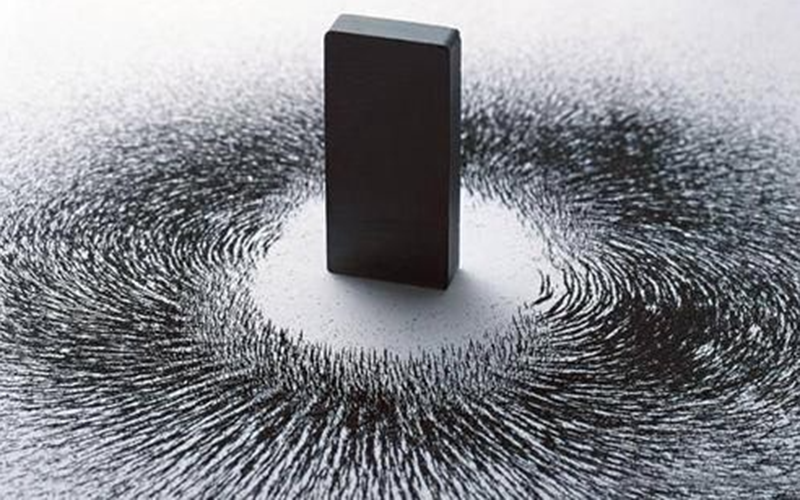
Speaker magnets are a crucial component in most speakers
speaker magnet responsible for creating the magnetic field necessary for the speaker to function. Typically, they’re made of materials like ferrite (ceramic), neodymium, or even samarium-cobalt. These magnets interact with the electric current flowing through the voice coil, which in turn causes the speaker cone to move and produce sound waves. Neodymium magnets, in particular, are popular due to their strong magnetic properties, allowing for smaller and more powerful speaker designs.

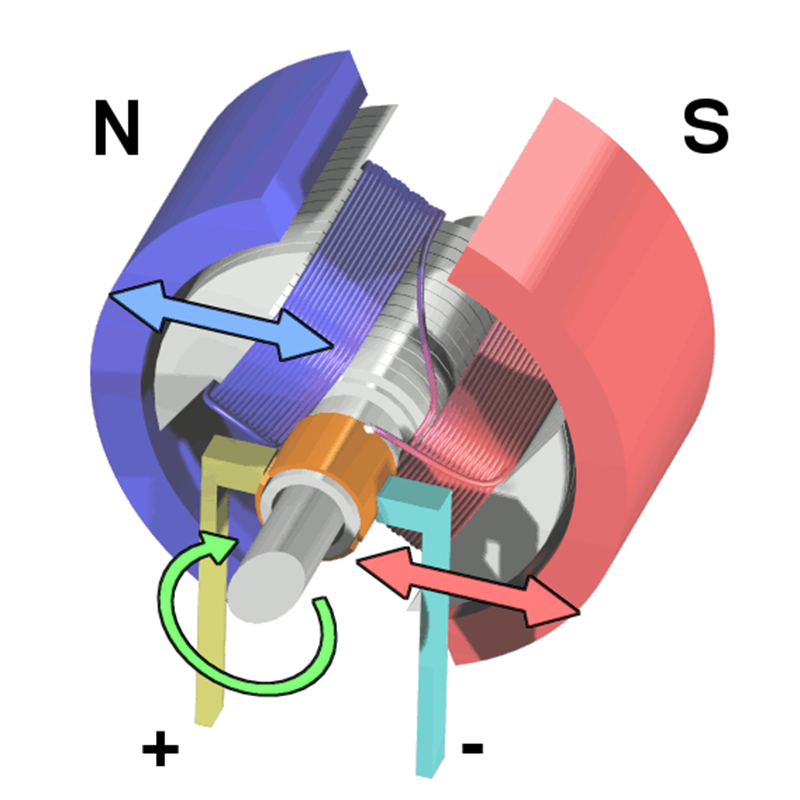
The speaker magnet is composed of several key components: T iron, magnet, voice coil and diaphragm. When an alternating current passes through the coil of the speaker (i.e., the voice coil), a corresponding magnetic field is generated in the voice coil. This magnetic field interacts with the magnetic field generated by the magnet on the speaker. This force causes the voice coil to move around the speaker itself. The permanent magnet magnetic field of the belt vibrates with the audio current.
The diaphragm and the voice coil are connected together. When the voice coil and the speaker diaphragm vibrate together, they push the surrounding air to vibrate, and the speaker produces sound. As shown in the picture above, this is the principle of horn sound.
Auswirkung der Magnetleistung auf die Tonausgabequalität des Lautsprechers
In the case of the same magnet volume and the same voice coil, the performance of the magnet has a direct impact on the sound quality of the speaker:
The greater the magnetic flux density (magnetic induction intensity) B of the magnet, the stronger speaker magnet the thrust acting on the sound membrane.
The greater the magnetic flux density (magnetic induction intensity) B, the greater the power, and the higher the sensitivity of the speaker. Headphone sensitivity refers to the sound pressure level that the headphone can emit when a 1mw, 1khz sine wave is input into the headphone. The unit of sound pressure is dB (decibel). The greater the sound pressure, the greater the volume. Therefore, the higher the sensitivity, the smaller the impedance, and the easier it is for the headphones to produce sound.
The larger the magnetic flux density (magnetic induction intensity) B, the lower the overall quality factor Q value of the speaker. Q value (quality factor) refers to a set of parameters of the speaker damping coefficient.
The larger the magnetic flux density (magnetic induction intensity) B, the better the transient state. Transient can be understood as “fast response” to signals. Headphones with speaker magnet good transient response should respond immediately as soon as the signal comes, stop abruptly as soon as the signal stops, and never be sloppy. This is especially true for drum music and larger-scale symphonies. This is most evident in the transitional parts of the ensemble.
Wie man Lautsprechermagnete auswählt
There are three main types of speaker magnets on the market: alnico, ferrite and neodymium iron boron:
Alnico was the earliest magnet used in speakers, such as horn speakers in the 1960s (known as tweeters). Generally made into internal magnetic speakers (external magnetic speakers are also available). Its disadvantages are low power, narrow frequency range speaker magnet, hard and brittle, and inconvenient processing. In addition, cobalt is a scarce resource and the price of alnico is relatively high. From a cost-effective perspective, there are relatively few speakers that use alnico.
Ferrite is generally made into external magnetic speakers. The magnetic properties of ferrite are relatively low and a certain volume is required to meet the driving force of the speaker magnet. Therefore, it is generally used in larger audio speakers. The advantage of ferrite is that it is cheap and cost-effective; the disadvantage is that it is larger in size, has less power, and has a narrow frequency range.
The magnetic properties of NdFeB are far superior to Alnico and ferrite, and it is currently the most commonly used magnet in speaker magnet, especially high-end speakers. Its advantages are small size, high power and wide frequency range under the same magnetic flux speaker magnet. Currently, HiFi headphones basically use this type of magnet. The disadvantage is that the material price is higher because it contains rare earth elements.
In the application of magnets, magnetic flux or flux density is an important indicator to measure its performance (especially in motors), but in some application fields, such as magnetic sorting, salvage, etc., magnetic flux is not an effective measure of sorting or The amount of adsorption effect, magnetic attraction is a more effective indicator.
Magnetic attraction refers to the weight of ferromagnetic material that a speaker magnet can absorb. It is affected by factors such as the performance, shape, size, and adsorption distance of the magnet. There is no mathematical formula that can calculate the attraction of a certain magnet, but we can use The magnetic attraction force measurement device is used to measure the magnetic attraction force value (usually measuring the magnet pulling force and then converting it into weight), as shown in the figure below.
The attraction force of the speaker magnet will gradually decrease as the distance from the adsorbed object increases.
If you search for magnet attraction calculations on the Internet, many websites will write “According to experience, the magnetic force of a neodymium iron boron speaker magnet is 600 times its own weight (some say 640 times).” Is this experience correct? Let’s verify it through experiments. Just know.
The experiment selected sintered NdFeB N42 speaker magnet of different shapes and sizes. The surface coatings are all nickel-copper-nickel, which are magnetized in the height direction. The maximum pulling force (N pole) of each speaker magnet was measured and converted into an adsorption weight.
It is not difficult to find from the measurement results:
The ratio of the weight that speaker magnet of different shapes and sizes can pick up to their own weight varies greatly. Some are less than 200 times, some are more than 500 times, and some can reach more than 3,000 times. Therefore, the 600 times written on the Internet is not completely correct.
For a cylinder or round cake of the same diameter, the greater the height, the greater the weight it can absorb. The suction force is basically proportional to the height.
For a cylinder or round cake (blue cell) of the same height, the larger the diameter, the greater the weight it can absorb. The suction force is basically proportional to the diameter.
Cylinders or round cakes (yellow cells) with the same volume and weight have different diameters and heights, and the weight they can pick up varies greatly. Generally, the longer the orientation direction of the magnet, the greater the suction force.
speaker magnet with the same volume do not necessarily have the same suction force. Depending on their shape, the suction force may vary greatly. The opposite is also true. Magnets that attract ferromagnetic materials of the same weight may have different shapes, volumes, and weights.
Regardless of the shape, the length of the orientation direction plays the greatest role in determining suction.
The above is a suction test for magnets of the same brand speaker magnet. So what is the difference in suction between magnets of different brands? We will do another test for comparison later.
Parylene is a protective polymer material. Its Chinese name is parylene. It can be vapor deposited under vacuum. The good penetrating power of Parylene active molecules can form pinhole-free inside, at the bottom, and around the component.
The transparent insulating coating with uniform thickness provides components with a complete high-quality protective coating to resist the attack of acid, alkali, salt spray, mold and various corrosive gas parts. Because Parylene is not a liquid, there will be no aggregation or bridging to form a meniscus during the coating process.
Why do speaker magnet permanent speaker magnet need to be coated with parylene?
NdFeB permanent speaker magnet material is a high-performance strong magnetic material, but this material is very unstable in the air. Larger magnets are usually protected by electroplating or epoxy electrophoretic paint, while smaller magnets are Especially for ring-shaped and cylindrical magnetic materials, it is difficult to meet the use requirements with the above traditional protection methods.
The combination of Parylene’s unique preparation process and excellent performance enables it to fully coat small and ultra-small magnetic materials without weak points. The magnetic materials can be immersed in hydrochloric acid for more than 10 days without corrosion. Currently, there are many small and ultra-small magnetic materials in the world. Parylene is used as insulation and protective coating.
Preparation and polymerization process of Parylene films
The commonly used method for preparing parylene is chemical vapor deposition (CVD), which is a process in which reactive substances undergo a space gas phase chemical reaction under gaseous conditions, directly generating solid substances on the surface of a solid substrate, and then forming a coating on the surface of the substrate. technology.
The preparation process of parylene film is divided into three steps: vaporization and pyrolysis of the monomer, and adhesion deposition on the surface of the substrate.
1. In a vacuum environment, solid tetrachloro-p-xylene ring disomer sublimates into a gaseous state at about 150°C;
2. At about 650°C, the tetrachloro-p-xylene ring dimer is cracked into active 2,5-dichloro-p-dimethylbenzene with free radicals;
3. At room temperature (25°C), free 2,5-dichloro-p-dimethylbenzene is deposited and polymerized on the surface of the solid substrate to form a pinhole-free conformal film.
The protective effect of parylene coating
1. Resistant to acid and alkali corrosion, can solve the problem of corrosion by acidic or alkaline substances.
2. Low water and gas permeability, high barrier effect, and can achieve moisture-proof, waterproof, anti-rust and slow weathering effects.
3. Resistant to organic solvents (not soluble in general solvents).
4. The film layer is colorless and highly transparent, and does not affect the original appearance of the product.
5. The film layer has the effect of being dustproof, moistureproof, and waterproof, allowing the product to meet the international dustproof and waterproof IP grade standards.