


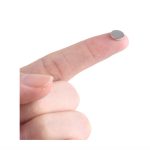
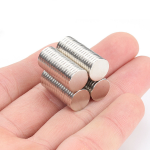
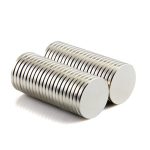

Permanent magnet neodymium
Hard magnetic materials (such as NdFeB) have two distinctive characteristics. One is that they can be strongly magnetized under the action of an external magnetic field, and the other is hysteresis, that is, the hard magnetic material still retains its magnetized state after the external magnetic field is removed permanent magnet neodymium. So how do you make a magnet that has been magnetized to a technically saturated state lose its magnetism? Today we will learn about the principles and methods of demagnetization.
Demagnetization, also known as magnetic cleaning, demagnetization, etc., refers to the process of returning a magnet to a magnetically neutral state, which can also be called magnetic neutralization.
In industrial processing, there are three methods of demagnetization:
1. Statische Entmagnetisierung
Add a magnetic field in the opposite direction of the original magnetization of the magnet. The strength of this antimagnetic field should ensure that when it is removed, the magnetic induction intensity of the magnetic body will just become zero permanent magnet neodymium. The magnetic neutral state obtained in this way is called the static magnetic neutral state.
In the hysteresis loop curve, the red line segment in the second quadrant represents the demagnetization curve, that is, when a magnetic field opposite to the magnetization direction is applied to the permanent magnet neodymiumt, its magnetic induction intensity decreases as the reverse magnetization field intensity increases. When the reverse magnetization field intensity reaches -Hc, the magnetic induction intensity of the magnet drops to 0, and the magnet no longer has magnetism.
The hysteresis loop is measured at room temperature. When the magnet is at different working temperatures, the demagnetization curve is not the same, as shown in the figure below. Therefore, the reverse magnetic field intensity applied for demagnetization at different temperature conditions is different.

2. Dynamische Entmagnetisierung
A sufficiently strong alternating magnetic field is applied to the magnetic body, and then the amplitude of the alternating magnetic field is gradually reduced to 0. The resulting magnetic neutral state is called the dynamic magnetic neutral state.
The principle of this method is to place the workpiece in an alternating magnetic field and use the decreasing hysteresis loop to demagnetize. As the amplitude of the alternating magnetic field gradually decays, the trajectory of the hysteresis loop becomes smaller and smaller permanent magnet neodymium. When the magnetic field gradually decays to zero, the residual magnetism remaining in the workpiece will be close to zero.
The demagnetization principle is shown in the figure below. It can be seen from this that the changes in the direction and magnitude of the current and the magnetic field during demagnetization must be commutated and decayed at the same time.

(1) AC-Entmagnetisierung
The workpieces that have been magnetized by AC are demagnetized by AC, and the pass method or attenuation method can be used.
A. Pass method
For batch demagnetization of small and medium-sized workpieces, it is best to place the workpieces on a demagnetizer equipped with a track and a carriage for demagnetization. When demagnetizing, place the workpiece on the carriage 30 cm in front of the coil. When the coil is energized permanent magnet neodymium, slowly pass the workpiece through the coil along the track and turn off the power at least 1 m away from the coil. For heavy or large workpieces that cannot be demagnetized on the demagnetizer, the coil can also be placed on the workpiece. When the power is on, slowly pass the coil through the workpiece and turn off the power at least 1 m away.

B Attenuation method
Since the direction of the alternating current is constantly changing, an automatic attenuation demagnetizer or voltage regulator can be used to gradually reduce the current to zero for demagnetization. The workpiece is placed in a coil, clamped between the two magnetizing chucks of a flaw detector, or the support rod contact contacts the workpiece and then the current is reduced to zero for demagnetization.
The following figure shows the demagnetization effect of a demagnetizer found on the Internet. It can be seen that after demagnetization, there will still be a certain amount of residual magnetism left in the permanent magnet neodymium. The price of the demagnetizer is mainly related to the capacity of the energy storage capacitor and the charging voltage (demagnetizer energy). When purchasing a demagnetizer, the brand or intrinsic coercive force of the demagnetized product and the size of the demagnetized sample should be considered.
(2) DC demagnetization
Demagnetization is performed by continuously changing the direction of the DC current and decreasing the current through the workpiece to zero. The DC demagnetization current waveform is shown in the figure below, where T1 is the current conduction time interval and T2 is the current power-off time interval. It is necessary to ensure that the current is reversed when the power is off permanent magnet neodymium. The current attenuation times should be as many as possible (generally more than 30 times), and the current amplitude of each attenuation should be as small as possible. If the attenuation amplitude is too large, the purpose of demagnetization cannot be achieved.

3. Thermal demagnetization
It is a method of heating the magnetic body to above the Curie temperature and then cooling and demagnetizing it without the action of an external magnetic field. Sintered NdFeB can be baked at a high temperature of more than 350°C for about 30 minutes to 1 hour by thermal demagnetization.
Within the working temperature, the magnetic force of the magnet will decrease as the temperature rises, but most of the magnetic force will recover after cooling. If the temperature reaches the permanent magnet neodymium Curie temperature, some molecules in the magnet will move violently and demagnetize, and this demagnetization is irreversible.
No matter which of the above three methods is used to demagnetize the magnet, the internal structure of the magnet will be permanently changed. After demagnetization, the magnet will be magnetized again, and the magnetic properties cannot be restored to the previous level.
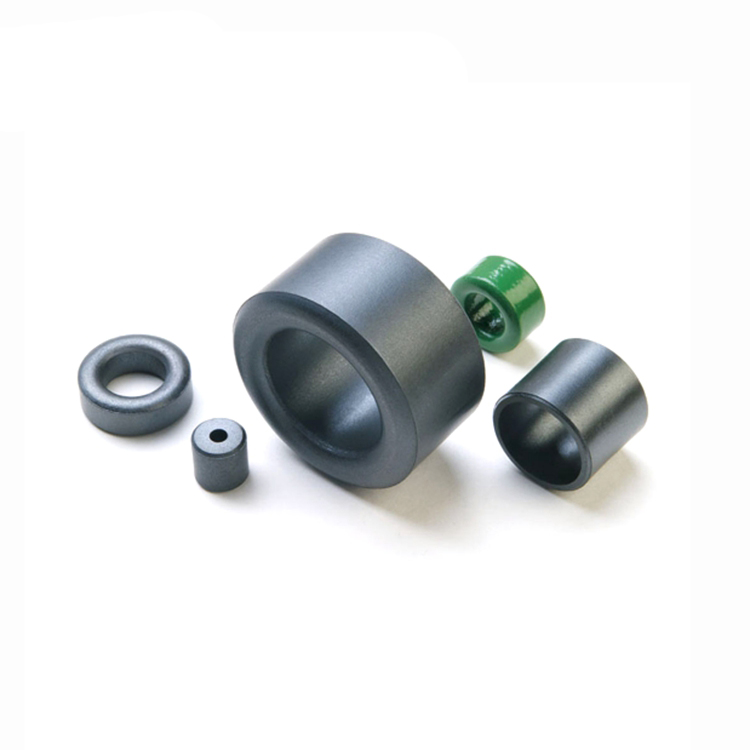
Neodymium magnets, also known as neodymium-iron-boron (NdFeB) permanent magnet neodymium, are a type of permanent magnet known for their exceptional strength. Here are some key aspects about permanent magnet neodymium:
Composition: permanent magnet neodymium are composed mainly of neodymium, iron, and boron. The specific composition typically includes other elements to enhance properties like corrosion resistance.
Strength: They are the strongest type of permanent magnets available commercially. They can produce magnetic fields significantly stronger than other types of magnets, such as ferrite or alnico magnets.
Applications: Due to their strength and compact size, neodymium magnets are used in a wide range of applications across various industries:
Electric motors and generators: Used in electric vehicles (EVs), wind turbines, and industrial machinery.
Consumer electronics: Found in headphones, microphones, and smartphone speakers.
Magnetic separators: Used in recycling processes to separate metals from non-metals.
Magnetic resonance imaging (MRI): Essential in medical diagnostics.
Aerospace and defense: Utilized in actuators, sensors, and magnetic bearings.
Audio equipment: Providing high-quality sound reproduction in speakers and headphones.
Magnetic therapy: Used in products aimed at therapeutic benefits.
Shapes and Sizes: permanent magnet neodymium are available in various shapes and sizes, such as discs, blocks, rings, and spheres. They can be customized to fit specific industrial or consumer needs.
Coatings: To protect against corrosion and to provide a smooth surface, permanent magnet neodymium are often coated with nickel, copper, or a combination of both.
Handling Precautions: Due to their extreme magnetic strength, neodymium magnets can pose hazards if mishandled. They can attract each other with substantial force and are brittle, which means they can chip or shatter upon impact.
Environmental Considerations: permanent magnet neodymium are made from rare-earth elements, which can have environmental impacts during mining and processing. Recycling these magnets is important to minimize environmental consequences.
Overall, permanent magnet neodymium are crucial components in modern technology, offering unparalleled magnetic strength and efficiency in various applications where compact size and powerful magnetic fields are required. Their development has revolutionized many industries, making smaller and more efficient devices possible.
Demagnetization is the process of reducing or eliminating the magnetization in a material or object. This can be achieved through various principles and methods depending on the type of magnet and the desired outcome permanent magnet neodymium. Here are the principles and methods commonly used for demagnetization:
Principles of Demagnetization:
Thermal Demagnetization (Curie Point):
Principle: Heating a magnet to its Curie temperature causes its magnetic domains to lose alignment, resulting in demagnetization.
Application: Effective for materials with well-defined Curie temperatures, such as ferromagnetic materials. Above the Curie temperature, the material becomes paramagnetic and loses its magnetic properties permanent magnet neodymium.
Mechanical Shock:
Principle: Subjecting a magnet to a strong mechanical shock disrupts the alignment of its magnetic domains, causing demagnetization.
Application: Useful for fragile materials or in situations where other methods are impractical.
Reverse Magnetization:
Principle: Applying an alternating magnetic field that gradually reduces in intensity can demagnetize a material by reversing the direction of magnetization several times until it becomes negligible.
Application: Commonly used in industrial demagnetization processes, such as in the production of magnetically sensitive components.
Demagnetizing Coils:
Principle: Using a coil carrying an alternating current to create a varying magnetic field that gradually reduces the magnetization of a material.
Application: Efficient for bulk demagnetization of ferromagnetic materials or components.
Methods of Demagnetization:
Heat Treatment:
Method: Heating the material to its Curie temperature and then cooling it in a controlled manner to induce demagnetization.
Application: Used for demagnetizing permanent magnets and ferromagnetic materials with predictable Curie temperatures.
Electromagnetic Demagnetization:
Method: Passing the material through an alternating current electromagnetic coil to induce a reversing magnetic field that progressively reduces magnetization.
Application: Applied in industrial processes where precise control over demagnetization is required, such as in manufacturing environments.
Mechanical Demagnetization:
Method: Subjecting the material to mechanical shock or vibration to disrupt magnetic alignment and reduce magnetization.
Application: Used for demagnetizing sensitive equipment or materials where heat or electromagnetic methods may not be suitable.
Electromagnetic Shielding:
Method: Enclosing the magnet or material in a material with high magnetic permeability (such as mu-metal) to redirect and neutralize its magnetic field.
Application: Commonly used in shielding applications where preventing magnetic interference is necessary.
Degaussing:
Method: Passing the magnet or material through a coil carrying an alternating current to gradually reduce its magnetic field strength.
Application: Often used in electronics and magnetic storage media to erase or reset magnetic data.
Each method of demagnetization has its advantages and is chosen based on factors such as the type of material, the desired level of demagnetization, and the sensitivity of the application. Effective demagnetization ensures that magnets and materials can be safely handled, stored, or reused without unintended magnetic interference or residual magnetization.