



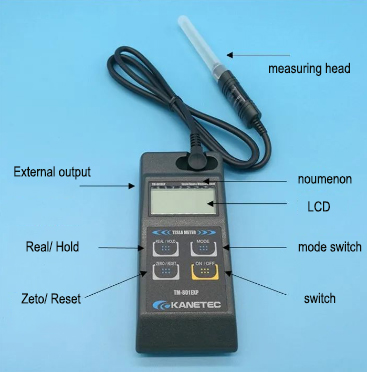
The picture below is a very widely used Japanese KANETEC gauss meter.
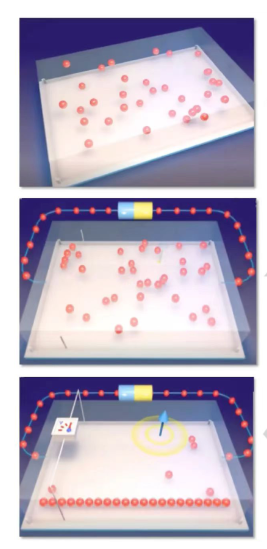
The working principle of the gauss meter is mainly based on the application of the Hall effect: when a current-carrying conductor is placed in a magnetic field, due to the action of the Lorentz force, a transverse potential difference will appear in the direction perpendicular to the magnetic field and the current.
The current gauss meter is generally equipped with a one-way Hall probe, that is, it can only measure the magnetic field strength in one direction, that is, it can only measure the magnetic field strength in the direction perpendicular to the Hall chip. In some high-end measurement fields, there are also Hall probes that can measure three-dimensional magnetic fields. Through the conversion of the measuring instrument, the magnetic field strength in the X, Y, and Z axis directions can be displayed at the same time. The maximum magnetic field strength can be obtained through the conversion of trigonometric functions.
Gauss meters can generally measure DC magnetic fields and AC magnetic fields, and the units can generally be switched to display the Gaussian unit Gs or the international system unit millitesla mT, and the measurement of DC magnetic fields is the most used in the industry.
If you need to measure the real-time magnetic field, you need to use the real function, and the display will display the real-time magnetic field value and polarity
The hold function is required when it is necessary to capture the peak magnetic field and the corresponding polarity during the measurement.
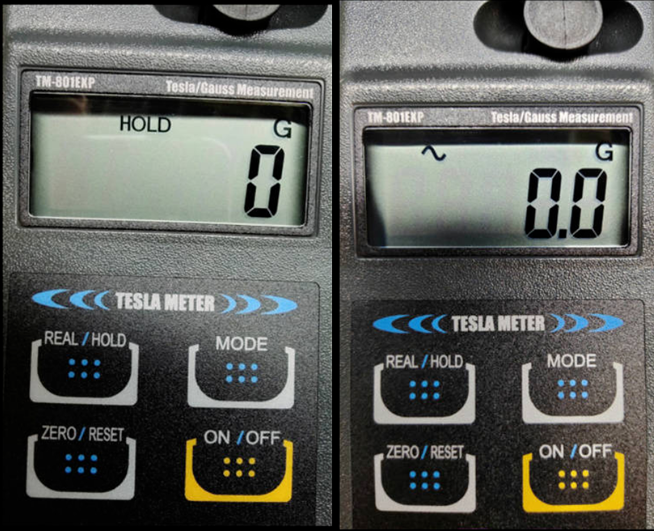
As shown in the figure below, the display will display “hold”, and the displayed value and polarity are the captured peak magnetic field and its corresponding polarity. If there is no display, it is a real function. Press the MODE button to switch to the AC magnetic field test mode, as shown in the figure below, the “~” symbol appears on the screen.
Precautions for the use of Gauss meter:
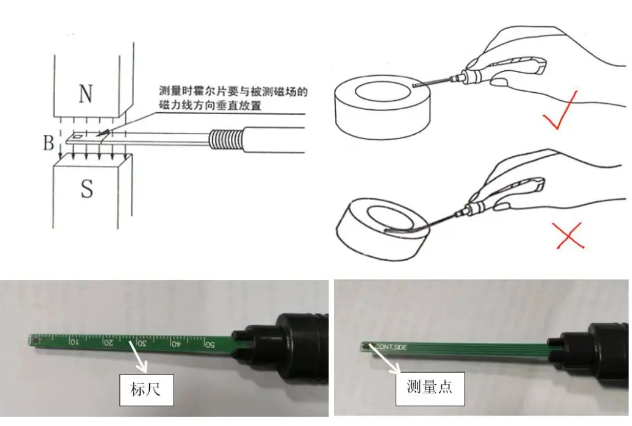
1. When using a gauss meter to measure surface magnetism, the probe should not be bent excessively. The Hall chip at the end should generally be in light contact with the surface of the magnet. On the one hand, this is to ensure that the measurement point is fixed.
2. Both sides of the Hall chip can be sensed, but the value and polarity are different. The scale surface is used for convenient measurement and cannot be used as the measurement surface. The non-scale surface is the measurement surface.
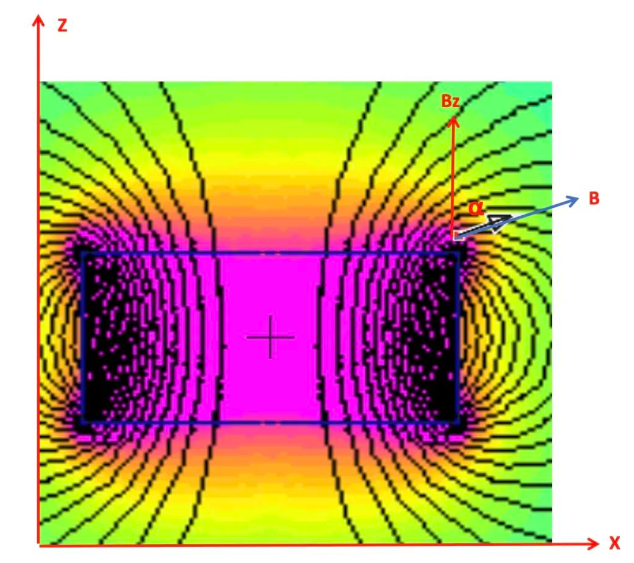
The Gauss meter measures the magnetic field strength Bz of the default vertical measurement surface. The following figure is a simulation diagram of a common Z-axis magnetized magnet. It can be seen that the magnetic field is a vector, and the magnetic field strength of the Z axis can be considered as Bz=. It is just the limitation of the area measured by the Hall chip, and the strength of the measured corner magnetic field is generally stronger than that of the center, at least not lower than the central magnetic field.
What needs special attention here is that when the magnetization directions are different, even if it is the same measurement surface, the difference in the measured value is very large.
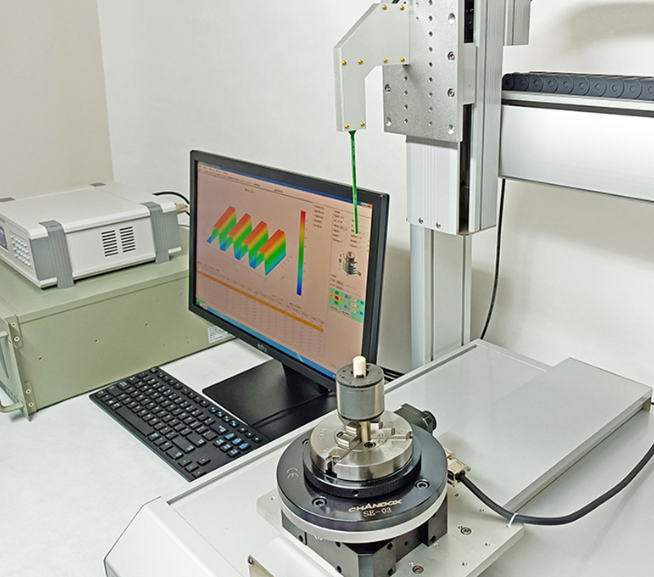
For those that need to measure dynamics or need to fit the magnetic field of different measurement positions into waveform curves, a magnetic field scanner is required. It still needs to be measured by a unidirectional or three-dimensional Hall chip, and then the magnetic field measurement curve is output by designing the measurement trajectory and data acquisition.
Gaussmeter (Teslameter) is an instrument for measuring magnetic induction intensity based on the Hall effect principle. The Gaussmeter is composed of a Hall probe and a measuring instrument.
Gauss meter (Tesla meter) selection: The selection of Gauss meter (Tesla meter) should first start with the measurement object, and consider the following aspects:
The type of magnetic field to be measured by the Gauss meter: the magnetic field is divided into two types: DC magnetic field and AC magnetic field. The magnetic field strength of permanent magnet materials should be measured by DC Gauss meter;
Gauss measurement range: clarify the approximate magnetic field range of the measured object, and the range range of the selected instrument should be greater than the measured magnetic field;
Gauss meter measurement accuracy: refers to the resolution of the instrument, such as the resolution is 1Gs or 0.1Gs, etc.;
Gauss meter Hall probe selection: Usually Hunan Yongyi Technology Co., Ltd.’s test probes have different specifications to meet various test requirements, and the measurement of the surface magnetic field strength usually does not need to consider the probe specifications.
① Air gap magnetic field measurement: the size of the probe should be considered. If the probe size is larger than the measured air gap, it cannot enter the measured air gap and thus cannot be used;
②Selection of the direction of the Hall probe of the Gauss meter: The direction of the Hall probe is divided into two types: horizontal and axial. When selecting the probe, the user should consider selecting the appropriate probe according to the object to be measured;
③Gaussmeter Hall probe connection cable: The length of the Hall probe cable is usually fixed. If there are special measurement requirements, if the probe line needs to be extended or shortened, it should be proposed to Hunan Yongyi Technology Co., Ltd.
Precautions when using Gauss meter to measure magnetic field
1. The sensor is a fragile device, so it is not covered by the manufacturer’s warranty, so it must be used carefully; handle it with care during use, and tighten the protective cover in time after use to avoid external breakage; do not press the rear end of the probe hard during the test to avoid breaking the internal cable;
2; How to avoid the problem of using Gauss meter process:
Carefully test and pay attention to protection; make special tooling and relatively fix the sensor to avoid damage caused by sensor movement;
How should the cylindrical magnet measure the Gauss value?
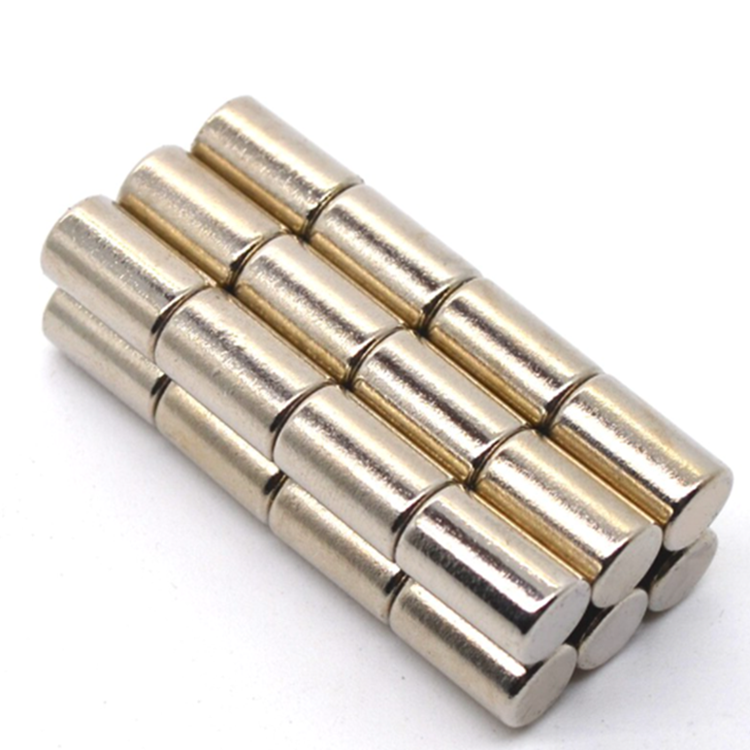
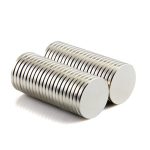
Cylindrical magnet, a round pillar with smooth ends like a stick. This round pillar magnet is not uncommon in our daily life, but many of us don’t know how to measure its Gauss value? In the eyes of our Yutong magnet manufacturer, the magnet mainly has two positions for measuring Gauss values, one is the smooth part at both ends, and the other is the smooth side of the surface. This needs to be related to the material and cutting direction selected by the magnet manufacturer when customizing the magnet.
The normal ordinary cylindrical magnet is smoothly moved on the plane by the gauss meter at the smooth place at both ends, and the highest gauss value is selected. The side suction magnet needs to use the gauss meter to move smoothly on the side to select the highest gauss value range, and measure the gauss value of the cylindrical magnet in this way, and select the magnet gauss value range.
Magnet manufacturers produce cylindrical magnet workshop
Through the above explanation of the method of measuring the Gauss value range of the cylindrical magnet by the magnet manufacturer, you have a general understanding now, right? If you still don’t understand, you can call us!
What is a Gaussmeter?
Measuring the Rare earth magnets strength of the magnetic field
Gauss, short for high (Gs, G), is not an internationally accepted unit of magnetic induction or magnetic flux. Named in honor of the German physicist and mathematician Gauss. If a piece of wire is placed in a magnetic field with uniform magnetic induction intensity, and a long straight wire whose direction is perpendicular to the direction of magnetic induction intensity has a constant current of 1 electromagnetic system unit, the electromagnetic force per centimeter of length of the wire is 1 dyne, then the magnetic induction intensity is defined as 1 gauss. Gauss is a very small unit, 10000 Gauss is equal to 1 Tesla (T). Gauss is a common non-legal unit of measurement, and Tesla is a legal unit of measurement.
Verwandte Produkte